6 Sources
[1]
US data center protests go national as backlash grows
July 18 (Reuters) - Opponents of the rapid buildout of data centers plan to hold protests on Saturday in at least 125 locations across the United States, the first coordinated national effort to channel anger at the AI infrastructure expansion that has ramped up over the past year and roiled local politics. The protests are coordinated by a grassroots group called HumansFirst, co-founded by a former leader of the modern-day Tea Party who has compared growing opposition to data centers to the right-wing populist movement that emerged in 2009 to protest what it saw as excessive taxation and government overreach. Protesters will rally against what HumansFirst calls the "unaccountable" buildout of data centers and "unacceptable infringement on our liberty." Towns and counties have been at the forefront of opposition to data center projects that in some cases have been greenlit with local officials signing non-disclosure agreements with â developers despite resident pushback or a lack of regulatory scrutiny. Now politicians at the state and national level are scrambling to keep pace with rising voter anger over the threat of higher power bills, the diversion of precious water resources and pollution. Data center opposition is among the few issues uniting Americans across ideological lines, with just a third of Americans approving of the pace of data-center construction in the U.S., according to a June Reuters/Ipsos poll. Only 14% of respondents would support a data center being built in their community to support artificial intelligence projects for technology firms such as Meta (META.O), opens new tab, Alphabet (GOOGL.O), opens new tab, Amazon (AMZN.O), opens new tab, Microsoft (MSFT.O), opens new tab and Elon Musk's xAI. The Data Center Coalition, the industry's association and lobbying group, did not immediately comment on the protests. It previously told Reuters data centers are committed to being responsible neighbors in the communities where they operate. RED AND BLUE STATES REPRESENT Although HumansFirst co-founder Amy Kremer compared it to the conservative Tea Party movement's early days in 2009, she said the anger against data centers is nonpartisan. "They just woke up one â day and found out they're going to have this monstrosity in their community, and they don't want it," said Kremer, who predicted data centers will be a defining issue in November's midterm elections and the 2028 presidential race. Kremer has criticized Republicans for giving Big Tech a "free pass," but she and some organizers also said they do not support policies like moratoriums on data center approvals adopted by the Democratic state of New York. Among other things, organizers said they want the development process to be transparent, resources and environmental health protected, community benefits such â as the creation of well-paid union jobs and a way to hold developers accountable if they do not follow through on promises. Late on Friday, the Republican stronghold of Texas, a hotspot for data center development, was on track to have the most protests with 16. The battleground state of Georgia had 11, while Democratic California, Republican Florida and the swing state of Pennsylvania â came in at 7 each. First-time activist and self-described "political nomad" Eva Cardona, 31, is organizing a protest in Texas. "I've been hearing about unregulated AI and the rapid growth was alarming me. I wanted to do something more hands-on than just your standard Facebook post," Hickman said. Left-leaning Ivan DelSol, 54, is helping lead a protest in the California â desert's Imperial County, where a proposed data center project could use 260 million gallons of water per year from the Colorado River. "It's dystopian that you would use this much fresh water for AI," DelSol said. Although water is frequently cited as a top public concern, especially in water-stressed regions, the data center industry says its water use is not as significant as other industries. Reporting by Valerie Volcovici in Washington and Lisa Baertlein in Los Angeles; Editing by Stephen Coates Our Standards: The Thomson Reuters Trust Principles., opens new tab * Suggested Topics: * Retail & Consumer Valerie Volcovici Thomson Reuters Valerie Volcovici covers U.S. climate and energy policy from Washington, DC. She is focused on climate and environmental regulations at federal agencies and in Congress and how the energy transition is transforming the United States. Other areas of coverage include her award-winning reporting plastic pollution and the ins and outs of global climate diplomacy and United Nations climate negotiations. Lisa Baertlein Thomson Reuters Lisa Baertlein covers the movement of goods around the world, with emphasis on ocean transport and last-mile delivery. In her free time, you'll find her sailing, painting or exploring state and national parks.
[2]
Americans are angry about data centers. Politicians are feeling the pressure
SALINE TOWNSHIP, Michigan, July 16 (Reuters) - From Michigan Avenue, Saline Township looks like any other farming community, with its corn and soybean fields, silos and grain elevators. Just down the road, though, cranes reach above towering fences at the site of a $16 billion project -- one that has turned this town of 2,400 people into the latest U.S. flashpoint over AI data centers. Dubbed "The Barn" by its consortium of developers -- Oracle (ORCL.N), opens new tab, OpenAI, Related Digital, Blackstone (BX.N), opens new tab and Walbridge -- the Stargate data center is expected to stretch over 250 acres. Construction is moving ahead despite resistance from residents concerned about its impact on Saline's water supply, its power grid and its rural character. "Most people aren't interested in some massive development here," said Tammie Bruneau, who has led local pushback. "They're interested in protecting the farmland." In this deeply polarized country, opposition to data centers is among the few issues that unite voters across ideological lines. Just a third of Americans approve of the pace of data-center construction, according to a June Reuters/Ipsos poll. Only 14% of respondents would support a data center being built in their community. That tension is increasingly pronounced in Michigan, where at least 13 data centers, opens new tab are in various stages of planning -- and communities in Saline and beyond are fighting back. Developers withdrew a project in Washington Township after residents mobilized against it; in Augusta, petitioners stalled development and forced a public rezoning vote. As backlash spreads, the fight over data centers is no longer confined to town councils, leaving politicians here and across the nation, opens new tab scrambling to keep up. MICHIGAN DEMOCRATS GRAPPLE WITH â AI ANGER With Michigan's Democratic primary for U.S. Senate looming on August 4, in a race that will help determine the balance of power in Washington, candidates are weighing the benefits of AI development with mounting voter concerns. For many Americans, resistance to data centers is inseparable from broader unease about the future of AI and corporate power. "It seems like the big tech companies are kind of steamrolling the citizens," said Jeff Samoray, 57, a Democrat who lives in Huntington Woods, outside Detroit. In her bid for the Democratic nomination, Haley Stevens is running as a tech optimist, calling AI, opens new tab "a revolutionary technology." In a debate last week she linked data center development to job creation, saying it will put Michigan "on the forefront of innovation and manufacturing" while calling on tech companies to pay their water and utility bills. Stevens, who has served in the U.S. House since 2019, did not respond to a Reuters interview request. Abdul El-Sayed, her progressive rival, unveiled a policy platform last month that would require AI companies to operate as public-benefit corporations with more government oversight. He has stopped short of calling for a national moratorium on data-center construction - as others on the left flank of the Democratic Party have done, opens new tab -- but told Reuters that local moratoriums might be needed. "Too often local communities just don't have the capacity to withstand the pressure that huge corporations can put on them," he said in an interview. Ultimately, however, safeguards need to come from the federal government, he added. Samoray thinks neither candidate is taking a strong enough stand. "It's nice rhetoric, but I don't know if that stuff will really happen," he said, characterizing the AI industry as "a runaway train." Even the Trump administration, which â has prioritized rapid AI development to compete with China, has taken note of shifting voter sentiment. Reuters reported on July 13 that the White House is working with utility companies and data center developers on a voluntary pledge to protect taxpayers from footing the bill for AI expansion. Politicians from both parties are "all over the map," said Lisa Wozniak, president of the Michigan League of Conservation Voters. 'FORCED INTO THIS POSITION' The fight in Saline illustrates both the depth of public opposition and the difficulty of finding policy solutions. After months of contentious public meetings, the township board voted 4-1 in September to deny rezoning for the Stargate data center. Two days later, the developers and landowners sued the township. Facing costly litigation, officials reached a consent judgment in October allowing construction to proceed. The settlement provided some $14 million in community benefits, including farmland preservation and fire services, along with restrictions on water use and noise. Opponents have challenged â the agreement in court. Builders broke ground on June 1 with Democratic Governor Gretchen Whitmer and OpenAI Chief Executive Sam Altman in attendance. The project will create more than 2,500 union construction jobs, 1,500 countywide jobs, more than 450 permanent jobs and billions in tax revenue, according to developers. But local opposition remains strong. "We really just didn't think it was fair that our board got forced into this position," said community activist Bruneau, who had never previously been involved in local politics. She worries about groundwater contamination and electricity costs. Bruneau is hardly alone, she said, with opposition crossing party lines: "We've met people from extreme right â and left, and all the way in the middle." Beverly Kincaid, 56, a Republican who lives near the township, said data centers will be a central issue for her when she votes in November. In Saline, she said, "big money pushed their way around." A spokesperson for data-center developer and investment company Related Digital said in an email that the company is "committed to responsible development," including "protecting Michigan's water by using closed-loop, air cooling systems" and preserving "750 acres of farmlands, wetlands and woodlands." In a statement, an Oracle spokesperson said the company will fund all of the â energy and infrastructure needed for the data center, "ensuring no impact on local ratepayer bills or grid reliability." Sandy Baruah, president of the Detroit Regional Chamber, said critics were missing the big picture: "For those of us who are involved in efforts to grow Michigan's economy, to create more jobs, it is truly puzzling." Laura Dennison sees both sides of the issue. The 42-year-old in Royal Oak worries about the agricultural impact of data centers. But researchers are also using AI to better understand her son's rare medical condition. "It doesn't matter if you're the person running for office or you're the person impacted by it," she said. "There's so many unknowns." Reporting by Helen Coster in Saline Township, Michigan, and Valerie Volcovici in Washington; Editing by Jesse Mesner-Hage and Matthew Lewis Our Standards: The Thomson Reuters Trust Principles., opens new tab * Suggested Topics: * Disrupted Helen Coster Thomson Reuters Helen Coster is a National Affairs Correspondent at Reuters, where she writes a mix of spot news, enterprise and analysis stories, with a focus on politics and media. She previously covered the 2024 presidential race, with a focus on Republicans, and before then reported on the media industry. She was part of a team of Reuters journalists that won the 2026 Pulitzer Prize for National Reporting. Valerie Volcovici Thomson Reuters Valerie Volcovici covers U.S. climate and energy policy from Washington, DC. She is focused on climate and environmental regulations at federal agencies and in Congress and how the energy transition is transforming the United States. Other areas of coverage include her award-winning reporting plastic pollution and the ins and outs of global climate diplomacy and United Nations climate negotiations.
[3]
US Data Center Protests Go National as Backlash Grows
By Valerie Volcovici and Lisa Baertlein July 18 (Reuters) - Opponents of the rapid buildout of data â centers â plan to hold protests on Saturday in at least â 125 locations across the United States, the first coordinated national effort to channel anger at the AI infrastructure expansion that has ramped up over the past year and roiled local politics. The protests are coordinated by a grassroots group called HumansFirst, co-founded by a former leader of the modern-day Tea Party who has compared growing opposition to data centers to the right-wing populist movement that emerged in 2009 to protest what it saw as excessive taxation and government overreach. Protesters will rally against what HumansFirst calls â the "unaccountable" buildout of data â centers and "unacceptable infringement on our liberty." Towns and counties have been at the forefront of opposition to data center projects that in some cases have been greenlit with local officials signing non-disclosure agreements with developers despite resident pushback or a lack of regulatory scrutiny. Now politicians at the state and national level are scrambling to keep pace with rising voter anger over the threat of higher power bills, the diversion of precious water resources and pollution. Data center opposition is among the few issues uniting Americans across ideological lines, with just a third of Americans approving of the pace of data-center construction in the U.S., according to a â June Reuters/Ipsos â poll. Only 14% of respondents would â support a data center being built in their community to support artificial intelligence projects for technology firms such as Meta, Alphabet, Amazon, Microsoft and Elon Musk's xAI. The Data Center Coalition, the industry's association and lobbying group, â did not immediately comment on the protests. It previously told Reuters data centers are committed to being responsible neighbors in the communities where they operate. RED AND BLUE STATES REPRESENT Although HumansFirst co-founder Amy Kremer compared it to the conservative Tea Party movement's early days in 2009, she said the anger against data centers is nonpartisan. "They just woke up one day and found out they're going to have this monstrosity in their community, and they don't want it," said Kremer, who predicted data centers will be â a defining issue in November's midterm elections and the 2028 presidential race. Kremer has criticized Republicans for giving Big Tech a "free â pass," but she and some organizers also said they do not support policies like moratoriums on data center approvals adopted by the Democratic state of New York. Among other things, organizers said they want the development process to be transparent, resources and environmental health protected, community benefits such as the creation of well-paid union jobs and a way to hold developers accountable if they do not follow through on promises. Late on Friday, the Republican stronghold of Texas, a hotspot for data center development, was on track to have the most protests with 16. The battleground state of Georgia had 11, while Democratic California, Republican Florida and the swing state of Pennsylvania came in at 7 each. First-time activist and self-described "political nomad" Eva Cardona, 31, is organizing a protest in Texas. "I've been hearing about unregulated AI and the rapid growth was alarming me. I wanted â to do something more hands-on than just your standard Facebook post," Hickman said. Left-leaning Ivan DelSol, 54, is helping lead a protest in the California desert's Imperial County, where a proposed data center project could use 260 million gallons of water per year from the Colorado River. "It's dystopian that you would use this much fresh water for AI," DelSol said. Although water is frequently cited as a top public concern, especially in water-stressed regions, the data center industry says its water use is not as significant as other industries. (Reporting by Valerie Volcovici in Washington and Lisa Baertlein in Los Angeles; Editing by Stephen Coates)
[4]
AI's data centre boom is becoming a political problem across the globe
As governments race to attract AI investments, data centres are facing mounting opposition worldwide over their massive land, power and water demands, prompting protests, legal challenges and tighter regulations. Listen to this article in summarized format Listen Ă Subscribe to Unlock AI Briefing and Premium Content New Year Offer 24 Hours Left Subscribe Now Already a member? Sign In What's Included * Exclusive Stories * Daily ePaper Access * Smart Market Tools * Curated Investment Ideas * Ad-lite Experience * Subscription Paris: Governments worldwide are pushing to attract AI computing infrastructure, but must grapple with data centres' demands on resources and mounting local opposition. The massive buildings stuffed with specialised chips hungry for power and water have sparked objections from locals around the world. Voter concerns have sparked action from local and national governments, while American activists have called for nationwide demonstrations on July 18. Here are some key points to know about the data centre debate: What are the objections? Opposition to data centres from the US to India tends to focus on three major themes: land, power and water. Data centres can occupy vast swathes of land, with Meta's Prometheus site in Ohio measuring "a significant part of the footprint of Manhattan". In countries with weaker property protections, some have complained of being shouldered aside in favour of tech construction -- including Indian farmers in the southern state of Andhra Pradesh, as tech news outlet Rest of World reported in April. Meanwhile data centres filled with top-of-the-line chips can draw the energy of a city. At 630 megawatts according to industry tracker Epoch AI, Prometheus is equivalent to around half a million American family homes. Bloomberg News found in a September 2025 analysis that electricity could be as much as 267 percent more expensive in areas of the US with high concentrations of data centres. And companies' off-grid generators -- such as SpaceXAI's gas turbines at its Colossus facility in Memphis -- have drawn complaints of their own. The NAACP campaign group in April filed a legal case alleging the turbines are harming mostly Black neighbourhoods with pollutants. As the chips get hot while they work, data centres need cooling -- mostly using water. While the absolute amount of water used is small -- around 0.3 percent of total supply in the US, according to electronics magazine IEEE Spectrum -- many are built in areas already facing high water stress. Other complaints against data centres include carbon emissions, noise and ultra-low-frequency "infrasound" vibrations that can be felt in the body. How have people responded? American campaign group Humans First has called for a "national day of protest" against "the unaccountable buildout of data centres" on Saturday 18. It is was not clear in advance how many will follow the call from the conservative group, which follows months of a rising drumbeat of local opposition across the US. Beyond civil opposition to data centres, security nonprofit The Soufan Group in May highlighted "a rise in direct threats against individuals perceived as driving (AI) technology forward" in the US. Two major incidents this year have been a Molotov cocktail attack on OpenAI chief Sam Altman's house and a gun attack on the home of an Indianapolis politician. Beyond America, campaigners across Europe have challenged data centre projects on grounds from environmental concerns to claims governments have granted undue favours, such as a legal action in Spain's Aragon region against a massive data centre buildout by Amazon. And in densely-populated Japan, a shortage of space has projects being planned in or near residential neighbourhoods. That has prompted legal action from some residents, such as against a proposed new data centre in Tokyo commuter town Inzai, which already hosts 10 facilities. Governments step in Australian Prime Minister Anthony Albanese has vowed to pass laws requiring data centres to feed in to the power grid more than they draw and minimise water usage. The country "cannot settle for a short-term boom in capital expenditure and construction," he said this week. Also this week, New York became the first US state to impose a general moratorium on new large data centre projects, also citing power and water drain. But Maine governor Janet Mills vetoed a similar would-be moratorium in April, citing the economic impact. In Europe, Amsterdam has imposed a moratorium on construction of new data centres over space and power concerns. And Denmark has placed data centres at the bottom of its priority list for access to electricity, warning of strain on its power grid.
[5]
Americans Are Angry About Data Centers. Politicians Are Feeling the Pressure
By Helen Coster and Valerie Volcovici SALINE TOWNSHIP, Michigan, July 16 (Reuters) - From Michigan Avenue, Saline Township looks like any other farming community, with its â corn â and soybean fields, silos and grain elevators. Just down the road, though, cranes reach â above towering fences at the site of a $16 billion project -- one that has turned this town of 2,400 people into the latest U.S. flashpoint over AI data centers. Dubbed "The Barn" by its consortium of developers -- Oracle, OpenAI, Related Digital, Blackstone and Walbridge -- the Stargate data center is expected to stretch over 250 acres. Construction is moving ahead despite resistance from residents concerned about its impact on Saline's water supply, its power grid and its rural character. "Most people aren't interested in some massive development here," said Tammie Bruneau, who has led local pushback. "They're interested in protecting the farmland." In this deeply polarized country, opposition to data centers is among the few issues that unite voters across ideological lines. Just a third of Americans approve of the pace of data-center construction, according to a June Reuters/Ipsos poll. Only 14% of respondents would support a â data center being built in their â community. That tension is increasingly pronounced in Michigan, where at least 13 data centers are in various stages of planning -- and communities in Saline and beyond are fighting back. Developers withdrew a project in Washington Township after residents mobilized against it; in Augusta, petitioners stalled development and forced a public rezoning vote. As backlash spreads, the fight over data centers is no longer confined to town councils, leaving politicians here and across the nation scrambling to keep up. MICHIGAN DEMOCRATS GRAPPLE WITH AI ANGER With Michigan's Democratic primary for U.S. Senate looming on August 4, in a race that will help determine the balance of power in Washington, candidates are weighing the benefits of AI development with mounting voter concerns. For many Americans, resistance to data centers is inseparable from broader unease about the future of AI and corporate power. "It seems like the big tech companies are kind of steamrolling the citizens," said Jeff Samoray, 57, a Democrat who lives in Huntington Woods, outside Detroit. In her bid for the Democratic nomination, Haley â Stevens â is running as a tech optimist, calling AI "a revolutionary â technology." In a debate last week she linked data center development to job creation, saying it will put Michigan "on the forefront of innovation and manufacturing" while calling on tech companies to pay their water and utility bills. Stevens, who has served in the U.S. House since 2019, did not respond to a Reuters interview request. Abdul El-Sayed, her progressive rival, unveiled a policy â platform last month that would require AI companies to operate as public-benefit corporations with more government oversight. He has stopped short of calling for a national moratorium on data-center construction - as others on the left flank of the Democratic Party have done -- but told Reuters that local moratoriums might be needed. "Too often local communities just don't have the capacity to withstand the pressure that huge corporations can put on them," he said in an interview. Ultimately, however, safeguards need to come from the federal government, he added. Samoray thinks neither candidate is taking a strong enough stand. "It's nice rhetoric, but I don't know if that stuff will really happen," he said, characterizing the AI industry as "a runaway train." Even the Trump administration, which has prioritized rapid AI development to compete with China, has taken note of shifting voter sentiment. Reuters reported on July 13 that the White House is â working with utility companies and data center developers on a voluntary pledge to protect taxpayers from footing the bill for AI expansion. Politicians from both parties are "all over the map," said Lisa â Wozniak, president of the Michigan League of Conservation Voters. 'FORCED INTO THIS POSITION' The fight in Saline illustrates both the depth of public opposition and the difficulty of finding policy solutions. After months of contentious public meetings, the township board voted 4-1 in September to deny rezoning for the Stargate data center. Two days later, the developers and landowners sued the township. Facing costly litigation, officials reached a consent judgment in October allowing construction to proceed. The settlement provided some $14 million in community benefits, including farmland preservation and fire services, along with restrictions on water use and noise. Opponents have challenged the agreement in court. Builders broke ground on June 1 with Democratic Governor Gretchen Whitmer and OpenAI Chief Executive Sam Altman in attendance. The project will create more than 2,500 union construction jobs, 1,500 countywide jobs, more than 450 permanent jobs and billions in tax revenue, according to developers. But local opposition remains strong. "We really just didn't think it was fair that our board got forced into this position," said community activist Bruneau, who had never previously been involved in local politics. She worries about groundwater contamination and electricity costs. Bruneau is hardly alone, she said, with opposition crossing party lines: "We've met people from extreme right and left, and all the way in the middle." Beverly Kincaid, 56, a Republican who lives near the township, said data centers will be a central issue for her when she votes in November. In Saline, she said, "big money pushed their way around." A spokesperson for â data-center developer and investment company Related Digital said in an email that the company is "committed to responsible development," including "protecting Michigan's water by using closed-loop, air cooling systems" and preserving "750 acres of farmlands, wetlands and woodlands." In a statement, an Oracle spokesperson said the company will fund all of the energy and infrastructure needed for the data center, "ensuring no impact on local ratepayer bills or grid reliability." Sandy Baruah, president of the Detroit Regional Chamber, said critics were missing the big picture: "For those of us who are involved in efforts to grow Michigan's economy, to create more jobs, it is truly puzzling." Laura Dennison sees both sides of the issue. The 42-year-old in Royal Oak worries about the agricultural impact of data centers. But researchers are also using AI to better understand her son's rare medical condition. "It doesn't matter if you're the person running for office or you're the person impacted by it," she said. "There's so many unknowns." (Reporting by Helen Coster in Saline Township, Michigan, and Valerie Volcovici in Washington; Editing by Jesse Mesner-Hage and Matthew Lewis)
[6]
AI data centers divide communities and scramble midterm playbooks
Opposition to AI data centers is one of the rare issues galvanizing voters across the political spectrum in this year's midterm elections. In battleground state Michigan, communities are fighting back. "... the development of this AI data center is really rattling citizens here." That's Reuters national affairs reporter Helen Coster. She recently visited Michigan's Saline Township, where tech giants OpenAI and Oracle have broken ground on a data center that's expected to stretch over 250 acres. COSTER: "Opponents of it are concerned about noise pollution, light pollution, the impact on the local water and their electricity rates. // They're concerned that if these companies go bust in a few years, or the technology shifts, such that they no longer need this kind of physical infrastructure, they're going to be stuck with these plants and that they're rural land will be forever transformed." A new Reuters/Ipsos poll shows that just one-in-three Americans approve of the pace of data-center construction. 57% of people surveyed -two-thirds of whom were Democrats and half, Republicans - would oppose one being built in their community. AI data centers sit at the intersection of Big Tech expansion, energy policy and the transformation of rural communities -- making them a potent political issue. The backlash also reflects deeper anxieties about AI's disruptive impact on society. For politicians from both parties on the ballot in November, the risk is clear: embrace data centers and alienate local voters or oppose them and undercut economic development and national security considerations.
Share
Copy Link
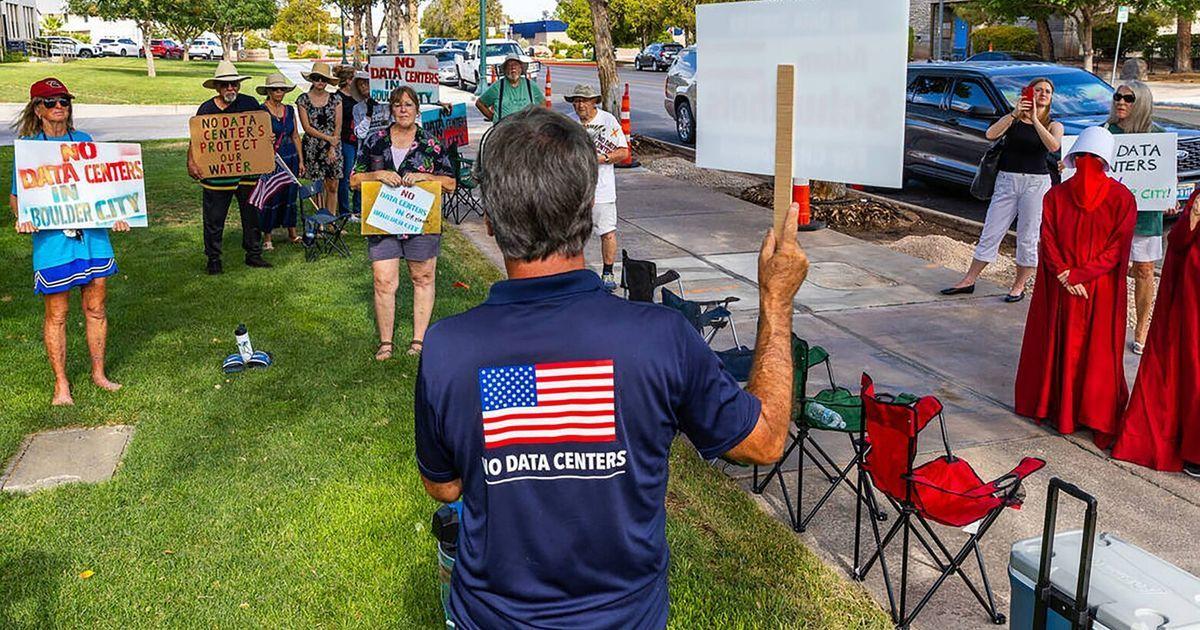
A grassroots group called HumansFirst is coordinating protests at 125+ locations across the US against rapid data center expansion. Only 14% of Americans support AI infrastructure in their communities, according to a June Reuters/Ipsos poll, as concerns mount over power grid strain, water usage, and environmental impact from facilities supporting Meta, Amazon, Microsoft, and other tech giants.
Opponents of the rapid expansion of data centers are staging protests on Saturday in at least 125 locations across the United States, marking the first coordinated nationwide protests against the AI infrastructure buildout that has accelerated over the past year
1
. The demonstrations are organized by HumansFirst, a grassroots group co-founded by Amy Kremer, a former leader of the modern-day Tea Party movement who has drawn parallels between growing opposition to data centers and the right-wing populist movement that emerged in 20093
.
Source: Reuters
Protesters will rally against what HumansFirst characterizes as the "unaccountable" buildout of data centers and "unacceptable infringement on our liberty"
1
. Late on Friday, Texas was on track to have the most protests with 16, followed by Georgia with 11, while California, Florida, and Pennsylvania each had 7 scheduled demonstrations3
.The backlash against data centers represents one of the few issues uniting Americans across ideological lines in a deeply polarized country. According to a June Reuters/Ipsos poll, just a third of Americans approve of the pace of data-center construction in the U.S.
2
. Even more striking, only 14% of respondents would support a data center being built in their community to support artificial intelligence projects for technology firms such as Meta, Alphabet, Amazon, Microsoft, and Elon Musk's xAI1
.Although Kremer compared the movement to the conservative Tea Party's early days, she emphasized that anger against data centers is nonpartisan. "They just woke up one day and found out they're going to have this monstrosity in their community, and they don't want it," Kremer said, predicting data centers will be a defining issue in November's midterm elections and the 2028 presidential race
3
. First-time activist Eva Cardona, 31, organizing a protest in Texas, explained: "I've been hearing about unregulated AI and the rapid growth was alarming me. I wanted to do something more hands-on than just your standard Facebook post"1
.The rapid expansion of data centers has sparked environmental concerns over water usage, power grid strain, and rising power bills. In California's Imperial County, a proposed data center project could consume 260 million gallons of water per year from the Colorado River
1
. "It's dystopian that you would use this much fresh water for AI," said Ivan DelSol, 54, helping lead a protest in the region3
.
Source: ET
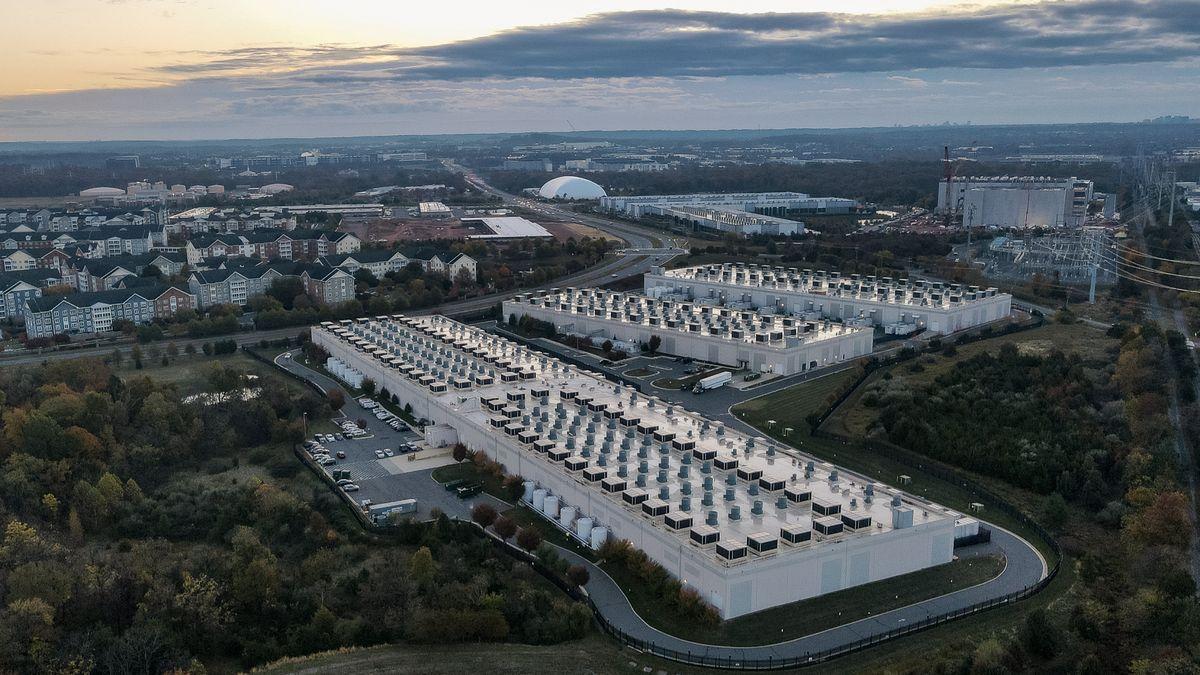
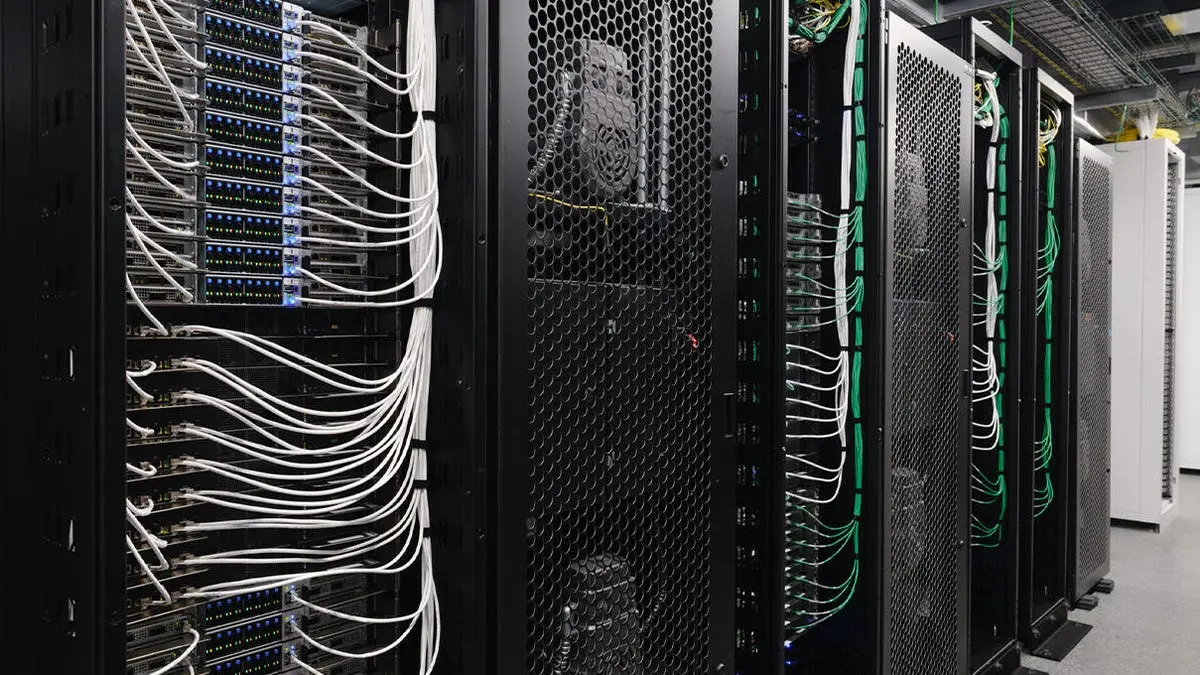
Data centers filled with specialized chips can draw the energy equivalent of a city. Meta's Prometheus site in Ohio operates at 630 megawatts, equivalent to around half a million American family homes
4
. A Bloomberg News analysis from September 2025 found that electricity could be as much as 267 percent more expensive in areas of the US with high concentrations of data centers4
.Related Stories
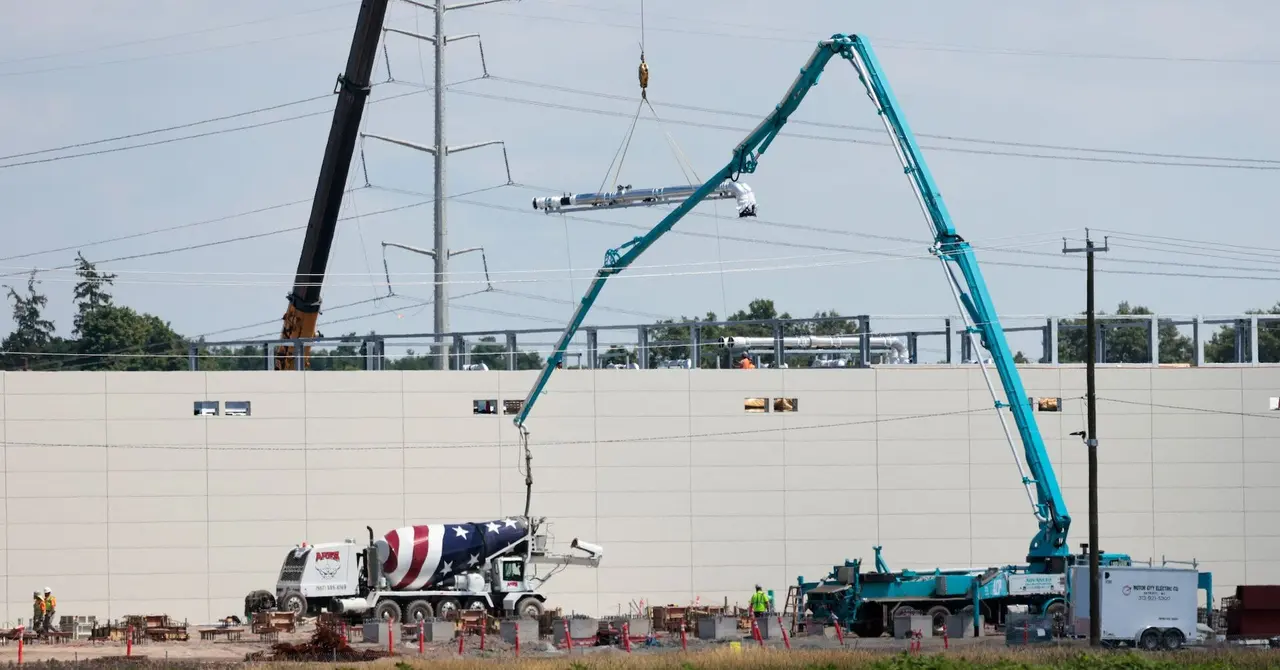
Saline Township, Michigan, a farming community of 2,400 people, has become a flashpoint in the AI data center boom. The $16 billion Stargate project, developed by a consortium including Oracle, OpenAI, Related Digital, Blackstone, and Walbridge, is expected to stretch over 250 acres
2
. Construction is moving ahead despite resistance from residents concerned about its impact on Saline's water supply, power grid, and rural character5
.
Source: Reuters
After the township board voted 4-1 in September to deny rezoning for the Stargate data center, developers and landowners sued the township two days later. Facing costly litigation, officials reached a consent judgment in October allowing construction to proceed, with $14 million in community benefits including farmland preservation and fire services, along with restrictions on water use and noise
5
.With Michigan's Democratic primary for U.S. Senate approaching on August 4, candidates are weighing AI development benefits against mounting voter concerns. Haley Stevens is running as a tech optimist, linking data center development to job creation, while her progressive rival Abdul El-Sayed unveiled a policy platform requiring AI companies to operate as public-benefit corporations with more government oversight
2
.Towns and counties have been at the forefront of opposition to data center projects that in some cases have been greenlit with local officials signing non-disclosure agreements with developers despite resident pushback or a lack of regulatory scrutiny
1
. Now politicians at state and national levels are scrambling to keep pace with rising voter anger.New York became the first US state to impose a general moratorium on new large data center projects, citing power and water drain . Even the Trump administration, which has prioritized rapid AI development to compete with China, has taken note of shifting voter sentiment. Reuters reported on July 13 that the White House is working with utility companies and data center developers on a voluntary pledge to protect taxpayers from footing the bill for AI expansion
2
.Organizers said they want the development process to be transparent, resources and environmental health protected, community benefits such as the creation of well-paid union jobs, and a way to hold developers accountable if they do not follow through on promises
1
. The Data Center Coalition, the industry's association and lobbying group, previously told Reuters that data centers are committed to being responsible neighbors in the communities where they operate3
.Summarized by
Navi
09 Dec 2025âąPolicy and Regulation

14 Mar 2026âąPolicy and Regulation
28 Jan 2026âąPolicy and Regulation

1
Policy and Regulation

2
Technology

3
Technology