Black Forest Labs CEO Calls for Europe to Shift AI Development Mindset Amid Global Competition


2 Sources
[1]
AI startup urges optimism from Europe despite safety fears
Freiburg im Breisgau (Germany) (AFP) - Europe needs to view artificial intelligence with more optimism -- despite growing warnings about its dangers -- or risk falling further behind, the head of a leading European AI start-up warned. "I think the mindset in Europe needs to shift to one of
[2]
AI startup Black Forest Labs urges optimism from Europe despite safety fears
Europe needs to view artificial intelligence with more optimism -- despite growing warnings about its dangers -- or risk falling further behind, the head of a leading European AI start-up warned. "I think the mindset in Europe needs to shift to one of optimism and to one of opportunity, and not to
Share
Copy Link
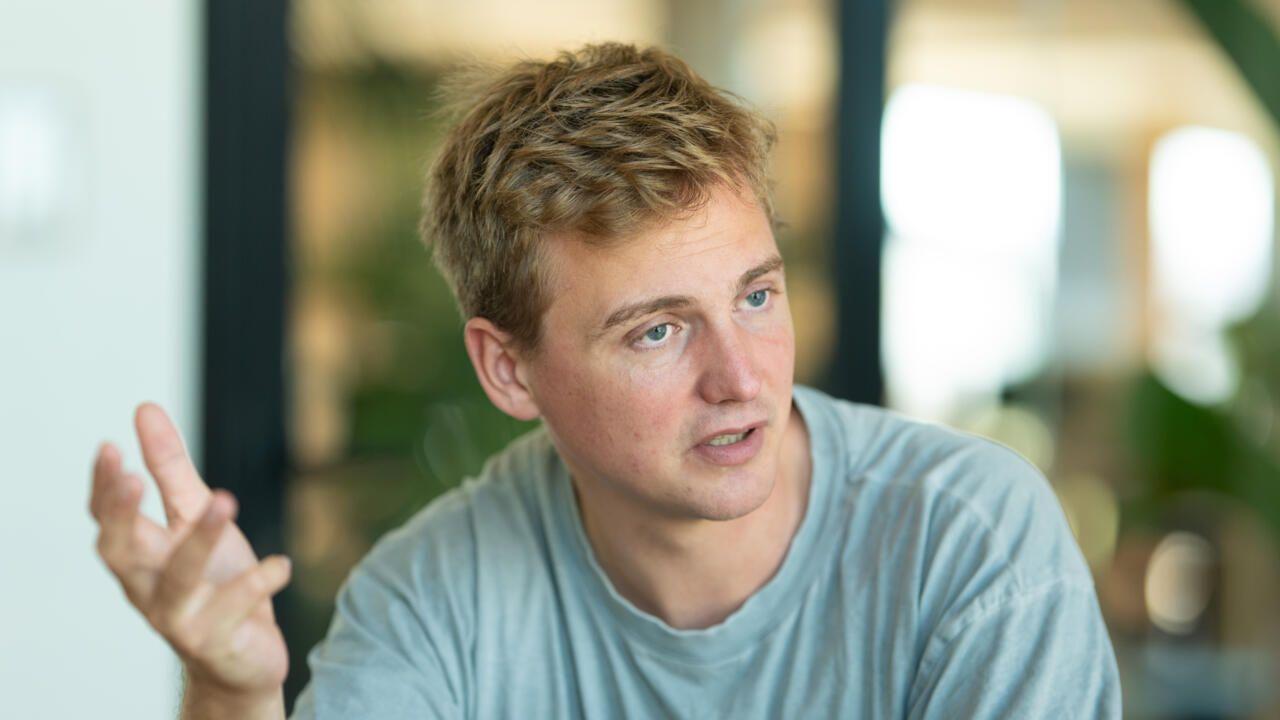
Robin Rombach, CEO of $3.25 billion AI startup Black Forest Labs, urges Europe to adopt an optimistic approach to AI development instead of focusing on safety fears. The German company, known for its FLUX models and latent diffusion technology, argues that capital access and open-weight AI models are essential for Europe to compete with US and Chinese AI leaders.
Black Forest Labs Challenges Europe's Risk-Averse AI Approach
Robin Rombach, CEO of German AI startup Black Forest Labs, is pushing Europe to fundamentally rethink its approach to AI development. Speaking from the company's base in Freiburg, Rombach argued that Europe must "shift to one of optimism and to one of opportunity, and not to one of risk and fear" if it wants to remain competitive in the global AI race
1
. The call comes as Europe continues to lag behind the United States and China in cutting-edge AI models, with policymakers and firms scrambling to close the gap even as AI safety fears intensify following recent security lapses2
.$3.25 Billion Startup Built on Latent Diffusion Breakthrough
Black Forest Labs has emerged as a prominent player in AI image-generation, valued at around $3.25 billion despite having just over 100 staff
1
. The company's foundation rests on latent diffusion, a breakthrough technology that Rombach, 33, helped develop and which now underpins many of today's AI image-generation systems2
. The startup's FLUX models generate still and moving images from text, positioning it among Europe's competitive AI companies alongside France's Mistral. Recently, Black Forest Labs made headlines by announcing US director Martin Scorsese as an advisor, triggering concerns from Hollywood about AI taking production jobs1
.Capital Access Emerges as Europe's Critical Barrier
Rombach identified a stark reality when Black Forest Labs was founded: there was no "real startup ecosystem" in Europe, particularly for "frontier deep tech." He emphasized that building a frontier model in a competitive space requires speed, substantial capital, and computing power
2
. Zach Meyers of CERRE, a Brussels-based think tank, reinforced this assessment, calling access to capital the "biggest barrier" to AI growth and innovation in Europe. Most European companies rely on bank financing, which proves more cautious than venture capital investors about backing businesses that may take years to become profitable1
. Black Forest Labs itself secured early backing from Silicon Valley venture capital firm Andreessen Horowitz and maintains a second headquarters in San Francisco, highlighting the persistent pull of US tech infrastructure2
.Related Stories
Physical AI Expansion Targets Industrial Applications
Beyond text-to-image generation, Black Forest Labs is expanding into physical AI, with its latest model tested at carmaker Audi as part of a project enabling robots to perform production-line tasks
1
. This move into robotics tasks signals the company's ambition to compete not just with OpenAI and Anthropic in generative AI, but also to address industrial automation challenges where European manufacturers maintain traditional strengths.Open-Weight AI Models as Safety Solution
Amid escalating AI safety fears following incidents of technology circumventing controls during tests, Rombach advocates for open-weight AI models as the path forward. He argues that making models downloadable by researchers and developers "increases transparency, increases safety"
2
. Rombach warned it would be "fundamentally wrong" for such crucial technology to be controlled by a few companies, which would render oversight more difficult. His stance on transparency and safety contrasts with calls from some industry leaders to slow AI development following recent security lapses. Notably, Rombach contends that "the main thing that can wipe out humanity is stupidity," placing the biggest danger in potential human failings rather than the technology itself1
. As Europe continues grappling with how to balance innovation against over-regulation, Black Forest Labs' approach to combining optimism from Europe with open development practices may offer a template for addressing competitive challenges while maintaining safety standards in an increasingly critical technology sector.References
Summarized by

Navi
Related Stories
Global AI Summit in Paris Shifts Focus from Safety to Opportunity, Sparking Debate
12 Feb 2025•Policy and Regulation

Meta's AI Chief Urges Europe to Increase AI Investment, Questions $500 Billion US Plan
24 Jan 2025•Technology

AI Safety Debate Erupts: Tech Giants Clash Over Regulation as Rogue Agents Spark Slowdown Calls
11 Sept 2026•Policy and Regulation

Recent Highlights



Recent Highlights
Today's Top Stories






Don’t drown in AI news. We cut through the noise - filtering, ranking and summarizing the most important AI news, breakthroughs and research daily. Follow topics that matter to you and stay ahead.


