Brad Smith warns US AI policy creates uncertainty with regulation but no transparent rules


2 Sources
[1]
Brad Smith: the US regulates AI with no clear rules
Microsoft's president has a warning about how Washington regulates AI: it is doing so with no clear rulebook. "Without rules, businesses can't plan," Brad Smith told Fortune. Microsoft president Brad Smith says the US is now regulating AI without a clear set of rules. The uncertainty, he warns, is
[2]
Microsoft's Brad Smith on U.S. AI policy: 'Regulation without transparent or complete rules' | Fortune
Microsoft President Brad Smith has weighed in on U.S. policy on AI, saying that the Trump administration's current approach lacks transparency and does not provide the clear rules companies need. Smith was speaking exclusively to Fortune on the sidelines of the AI for Good Global
Share
Copy Link
Microsoft President Brad Smith criticized Washington's approach to AI regulation, saying the US regulates AI without transparent or complete rules. Following abrupt export controls on Anthropic Fable 5 and delays to OpenAI GPT-5.6, Smith argues businesses cannot plan effectively. The moves have sparked a global push for sovereign AI as countries question reliance on American tech firms.
Microsoft President Brad Smith Challenges US AI Regulation Approach
Microsoft President Brad Smith has issued a stark warning about how Washington handles AI regulation: the government is regulating without providing clear, transparent rules that businesses need to operate effectively. Speaking exclusively to Fortune on the sidelines of the AI for Good Global Summit, Smith articulated growing industry concerns about the Trump administration's AI regulation strategy
1
2
. "What we really have right now is regulation without transparent or complete rules," Smith said. "Without rules, businesses can't plan."2
The critique comes as American tech firms face mounting business uncertainty about which models will face restrictions and under what criteria.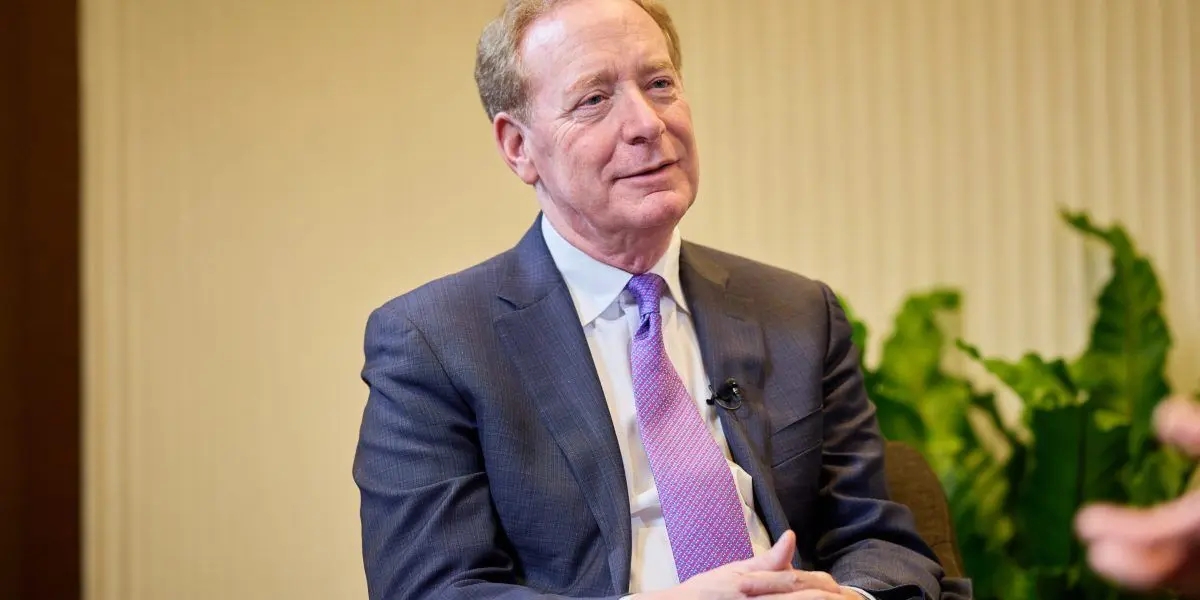
Source: Fortune
Export Controls on AI Models Expose Regulatory Gaps
Smith's concerns follow two abrupt actions by the Trump administration's AI regulation apparatus that exposed the government's limited toolkit. Last month, the Commerce Department invoked export controls on AI to force Anthropic to pull its Fable 5 and Mythos 5 models from the market worldwide, citing cybersecurity risks
1
. Weeks later, officials pressed OpenAI to delay the public launch of its GPT-5.6 model family, restricting early access to government-vetted partners only2
. Both restrictions have since eased—Anthropic Fable 5 returned online earlier this month, and OpenAI GPT-5.6 began rolling out publicly. While Smith acknowledged the government was right to act on genuine security concerns, he emphasized the problem lies in the regulatory mechanism employed. "The U.S. government got information that led it to conclude that there was an urgent cybersecurity risk, and when the government gets that information, I think it's right to act," Smith explained. "But, what the government found was that it only had one regulatory tool it could use: an export control tool."2
Legal experts have noted these export controls predate API-served models, raising doubts about whether such moves could survive court challenges1
.Licensing Without Legislative Backing Creates Planning Paralysis
Critics argue the current US AI policy resembles a licensing regime built without formal legislation or clearly delineated standards. A June executive order established a voluntary pre-release review process but explicitly avoided creating a formal licensing system that would require developers to secure government approval before releasing frontier models
2
. However, the Anthropic episode demonstrated officials are willing to deploy mandatory export controls when companies decline voluntary cooperation or when perceived risks emerge. The government has not disclosed criteria for who qualifies as a "trusted partner" or which models will face vetting in the future1
. OpenAI and Anthropic faced two different processes within weeks of each other, with no published standard for either. "The government doesn't have the tools it needs," Smith said. "Ultimately, common sense says don't be heavy-handed, but have enough of a touch that you can do what needs to be done."2
.Related Stories

Geopolitical Fallout Accelerates Sovereign AI Push
The Trump administration's use of export controls has triggered significant geopolitical fallout, accelerating the global push for sovereign AI—the effort by governments to control both AI models and the infrastructure they run on. In Europe, politicians across the political spectrum said the move highlighted dangers of relying too heavily on American technology. One French politician likened the shutdown to a blockade of the Strait of Hormuz, while British lawmakers noted hospitals and researchers lost access to crucial technology overnight
2
. Canadian Prime Minister Mark Carney called it a lesson in over-reliance on a small number of providers around the G7 summit1
. Smith believes foreign governments have misread the export control as targeting them specifically, when Washington's intent was to pull the model from everyone. "They asked Anthropic to take Fable off the market," he explained. "Anthropic said it would not, so they used an export control lever in a way that caused Anthropic to take it off the market, both domestically and internationally."2
.Trust and Certainty Define Global AI Access Future
Smith emphasized that the burden now falls on Washington and American tech firms to demonstrate their systems provide reliable global AI access. "We want to sell our services around the world, but people will not buy what we have to sell unless they're confident that there will be certainty of supply, continuity of supply, and we need to address that," he said
2
. The episode reveals how much power the US holds over which AI models reach the world—power that has barely been codified into law. For companies selling AI globally, the lack of legislative backing creates a deeper challenge than strict rules would. As Smith noted, you can argue with published regulations, but a policy nobody can see proves far harder to plan around1
. The coming months will test whether Washington can build a transparent framework that balances security needs with the predictability businesses require, while reassuring international partners that access to American AI infrastructure remains stable.References
Summarized by

Navi
[1]
Related Stories
Microsoft Urges Trump Administration to Reconsider AI Chip Export Restrictions
26 Feb 2025•Policy and Regulation

US Tech Giants Urge Easing of AI Export Controls to Compete with China
08 May 2025•Technology

Brad Smith calls graduate AI backlash a wake-up call as Microsoft plans $80B infrastructure spend
10 Jun 2026•Entertainment and Society

Recent Highlights



Recent Highlights
Today's Top Stories






Don’t drown in AI news. We cut through the noise - filtering, ranking and summarizing the most important AI news, breakthroughs and research daily. Follow topics that matter to you and stay ahead.


