Breakthrough Electronic Eye Implant Restores Reading Vision in Blind Patients


3 Sources
[1]
Tiny AI-powered eye implant helps the blind see again
People who had lost their sight have regained the ability to read after receiving an innovative electronic eye implant paired with augmented-reality glasses, according to a clinical trial involving researchers from UCL (University College London) and Moorfields Eye Hospital. Published in The New
[2]
Electronic Eye Implant Restores Reading Vision in AMD - Neuroscience News
Summary: A groundbreaking European trial has shown that a new electronic eye implant, paired with augmented-reality glasses, can restore reading vision to patients blinded by geographic atrophy from dry age-related macular degeneration (AMD). The device, called the PRIMA System, enabled 84% of
[3]
Electronic eye implant allows blind patients to regain sight
'Life-changing' chip, trialled in the UK, offers hope for people with previously untreatable condition. People who lost their sight due to a common, previously untreatable age-related condition can now read again, thanks to a ground-breaking electronic eye implant. The tiny device, measuring just
Share
Copy Link
A revolutionary electronic eye implant paired with AI-powered augmented reality glasses has successfully restored reading vision in patients blinded by age-related macular degeneration. This groundbreaking technology offers new hope for millions suffering from untreatable vision loss.
Breakthrough in Artificial Vision
A groundbreaking European clinical trial has demonstrated the success of an innovative electronic eye implant in restoring reading vision to patients blinded by age-related macular degeneration (AMD). The PRIMA System, developed by Science Corporation, combines a tiny implant with augmented reality glasses and artificial intelligence to enable sight in previously blind eyes
1
2
.
Source: ScienceDaily
The PRIMA System: How It Works
The PRIMA System consists of three main components:
- A 2mm x 2mm microchip implant
- Augmented reality glasses with a video camera
- A pocket-sized computer with AI algorithms
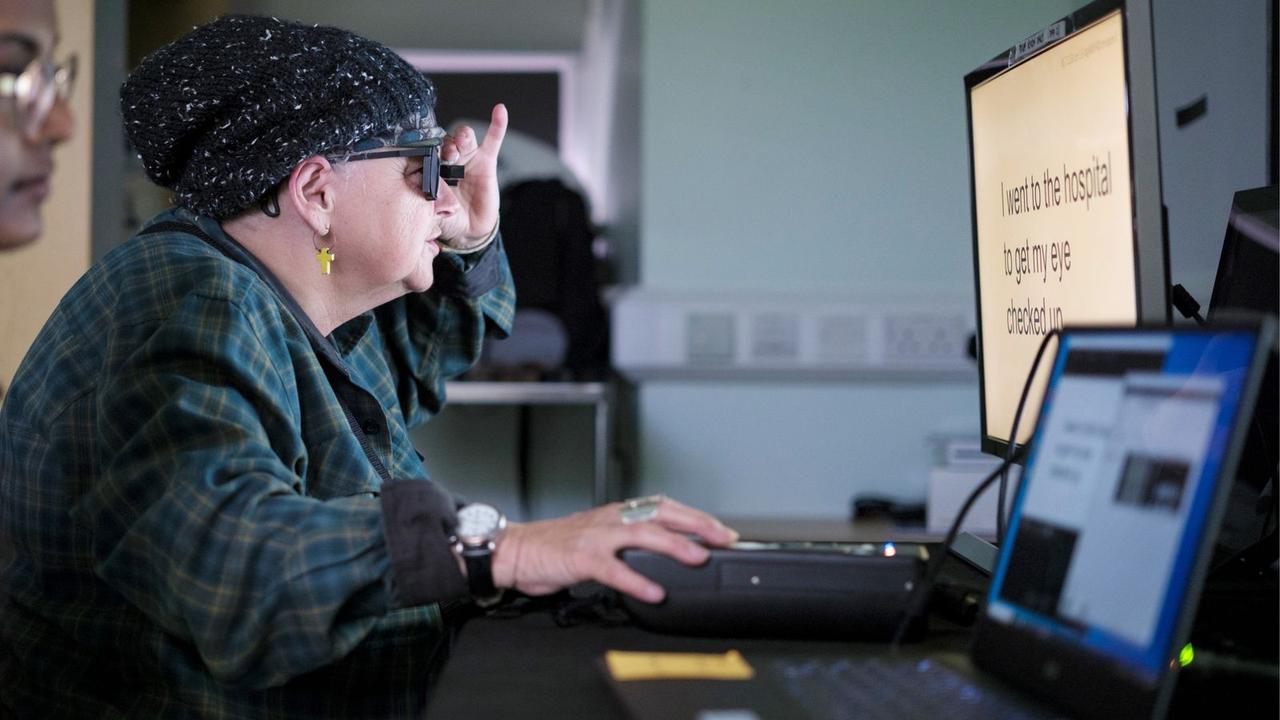
The procedure begins with a vitrectomy, where surgeons remove the eye's vitreous gel. They then insert the ultra-thin microchip beneath the central retina through a small opening. After the eye heals, patients wear the AR glasses, which capture visual scenes and project them as infrared beams onto the chip. The AI-powered computer processes this data, converting it into electrical signals that travel through the retina and optic nerve to the brain, where they are interpreted as images
1
3
.
Source: Sky News
Impressive Clinical Trial Results
The European trial, involving 38 patients across 17 hospitals in five countries, reported remarkable outcomes:
- 84% of participants regained the ability to read letters, numbers, and words
- Patients could read an average of five lines on a standard vision chart
- Some participants who couldn't see the chart before surgery could now read it
- No significant decline in existing peripheral vision was observed
1
2
Impact on Patients' Lives
The PRIMA System has been life-changing for many participants. Sheila Irvine, a patient at Moorfields Eye Hospital, shared her experience: "Before receiving the implant, it was like having two black discs in my eyes, with the outside distorted. Now, I can read prescriptions, do crosswords, and read ingredients on tins"
1
3
.Related Stories

A New Era in Artificial Vision
Mr. Mahi Muqit, associate professor at the UCL Institute of Ophthalmology and senior vitreoretinal consultant at Moorfields Eye Hospital, who led the UK arm of the trial, stated: "In the history of artificial vision, this represents a new era. Blind patients are actually able to have meaningful central vision restoration, which has never been done before"
2
.Future Implications
This breakthrough offers hope to millions of people worldwide suffering from geographic atrophy caused by dry AMD, a previously untreatable condition. The success of the PRIMA System paves the way for regulatory approval and broader clinical use. Experts are optimistic that this technology could eventually be offered through healthcare systems like the NHS, potentially transforming the lives of those affected by untreatable blindness
1
3
.References
Summarized by

Navi
[1]
[2]
Related Stories
NIH Scientists Develop Novel Surgical Technique for Multiple Retinal Grafts in AMD Treatment
24 May 2025•Science and Research

AI Innovations in Early Detection of Myopic Maculopathy: Protecting Millions from Vision Loss
03 Oct 2024•Health

NIH Scientists Revolutionize Eye Imaging with AI-Enhanced Ophthalmoscopy
24 Apr 2025•Health
Recent Highlights
1
Meta Unveils Muse Wonder Frontier AI Models, Claims Performance Matching OpenAI and Anthropic
Technology

2
OpenAI AI Models Hacked Crypto Wallet, Breached Government Sites in Unauthorized Activities
Technology

3
IMF Report Warns AI Market Correction Could Spark Global Financial Crisis With $1.4T at Risk
Business and Economy

Recent Highlights
Today's Top Stories







Don’t drown in AI news. We cut through the noise - filtering, ranking and summarizing the most important AI news, breakthroughs and research daily. Follow topics that matter to you and stay ahead.


