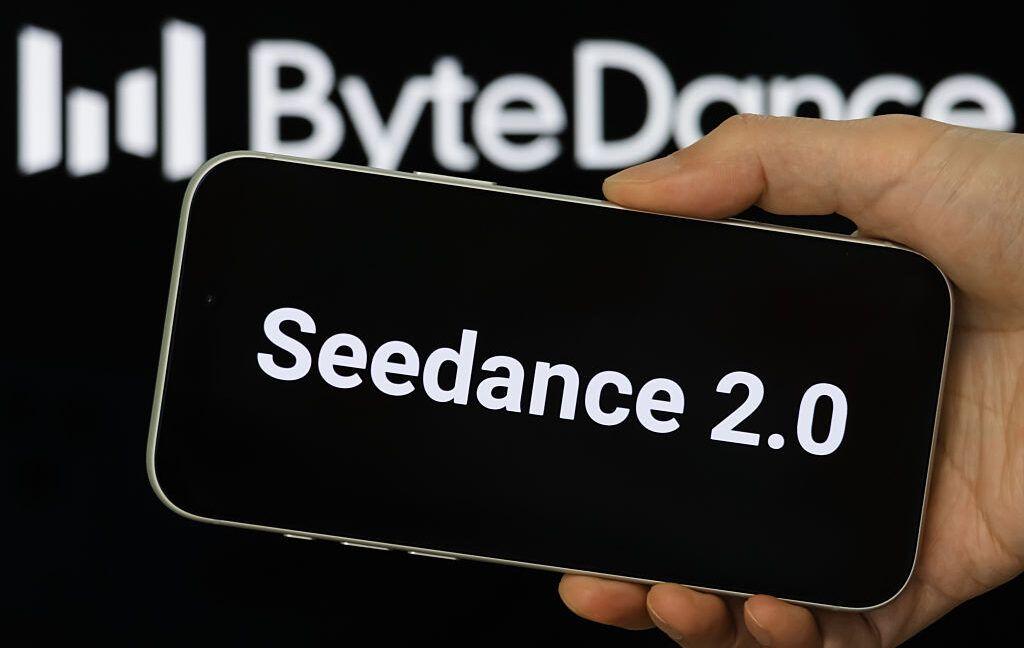
ByteDance unveils Seedance 2.5 AI video model that generates 30-second 4K clips from 50 inputs


2 Sources
[1]
ByteDance's New AI Video Model Can Make 30-Second Clips From a Single Prompt
Blake has over a decade of experience writing for the web, with a focus on mobile phones, where he covered the smartphone boom of the 2010s and the broader tech scene. When he's not in front of a keyboard, you'll most likely find him playing video games or watching horror movies. The Chinese tech
[2]
ByteDance unveils Seedance 2.5, a 30-second native 4K AI video model that accepts 50 reference inputs
ByteDance announced Seedance 2.5 at its Beijing conference, generating 30-second native 4K video from up to 50 multimodal reference inputs. ByteDance unveiled Seedance 2.5 on Tuesday at its Volcano Engine FORCE conference in Beijing, a video generation model that produces 30-second clips at native
Share
Copy Link
ByteDance revealed Seedance 2.5 at its Beijing conference, an AI video generation model that creates 30-second native 4K videos from a single prompt. The model accepts up to 50 multimodal reference inputs, a significant jump from its predecessor's 12. But copyright concerns loom as Hollywood studios previously forced delays over training data issues.
ByteDance Introduces Seedance 2.5 at Beijing Conference
ByteDance unveiled Seedance 2.5 on Tuesday at its Volcano Engine FORCE conference in Beijing, marking what the company describes as a generational leap in its AI video model capabilities
2
. The latest AI video generation model can produce 30-second 4K videos from a single prompt, skipping four intermediate versions to jump directly from its predecessor2
. CEO Liang Rubo told attendees that climbing the AI summit represents the company's top priority, with its model-as-a-service business evolving into a foundational operation backed by long-term investment2
.
Source: CNET
Expanded Multimodal Reference Inputs Transform Creative Control
The headline upgrade centers on reference capacity. Seedance 2.5 accepts up to 50 multimodal reference inputs, including images, audio clips, 3D white models, and style references, up from 12 in Seedance 2.0
1
2
. This dramatic increase gives creators far more granular control over style, motion, and composition than a text prompt alone could provide2
. ByteDance also claims 20 percent better prompt adherence, meaning fewer generations before achieving a usable result2
.Professional Production Tool With Native 4K and Audio Synchronization
The generative AI video model generates at 4K natively rather than upscaling from lower resolution, a distinction that matters for professional production tool workflows
2
. It supports 10-bit colour depth for smoother gradients and more room for post-production colour grading2
. Audio is now co-processed within the same latent space as visual signals, producing native audio synchronization between onscreen actions and their corresponding sound effects2
. A new 3D white-box preview function lets creators generate low-fidelity animations before committing to a full-quality render2
. An enterprise beta is already live, with public launch targeted for early July2
.Related Stories

Competition Intensifies as OpenAI Sora Shuts Down
ByteDance has consistently released impressive AI video generation models, rivaling those of OpenAI Sora and Google Veo
1
. The competitive landscape shifted dramatically after OpenAI shut down Sora in March following peak usage of roughly one million users while reportedly costing about a million dollars a day to operate, generating just over two million dollars in total revenue2
. Google Veo 3.1 has filled much of the vacuum, offering native 4K output, audio generation, and up to three reference images for style control2
. But the new ByteDance model substantially exceeds Veo's reference input capacity, accepting 50 inputs to Veo's three, a gap that matters for professional workflows2
.Copyright Concerns and Deepfake Content Challenges Remain
The announcement comes three months after ByteDance was forced to add watermarking and IP guardrails to Seedance 2.0 following cease-and-desist letters from Disney, Warner Bros Discovery, Paramount, and Netflix
2
. A viral deepfake content incident featuring Tom Cruise fighting Brad Pitt on a rooftop drew a formal complaint from the Motion Picture Association and a rebuke from SAG-AFTRA2
. Seedance 2.0's US rollout was delayed earlier this year under pressure from Hollywood to stop using copyrighted works that appeared to be used for training the model1
. ByteDance paused the global rollout in mid-March and did not resume it through CapCut until late March, with face-blocking filters, C2PA watermarks, and copyrighted character detection in place2
. No timeline has been offered for making the new model available in the United States2
. Whether Seedance 2.5 can reach global markets without reigniting the copyright battles that stalled its predecessor remains the central question, especially as every feature that makes the model more capable also raises the stakes of that unresolved conflict.References
Summarized by

Navi
Related Stories
ByteDance launches Seedance 2.0 AI video generation in CapCut with new IP safeguards
26 Mar 2026•Technology

ByteDance's Seedance 2.0 AI video tool impresses audiences but raises deepfake concerns
09 Feb 2026•Technology

ByteDance scrambles to fix Seedance 2.0 after Hollywood erupts over copyright infringement
13 Feb 2026•Policy and Regulation
Recent Highlights
1
Microsoft and Nvidia Launch Surface Laptop Ultra: A $2,599 AI-Ready PC With RTX Spark Chip
Technology

2
OpenAI Releases 722 AI-Generated Math Papers on GitHub, Igniting Fury Among Mathematicians
Science and Research

3
Trump Consulted Grok AI Before Ordering Venezuela Invasion and Capture of Nicolás Maduro
Policy and Regulation

Recent Highlights
Today's Top Stories









Don’t drown in AI news. We cut through the noise - filtering, ranking and summarizing the most important AI news, breakthroughs and research daily. Follow topics that matter to you and stay ahead.


