OpenAI Unveils $300-$400 AI Smart Speaker Designed by Jony Ive, Set for 2027 Launch


28 Sources
[1]
OpenAI's expensive smart speaker will use moving parts to seem "more alive
OpenAI's upcoming smart speaker will probably cost over $300, "people familiar with the matter" have told Bloomberg's Mark Gurman. The generative AI company has "discussed" charging up to $400, Bloomberg, which has been reporting on the yet-to-be-announced smart speaker since July, said today. The
[2]
OpenAI's new AI smart speaker will reportedly sell for between $300 and $400
More details continue to trickle out about OpenAI's mysterious new hardware device -- described previously as an AI-fueled smart speaker that will be the "physical manifestation" of ChatGPT. Bloomberg now reports that the device will be "donut-shaped," designed thusly to allow users to carry it
[3]
OpenAI's new AI smart speaker will reportedly sell for between $300-$400
More details continue to trickle out about OpenAI's mysterious new hardware device -- described previously as an AI-fueled smart speaker that will be the "physical manifestation" of ChatGPT. Bloomberg now reports that the device will be "donut-shaped," designed thusly to allow users to carry it
[4]
Details Leak on OpenAI's Doughnut-Shaped Speaker - CNET
OpenAI plans to release an AI smart speaker in 2027, according to a Bloomberg report on Thursday. It'll reportedly be palm-size and doughnut-shaped and have a wireless design that will let people carry it around. The report, which cited unnamed people familiar with the project, also indicates that
[5]
Jony Ive's first OpenAI gadget is reportedly a hockey puck-sized smart speaker
The AI device OpenAI is developing with former Apple designer Jony Ive is "essentially a smart speaker without a display" that's battery-powered, doughnut-shaped and roughly the size of a hockey puck, according to Bloomberg reporter Mark Gurman. The device, expected to launch in 2027 for a price
[6]

OpenAI's Rumored AI Smart Speaker Could Cost Up to $400
We now have more details about the AI hardware OpenAI is building in collaboration with former Apple design head Jony Ive. Bloomberg's Mark Gurman reports that the device will be a screenless, doughnut-shaped speaker that will function like ChatGPT's voice mode and cost as much as a midrange
[7]

OpenAI's ring-shaped smart speaker will reportedly cost between $300 and $400 - Engadget
It would be an ambitiously high price for the AI-powered hardware pivot. We typically expect Mark Gurman at Bloomberg to have the latest tips on Apple tech, but today he's sharing info about OpenAI's planned move into hardware. After reporting a wave of details last month about the smart speaker
[8]

OpenAI's mysterious ChatGPT device is a $300+ doughnut-shaped smart speaker with moving parts
Serving tech enthusiasts for over 25 years. TechSpot means tech analysis and advice you can trust. Why it matters: The mysterious AI device being created by OpenAI and former Apple designer Jony Ive's LoveFrom studio has been revealed - and it sounds a bit weird. According to a new report, it
[9]

OpenAI's first device is a $300 doughnut-shaped speaker
OpenAI's first gadget finally has a shape, a price and a release window. It is a doughnut-shaped speaker the size of a hockey puck, and it doubles as the company's answer to Apple. The details come from Bloomberg's Mark Gurman, who reported on Wednesday. OpenAI's first device is a smart speaker
[10]

OpenAI's Rumored Smart Speaker Sounds More Like a... Squirming AI Robot?
OpenAI's big hardware venture alongside legendary ex-Apple designer Jony Ive is reportedly shaping up to be a smart home speaker powered by AI. But unlike your average agentic chatbot-enabled Amazon Echo Dot or Google Home Speaker, OpenAI's puck is built for squirming. The latest report from
[11]

OpenAI's first AI smart speaker reportedly won't just talk, it'll move too
OpenAI reportedly plans to launch the AI-first device in 2027 as the first product in a broader lineup of AI-powered hardware. We first heard last month that OpenAI's debut hardware product could be a screenless smart speaker. Now, a new report from Bloomberg adds several fresh details about what
[12]

OpenAI's ChatGPT Speaker Will Be Hockey Puck-Sized and Cost Over $300
OpenAI's upcoming AI device is a hockey-puck-sized, doughnut-shaped smart speaker with no display, reports Bloomberg. The product is meant to be easy to carry around with one hand, and it will have "moving parts that help give it personality," along with a price tag around $300 to $400. Bloomberg
[13]

I asked Gemini and ChatGPT to build OpenAI's mythical AI hardware -- the results are shockingly good but still don't make me want this $300-plus device
It's a smart donut. That's the only conclusion I can draw about OpenAI's first, groundbreaking piece of AI hardware after reading Bloomberg's revealing but unconfirmed report. Here's the TLDR summary of these rumors: This donut-shaped, hockey puck-sized AI companion, designed with Jony Ive's
[14]

OpenAI's AI smart speaker will reportedly be shaped 'like a doughnut'
OpenAI's screenless smart speaker will reportedly be shaped "like a doughnut" and carry a price tag in the ballpark of $300. Bloomberg revealed new details about OpenAI's upcoming hardware device on Tuesday, citing sources familiar with the matter. According to Bloomberg's report, OpenAI's
[15]

OpenAI's first gadget sounds like a tiny robot for your home
For months, reports have suggested that OpenAI's first hardware product would be a screen-free smart speaker designed to act more like an AI companion. We already knew it could understand its surroundings, be carried around the home, and proactively help users. A new Bloomberg report now gives us a
[16]

OpenAI's First Device Is a $300-Plus Doughnut-Shaped Speaker: Report
Apple sued OpenAI in July over the alleged misappropriation of hardware trade secrets, and OpenAI moved to dismiss on Wednesday. OpenAI's first consumer device will be a screenless smart speaker shaped like a doughnut and roughly the size of a hockey puck, Bloomberg reported on Thursday, citing
[17]

OpenAI's vision of the future is reportedly a donut-shaped smart speaker
We've got a new vision for the next great piece of AI hardware -- and it (allegedly) is going to look a lot like a donut. New details about OpenAI's first piece of hardware, designed by JonyIve's LoveFrom studio, are emerging. According to Bloomberg, the device will be smart speaker with no
[18]

Report: OpenAI's upcoming AI speaker will be shaped like a donut and cost around $300
More details have emerged from Bloomberg about OpenAI Group PBC's long-awaited hardware device, which was previously described as an artificial intelligence-enabled speaker that will be a "physical manifestation" of ChatGPT. In its latest report, Bloomberg described the upcoming device as having a
[19]

OpenAI's next hardware is a doughnut-shaped smart speaker with moving parts that wants to be your new phone
OpenAI's first consumer hardware turned out to be a $230 programmable keypad called the Codex Micro, a niche product built specifically for developers using its Codex coding agent. If that felt like an unexpected first move into hardware, the company's next reported device is a much bigger
[20]

OpenAI's First AI Hardware Could Be a Doughnut-Shaped Smart Speaker: Report
It may get moving parts for more lifelike interactions, Gurman says OpenAI's long-rumoured AI hardware is finally expected to be on the horizon. While the rumour mill has hinted towards a launch in 2027, a new report has revealed fresh details about what is likely to be the first consumer device
[21]

OpenAI's new device will be hockey puck-sized and cost over $300
The product -- essentially a smart speaker without a display -- will be shaped like a doughnut that's roughly the size of a hockey puck, said the people, who asked not to be identified because the work is confidential. The idea is to make the device easy to carry around the home with one hand. A
[22]
ChatGPT owner OpenAI is launching a doughnut-shaped speaker, similar to Amazon's Alexa and Google's Nest, that will work on your command: What is it?
OpenAI plans a unique doughnut-shaped smart speaker for a 2027 release. This AI-first device will feature moving parts and advanced humanlike interactivity. It aims to offer a premium look and feel, costing over $300. The company is collaborating with Jony Ive's LoveFrom studio on the design.
[23]

OpenAI Aims to Redefine Smart Speakers With First AI Device | PYMNTS.com
The design of this artificial intelligence-first computer is meant to make it easy to carry around in the home, to have a personality as it interacts with the user, and to set it apart from the smart speakers currently offered by Apple and Google, according to the report. The device will be
[24]

OpenAI's new AI device said to be a doughnut-shaped smart speaker with moving parts
OpenAI is developing a new AI-focused device that will reportedly be roughly the size of a hockey puck and shaped like a doughnut. According to Bloomberg's Mark Gurman, the device will function as a smart speaker without a display and is being developed as an AI-first computer. The device is
[25]

OpenAI set to get into the smart home sector with $300 doughnut-shaped puck
OpenAI's highly-anticipated new smart home device is reportedly a small, $300 doughnut-shaped speaker with cameras, movable parts and advanced technological capabilities. The Silicon Valley tech firm's new product-in-development is essentially a smart speaker without a display, designed to be the
[26]

OpenAI and Jony Ive Developing Screen-Free AI Smart Speaker
OpenAI is reportedly preparing to make its consumer hardware debut with an AI-powered smart speaker, marking a significant expansion beyond software and generative AI services. Bloomberg reported that the firm is working on an all-new device without a display, meant to serve as an AI companion
[27]
OpenAI's First AI Device Could Skip the Screen Entirely
OpenAI's first AI device could arrive without a traditional screen. Reports suggest it will focus on voice, smart AI features, and a new way of using technology. OpenAI is supposedly developing its first AI device, and it could look nothing like any phone or tablet on the market today. There have
[28]

OpenAI and Jony Ive's rumoured AI speaker may feature moving parts and doughnut shape: How much it might cost
HIGHLIGHTS OpenAI's rumoured smart speaker may be doughnut-shaped. The device is said to be about the size of a hockey puck. It may cost between $300 and $400. OpenAI is reportedly working on its first AI device, which is expected to be a smart speaker. Expected to launch in 2027, the device
Share
Copy Link
OpenAI is developing a premium AI smart speaker priced between $300-$400, designed in partnership with Jony Ive's LoveFrom studio. The doughnut-shaped, battery-powered device features moving parts and advanced ChatGPT capabilities, positioning itself as a potential smartphone replacement despite facing Apple's trade secret theft lawsuit.
OpenAI Enters Hardware Market with Premium Smart Speaker
OpenAI is preparing to launch an AI smart speaker that could cost between $300-$400, marking the company's ambitious entry into the hardware market
1
2
. The premium smart speaker, developed in partnership with Jony Ive's LoveFrom design studio, represents a significant bet on dedicated AI-powered gadgets at a time when OpenAI is losing billions of dollars annually and seeking additional revenue diversification1
.
Source: PYMNTS
The device is expected to be revealed this year with a 2027 launch, assuming legal challenges don't disrupt those plans
1
. OpenAI views this AI smart speaker as a potential smartphone replacement, positioning it as more than just another voice assistant1
.Distinctive Design Features Set Device Apart
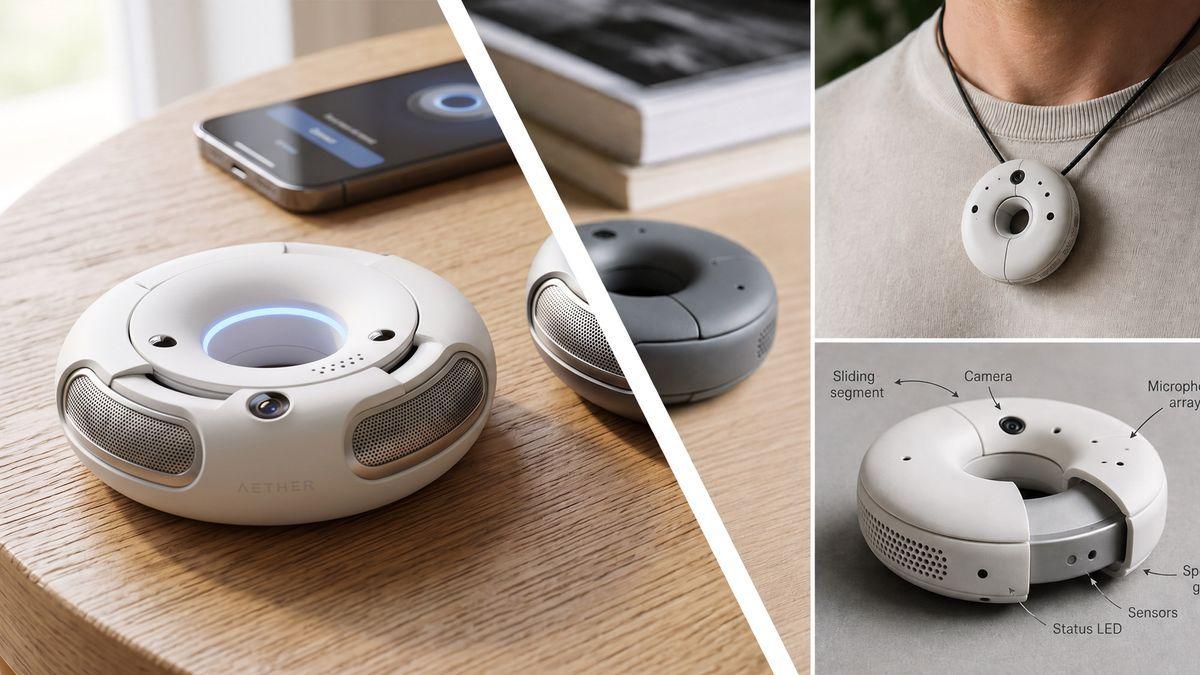
The doughnut-shaped smart speaker will be roughly the size of a hockey puck, designed to be portable and easy to carry around the home with one hand
4
5
. What distinguishes this hockey puck-sized smart speaker from competitors is its innovative use of moving parts that will operate independently when responding to user prompts, creating a more dynamic user experience1
.The device will feature indicator lights to signal when it's listening, while the moving parts aim to make it seem "more alive than today's stationary speaker products," according to sources familiar with the matter
1
. Constructed from high-quality metal and other premium materials, the speaker will have a camera system and sensors to collect and process environmental information2
4
.
Source: TechRadar
The battery-powered design allows users to place it in different locations throughout their home, from bedside tables to kitchen counters
2
5
.Advanced ChatGPT Voice Mode Powers Interactions
The speaker will operate similarly to the ChatGPT voice mode available on mobile apps but with more advanced models designed for humanlike interactivity
1
5
. Unlike traditional smart speakers that handle simple tasks like checking weather, this device pushes an AI-first focus aimed at helping people complete more complex tasks1
.
Source: Gadgets 360
The device will learn about users and communicate with them in tailored ways over time, offering personalized interactions that evolve with continued use
4
. It will also control smart home devices, integrating ChatGPT capabilities into users' daily routines1
.Pricing Strategy Challenges Market Norms
At $300-$400, OpenAI's device would be significantly more expensive than most smart speakers currently available. For comparison, Amazon's smart home speakers range from $40 on the low end to $240 on the high end, with the most expensive options like the 15.6-inch $300 Echo Show 15 including displays or the $220 Echo Studio featuring virtual surround sound
1
2
.The main appeal of the OpenAI speaker centers on ChatGPT capabilities rather than advanced hardware features like displays or premium audio
1
. This presents a challenge: OpenAI is betting on consumers' willingness to pay substantial money for dedicated hardware to access chatbot features, many of which already require subscription fees on top of the device cost1
.Fitting advanced technology into a hockey puck-sized form factor poses significant engineering challenges, particularly regarding sound quality, battery life, and response speed
4
.Related Stories

Legal Complications Cloud Launch Timeline
Apple is currently suing OpenAI, accusing the company of trade secret theft related to its hardware development, specifically alleging that OpenAI stole confidential product design and development information and asked manufacturers to copy Apple's metal finishing
1
4
. OpenAI launched an internal probe following Apple's lawsuit and determined that the speaker doesn't use Apple intellectual property1
.The irony isn't lost that the device designed by former Apple designer Jony Ive through his LoveFrom design studio has become the center of legal dispute with Apple
2
4
. Sources indicate the device will look and feel nothing like an Apple product despite Ive's involvement5
.Market Challenges and Future Implications
OpenAI's entry into the hardware market comes at a time when the smart speaker industry has faced severe profitability obstacles
1
. The company must contend with privacy concerns that have intensified as AI-powered devices become more commonplace in homes4
.Competitors like Amazon Echo with Alexa Plus and Google Home with Gemini already offer AI features that can adapt to user habits, order food, and answer questions about security camera footage
4
. Whether OpenAI's speaker will match or exceed these capabilities remains unclear.This device could be the first in a family of devices OpenAI has planned, suggesting broader ambitions in the hardware market beyond this initial speaker
5
. The speaker would join OpenAI's only other gadget so far, the $230 Codex Micro mini keyboard1
.Watch for how OpenAI navigates the Apple lawsuit, whether the final pricing lands closer to $300 or $400, and if the company can justify premium pricing without advanced hardware like displays that consumers expect at this price point. The success of this device will test whether users value dedicated AI hardware enough to pay significantly more than existing alternatives, potentially reshaping expectations for AI-powered gadgets in the home.
References
Summarized by

Navi
Related Stories
OpenAI confirms family of devices coming soon as it pushes into voice-first hardware
29 Jul 2026•Technology

OpenAI's first Jony Ive device is a $200-$300 smart speaker with a camera, launching in 2027
20 Feb 2026•Technology

OpenAI's first hardware device is a screenless AI smart speaker launching in 2027
15 Jul 2026•Technology

Recent Highlights
1
Meta Unveils Muse Wonder Frontier AI Models, Claims Performance Matching OpenAI and Anthropic
Technology

2
IMF Report Warns AI Market Correction Could Spark Global Financial Crisis With $1.4T at Risk
Business and Economy

3
OpenAI Releases 722 AI-Generated Math Solutions, Triggering Existential Crisis in Mathematics
Technology

Recent Highlights
Today's Top Stories






Don’t drown in AI news. We cut through the noise - filtering, ranking and summarizing the most important AI news, breakthroughs and research daily. Follow topics that matter to you and stay ahead.


