Cal AI Founder Zach Yadegari Raises $10 Million for Persona, a Wearable AI Assistant Startup


2 Sources
[1]
Cal AI's 19-year-old founder just raised $10M for his new AI startup
Zach Yadegari, the teen co-founder of calorie tracking app Cal AI, has launched Persona, a new AI agent startup, and already raised $10 million. Vine Ventures led the round, with Z Fellows founder Cory Levy and Collective Global participating. In March, MyFitnessPal acquired Cal AI for an
[2]
This 19-Year-Old Founder Just Raised $10 Million to Build an AI Assistant You Can Wear
Zach Yadegari became a millionaire at 18 after selling his company, Cal AI, an AI calorie tracking tool that generated $40 million in revenue within a 12-month period. Now 19, the Miami-based entrepreneur is back with a new venture called Persona, an AI assistant and wristband that can complete
Share
Copy Link
Zach Yadegari, the 19-year-old founder behind Cal AI, has launched Persona, an AI assistant startup with a $179 wearable band. The AI startup raised $10 million led by Vine Ventures, with backing from Cory Levy, Collective Global, WHOOP, and Eight Sleep. The screenless hands-free AI assistant aims to handle multi-step tasks while prioritizing user privacy through encryption.
Teen Entrepreneur Launches New AI Startup After Cal AI Success
Zach Yadegari, the 19-year-old entrepreneur who co-founded calorie tracking app Cal AI, has launched Persona, an AI assistant startup that just raised $10 million in funding.
1
Vine Ventures led the investment round, with participation from Cory Levy of Z Fellows, Collective Global, WHOOP, and Eight Sleep.1
2
The fresh capital will cover AI computing costs, team expansion, and manufacturing ahead of planned wristband deliveries later this year.2
Yadegari's previous venture, Cal AI, generated over $30 million in annual revenue in under two years before MyFitnessPal acquired it in March 2026 for an undisclosed sum.
1
The deal was significant enough to convince Yadegari and his co-founders to sell after Cal AI had zoomed ahead of the older calorie app in app store rankings. One source reported Cal AI generated $40 million in revenue within a 12-month period, making Yadegari a millionaire at 18.2
After briefly working for MyFitnessPal following the acquisition, Yadegari left in June to pursue his next idea.1

Source: TechCrunch
Persona Combines AI Personal Assistant with Wearable Technology
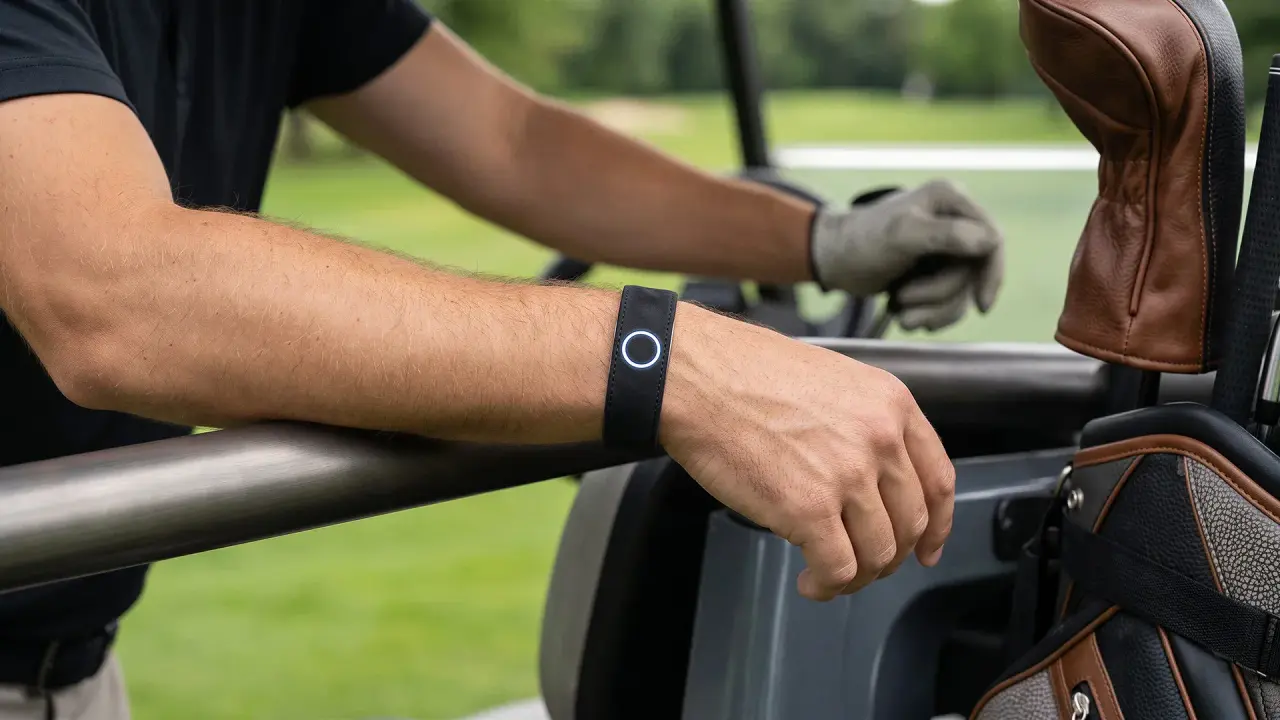
Persona is an AI personal assistant similar to Instinct or Meta's Muse, but it includes a hardware component: a $179 wearable band expected to launch in December.
1
The AI-powered wearable wristband positions Persona as a screenless hands-free AI assistant designed to make computing seamless with human life.2
Wearers will be able to speak to the AI agent and ask it to book flights, schedule meetings, and handle requests involving multiple steps.2
The wearable band differs from Amazon's Bee device, which the tech giant acquired in 2025, in several key ways. Unlike ambient AI devices that constantly listen and record, Persona's band activates only when users press a button or flick their wrist.
1
The device can also pick up whispers and talk back to users.2
For founders and executives, Persona is designed to serve as a personal chief of staff, secretary, and executive assistant capable of sending invoices, drafting emails, and moving meetings.2
Source: Inc.
Privacy-Focused Design with User Data Encryption
Yadegari emphasizes that Persona is built with user privacy as a priority. The AI assistant doesn't run its model or store user data on the device itself. Instead, the model operates in Persona's cloud, where user data is sent with user data encryption both in transit and at rest.
1
Users retain control over their information and can delete their data at any time. The company promises that user conversations stay private and cannot be sold to advertisers or data brokers.1
The team has implemented safeguards to protect against prompt-injection attacks and phishing attempts, two vulnerabilities that plague AI agents according to labs like OpenAI.
1
Persona's agent cannot access users' credit card details, and all purchases require explicit user approval, with payment processing handled through external providers such as Stripe Link, a secure wallet designed specifically for agent use.1
Related Stories




iMessage Beta and Revenue Model Through Sponsored Results
Persona has launched as a free beta product where users interact with the AI assistant via iMessage text messages, attracting a few thousand beta users.
1
The free AI assistant is accessible at 650-444-3876, where it asks for your name, creates a contact, and offers a setup call.2
The wearable band has already generated five figures in preorder revenue ahead of its December release.1
While user data won't be sold to advertisers, the AI startup's current business model relies on showing advertised products during shopping research. Yadegari explains that the agent will present unbiased recommendations because it won't know which items are sponsored. "The agent knows their preferences" and will show items matching those preferences, including some sponsored results, he says.
1
For example, when researching office chairs, users would see chairs aligned with their needs, with some being paid placements.Vision for a Super App Powered by AI
Like other consumer AI assistants, Persona can order food or rides, take notes, book travel, answer questions and emails, and handle various daily tasks.
1
Yadegari believes these capabilities represent the future of mobile computing. "All of the utility apps that you use on your phone day-to-day, whether those are apps for shopping, whether it's Uber, DoorDash, your email -- these are all collapsing and will collapse into a single super app powered by an AI assistant," Yadegari said.1
The product's appeal spans both simple reminders and complex, multi-step workflows. When asked to plan a trip, Persona is designed to break down objectives and decide which tools to use. "It might start emailing and then hop on a call and then continue on the website," Yadegari explains.
2
Eventually, he envisions making Persona more proactive, capable of offering help and solving problems before users realize they exist, creating a seamless experience that reduces dependence on staring at phone screens.1
Yadegari says the idea emerged from friction in his own life after moving from Long Island, New York to Miami. Administrative tasks like booking doctor's appointments, managing emails, and arranging furniture moves became burdensome chores.
2
He had considered the concept while developing Cal AI but set it aside to focus on that company. After selling Cal AI, he returned to the idea despite hesitation about competing with Big Tech giants like OpenAI and Meta, along with numerous startups crowding the AI agent market.2
Before Cal AI, Yadegari built his first business in ninth grade and sold it for $100,000 when he was 16.1
References
Summarized by

Navi
Related Stories
Recent Highlights
1
Microsoft and Nvidia Launch Surface Laptop Ultra: A $2,599 AI-Ready PC With RTX Spark Chip
Technology

2
Google Unveils Gemini 4 Argon AI Model, Restricts Access to Trusted Cyber Defenders
Technology

3
OpenAI Releases 722 AI-Generated Math Papers on GitHub, Igniting Fury Among Mathematicians
Science and Research

Recent Highlights
Today's Top Stories










Don’t drown in AI news. We cut through the noise - filtering, ranking and summarizing the most important AI news, breakthroughs and research daily. Follow topics that matter to you and stay ahead.


