4 Sources
[1]
Cathay Pacific and Google partner on AI contrail avoidance for ultra-long-haul flights
More than 80 flights flew altitude-adjusted routes, cutting the warming impact of their contrails by an estimated 40%. Europe has been metering the same effect since January 2025. Cathay Pacific has flown more than 80 contrail-avoidance routes in a trial with Google that began in late 2025, adjusting cruise altitude to steer clear of the thin bands of humid air where aircraft exhaust freezes into clouds that trap heat. Google puts the result at roughly a 40% reduction in the warming impact of the contrails those flights would otherwise have made, based on its own satellite analysis. The trial targeted ultra-long-haul services, meaning flights of more than 16 hours, and it is the first time the technique has been tested at that duration. One corridor did most of the work: the Hong Kong to Singapore route, where persistent contrails form often, accounted for more than half the estimated reduction. Predictions reached the flight deck through Cathay's electronic flight folder over in-flight Wi-Fi, which is the unglamorous part that makes the rest of it operational. Why this is worth doing at all comes down to a quirk of the physics. Only a small share of flights make contrails that persist and warm, and the effect is extraordinarily concentrated: research collated by Resources for the Future finds that 2% to 3% of flights produce around 80% of contrail warming. On North Atlantic routes, roughly 38% of flights made warming contrails, 48% made none that persisted, and 14% produced contrails that were cooling on balance. Find the few that matter, move them a few thousand feet, and the rest can be left alone. The obvious objection is fuel, since flying off the optimal altitude burns more of it, and burning more of it emits more carbon dioxide. Google's earlier work with American Airlines has been the main evidence on that question. A 2023 study across 70 flights cut contrails by 54% at a cost of about 2% extra fuel on the rerouted flights, which the researchers argued would fall to as little as 0.3% spread across an airline's whole schedule. A larger transatlantic trial running from January to May 2025 covered 112 flights, reported a 62% reduction against a control group, and found no statistically significant difference in fuel burn. Google's own calculation is that the warming avoided runs to roughly 20 times the warming added by the extra fuel, which puts the cost of abatement at somewhere between $5 and $25 per tonne of CO2 equivalent, cheap by the standards of almost anything else available to an airline. Europe has already decided the effect is real enough to measure. The EU's emissions trading system has required airlines to monitor and report their non-CO2 effects per flight since 1 January 2025, covering persistent contrails alongside nitrogen oxides and soot. The European Commission's own framing is blunt about the scale of it, putting non-CO2 effects at two thirds of aviation's total climate impact, with contrails alone accounting for roughly a third. That obligation is why the European end of this research has moved from voluntary to structural. Operation Blue Skies, announced in August, is a £5m programme running over 30 months across Shanwick oceanic airspace, the eastern half of the North Atlantic corridor and a stretch reckoned to produce about 5% of global contrail warming. The Department for Transport is putting in £2.65m through the Aerospace Technology Institute, Google UK £1.4m in kind, and the consortium takes in the Met Office, NATS, Imperial College London, and the University of Cambridge, with 20 to 40 test days planned per winter season. The forecasting underneath it leans on the same shift that produced machine-learning weather models able to beat conventional numerical forecasts. "Aviation needs solutions to address climate change, and AI is accelerating that progress," said Lawrence Fong, Cathay's director of digital and IT, in a statement alongside Michael Yue, managing director of Google Hong Kong. A second and larger phase will extend across Cathay's Asian and transpacific network. The appeal for airlines is straightforward enough, since altitude changes cost almost nothing next to fleet renewal or sustainable aviation fuel, which remains scarce and expensive. What has not yet been established is whether the satellite measurement is precise enough to survive being turned into a regulated number rather than a research finding, which is the test the EU reporting period will eventually apply.
[2]
Our new contrail avoidance trial in Asia-Pacific
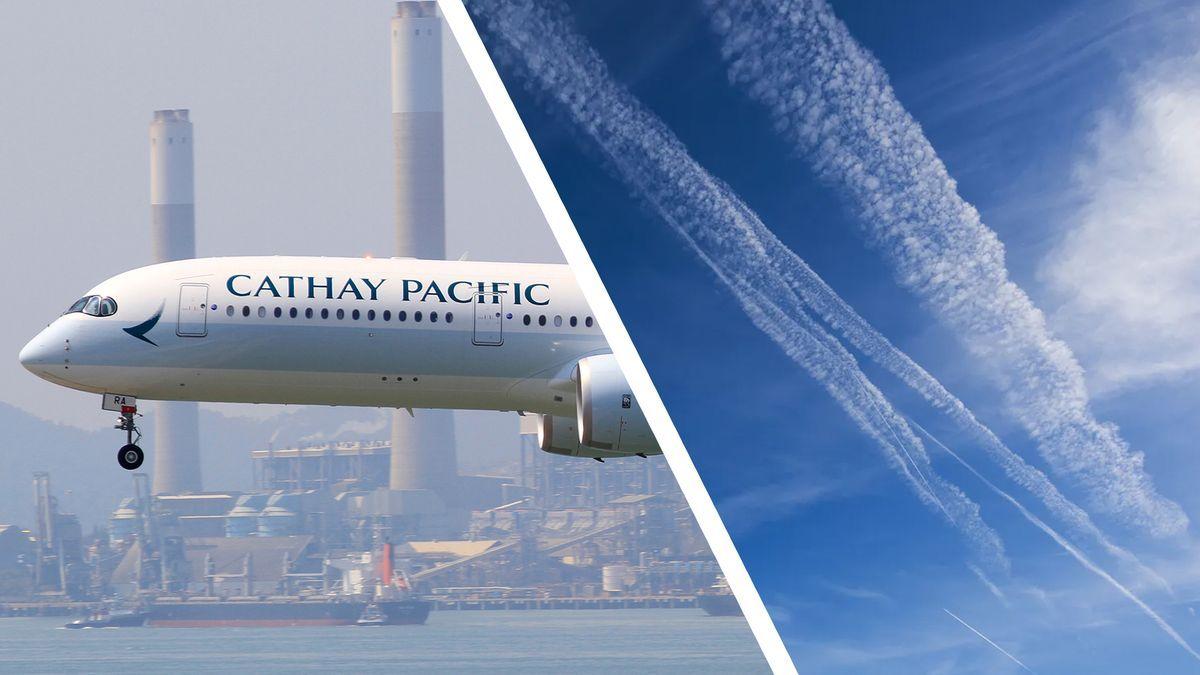
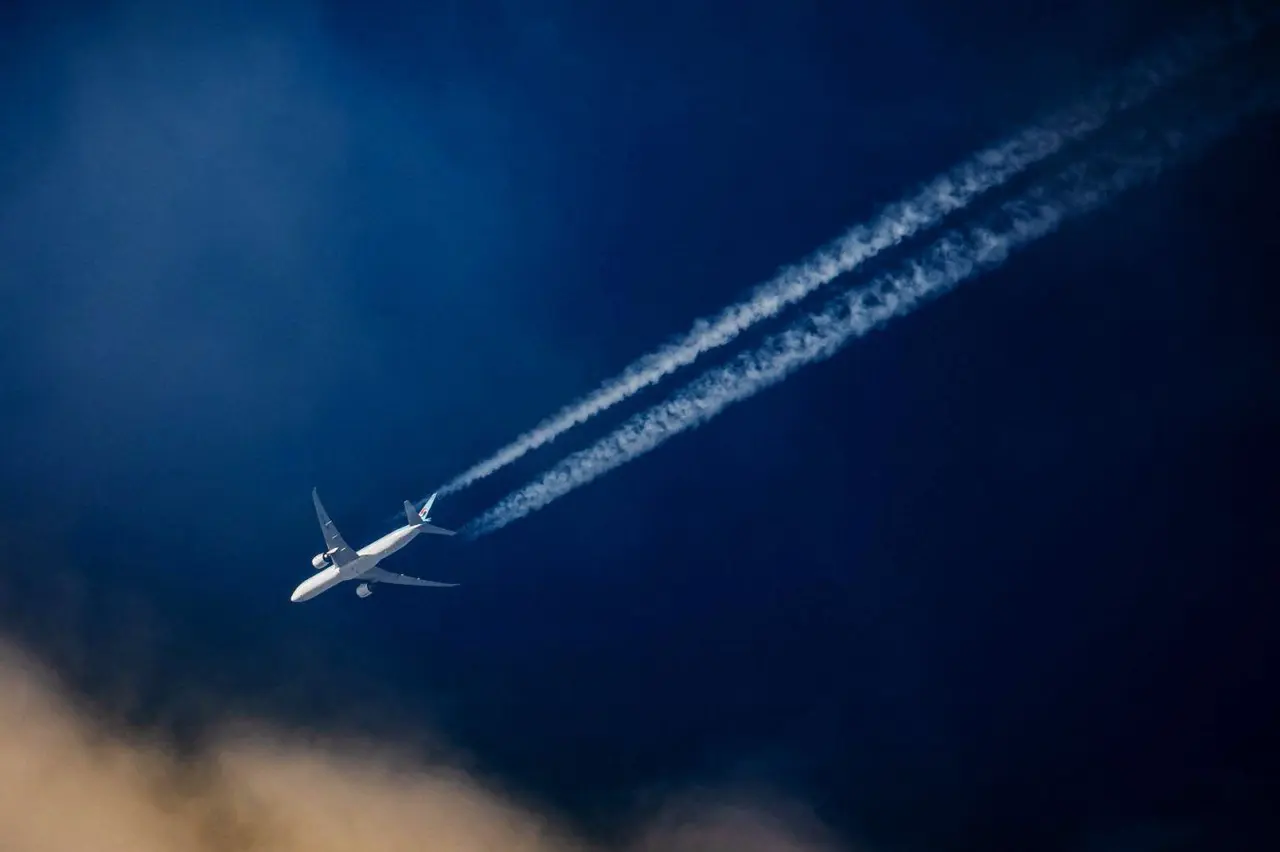
Contrails are the thin, white streaks that form behind airplanes when they fly through cold, humid air. Most dissipate quickly, but some can persist and spread into cloud-like formations that contribute to warming by trapping heat in the atmosphere. Contrails are responsible for roughly one-third of aviation's total climate impact. And over the past few years, our efforts to reduce them have evolved from AI research models to real-world trials in the United States, across the North Atlantic, and now, in the Asia-Pacific region, the world's fastest growing aviation market. We're partnering with Cathay Pacific, our first commercial airline partner in Asia to test contrail avoidance on ultra-long-haul flights . Our early trials ran over 80 flights and have achieved roughly 40% estimated reduction in the warming impact of contrails by following contrail-avoidance routes. We're now expanding the trials to provide insights across Cathay Pacific's Asia extensive global network, helping evaluate the operational feasibility of contrail avoidance while contributing to global contrails research. Putting predictive AI into the cockpit What's exciting about avoiding contrails is that it can be very straightforward in theory. Aircraft adjust their altitude slightly to steer clear of cold, humid atmospheric zones where warming contrails are likely to form, much like pilots do to navigate around turbulence. Pilots and flight teams routinely make these kinds of small, planned adjustments for a variety of operational reasons, always within established safety parameters. These adjustments are not expected to impact passengers or the safety of the flight. Adjusting flight altitudes for contrail avoidance in practice means giving flight teams actionable data long before an aircraft leaves the gate, and then feeds that data to the cockpit. Building on our previous work deploying the contrail solution in live operations, we're partnering with Cathay Pacific to expand its use into the Asia-Pacific region. Our system brings together AI predictions, satellite imagery, and advanced weather intelligence to pinpoint these contrail-forming zones in advance, allowing dispatchers and pilots to plan slight altitude shifts around them. In the air, Cathay Pacific connects these dynamic forecasts directly to the flight deck through in-flight Wi-Fi and its proprietary Electronic Flight Folder (EFF), giving pilots live insights alongside usual operational metrics without interrupting standard cockpit workflows. Moving from proof of concept to scalable trial We started an operational trial with more than 100 flights targeted across Cathay Pacific's network. More than 80 flights followed contrail-avoidance routes, with Google's satellite imagery analysis estimating that these flights reduced the warming impact of contrails by roughly 40%. The Hong Kong-Singapore corridor was among the routes tested, as flights in this airspace frequently encounter conditions conducive to persistent contrail formation. Analysis from the trial indicates that interventions on this single route account for more than 50% of the trial's total emissions reductions. Now, we're scaling the partnership with Cathay Pacific on a larger second phase of trial flights and partnering with Contrails.org, a nonprofit initiative dedicated to advancing the science of contrail mitigation. The trials are helping build a broader understanding of how contrail avoidance could work across different operating environments on Asia and transpacific routes, and contribute to the growing body of global contrails research. Contrail mitigation remains one of the most immediately available, scalable, and cost-effective ways to reduce aviation's climate footprint, and it can get started now, with today's aircrafts and fuel. By advancing open contrails research together, we hope to accelerate progress in contrail science and unlock one of the most promising and cost-effective climate solutions available to aviation today.
[3]
Cathay Pacific and Google partner to test AI-powered contrail avoidance
Cathay Pacific and Google have announced a joint initiative to test artificial intelligence technology designed to reduce aircraft condensation trails, or contrails. The partnership makes the Hong Kong-based carrier Google's first commercial airline partner in the Asia-Pacific region to trial the system, as well as the first globally to evaluate contrail avoidance strategies on ultra-long-haul flight paths. The operational trials evaluate the feasibility, constraints, and atmospheric impact of contrail avoidance across Cathay Pacific's international network, expanding empirical research into geographic zones that have historically seen limited testing. The Climate Impact of Aviation Contrails Contrails form when water vapor and soot from jet engine exhaust encounter specific cold, humid air masses at cruising altitudes. While most dissipate rapidly, some persist and spread into thin, cirrus-like cloud layers. Atmospheric science research suggests that these persistent contrails trap outgoing terrestrial radiation, potentially accounting for roughly one-third of aviation's total global warming footprint. Consequently, non-carbon-dioxide (non-CO₂) warming mechanisms have increasingly become a focus of industry decarbonization strategies alongside fleet renewal, operational efficiencies, and sustainable aviation fuels (SAF). AI Forecasting and Cockpit Implementation Google's contrail mitigation model integrates predictive machine learning algorithms, satellite imagery analysis, and atmospheric weather forecasts to project the locations and altitudes of contrail-prone air layers. Similar to standard maneuvers executed to avoid turbulence, dispatchers and flight crews use these projections to plan minor vertical deviations around affected zones. In Cathay Pacific's operations, the dynamic forecast data is transmitted to cockpits via in-flight connectivity and integrated directly into the airline's proprietary Electronic Flight Folder (EFF). This interface displays contrail-forming regions alongside flight planning parameters, allowing pilots to assess altitude adjustments during active flight planning without disrupting standard cockpit routines. Trial Findings and Geographic Focus Operational trials launched in late 2025 targeted more than 100 flights. According to program data: * Contrail Reduction: More than 80 flights actively followed avoidance routing, resulting in an estimated 40% reduction in the localized warming effect caused by contrails on those routes. * Corridor Sensitivity: The Hong Kong-Singapore route served as a primary testing ground due to frequent atmospheric conditions favorable to contrail persistence. Minor flight level adjustments on this single corridor contributed to more than half of the total climate benefit observed during the initial trial phase. Expansion and Industry Evaluation The operational findings provide empirical benchmarks for routing adjustments, but broader atmospheric questions remain regarding trade-offs, such as any marginal fuel burn incurred during altitude changes versus the net warming impact avoided. To address these parameters, Cathay Pacific and Google -- in collaboration with Contrails.org, an independent nonprofit research initiative -- are launching a broader second phase of operational testing. This next phase will cover wider operational sectors across the airline's Asian and transpacific routes, generating open-source and peer-reviewable datasets to help regulators, carriers, and air traffic authorities evaluate potential airspace policies and operational frameworks. Lawrence Fong, Director Digital and IT, Cathay said: Aviation needs solutions to address climate change, and AI is accelerating that progress. This partnership combines Cathay's operational expertise with Google's world-class AI capabilities to tackle complex sustainability challenges at scale. At Cathay, we believe innovation should deliver tangible and meaningful impact, and this collaboration sets a new benchmark for leadership in our industry. Michael Yue, Managing Director and General Manager, Google Hong Kong said: At Google, we believe AI has the power to help address complex environmental challenges and our partnership with Cathay Pacific is a prime example of this in action -- researching how predictive AI can be deployed in live operations to help address the climate impact of contrails with today's aircrafts and today's fuel. This work reflects our ongoing commitment to developing sustainable solutions that deliver lasting impact, and we're excited to expand our trial with Cathay Pacific and continue contributing to open climate science together.
[4]
Cathay Pacific and Google Partner to Research and Trial AI-Powered Contrail Avoidance
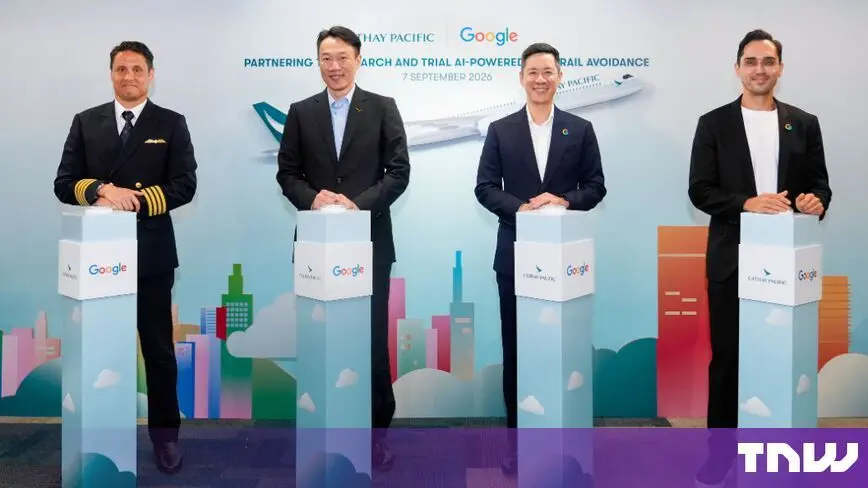
The partnership attempts to understand the operational feasibility and potential climate benefits of contrail avoidance across Cathay Pacific's extensive global network, while contributing real world data to advance global contrail research. Cathay Pacific and Google collaborate to advance research on contrails and contribute to aviation industry's climate impact. (From left to right: Captain Tony Pringle, Cathay Pacific Line Operations Manager, Lawrence Fong, Cathay Director Digital and IT, Michael Yue, ManGaging Director and General Manager, Google Hong Kong and Kemal Armada, Product Manager, Climate & AI, Google) Cathay Pacific and Google today announced a partnership to advance research on contrails and their contribution to aviation's climate impact. Cathay Pacific is Google's first commercial airline partner in Asia-Pacific to trial its AI-powered contrail mitigation technology, and the first airline globally to test contrail avoidance on ultra-long-haul flights. The companies have started trials to evaluate the operational feasibility and constraints of contrail avoidance across Cathay Pacific's extensive global network. The trials will contribute valuable new data to global contrail research and advance understanding of contrail formation and avoidance in the Asia-Pacific region, a geography that has been underrepresented in previous trials. The real-world data gathered through the trial would allow the industry to better understand the climate benefits of contrail avoidance in actual operational environments. The thin white lines that sometimes form behind aircraft in the sky are known as contrails, or condensation trails. They are clouds that form when aircrafts fly through certain cold and humid conditions at high altitude. While many disappear quickly, some persist and spread into broader cloud formations that can trap heat in the atmosphere. Previous research suggests these persistent contrails could account for around one-third of aviation's total climate impact, making them an important area of study alongside carbon dioxide (CO₂) emissions. Cathay recognises aviation's contribution to climate change and is working towards addressing the climate impacts through multiple approaches. Reducing CO₂ emissions remains a primary focus for Cathay through fleet modernisation, operational efficiency improvements and the adoption of sustainable aviation fuel (SAF). At the same time, the airline recognises the importance of growing scientific understanding of non-CO₂ climate effects, including contrails. Through this partnership, Cathay Pacific and Google are supporting contrail research using real-world operational data from flight trials. The insights will help build further understanding of the impact and possible actions airlines can take against individual contrails, while exploring how contrail avoidance could be implemented and managed at scale across the aviation industry. AI in the Cockpit Shows Encouraging Early Results Google's contrail mitigation solution combines AI-based predictive models, satellite imagery detection tools, and extensive weather intelligence to forecast contrail-forming zones. This actionable data allows flight dispatchers and pilots to make informed altitude adjustments navigating around these zones much like they routinely do to avoid turbulence. Onboard, Cathay Pacific leverages its modernised fleet capabilities, combining in-flight Wi-Fi connectivity with its proprietary, in-house developed Electronic Flight Folder (EFF). The EFF system equips pilots with dynamic Google contrail forecasts alongside real-time operational parameters, enabling seamless decision-making in the cockpit without disrupting normal operations. An operational trial began in late 2025, with more than 100 flights targeted across Cathay Pacific's network. Over 80 flights followed contrail-avoidance routes[1], and Google estimates that these flights achieved roughly 40% reduction in the warming impact of contrails. The Hong Kong-Singapore corridor was one of the routes tested, as flights in this airspace frequently encounter conditions where persistent contrails form. Early analysis indicates that minor altitude adjustments can successfully prevent contrails, with actions taken on this single route accounting for more than 50% of the trial's total climate impact. Lawrence Fong, Director Digital and IT, Cathay said: "Aviation needs solutions to address climate change, and AI is accelerating that progress. This partnership combines Cathay's operational expertise with Google's world-class AI capabilities to tackle complex sustainability challenges at scale. At Cathay, we believe innovation should deliver tangible and meaningful impact, and this collaboration sets a new benchmark for leadership in our industry." Michael Yue, Managing Director and General Manager, Google Hong Kong said: "At Google, we believe AI has the power to help address complex environmental challenges and our partnership with Cathay Pacific is a prime example of this in action -- researching how predictive AI can be deployed in live operations to help address the climate impact of contrails with today's aircrafts and today's fuel. This work reflects our ongoing commitment to developing sustainable solutions that deliver lasting impact, and we're excited to expand our trial with Cathay Pacific and continue contributing to open climate science together." Shaping the Future of Aviation The initial trial provided valuable experience for integrating predictive AI data in live flight planning to support contrail avoidance at flights level, while bringing together the operational and technical stakeholders needed to make such trials possible. While the partnership delivered encouraging results on individual flights, further trials and research are needed to assess the benefits of applying contrail avoidance measures across airlines and airspaces. The availability of such robust science evidence will enable further industry considerations and policy development by airlines, regulators, and other industry players. Therefore, the partners are embarking on a larger second phase of flight trials to generate a broader set of real-world operational data and further insights across Cathay Pacific's Asia and transpacific network. Contrails.org, a nonprofit initiative dedicated to advancing the science of contrail mitigation, is also a partner in the project. The ongoing partnership aims to generate a robust operational data set to further scientific understanding of contrail avoidance and help inform future industry best practices.
Share
Copy Link
Cathay Pacific partnered with Google to test AI-powered contrail avoidance on over 80 ultra-long-haul flights across Asia-Pacific. The trial achieved a 40% reduction in contrail warming impact through altitude adjustments. The Hong Kong to Singapore route alone accounted for over half the climate benefit, marking the first contrail avoidance test on flights exceeding 16 hours.
Cathay Pacific has completed a groundbreaking trial with Google testing AI-powered contrail avoidance across more than 80 ultra-long-haul flights in Asia-Pacific, achieving an estimated 40% reduction in contrail warming impact
1
2
. The Hong Kong-based carrier became Google's first commercial airline partner in the region to trial the technology and the first globally to test contrail avoidance on flights exceeding 16 hours3
. The operational trial, which began in late 2025, targeted more than 100 flights across Cathay Pacific's network, with pilots making minor altitude adjustments to steer clear of cold, humid atmospheric zones where contrails form and persist4
.Contrails represent roughly one-third of aviation's total climate impact, a figure that has placed non-CO2 effects at the center of industry decarbonization strategies
1
2
. These thin white streaks form when aircraft exhaust meets specific atmospheric conditions at cruising altitude, with water vapor and soot freezing into cloud-like formations that trap terrestrial heat. Research collated by Resources for the Future reveals that just 2% to 3% of flights produce around 80% of contrail warming, making targeted intervention extraordinarily efficient1
. The European Commission has acknowledged this scale, stating that non-CO2 effects account for two-thirds of aviation's climate impact, with contrails alone responsible for approximately one-third1
. The EU's emissions trading system now requires airlines to monitor and report non-CO2 effects per flight since 1 January 2025, covering persistent contrails alongside nitrogen oxides and soot1
.
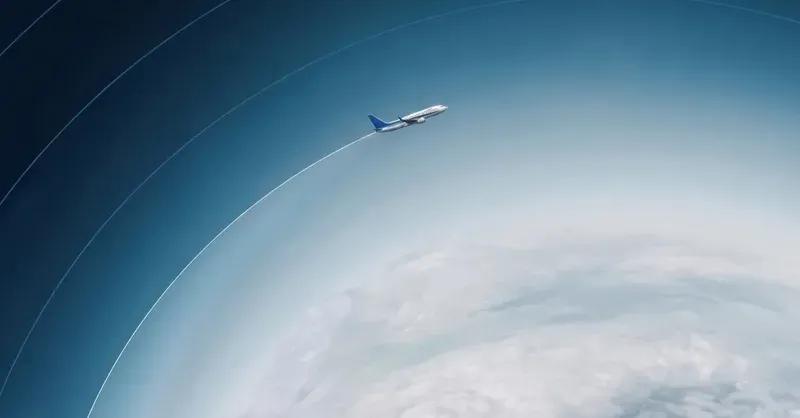
Source: Google
Google's contrail mitigation solution integrates machine-learning weather models, AI-driven satellite analysis, and atmospheric forecasts to pinpoint contrail-forming zones before aircraft leave the gate
2
3
. Cathay Pacific transmits these dynamic forecasts directly to flight decks through in-flight Wi-Fi and its proprietary Electronic Flight Folder, giving pilots live insights alongside standard operational metrics without disrupting cockpit workflows1
4
. Pilots assess altitude adjustments during flight planning, making small vertical deviations around affected zones much like they routinely navigate around turbulence2
. Lawrence Fong, Cathay's Director Digital and IT, stated that "this partnership combines Cathay's operational expertise with Google's world-class AI capabilities to tackle complex sustainability challenges at scale"4
.
Source: The Next Web
The Hong Kong to Singapore corridor emerged as a critical testing ground, with flights in this airspace frequently encountering conditions conducive to persistent contrail formation
1
2
. Minor altitude adjustments on this single route accounted for more than 50% of the trial's total emissions reductions, demonstrating how geographic targeting amplifies impact2
4
. The concentration of climate benefit on specific corridors aligns with broader research showing that warming contrails cluster on particular routes. On North Atlantic routes, roughly 38% of flights made warming contrails, 48% made none that persisted, and 14% produced contrails that were cooling on balance1
. This geographic specificity matters for aviation sustainability because it allows airlines to focus resources where they generate measurable climate returns.Flying off optimal altitude burns additional fuel, raising questions about whether contrail avoidance simply shifts emissions from one form to another
1
. A 2023 study with American Airlines across 70 flights cut contrails by 54% at a cost of about 2% extra fuel on rerouted flights, with researchers projecting this would fall to 0.3% spread across an airline's entire schedule1
. A larger transatlantic trial from January to May 2025 covering 112 flights reported a 62% reduction against a control group and found no statistically significant difference in fuel burn1
. Google calculates that warming avoided runs to roughly 20 times the warming added by extra fuel, placing the cost of abatement between $5 and $25 per tonne of CO2 equivalent, cheap by aviation decarbonization standards1
.Related Stories
Operation Blue Skies, announced in August, represents Europe's shift from voluntary research to regulated monitoring. The £5 million programme runs over 30 months across Shanwick oceanic airspace, the eastern half of the North Atlantic corridor estimated to produce about 5% of global contrail warming
1
. The UK Department for Transport is contributing £2.65 million through the Aerospace Technology Institute, with Google UK providing £1.4 million in kind1
. The consortium includes the Met Office, NATS, Imperial College London, and the University of Cambridge, with 20 to 40 test days planned per winter season1
. What remains unestablished is whether satellite measurement proves precise enough when converted from research finding to regulated number, a test the EU reporting period will eventually apply1
.Cathay Pacific and Google are launching a broader second phase extending across Asian and transpacific routes, partnering with Contrails.org, a nonprofit dedicated to advancing contrail mitigation science
2
3
. The trials will generate open-source datasets and peer-reviewable findings to help regulators, carriers, and air traffic authorities evaluate potential airspace policies and operational frameworks3
. Michael Yue, Managing Director of Google Hong Kong, emphasized that "this work reflects our ongoing commitment to developing climate solutions that deliver lasting impact"3
. The appeal for airlines remains straightforward since altitude changes cost almost nothing compared to fleet renewal or sustainable aviation fuel, which remains scarce and expensive1
. Contrail mitigation stands as one of the most immediately available, scalable, and cost-effective climate solutions that can be implemented now with today's aircraft and fuel2
.Summarized by
Navi
[1]
20 Mar 2026•Technology

18 Aug 2026•Technology

04 Dec 2024•Technology

1
Technology

2
Policy and Regulation

3
Technology