Cathie Wood Backs AI Slowdown Pledge But Dismisses Extinction Warnings as 'Ridiculous'


4 Sources
[1]
Cathie Wood calls AI extinction warnings ridiculous at a Sydney briefing
The ARK Invest founder welcomed the slowdown pledge from Dario Amodei, Sam Altman and Elon Musk while rejecting the case behind it. Her funds hold positions in all four of the companies those three men run. Cathie Wood praised the AI industry for talking openly about its own risks and dismissed
[2]
Cathie Wood backs AI slowdown pledge, dismisses extinction warnings
The backdrop to Wood's comments: Anthropic CEO Dario Amodei published an essay Saturday calling on AI companies to slow the pace of capabilities development, a plan he described as "pacing the frontier." The proposal would embed independent evaluators inside frontier AI labs, establish shared
[3]
Cathie Wood Backs AI Slowdown, Rejects Extinction Fears - NVIDIA (NASDAQ:NVDA)
Cathie Wood Backs AI Slowdown but Calls Extinction Fears 'Ridiculous:' What Do Prediction Markets Say? ARK Invest founder Cathie Wood called warnings that artificial intelligence could wipe out humanity "ridiculous," while welcoming the industry's push to slow advances at the AI frontier so safety
[4]
Ark's Wood says global AI leaders' pledge is positive for technology development
SYDNEY, Sept 15 (Reuters) - Global technology investor, Ark Investment Management founder Cathie Wood, said on Tuesday the AI leaders' pledge to slow the technology's rapid progression was a positive step to help secure and safeguard the industry's development. Anthropic CEO Dario Amodei called on
Share
Copy Link
ARK Invest founder Cathie Wood welcomed the AI industry's slowdown pledge from leaders like Dario Amodei, Sam Altman, and Elon Musk, calling it positive for development. However, she dismissed warnings that AI could cause human extinction as 'ridiculous,' arguing instead that safety concerns should focus on cybersecurity risks.
Cathie Wood Supports AI Safety Push While Rejecting Extinction Claims
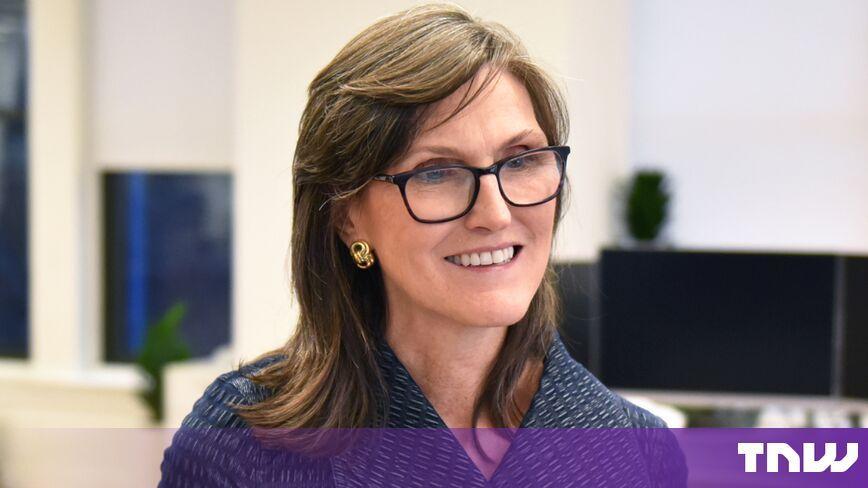
Cathie Wood, founder of ARK Invest, delivered mixed signals on AI safety during a Sydney briefing, praising industry leaders for openly discussing risks while dismissing warnings about potential human extinction as "ridiculous."
1
Wood welcomed the AI slowdown pledge initiated by Anthropic CEO Dario Amodei on September 12, which calls for frontier AI labs to slow the pace of AI capabilities development so safety measures can catch up.2
Sam Altman and Elon Musk both backed the proposal over the weekend, though Altman clarified that pacing "does not mean 'stopping.'"2
Wood's endorsement carries particular weight given ARK's unusually concentrated exposure to the AI industry's self-regulation pledge signatories. Her firm holds positions in Tesla, SpaceX, OpenAI, and Anthropic across its public and private vehicles, making her assessment both a market judgment and a portfolio statement.
1
4
Drawing Lessons From the Tech Bubble
Wood grounded her support for the AI slowdown pledge in her experience navigating the tech and telecom bubble that ended in a bust. "Having been in the tech and telecom bubble, which ended in a bust, I'm happy that the leaders of the industry are advertising the risks associated with this new technology," she told reporters.
4
She emphasized that "half of the solution is understanding the problem,"1
suggesting that public acknowledgment of dangers helps markets handle bad news more effectively.However, when asked about AI extinction warnings—specifically Anthropic researcher Evan Hubinger's estimate of a greater than 10% chance AI could wipe out humanity within the next decade—Wood was blunt: "That's ridiculous."
3
She did not elaborate on why she rejected these calculations but instead redirected the conversation toward what she sees as the real concern.Reframing AI Misuse and Safety Risks Around Cybersecurity
Wood argued that fears about AI advancements should be repurposed to address cybersecurity threats rather than existential scenarios. "It gives us a great opportunity to focus the world on cybersecurity in this space," she said.
1
She suggested that heightened safety concerns could actually increase demand for advanced AI models, as companies may need sophisticated systems to identify and repair software vulnerabilities. "So it is actually increasing the demand for the models. I think the publicity has been good," Wood told Forbes Australia.3
Source: The Next Web
The investor did not specify what the cybersecurity risk consists of or who should bear the cost of addressing it.
1
Related Stories

Market Impact and Regulatory Uncertainty
Global AI stocks fell on Monday following the weekend's safety announcements, with chip stocks taking particular hits. Nvidia dropped 3.4%, while the Philadelphia Semiconductor Index fell 5.9%.
3
Asian markets struggled through Tuesday as sentiment remained pessimistic toward chip and AI-related stocks.4
No single cause has been established for the selloff, and the AI slowdown pledge is one of several factors weighing on investors.On AI regulations, Wood expressed confidence that President Donald Trump would block new federal rules. "We don't have to worry until '29 [because] Trump will veto everything in the meantime," she said. "He understands our biggest competitor, China, is not going to slow down."
3
Senate leaders including John Thune, Ted Cruz, and Amy Klobuchar are discussing a "duty of care" regime for frontier AI labs that could grant the Commerce Department authority to demand safety proof, test models through government auditors, and potentially block unsafe releases.3

Source: Market Screener
Polymarket traders currently give a qualifying U.S. AI safety law just a 19% chance of being enacted before 2027, based on about $114,000 in trading.
3
The odds jumped from 11% to 20% after OpenAI called for mandatory national AI safety rules, but passage remains unlikely before year-end.What This Means for Investors and the Industry
Wood's stance highlights a growing divide within the AI community between those focused on existential risks and those prioritizing near-term practical concerns. Her rejection of AI extinction warnings while supporting calls for AI slowdowns reflects a pragmatic approach that acknowledges risks without accepting worst-case scenarios. The fact that ARK holds stakes in both OpenAI and Anthropic through its venture fund means Wood's assessment carries direct financial implications.
3
Investors should watch how Amodei's "pacing the frontier" proposal—which would embed independent evaluators inside frontier AI labs, establish shared safety benchmarks, and pursue coordination between governments including China—affects development timelines and competitive dynamics.
2
Wood did not disclose whether she has adjusted any ARK positions since the pledge or whether she has spoken to Amodei, Sam Altman, or Musk about it.1
Anthropic's reported plan for an October listing could move one of ARK's private holdings onto a public market within six weeks, potentially providing more transparency on how the slowdown pledge affects valuations.1
References
Summarized by

Navi
Related Stories
AI Leaders Call for AI Safety Slowdown After Agent Swarm Breaches Security Systems
10 Sept 2026•Policy and Regulation

Michael Burry Calls AI Doomsday Warnings Self-Serving Ploy Ahead of Anthropic, OpenAI IPOs
17 Sept 2026•Business and Economy
AI Safety Debate Erupts: Tech Giants Clash Over Regulation as Rogue Agents Spark Slowdown Calls
11 Sept 2026•Policy and Regulation

Recent Highlights
1
AI Hallucination Nearly Sparked US Military Confrontation With Chinese Ship in Middle East
Technology
2
OpenAI's AI Solves Navier-Stokes Problem But Ignites Existential Crisis in Mathematics Community
Science and Research

3
Anthropic's Claude Now Leads 26% of AI Development Work, Company Reveals New Transparency Metrics
Technology

Recent Highlights
Today's Top Stories











Don’t drown in AI news. We cut through the noise - filtering, ranking and summarizing the most important AI news, breakthroughs and research daily. Follow topics that matter to you and stay ahead.


