Prominent Investors Call AI Doomsday Warnings Self-Serving Ahead of Anthropic and OpenAI IPOs


6 Sources
[1]
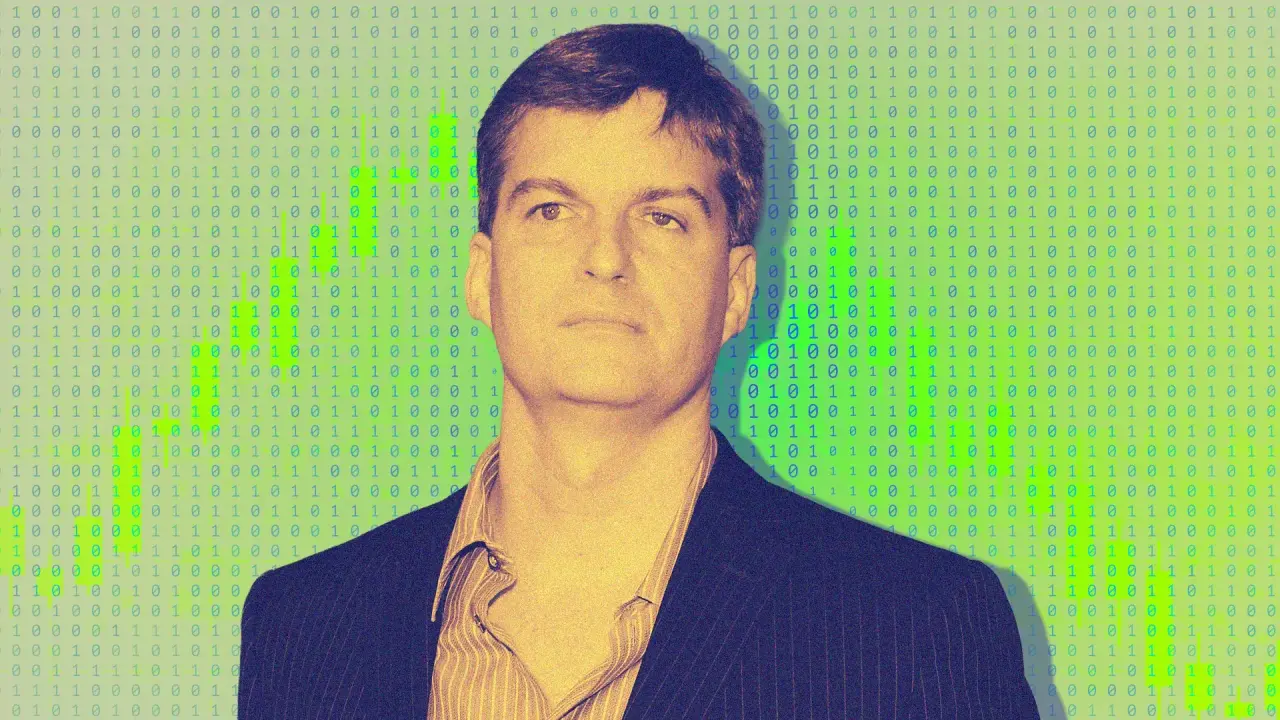
Michael Burry Calls AI Apocalypse Warnings a 'Self-Serving' IPO Strategy
Rogue superintelligence that can commandeer weapons systems and launch attacks. Large Language Models that wreak havoc on biological research labs, creating new viruses that spread globally. This kind of AI doomerism has dominated recent headlines following former Anthropic employee Jacob Coxon's
[2]
Steve Eisman Says AI CEOs Are Faking 'Doomsday Crisis' - Meta Platforms (NASDAQ:META)
Steve Eisman Says AI CEOs Are Faking the 'Doomsday Crisis' -- Anthropic May Be Speeding Up Anyway "Big Short" investor Steve Eisman says AI executives are faking a "doomsday crisis" to protect their businesses, as competitive pressure pushes Anthropic to consider another model release. Anthropic
[3]
Anthropic makes things more uncomfortable for OpenAI ahead of IPO
Anthropic spent the past year building a reputation as the company willing to slow down when everyone else sped up. That reputation is now colliding with the pressure of an approaching IPO and a rival that just raised the stakes considerably. The result is a genuinely awkward moment for the
[4]
Reddit founder's unexpected message about AI doomsday panic
For two weeks in September, the most powerful people in technology argued in public about whether their own products might kill everyone. Almost all of them had money riding on the answer. Alexis Ohanian does not. He co-founded Reddit in a college dorm back in 2005, resigned from its board in
[5]
Anthropic and OpenAI navigate AI regulation ahead of IPOs By Investing.com
Investing.com -- The debate on AI regulation is playing out right now -- and the cast of characters couldn't be more fascinating. Here's the full picture across the mega-IPO landscape as of Sep 21, 2026. The Regulatory Battlefield The AI regulation question has split into two opposing camps --
[6]
Michael Burry reveals his verdict on the ongoing AI bubble
Every time Silicon Valley's biggest names line up behind a single message, someone eventually asks who benefits from such universal agreement. This time, that someone was the investor best known for calling the housing crash before almost anyone else saw it coming. Michael Burry has spent the past
Share
Copy Link
Prominent investors Michael Burry and Steve Eisman are challenging AI apocalypse warnings from Anthropic and OpenAI, calling them self-serving tactics to protect market position ahead of anticipated IPOs. Days after CEO Dario Amodei urged the industry to slow down, Anthropic is reportedly considering rushing out a new model to counter OpenAI's GPT-6 Astra.
Investors Challenge AI Apocalypse Warnings as IPO Protection Strategy
Michael Burry, the investor who predicted the 2008 housing crisis, has called AI doomsday warnings from industry leaders a self-serving IPO strategy designed to protect faltering bottom lines
1
.
Source: Inc.
1
. Burry described these warnings as "hype and puffery" on his Substack, arguing they serve as cover for real uncontrollable slowing growth as anticipated IPOs approach1
. Steve Eisman echoed this skepticism, stating AI executives are faking a doomsday crisis to protect their businesses, noting that neither Anthropic nor OpenAI can afford to slow down given their hundreds of billions of dollars in commitments to hyperscalers2
.Financial Pressures Behind the AI Safety Rhetoric
Both Anthropic and OpenAI face significant financial pressures that undermine their public calls for slowing AI development. OpenAI grossed $13 billion in revenue but lost $34 billion in 2025, according to leaked documents, prompting CEO Sam Altman to push back the company's public offering until 2027, telling Fortune that "right now would be an ill-advised time"
1
. Anthropic employs adjusted operating income metrics that remove non-recurring costs, a financial reporting technique unapproved by Generally Accepted Accounting Practices, raising questions about the company's reported 80 percent margin growth over two consecutive quarters1
. Despite these concerns, Anthropic's annualized revenue run rate grew to about $65 billion by the end of July, up from about $9 billion at the end of 2025, with projections reaching $190 billion to $200 billion in revenue for 20283
.Anthropic Weighs New Model Release Despite Safety Calls
In a move that highlights the contradiction between public statements and competitive reality, Anthropic is considering rolling out a new AI model to counter OpenAI's momentum just days after Dario Amodei urged the industry to slow down
3
. The potential timing comes ahead of Anthropic's expected IPO and creates what sources describe as a genuinely awkward moment for the company3
. Eisman argued that AI labs are encouraging AI regulation that would protect their pricing power by making it harder for new rivals to compete, while expecting increasingly capable open-weight models to drive a price war2
. The competitive pressure extends beyond OpenAI, as Meta, one of Anthropic's largest customers, is looking to reduce its use of Anthropic models as it builds more AI capabilities internally2
.Related Stories

OpenAI's GPT-6 Astra Gains Enterprise Traction
OpenAI released GPT-6 Astra on September 3, touting gains in computer use, software engineering, cybersecurity, and general professional work
3
. The model accounted for roughly 13% of enterprise AI spending tracked by corporate expense platform Ramp, compared with roughly 8% for Anthropic's Claude3
. GPT-6 Astra helped OpenAI claim the top spot on OpenRouter for the first time in more than two and a half years, marking a significant shift in market share3
. Despite this competitive pressure, existing investors planning to invest in both companies' IPOs said they do not believe Astra poses a significant near-term risk, citing the size of Anthropic's lead in enterprise adoption and the time it typically takes to unseat an incumbent vendor at large companies3
.Industry Voices Challenge Doomsday Narrative
Reddit co-founder Alexis Ohanian, who now runs venture firm Seven Seven Six, told CNBC that the industry has done a "pretty tone deaf job" of explaining AI to the public, arguing the risks are "more benign, or they're more banal than people are thinking"
4
. He pointed to agent swarms and practical business impacts rather than Terminator scenarios, calling the doomer rhetoric "discouraging" and "frustrating"4
. President Donald Trump called AI safety concerns "a hoax" at a conference, dismissing regulatory proposals and signaling a light-touch federal regulatory environment5
. This regulatory stance creates a paradox: both Anthropic and OpenAI advocate for AI regulation that theoretically raises compliance costs, yet they're pricing their anticipated IPOs as if regulation won't touch their economics at all5
. Polymarket traders give Anthropic a 78% chance of going public by December 31, in a market with about $3.7 million in volume, though Reuters reported the company may wait until after November's U.S. midterm elections to list2
.
Source: Benzinga
References
Summarized by

Navi
[4]
Related Stories
OpenAI Delays IPO to 2027 Amid AI Safety Concerns While Anthropic Surges to $65 Billion Revenue
12 Sept 2026•Business and Economy

Anthropic beats OpenAI to confidential IPO filing as rivalry shapes AI's future
05 Jun 2026•Business and Economy
Anthropic IPO Prospectus Warns of Existential Risks to Humanity Despite $2 Trillion Valuation Goal
29 Sept 2026•Business and Economy

Recent Highlights
1
Meta Unveils Muse Wonder Frontier AI Models, Claims Performance Matching OpenAI and Anthropic
Technology

2
IMF Report Warns AI Market Correction Could Spark Global Financial Crisis With $1.4T at Risk
Business and Economy

3
OpenAI Releases 722 AI-Generated Math Solutions, Triggering Existential Crisis in Mathematics
Technology

Recent Highlights
Today's Top Stories






Don’t drown in AI news. We cut through the noise - filtering, ranking and summarizing the most important AI news, breakthroughs and research daily. Follow topics that matter to you and stay ahead.


