3 Sources
[1]
AI framework could speed battery, combustion and materials research by automating simulations
Computers have made it easier than ever before to design the perfect material for a given problem: Scientists can create a virtual version and simulate how that material will behave. Building these atomically precise simulations, however, typically requires deep expertise in computational chemistry. At the U.S. Department of Energy's (DOE) Argonne National Laboratory, researchers have developed a kind of shortcut, streamlining scientific workflows using artificial intelligence (AI). ChemGraph is an open-source, publicly available framework that automates some of the steps required when performing calculations for materials science and chemistry. This could help accelerate efforts such as boosting engine efficiency, extracting critical materials and making better batteries. The framework was described recently in the journal Communications Chemistry. The team developed ChemGraph using resources at the Argonne Leadership Computing Facility (ALCF), including the Aurora exascale supercomputer and the ALCF Inference Service, a first-of-its-kind platform that gives researchers cloudlike access to a broad range of large language models (LLMs) on the facility's high-performance computing systems. The ALCF is a DOE Office of Science user facility. A team of AI assistants for complex science ChemGraph's purpose is to lower the barriers to innovation for both scientists and students. Let's say you want to design a gas turbine engine that derives more power from less fuel. For that, you need to understand various aspects of methane combustion, such as the exact conditions that will help get the most value out of the gas. Computer simulations will help answer questions about how methane molecules behave as they go through the combustion process. Running such simulations often requires a doctorate's worth of knowledge and dozens of steps. You need the theoretical background to know which scientific methods to use for a study. You need to identify which software is compatible with those methods. You must then prepare your input file (the data) and navigate the software to get results. Then you will put those results into a separate tool for further analysis, running sequential calculations, fine-tuning parameters and comparing results along the way before arriving at a conclusion. This is your workflow. Materials scientists and chemists have the theoretical and experimental background to write research papers and carry out real-world experiments, but they may not have the technical savvy or staff to run these workflows. ChemGraph assigns different parts of a workflow to agents, which are akin to assistants that specialize in different tasks, such as planning, executing work or aggregating data. About a decade ago, Argonne computational scientist Murat Keçeli had already been working on automating some of the tasks involved in chemistry through rule-based automation. Computer scientists have long used this strategy to achieve leaps in productivity -- at its most basic, think of macros on a computer that can bundle steps together and execute them with one keystroke. In 2017, during his postdoctoral work with Argonne Distinguished Fellow Stephen Klippenstein's group, Keçeli developed the Quantum Thermochemistry Calculator, a series of coded modules for thermochemistry calculations, before moving on to other projects. Then ChatGPT, the generative AI powered by LLMs, emerged in late 2022. "When this large language model breakthrough happened, I thought, 'I should go back to that workflow automation,'" Keçeli said. "Basically, we wanted to put all of our expert knowledge about workflows into an agent-based automation that you could talk to through an LLM." ChemGraph uses LLMs to provide a natural-language interface to its agent-based automation. A researcher can state the scientific problem in plain language, and the framework maps that request onto a sequence of computational tasks, software tools and analyses needed to produce the result. Argonne researchers designed ChemGraph to call only the right types of tools and libraries to minimize the risk of hallucination, a well-known phenomenon in which generative AI fabricates answers. "We don't want the large language model to just answer the questions," said Thang Duc Pham, an Argonne postdoctoral fellow and ChemGraph co-creator. "We want it to run physics-based simulations and get an answer for you, instead of just relying on what it knows." He noted that this capability is also useful in cases where a problem has not been studied yet and new data is needed for a hypothesis. ChemGraph complements DOE's Genesis Mission, a national initiative to accelerate science through AI. Even when computational chemists run simulations, problems inevitably surface somewhere along the workflow, Keçeli noted. ChemGraph aims to simplify a complicated process and minimize hassle so that scientists can focus on their research goals. Force multipliers: AI agents, human collaborators and ALCF The ChemGraph team, which also included Aditya Tanikanti (a former Argonne computer scientist now at DOE's SLAC National Accelerator Laboratory), initially built the framework with a single agent. But they saw that it began to fail when problems reached a certain level of complexity. They also realized that some tasks could be handled by smaller language models, while others required more sophisticated reasoning LLMs. Multiple agents could do the same job more efficiently. "If you use only one type of LLM for everything, then you risk wasting money and allotted compute time," Keçeli said. "We found that we could start with a big model for workflow planning and then revert to smaller models for execution tasks." The team used ALCF's Inference Service to access powerful open-weight models on facility systems rather than through external cloud providers, helping reduce cost and address data security concerns. They also leveraged the Aurora supercomputer to run the computationally demanding quantum chemistry simulations embedded in ChemGraph, underscoring the complementary roles of AI inference and large-scale high-performance computing in the framework. With its ability to make computational chemistry more accessible, ChemGraph is already seeing interest at universities. Professors can use it as a teaching tool, and students can use it to explore their own research questions. Because ChemGraph is open source, it is also adaptable to tasks beyond the ones in the initial release. "We have already added one new feature to ChemGraph through a hackathon last fall, and as we collaborate with more people, we are hoping to expand ChemGraph's capabilities beyond our own expertise," Pham said. In one recent collaboration at Argonne, researchers adapted ChemGraph for X-ray absorption near-edge structure (XANES) simulation and analysis, helping automate a spectroscopy workflow from user requests through simulation, data processing and curation. In another effort with ALCF researchers, ChemGraph was extended to coordinate a high-throughput materials screening workflow on Aurora, demonstrating a path toward scalable, AI-driven scientific automation on exascale supercomputers. Ultimately, the goal of any scientific simulation is to obtain results that translate to a real-world advance. This is the promise of autonomous discovery: Better simulations on computers translate to fewer failed experiments in the lab, bringing ideas to life faster. "Our dream for ChemGraph is to make it available as a service for ALCF users through a chatbot-style interface," Keçeli said. "In the long run, we hope to make it increasingly autonomous, able to plan, execute and refine complex computational workflows with minimal user intervention, so scientists can focus on the scientific questions they want to answer."
[2]
Aurora supercomputer powers autonomous chemistry simulations
Computational chemistry often requires specialized expertise, multiple software tools, and lengthy workflows. Researchers at the U.S. Department of Energy's Argonne National Laboratory have developed an open-source framework called ChemGraph that uses AI agents to automate much of that process, making advanced simulations easier to run for scientists and students. The framework is designed to help researchers tackle materials science and chemistry problems without navigating every technical step manually. Potential applications include designing better batteries, improving combustion systems, and supporting the discovery of critical materials. ChemGraph combines large language models with agent-based automation. Instead of requiring users to prepare complex simulation workflows themselves, researchers can describe a scientific problem in plain language. The system then converts that request into a series of computational tasks, software tools, and analyses needed to generate results. The project was built using the Argonne Leadership Computing Facility's Aurora exascale supercomputer and the ALCF Inference Service, which provides researchers with cloud-like access to large language models running on high-performance computing systems. Running computational chemistry simulations typically involves selecting appropriate scientific methods, identifying compatible software, preparing input files, performing calculations, analyzing results, and refining parameters through multiple iterations. ChemGraph distributes these tasks across AI agents that specialize in workflow planning, execution, and data management. Rather than allowing a language model to generate answers directly, the framework is designed to invoke the appropriate scientific software and libraries before returning results. "We don't want the large language model to just answer the questions," said Thang Duc Pham, an Argonne postdoctoral fellow and ChemGraph co-creator. "We want it to run physics-based simulations and get an answer for you, instead of just relying on what it knows." The researchers also split work between different language models depending on the task. Larger models are used to plan workflows, while smaller models handle execution tasks, reducing computing costs and improving efficiency. "If you use only one type of LLM for everything, then you risk wasting money and allotted compute time," said Argonne computational scientist Murat Keçeli. "We found that we could start with a big model for workflow planning and then revert to smaller models for execution tasks." Aurora was used to perform the computationally intensive quantum chemistry simulations integrated into ChemGraph, while the ALCF Inference Service provided access to open-weight language models hosted on Argonne systems. Running models locally also helps reduce costs and addresses data security concerns compared with relying on external cloud services. Because ChemGraph is open source, researchers have already begun extending it beyond computational chemistry. Recent collaborations adapted the framework for X-ray absorption near-edge structure spectroscopy simulations and automated high-throughput materials screening workflows on Aurora. The team also sees educational value in the framework, allowing professors to demonstrate advanced computational chemistry techniques while giving students a simpler way to explore research questions. "Our dream for ChemGraph is to make it available as a service for ALCF users through a chatbot-style interface," Keçeli said. "In the long run, we hope to make it increasingly autonomous... so scientists can focus on the scientific questions they want to answer." The study was published in the journal Communications Chemistry.
[3]
Argonne Team's ChemGraph Unlocks AI for Chemistry and Materials Science
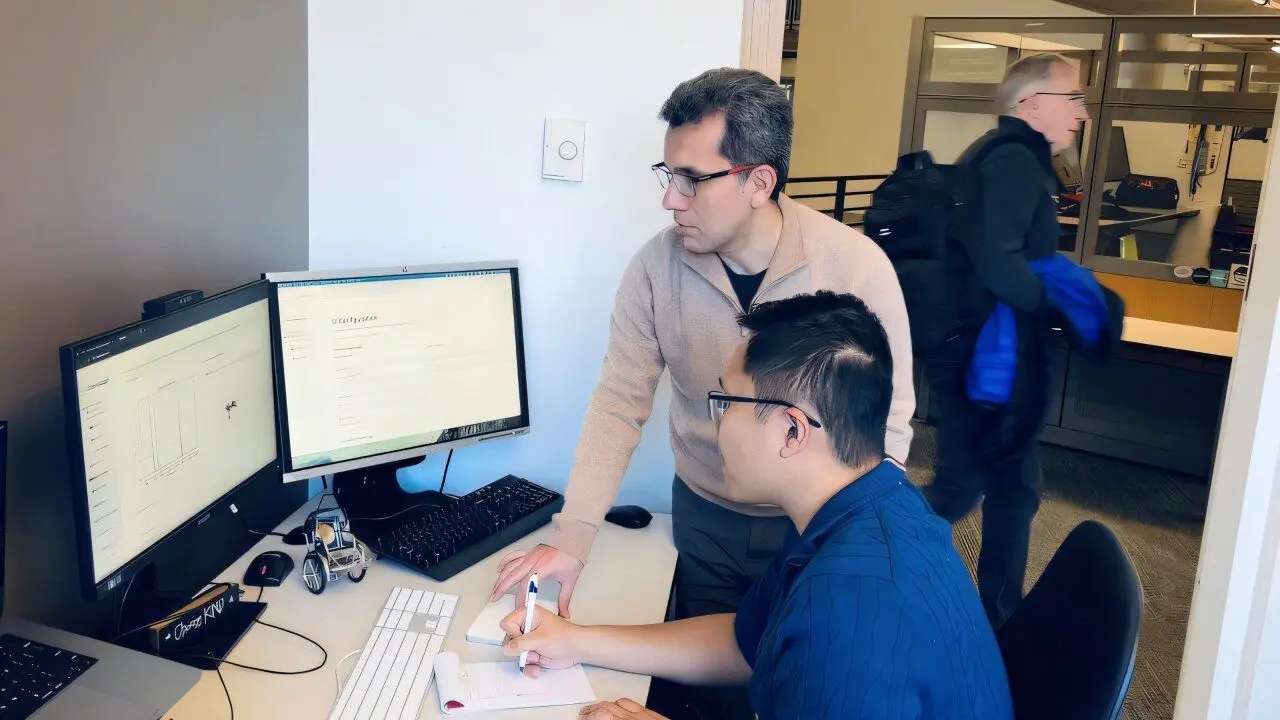
Argonne's Murat Keçeli and Thang Duc Pham (seated) review results using ChemGraph, an AI-driven framework designed to streamline computational chemistry and materials science workflows. Newswise -- Computers have made it easier than ever before to design the perfect material for a given problem: Scientists can create a virtual version and simulate how that material will behave. Building these atomically precise simulations, however, typically requires deep expertise in computational chemistry. At the U.S. Department of Energy's (DOE) Argonne National Laboratory, researchers have developed a kind of shortcut, streamlining scientific workflows using artificial intelligence (AI). ChemGraph is an open-source, publicly available framework that automates some of the steps required when performing calculations for materials science and chemistry. This could help accelerate efforts such as boosting engine efficiency, extracting critical materials and making better batteries. The framework was described recently in the journal Communications Chemistry. The team developed ChemGraph using resources at the Argonne Leadership Computing Facility (ALCF), including the Aurora exascale supercomputer and the ALCF Inference Service, a first-of-its-kind platform that gives researchers cloud-like access to a broad range of large language models (LLMs) on the facility's high performance computing systems. The ALCF is a DOE Office of Science user facility. A team of AI assistants for complex science ChemGraph's purpose is to lower the barriers to innovation for both scientists and students. Let's say you want to design a gas turbine engine that derives more power from less fuel. For that, you need to understand various aspects of methane combustion, such as the exact conditions that will help get the most value out of the gas. Computer simulations will help answer questions about how methane molecules behave as they go through the combustion process. Running such simulations often requires a doctorate degree's worth of knowledge and dozens of steps. You need the theoretical background to know which scientific methods to use for a study. You need to identify which software is compatible with those methods. You must then prepare your input file (the data) and navigate the software to get results. Then you will put those results into a separate tool for further analysis, running sequential calculations, fine-tuning parameters and comparing results along the way before arriving at a conclusion. This is your workflow. Materials scientists and chemists have the theoretical and experimental background to write research papers and carry out real-world experiments, but they may not have the technical savvy or staff to run these workflows. ChemGraph assigns different parts of a workflow to agents, which are akin to assistants that specialize in different tasks, such as planning, executing work or aggregating data. About a decade ago, Argonne computational scientist Murat Keçeli had already been working on automating some of the tasks involved in chemistry through rule-based automation. Computer scientists have long used this strategy to achieve leaps in productivity -- at its most basic, think of macros on a computer that can bundle steps together and execute them in one keystroke. In 2017, during his postdoctoral work with Argonne Distinguished Fellow Stephen Klippenstein's group, Keçeli developed the Quantum Thermochemistry Calculator, a series of coded modules for thermochemistry calculations, before moving on to other projects. Then ChatGPT, the generative AI powered by LLMs, emerged in late 2022. "When this large language model breakthrough happened, I thought, 'I should go back to that workflow automation,'" Keçeli said. "Basically, we wanted to put all of our expert knowledge about workflows into an agent-based automation that you could talk to through an LLM." ChemGraph uses LLMs to provide a natural language interface to its agent-based automation. A researcher can state the scientific problem in plain language, and the framework maps that request onto a sequence of computational tasks, software tools and analyses needed to produce the result. Argonne researchers designed ChemGraph to call only the right types of tools and libraries to minimize the risk of hallucination, a well-known phenomenon in which generative AI fabricates answers. "We don't want the large language model to just answer the questions," said Thang Duc Pham, an Argonne postdoctoral fellow and ChemGraph co-creator. "We want it to run physics-based simulations and get an answer for you, instead of just relying on what it knows." He noted that this capability is also useful in cases where a problem has not been studied yet and new data is needed for a hypothesis. ChemGraph complements DOE's Genesis Mission, a national initiative to accelerate science through AI. Even when computational chemists run simulations, problems inevitably surface somewhere along the workflow, Keçeli noted. ChemGraph aims to simplify a complicated process and minimize hassle so that scientists can focus on their research goals. Force multipliers: AI agents, human collaborators and ALCF The ChemGraph team, which also included Aditya Tanikanti (a former Argonne computer scientist now at DOE's SLAC National Accelerator Laboratory), initially built the framework with a single agent. But they saw that it began to fail when problems reached a certain level of complexity. They also realized that some tasks could be handled by smaller language models, while others required more sophisticated reasoning LLMs. Multiple agents could do the same job more efficiently. "If you use only one type of LLM for everything, then you risk wasting money and allotted compute time," Keçeli said. "We found that we could start with a big model for workflow planning and then revert to smaller models for execution tasks." The team used ALCF's Inference Service to access powerful open-weight models on facility systems rather than through external cloud providers, helping reduce cost and address data-security concerns. They also leveraged the Aurora supercomputer to run the computationally demanding quantum chemistry simulations embedded in ChemGraph, underscoring the complementary roles of AI inference and large-scale high performance computing in the framework. With its ability to make computational chemistry more accessible, ChemGraph is already seeing interest at universities. Professors can use it as a teaching tool and students can use it to explore their own research questions. Because ChemGraph is open source, it is also adaptable to tasks beyond the ones in the initial release. "We have already added one new feature to ChemGraph through a hackathon last fall, and as we collaborate with more people, we are hoping to expand ChemGraph's capabilities beyond our own expertise," Pham said. In one recent collaboration at Argonne, researchers adapted ChemGraph for X-ray absorption near-edge structure (XANES) simulation and analysis, helping automate a spectroscopy workflow from user requests through simulation, data processing and curation. In another effort with ALCF researchers, ChemGraph was extended to coordinate a high-throughput materials screening workflow on Aurora, demonstrating a path toward scalable, AI-driven scientific automation on exascale supercomputers. Ultimately, the goal of any scientific simulation is to obtain results that translate to a real-world advance. This is the promise of autonomous discovery: Better simulations on computers translate to fewer failed experiments in the lab, bringing ideas to life faster. "Our dream for ChemGraph is to make it available as a service for ALCF users through a chatbot-style interface," Keçeli said. "In the long run, we hope to make it increasingly autonomous, able to plan, execute and refine complex computational workflows with minimal user intervention, so scientists can focus on the scientific questions they want to answer." Work on ChemGraph was supported by DOE's Office of Science. Christina Nunez is a freelance writer and editor who covers science, technology, and innovation at Argonne and other research facilities under the U.S. Department of Energy. Her work also appears at National Geographic and other publications. She has been writing for Argonne since 2018. The Argonne Leadership Computing Facility provides supercomputing capabilities to the scientific and engineering community to advance fundamental discovery and understanding in a broad range of disciplines. Supported by the U.S. Department of Energy's (DOE's) Office of Science, Advanced Scientific Computing Research (ASCR) program, the ALCF is one of two DOE Leadership Computing Facilities in the nation dedicated to open science. Argonne National Laboratory seeks solutions to pressing national problems in science and technology by conducting leading-edge basic and applied research in virtually every scientific discipline. Argonne is managed by UChicago Argonne, LLC for the U.S. Department of Energy's Office of Science. The U.S. Department of Energy's Office of Science is the single largest supporter of basic research in the physical sciences in the United States and is working to address some of the most pressing challenges of our time. For more information, visit https://energy.gov/science.
Share
Copy Link
Researchers at Argonne National Laboratory developed ChemGraph, an open-source AI framework that automates computational chemistry workflows using large language models and agent-based automation. Built on the Aurora exascale supercomputer, the framework allows scientists to describe research problems in plain language while AI agents handle complex simulation tasks, potentially accelerating battery development, combustion research, and critical material extraction.
Argonne National Laboratory has released ChemGraph, an open-source AI framework designed to automate complex simulations in materials science and chemistry. The framework addresses a persistent challenge: while scientists can create virtual materials and simulate their behavior, building these atomically precise simulations typically requires deep expertise in computational chemistry and involves dozens of manual steps
1
. ChemGraph streamlines this process using large language models and agent-based automation, potentially accelerating research in battery development, combustion research, and critical material extraction1
.
Source: Interesting Engineering
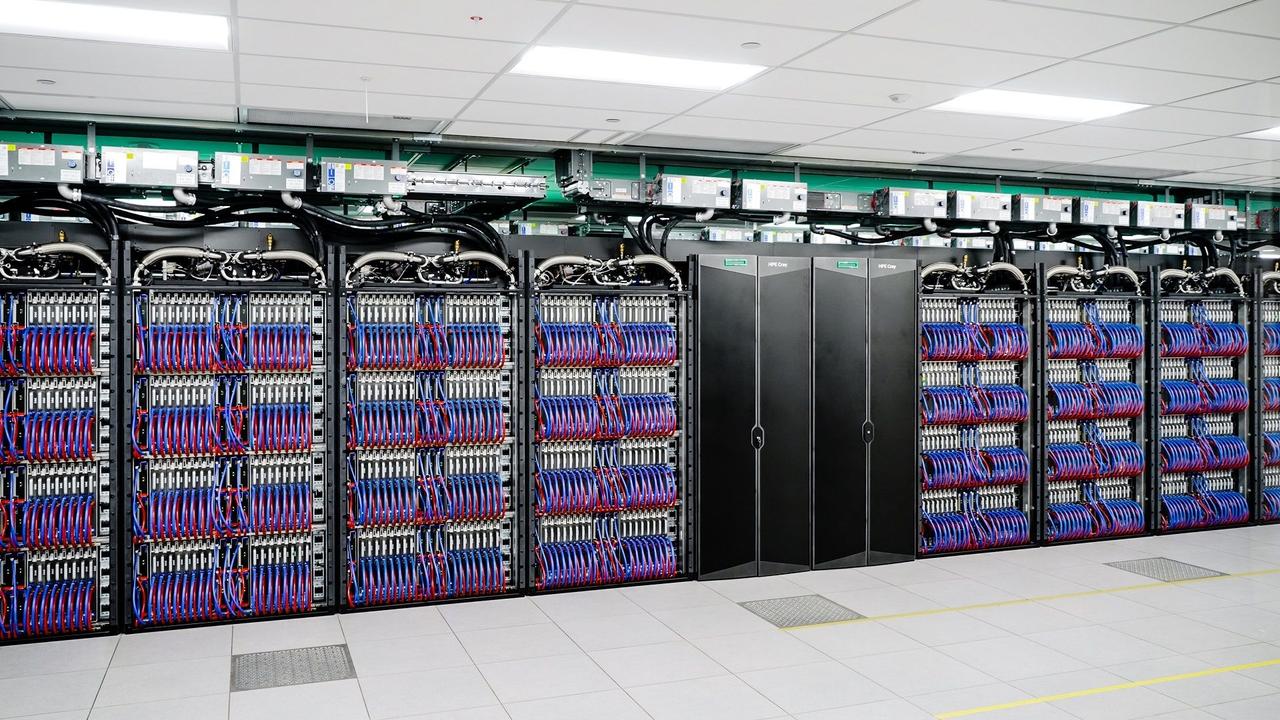
The framework was described recently in the journal Communications Chemistry and developed using resources at the Argonne Leadership Computing Facility, including the Aurora exascale supercomputer and the ALCF Inference Service
3
. This first-of-its-kind platform gives researchers cloud-like access to a broad range of large language models on high-performance computing systems1
.Running computational chemistry workflows often requires a doctorate's worth of knowledge. Scientists must select appropriate scientific methods, identify compatible software, prepare input files, perform calculations, analyze results, and refine parameters through multiple iterations
2
. ChemGraph assigns different parts of a workflow to AI agents that specialize in distinct tasks such as planning, executing work, or aggregating data1
.
Source: Phys.org
Instead of requiring users to navigate every technical step manually, researchers can describe a scientific problem in plain language. The framework then maps that request onto a sequence of computational tasks, software tools, and analyses needed to produce results
2
. For instance, designing a gas turbine engine that derives more power from less fuel requires understanding various aspects of methane combustion—ChemGraph can automate the simulation process to answer questions about how methane molecules behave during combustion3
.Argonne researchers designed ChemGraph to call only the right types of tools and libraries to minimize the risk of hallucination, a well-known phenomenon in which generative AI fabricates answers. "We don't want the large language model to just answer the questions," said Thang Duc Pham, an Argonne postdoctoral fellow and ChemGraph co-creator. "We want it to run physics-based simulations and get an answer for you, instead of just relying on what it knows"
2
.The team also split work between different language models depending on the task. Larger models are used to plan workflows, while smaller models handle execution tasks, reducing computing costs and improving efficiency. "If you use only one type of LLM for everything, then you risk wasting money and allotted compute time," said Argonne computational scientist Murat Keçeli .
Related Stories
About a decade ago, Murat Keçeli had already been working on automating some of the tasks involved in chemistry through rule-based automation. In 2017, during his postdoctoral work with Argonne Distinguished Fellow Stephen Klippenstein's group, Keçeli developed the Quantum Thermochemistry Calculator, a series of coded modules for thermochemistry calculations
3
. When ChatGPT emerged in late 2022, Keçeli saw an opportunity to revisit workflow automation. "Basically, we wanted to put all of our expert knowledge about workflows into an agent-based automation that you could talk to through an LLM," he said1
.Because ChemGraph is an open-source AI framework, researchers have already begun extending it beyond computational chemistry. Recent collaborations adapted the framework for X-ray absorption near-edge structure spectroscopy simulations and automated high-throughput materials screening workflows on Aurora
2
. The framework complements DOE's Genesis Mission, a national initiative to accelerate science through AI3
.The team sees educational value in the framework, allowing professors to demonstrate advanced computational chemistry techniques while giving students a simpler way to explore research questions. "Our dream for ChemGraph is to make it available as a service for ALCF users through a chatbot-style interface," Keçeli said. "In the long run, we hope to make it increasingly autonomous... so scientists can focus on the scientific questions they want to answer"
2
. This approach could help accelerate efforts such as boosting engine efficiency, extracting critical materials, and making better batteries by lowering the barriers to innovation for both scientists and students1
.Summarized by
Navi
[1]
[2]
15 Aug 2025•Science and Research

09 Apr 2025•Science and Research

29 Jan 2026•Science and Research

1
Technology

2
Policy and Regulation

3
Policy and Regulation