Chick-fil-A Rejects AI in Drive-Thru as McDonald's and Wendy's Embrace Voice-Ordering Technology


3 Sources
[1]
Fortune
The fast-food industry has spent decades trying to make ordering a burger faster. Digital menus, mobile apps, self-service kiosks -- you name it. Now, artificial intelligence wants a turn at the drive-thru speaker. But at Chick-fil-A, the familiar "my pleasure" still needs to come from a
[2]
Chick-fil-A draws hard line as McDonald's pushes drive-thru AI
For years, Chick-fil-A has worked to increase the number of people who visit its drive-thrus. CEO Andrew Cathy still needs someone to take orders. Cathy said the chicken chain has no plans to replace drive-thru order-takers with artificial intelligence, according to Fox Business, even as
[3]
Chick-fil-A on whether AI will take over its drive-thru as rivals embrace new tech
Chick-fil-A is bucking a growing fast-food industry trend, with CEO Andrew Cathy saying the chicken chain does not plan to use artificial intelligence to take customers' drive-thru orders. While Chick-fil-A is exploring potential uses for AI behind the scenes, Cathy told CNBC that the company
Share
Copy Link
Chick-fil-A CEO Andrew Cathy announced the chain will not replace drive-thru order-takers with AI, even as McDonald's tests Archy with over 90% accuracy and Wendy's deploys FreshAI. The decision highlights contrasting approaches to automation in fast food, with Chick-fil-A prioritizing human hospitality while competitors pursue efficiency gains of up to 250 basis points.
Chick-fil-A Takes a Stand Against AI in Drive-Thru
Chick-fil-A CEO Andrew Cathy has drawn a hard line on AI in drive-thru operations, stating the chicken chain will not use artificial intelligence to replace human order-takers despite growing AI adoption in the fast-food industry
1
2
. This decision puts Chick-fil-A at odds with competitors like McDonald's and Wendy's, which are rapidly deploying AI-powered voice-ordering systems at their drive-thrus. "From our experience, we really want that hospitality to be human to human," Cathy told CNBC. "We're not gonna substitute that interaction with technology, because we feel like that hospitality is so important to create that warm environment for consumers"1
. The privately held chain generated approximately $23.9 billion in U.S. systemwide sales in 2025, giving considerable weight to its strategic decision3
.McDonald's Pushes Forward with Archy Voice AI
McDonald's is taking a different path with its AI-powered voice-ordering system called Archy, which processes live drive-thru orders in both Spanish and English with an accuracy of more than 90%
2
. Global Chief Information Officer Brian Rice revealed at McDonald's recent investor day that Archy could potentially free up at least 50 labor hours per restaurant each week, with establishments testing the system generating drive-thru customer satisfaction levels above national norms2
. Archy is part of ArchIQ, a broader generative-AI-enabled restaurant operating system designed to streamline operations through voice ordering, inventory management, connected equipment, and order-accuracy technologies2
. McDonald's says its Restaurant NEXT program, which includes ArchIQ, could eventually generate roughly 250 basis points of gross restaurant-level efficiency improvements2
. This isn't McDonald's first attempt at drive-thru AI—the burger giant ended an earlier test with IBM in 2024 after rolling it out to more than 100 U.S. restaurants, a trial that drew attention for viral videos of botched orders1
.Wendy's FreshAI Tackles Complex Drive-Thru Orders
Wendy's has been working with Google Cloud to develop FreshAI, a system built to handle one of the most challenging aspects of restaurant automation: food orders are seldom placed in precisely standardized language
2
3
. The system must manage complex vocabulary, substitutions, and background noise associated with drive-thru ordering2
. Customers might request a chocolate shake when Wendy's refers to the product as a Frosty, or they might talk over music and road noise, use acronyms, or alter their order mid-sequence. About 86% of orders were successfully completed by Wendy's FreshAI system2
. The company has said the system is designed to improve ordering speed, accuracy and consistency3
.Contrasting Approaches to AI and Human Hospitality
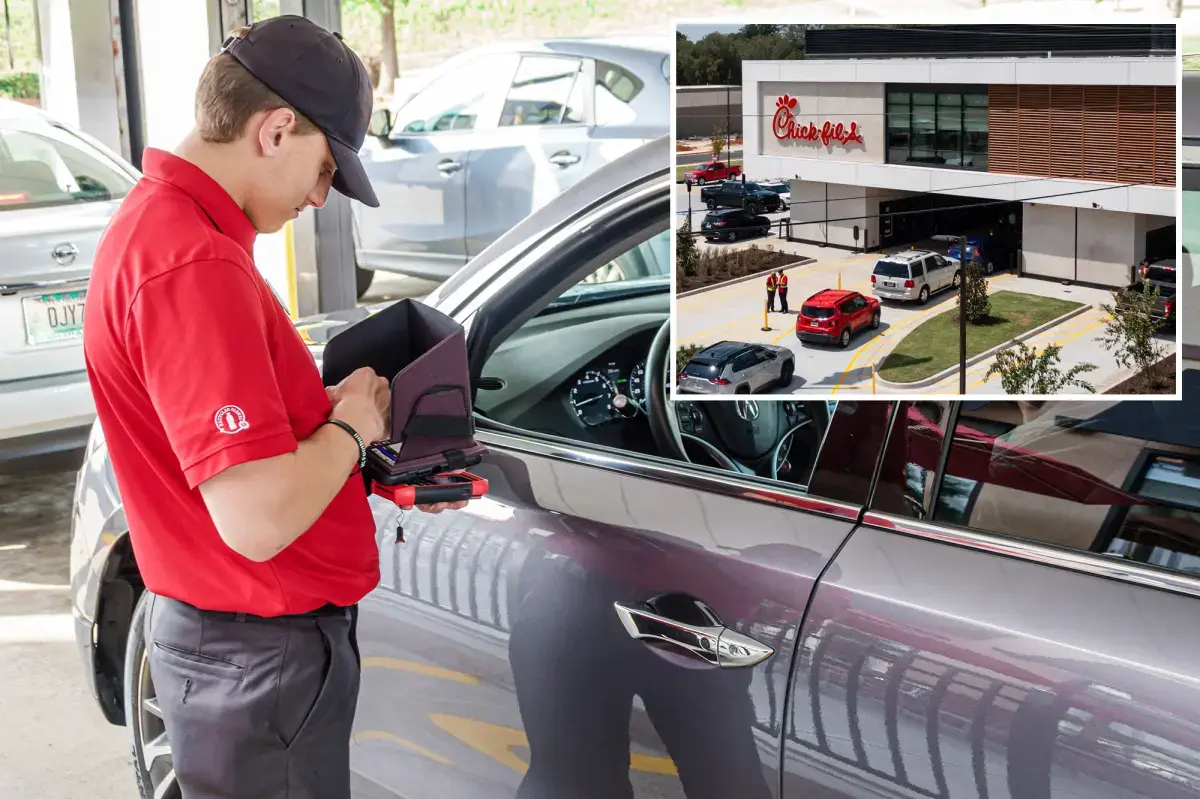
The contrasting approaches to AI between Chick-fil-A and its competitors reveal fundamentally different philosophies about customer experience and automation. Alex Susskind, a Cornell University professor who studies restaurant operations and hospitality technology, sees the logic in Chick-fil-A's decision. The chain's drive-thrus often have employees standing outside with tablets, taking orders and directing cars through lines that can stretch around the building. Those human interactions make the wait more tolerable
1
. Before adopting technology, Susskind said restaurants should ask: "Is this making my customers' experience better or more meaningful?"1
. Chick-fil-A calls its approach "human plus," exploring AI behind the scenes while preserving human interaction in drive-thrus1
2
.When Automation Goes Wrong
Susskind experienced firsthand how quickly an AI-powered voice-ordering system can fail when he called a local pizzeria to order one large pizza, half pepperoni and half plain cheese. The AI phone assistant kept insisting he wanted two pizzas, even after he repeatedly corrected it. With no easy way to reach a person, Susskind eventually went to the restaurant himself, where employees explained there was a bug in the system
1
. Keith Spencer, a career expert focused on AI's impact on workers, noted that automated ordering could eliminate some repetitive responsibilities for restaurant employees, but fewer tasks don't necessarily mean less work. "If AI takes over routine tasks while workers have more opportunity to focus on customer service and problem-solving, it could make shifts more manageable," Spencer told Fortune. "If the primary goal is simply to reduce labor hours, the impact could look very different"1
.Related Stories

Chick-fil-A's Technology Strategy: Automate the Kitchen, Not the Greeting
Chick-fil-A isn't avoiding drive-thru technology altogether. The upgraded drive-thru at Chick-fil-A in McDonough, Georgia, demonstrates the company's willingness to advance technology without eliminating staff from the customer experience
2
. Beneath the restaurant's second-floor kitchen are four drive-thru lanes, with a conveyor system that can deliver a finished meal to a worker every six seconds2
3
. The four-lane layout can accommodate two to three times as many cars as a traditional facility, and the kitchen is twice as large as one at a standard Chick-fil-A2
. Customers may use the Chick-fil-A app to make orders in advance or use a regular drive-thru lane to place an order with a staff member2
. When Chick-fil-A unveiled plans for new digitally focused restaurant designs in 2023, the company said it wanted to use technology to "elevate the human touchpoints" in its restaurants while keeping human interaction at the core of the customer experience3
.
Source: New York Post
What This Means for Fast-Food's Future
The operational implications of these contrasting approaches to AI will likely shape the fast-food industry for years to come. McDonald's is betting that efficiency gains and labor savings will offset any loss of personal connection, while Chick-fil-A is wagering that human hospitality remains a competitive differentiator worth protecting. As Cathy told CNBC, "We think about all these new things into the future, about how will people want to receive food in the future? It's a fun time in the industry, to think about all the possibilities of what we can do to make a better experience for our guests"
3
. Watch whether customer satisfaction scores and sales performance at AI-enabled drive-thrus match or exceed those with human order-takers, and whether other chains follow Chick-fil-A's human-first approach or McDonald's automation-forward strategy in the coming months.References
Summarized by

Navi
[1]
[2]
Related Stories
McDonald's AI drive-thru returns with ArchIQ after IBM failure, tests at 5 US locations
07 Jun 2026•Technology

McDonald's Leads Fast Food Industry in Massive AI Implementation Across 43,000 Locations
07 Mar 2025•Technology

McDonald's commits $8.5 billion to AI drive-thru and ArchIQ automation across 46,000 restaurants
24 Sept 2026•Business and Economy
Recent Highlights



Recent Highlights
Today's Top Stories





Don’t drown in AI news. We cut through the noise - filtering, ranking and summarizing the most important AI news, breakthroughs and research daily. Follow topics that matter to you and stay ahead.


