McDonald's commits $8.5 billion to AI drive-thru and ArchIQ automation across 46,000 restaurants


6 Sources
[1]
McDonald's pushes $8.5 billion modernization with more tech and hand-breaded chicken
Chicago-based McDonald's said Wednesday it will spend $8.5 billion over the next decade to modernize its restaurants globally. Fast-food traffic in many markets, including the U.S., is flat, so for McDonald's to continue to grow it has to grab share from competitors and improve restaurant
[2]
McDonald's set to spend billions on big changes. What to expect
McDonald's plans to spend about $8.5 billion through 2036 to modernize its restaurants, expand technology and improve operations as the fast-food giant looks for new ways to attract customers and grow sales. The investment, announced Wednesday, Sept. 23, at the company's investor day in Chicago,
[3]
McDonald's is spending $8.5 billion on changes: AI drive-thru, automated kitchens, new chicken menu, protein-packed meals and more
McDonald's is planning an $8.5 billion global overhaul over the next decade, bringing AI-powered ordering, more automation, smarter kitchens, new chicken items and protein-focused foods. The changes will also include restaurant upgrades, employee training and new ways to improve service, value and
[4]
McDonald's Puts AI in Charge of the Drive-Thru | PYMNTS.com
Archy does more than answer questions. It hears a spoken request, builds the basket, shows the customer a total and passes the order to the payment window. Brian Rice, McDonald's executive vice president and global chief information officer, said the agent "frees our crew to focus on hospitality
[5]

McDonald's wants AI to cut 50 labor hours a week
McDonald's (MCD) has spent years experimenting with automation. Its newest plan makes the financial objective much clearer. As part of its new McDonald's > NEXT growth strategy, the fast-food giant is rolling out an artificial-intelligence-powered restaurant operating system, ArchIQ, that it says
[6]
McDonald's announces $8.5 billion plan for ArchIQ AI drive-thru ordering system
A McDonald's drive-thru shouldn't feel like a waiting room. Yet there you are, watching the minutes tick by while the car ahead sits at the speaker. For a company with 45,356 restaurants, that is definitely a problem worth fixing. Well, McDonald's seems to be thinking the same thing. And on Sept.
Share
Copy Link
McDonald's unveiled an $8.5 billion modernization plan through 2036, deploying its AI-powered drive-thru system Archy and ArchIQ automation platform developed with Google across 46,000 global restaurants. The initiative targets 50 labor hours saved weekly per location while introducing hand-breaded chicken and protein-focused menu items as fast-food traffic stagnates.
McDonald's Unveils $8.5 Billion AI-Driven Transformation
McDonald's announced an $8.5 billion investment through 2036 to modernize its 46,000 global restaurants, with $5 billion allocated by 2030.
1
Chairman and CEO Chris Kempczinski revealed the McDonald's > NEXT strategy at the company's Chicago headquarters, emphasizing that flat fast-food traffic across markets demands aggressive action. "The winners will be the companies that create more demand and deliver it more efficiently," Kempczinski stated.1
McDonald's shares dropped nearly 5% following the announcement, marking their largest percentage decline since April 2025 as investors absorbed the massive capital commitment.1
The modernization centers on ArchIQ, an AI-powered restaurant operating system developed with Google that automates inventory management, employee scheduling, and order accuracy verification.
4
ArchIQ runs on Google edge computing hardware installed directly inside restaurants, placing computational power on-site rather than in distant data centers.4
The system has already processed over 1 million transactions across five test restaurants and will complete U.S. rollout by 2027.4
Archy AI Transforms Drive-Thru Operations
The AI-enabled drive-thru system, Archy, represents McDonald's most ambitious automation effort after abandoning a previous IBM partnership in 2024.
4
Unlike that failed system, which struggled with accents and dialects, Archy achieves 90% accuracy taking orders in both English and Spanish.1
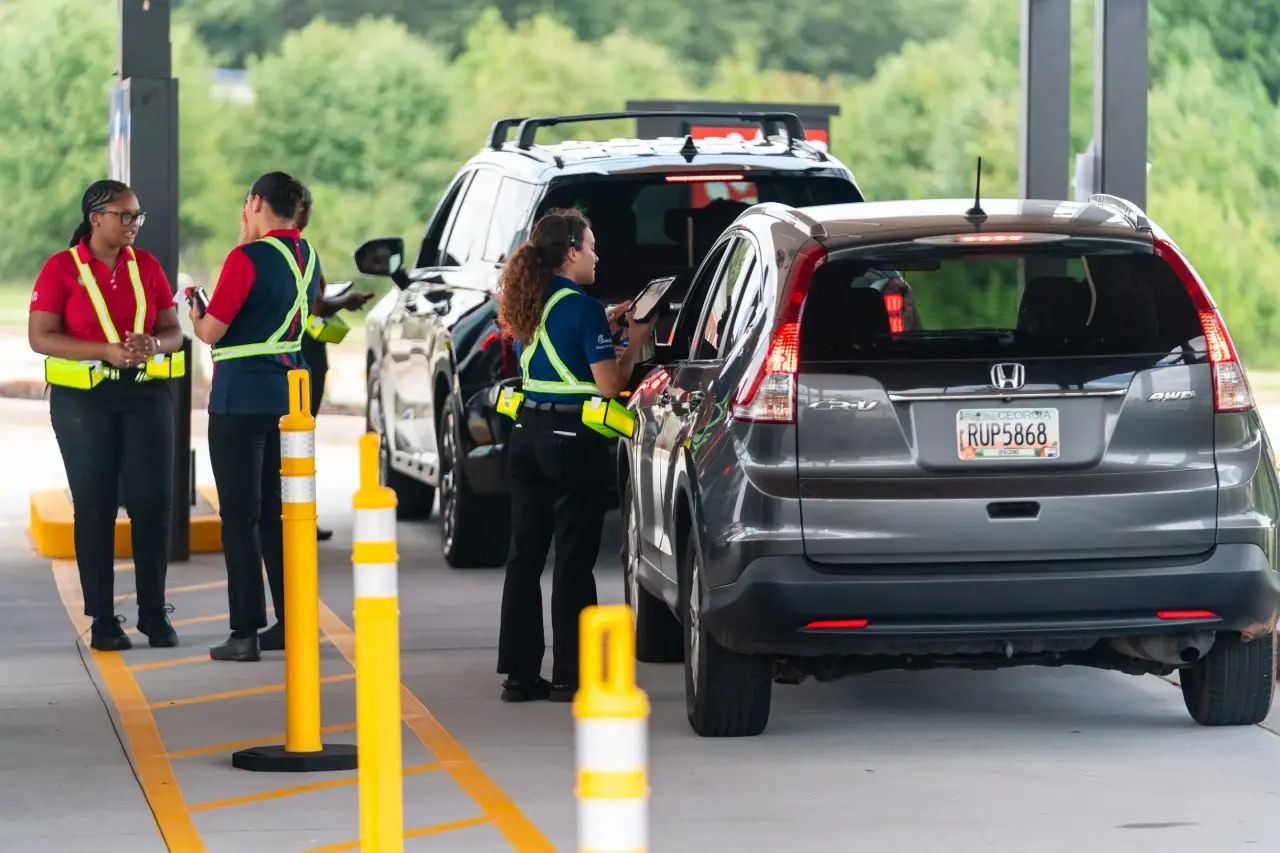
The AI-powered drive-thru system handles the complete transaction—hearing requests, building baskets, displaying totals, and passing orders to payment windows.4
Brian Rice, McDonald's Executive Vice President and Global Chief Information Officer, explained that Archy "frees our crew to focus on hospitality and driving growth."
4
Chief Financial Officer Ian Borden revealed Archy could reduce labor hours by at least 50 per week at typical locations—approximately 2,600 hours annually per restaurant.5
However, executives emphasized the goal isn't staffing reductions but reallocating employees to hospitality tasks and food preparation like hand-breading chicken.1
Automated Systems Target Kitchen Operations and Order Accuracy
McDonald's modernization extends beyond the drive-thru into comprehensive kitchen operations improvements. Automated inventory tracking uses Bluetooth Low Energy tags to monitor stock in real time, saving approximately five labor hours weekly while cutting food waste by 15%.
4
Connected equipment and computer vision monitor food quality and consistency, shifting equipment management to predictive maintenance that improves key equipment availability by roughly 50% per restaurant.4
Accuracy Scales verify order correctness before food leaves the kitchen, with crew catching and correcting 10% of orders daily.
4
Currently deployed in 10,000 restaurants globally, McDonald's plans expanding to 20,000 locations by 2028.2
The French-created scales reduce delivery refunds and free drive-thru capacity during peak hours.4
Physical Restaurant Upgrades Enhance Customer Experience
The McDonald's > NEXT strategy includes substantial physical improvements beyond technology. Restaurant modernizations feature lockers for delivery orders, more visible coffee preparation areas, expanded play areas, and optimized kitchen layouts.
1
These changes aim to improve both customer experience and operational efficiency as the company competes in stagnant markets.3
Hand-Breaded Chicken and Protein-Focused Menu Expansion
McDonald's is rolling out hand-breaded chicken after successful deployment at 10,000 Asian restaurants and select Chicago-area locations, where it boosted sales and quality ratings.
1
The company plans expanding testing to additional U.S. markets and Ireland in 2027, directly competing with Chick-fil-A and KFC.1
Skye Anderson, President of McDonald's USA, noted that approximately 30 million Americans now use GLP-1 weight loss drugs, seeking smaller, protein-packed meals.
1
McDonald's research indicates 60 million Americans actively seek more dietary protein, presenting significant growth opportunities.3
The company is testing grilled chicken sandwiches, wraps, egg bites, and bowls to meet these demands.2
Related Stories
Franchisee Costs and Financial Returns
U.S. franchisees typically spend $400,000 to $450,000 per decade on required remodels.
1
Under the new plan, they'll invest an additional $800,000 over time for technology bundles and kitchen upgrades, with McDonald's providing rent relief and capital support.4
The company projects roughly $100,000 in annual cash flow benefits per average U.S. restaurant from efficiency improvements, enabling franchisees to recoup investments in approximately four years.2
McDonald's targets operating margins in the low-to-mid 50% range by 2030, up from 46.1% in 2025.
5
The company also aims to reduce general and administrative expenses from 2.2% of systemwide sales in 2026 to approximately 1.9% by 2030, with AI driving corporate efficiency gains.5
Competitive Context and Market Challenges
McDonald's faces persistent inflation affecting labor, construction, and ingredients. Beef costs in major markets have nearly doubled over five years, while U.S. same-store sales grew just 0.8% with declining traffic.
5
Kempczinski acknowledged that cost-of-living pressures aren't temporary: "We need to stop talking about that being a difficult environment and just say that is the environment."5
Competitors like Yum Brands expanded Taco Bell's voice AI to over 500 drive-thrus in 2024, though viral videos showing customers pranking the system prompted reconsideration of deployment strategies.
4
McDonald's unified point-of-sale systems across nearly all markets and built a single data lake capturing billions of daily data points from 46,000 restaurants, positioning the company to leverage AI more comprehensively than competitors.4
The company's 370 million global loyalty members—including 220 million active members—account for roughly 30% of sales and visit approximately 2.5 times more frequently than non-members.
2
McDonald's plans introducing a tiered rewards program offering frequent customers faster points earnings, early access to limited-time items, and event invitations.2
References
Summarized by

Navi
[5]
Related Stories
McDonald's AI drive-thru returns with ArchIQ after IBM failure, tests at 5 US locations
07 Jun 2026•Technology

McDonald's Leads Fast Food Industry in Massive AI Implementation Across 43,000 Locations
07 Mar 2025•Technology

McDonald's to Double Down on AI Investment by 2027, Focusing on India as Key Hub
01 Aug 2025•Business and Economy
Recent Highlights
1
Meta Unveils Muse Wonder Frontier AI Models, Claims Performance Matching OpenAI and Anthropic
Technology

2
IMF Report Warns AI Market Correction Could Spark Global Financial Crisis With $1.4T at Risk
Business and Economy

3
OpenAI Releases 722 AI-Generated Math Solutions, Triggering Existential Crisis in Mathematics
Technology

Recent Highlights
Today's Top Stories






Don’t drown in AI news. We cut through the noise - filtering, ranking and summarizing the most important AI news, breakthroughs and research daily. Follow topics that matter to you and stay ahead.


