Chile unveils Latam-GPT, an open-source AI model built to combat bias in Latin America


4 Sources
[1]
Chile launches open-source AI model designed for Latin America
BUENOS AIRES, Argentina (AP) -- Chile on Tuesday launched the first open-source artificial intelligence language model trained on the diverse cultures of Latin America, aiming to better reflect regional realities and strengthen the region's presence in the global AI race. Latam-GPT is the result
[2]
What is Latam-GPT: Latin America's new AI model?
Chile has presented Latam-GPT, a project aimed at providing Latin America with its own artificial intelligence (AI) model in a sector dominated by American companies and with the objective of limiting the biases observed in current systems. The initiative has been promoted by Chile's National
[3]
Latam-GPT: a Latin American AI to combat US-centric bias
Santiago (Chile) (AFP) - Move over ChatGPT. Chile on Tuesday launched Latam-GPT, an open-source artificial intelligence model for the region, designed to combat bias inherent in a US-centric industry. Developed by the Chilean National Center for Artificial Intelligence (CENIA), Latam-GPT uses
[4]
Chile Launches Open-Source AI Model Designed for Latin America
BUENOS AIRES, Argentina (AP) -- Chile on Tuesday launched the first open-source artificial intelligence language model trained on the diverse cultures of Latin America, aiming to better reflect regional realities and strengthen the region's presence in the global AI race. Latam-GPT is the result
Share
Copy Link
Chile launched Latam-GPT, the first open-source artificial intelligence language model trained on Latin American cultures. Developed by CENIA with $550,000 in funding, the model uses over eight terabytes of regional data to address linguistic biases in AI systems trained primarily on English content. The initiative positions Latin America as an active player in the global AI race.
Chile Launches First Open-Source AI Model for Latin America
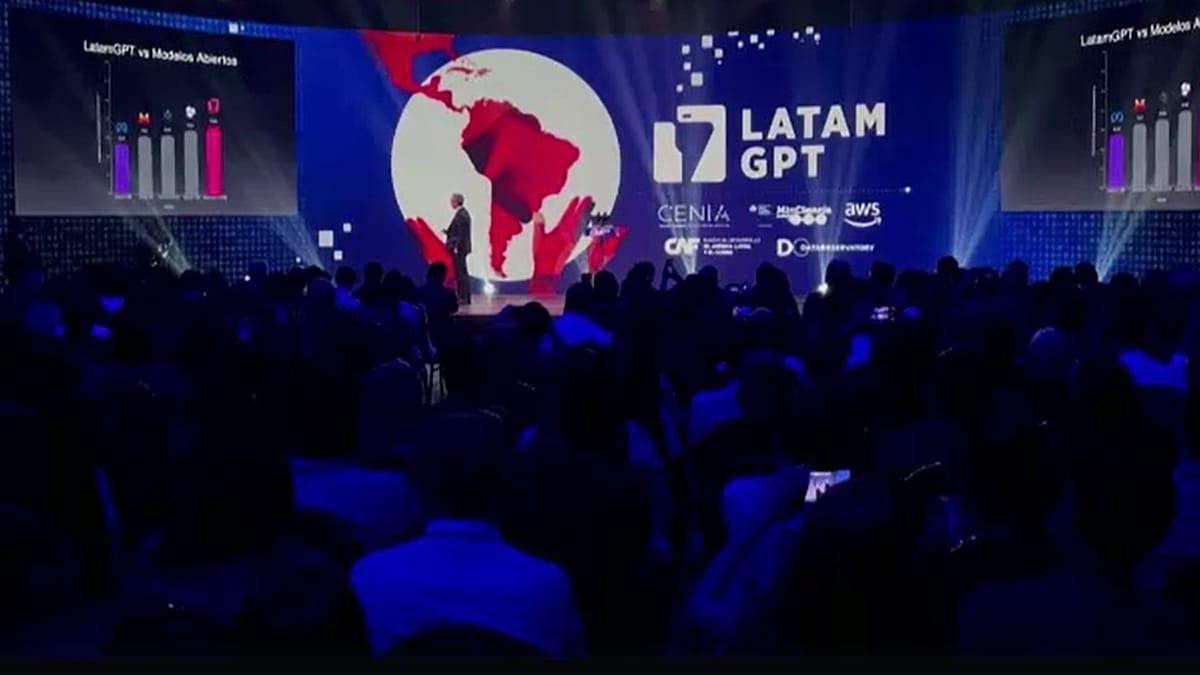
Chile unveiled Latam-GPT on Tuesday, marking a significant step toward regional technological independence in artificial intelligence. The open-source AI model represents a two-year collaborative effort led by the Chilean National Center for Artificial Intelligence (CENIA) and supported by over 30 institutions across eight Latin American countries including Argentina, Brazil, Colombia, Ecuador, Mexico, Peru, and Uruguay
1
. President Gabriel Boric emphasized the strategic importance of the launch, stating that "artificial intelligence is the greatest technological revolution of recent times, and from Latin America and the Caribbean, it is strategic and urgent that we play a role"1
. The initiative aims to position the region as an active player rather than a passive recipient in the global AI economy.
Source: France 24
Addressing Linguistic Bias Through Regional Data Training
The artificial intelligence language model was developed specifically to combat US-centric bias inherent in existing AI systems trained primarily on English data. Rodrigo Durán, executive director at CENIA, explained that "Latam-GPT is trained with a proportion of Latin American data that previously did not exist online and was not included in existing models"
1
. The model required collecting more than eight terabytes of data, equivalent to millions of books, from private sources obtained through strategic partnerships and synthetic data addressing underrepresented areas1
. This comprehensive data training enables the model to recognize regional slang, idioms, and even speech patterns that other AI systems often misinterpret3
.Foundational AI Infrastructure for Regional Applications
Unlike consumer-facing tools such as ChatGPT or Google Gemini, Latam-GPT functions as foundational infrastructure for future regional AI applications rather than a direct competitor
1
. The open-source nature allows programmers to customize the software to suit specific local needs3
. CENIA director Alvaro Soto highlighted potential applications in healthcare, particularly for hospitals "with logistical problems or issues with the use of medical resources"3
. Chilean company Digevo has already committed to using the model to develop conversational robots specializing in customer service for airlines and retail companies, with clients showing strong interest in having users express themselves in local language2
.
Source: Euronews
Building Technical Capacity on a Modest Budget
The AI model for Latin America was developed with just $550,000 in funding, primarily sourced from the Development Bank of Latin America (CAF) and CENIA's own resources
1
. The first version was developed using Amazon Web Services cloud infrastructure and will launch at the end of February4
. Future versions will be trained on a supercomputer at the University of Tarapacá in northern Chile, with an investment of approximately $4.5 million, starting in the first semester of 20261
. While academics like Alejandro Barros from the University of Chile acknowledge that Latam-GPT has "no chance" of competing with major global AI models due to resource disparities, the project demonstrates that Latin America can develop and understand this technology3
.Related Stories




Preserving Cultural Diversity and Language Representation
The project operates primarily in Spanish and Portuguese, with plans to incorporate indigenous languages in later stages
1
. Gabriela Arriagada, a researcher at CENIA and head of the project's ethics team, explained that "when we talk about incorporating Latin American culture, we are referring to a training approach designed to address data that reflects cultural realities, identifying where gaps exist in other models"1
. Chile's Science Minister Aldo Valle emphasized that Latin America "cannot simply be a passive user or recipient of artificial intelligence systems" as this could result in the loss of significant traditions3
. The initiative joins other regional AI efforts worldwide, including SEA-LION in Southeast Asia and UlizaLlama in Africa, all focusing on their own cultural contexts2
.Implications for AI Regulation and Future Development
The development of Latam-GPT carries important implications for AI regulation in the region. Durán noted that "you cannot regulate something you do not understand," and the project demonstrates that Latin America now has the technical capacity to build AI models
1
. Luis Chiruzzo, an engineering professor at the University of the Republic in Uruguay, called it "a very important milestone for Latin America" that provides assurance that everyone is included in the training1
. The initiative comes as the United States, China and the European Union control more than half the world's most powerful data centers, while Africa and South America have almost no AI hubs according to Oxford University data4
. The project was announced at the February 2025 Artificial Intelligence Action Summit in Paris and launched in early 20231
.References
Summarized by

Navi
[2]
Related Stories
Recent Highlights



Recent Highlights
Today's Top Stories



Don’t drown in AI news. We cut through the noise - filtering, ranking and summarizing the most important AI news, breakthroughs and research daily. Follow topics that matter to you and stay ahead.


