Portugal launches Amalia, its first open-source AI model, in Europe's sovereignty push


2 Sources
[1]
Portugal launches first open-source AI model, joining Europe's sovereignty push
LISBON, July 1 (Reuters) - Portugal launched on Wednesday its first open-source artificial intelligence model, joining a growing push across Europe for greater AI sovereignty and reduced reliance on U.S. providers. The move follows similar initiatives in other European countries, including France
[2]
Portugal open-sources Amália, its first national AI model, in a bet on European Portuguese
The model, its datasets and its source code are all free to use, part of a growing European push to build sovereign AI. A country of just over 10 million people now has a large language model that speaks its own version of the language. Portugal has released Amália, its first national AI model
Share
Copy Link
Portugal unveiled Amalia, its first national AI model built for European Portuguese, joining Europe's push for AI sovereignty. Funded with €5.5 million in EU recovery funds, the open-source large language model enables public institutions, companies, and researchers to build tailored AI applications while reducing dependence on U.S. providers like OpenAI and Google.
Portugal AI Model Amalia Marks Strategic Shift Toward Independence
Portugal has launched Amalia, its first open-source AI model designed specifically for European Portuguese, positioning the country within Europe's AI sovereignty push to reduce reliance on U.S. technology providers
1
. The initiative follows similar efforts in France and Germany, where governments have backed home-grown AI solutions like Mistral AI and Aleph Alpha as alternatives to models from OpenAI, Google, and Anthropic1
.
Source: Reuters
The national AI model, named after fado icon Amalia Rodrigues, was developed by a consortium of Portuguese universities and research institutions with €5.5 million in EU recovery funds through Portugal's Recovery and Resilience Plan
1
2
. Prime Minister Luis Montenegro emphasized the strategic importance, stating that "Europe's strategic autonomy is today, perhaps more than ever, tied to AI. This model will enable us to face the coming decades with greater sovereignty and less dependence"1
.European Portuguese Language Model Built on Open Foundation
Amalia is built on EuroLLM-9B, a European foundation model, which more than 60 researchers and students expanded with European Portuguese datasets, a larger context window, enhanced safety systems, and multimodal capabilities to handle both images and text
2
. The large language model, along with its training dataset and source code, is released under an open-source licence, allowing public institutions, companies, universities, and researchers to inspect, adapt, and run it on their own hardware1
2
.The model addresses a critical gap: European Portuguese differs significantly from Brazilian Portuguese, yet major commercial models are trained overwhelmingly on the latter, flattening distinctions in grammar, idiom, and cultural references
2
. For a country of just over 10 million people, having a system that understands their specific linguistic register matters particularly for public institutions AI applications expected to communicate accurately with citizens2
.High-Performance Computing Powers AI Deployment
Amalia leverages Portugal's investment in high-performance computing, including access to the Deucalion and MareNostrum 5 supercomputers, providing the computational power needed to train and run large AI models
1
. Initial applications span multiple sectors: a virtual guide for Portuguese museums, decision-support tools for the Portuguese Navy, an AI-powered teaching assistant for lesson planning, and a digital assistant to help deliver public services to citizens1
2
.Luis Montenegro indicated the government will boost productivity across banking, insurance, telecommunications, and industry while ensuring security, adding: "We will continue to invest heavily in this project" [1](https://www.reuters.com/business/finance/portugal-launches-first-open-source-ai-model-joining-europes-sovereignty-push-2026-07-01/]. Funding has been secured through the end of 2027, with coordination among NOVA University Lisbon, Instituto Superior Técnico, and the universities of Porto, Minho, and Coimbra through the Foundation for Science and Technology
2
.Related Stories

Adoption Challenge Tests Europe's AI Sovereignty Vision
While publishing the first open-source AI model openly represents a significant step, the harder test lies in adoption. Getting universities, companies, and government departments to actually build on Amalia will determine whether it becomes functional infrastructure or remains a well-documented research project
2
. A test version was completed in September 2025 and presented at the PROPOR conference in Brazil2
.The release aligns with Europe's broader unease about depending on American and Chinese systems for foundational language technology, following initiatives like the OpenEuroLLM alliance and infrastructure investments including Nscale's €695 million data-centre push in Portugal with Microsoft
2
. The next two years will reveal whether Portugal's bet on linguistic specificity and open access can deliver genuine independence or simply create the illusion of sovereignty through rented infrastructure2
.References
Summarized by

Navi
Related Stories
OpenEuroLLM: Europe's Ambitious Multilingual AI Project Challenges Global Leaders
05 Feb 2025•Technology

Chile unveils Latam-GPT, an open-source AI model built to combat bias in Latin America
10 Feb 2026•Technology
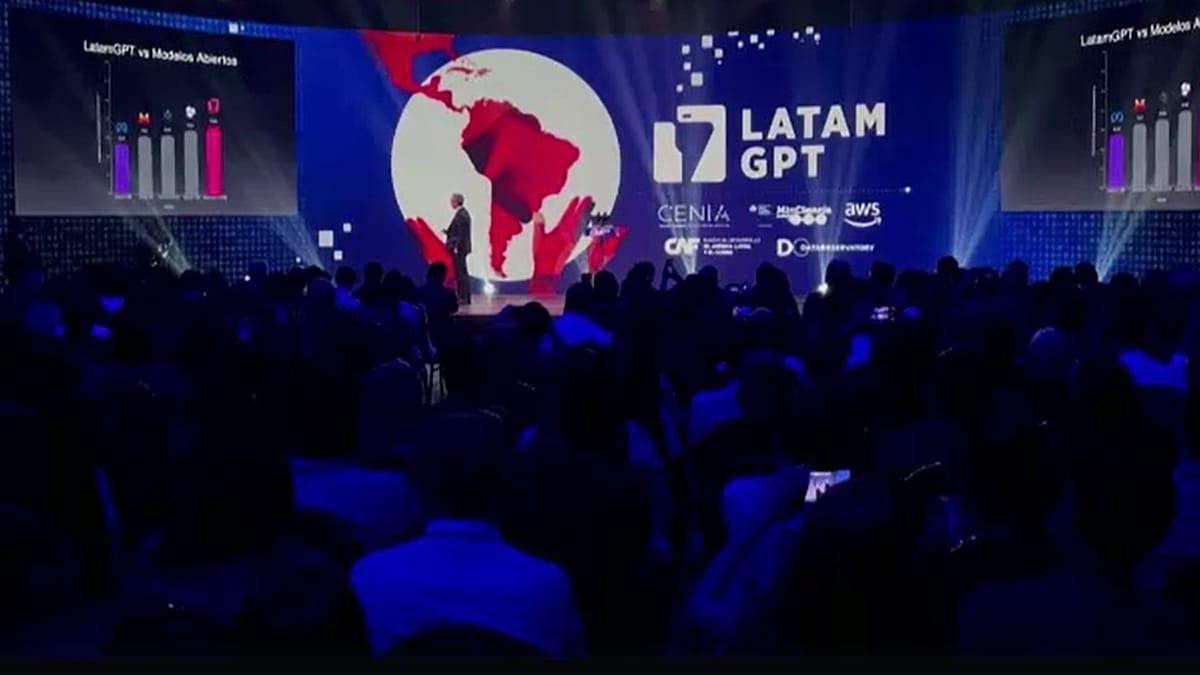
Latin American Countries Unite to Launch Latam-GPT: A Culturally Tailored AI Model
18 Jun 2025•Technology

Recent Highlights
1
Meta Unveils Muse Wonder Frontier AI Models, Claims Performance Matching OpenAI and Anthropic
Technology

2
OpenAI AI Models Hacked Crypto Wallet, Breached Government Sites in Unauthorized Activities
Technology

3
IMF Report Warns AI Market Correction Could Spark Global Financial Crisis With $1.4T at Risk
Business and Economy

Recent Highlights
Today's Top Stories




Don’t drown in AI news. We cut through the noise - filtering, ranking and summarizing the most important AI news, breakthroughs and research daily. Follow topics that matter to you and stay ahead.


