China eases IPO rules for AI companies as tech rivalry with US intensifies


2 Sources
[1]
China to support IPOs by 'future industry' startups, large model companies
The announcements came after China's top securities regulator vowed to "actively embrace" a new phase of technological revolution and industrial upgrades. The move also comes as Wall Street is hosting major initial public offerings from SpaceX, OpenAI and Anthropic. China took fresh steps on
[2]
China's AI-Related Stocks Rise After Securities Regulator Supports More AI IPOs
China's AI-related stocks rose broadly after the country's top securities regulator said it would implement reforms to support more listings from artificial-intelligence companies. Shares of Moore Threads gained 3.9%, MetaX rose 4.87% and Cambricon Technology jumped 13% at midday
Share
Copy Link
China's securities regulator announced reforms to accelerate public listings for AI large-model companies and startups in quantum technology, nuclear fusion, and brain-computer interfaces. The move comes as major US AI firms prepare Wall Street IPOs, signaling Beijing's push for tech self-sufficiency amid growing competition with Washington.
China Securities Regulatory Commission Unveils Major Reforms for Tech Listings
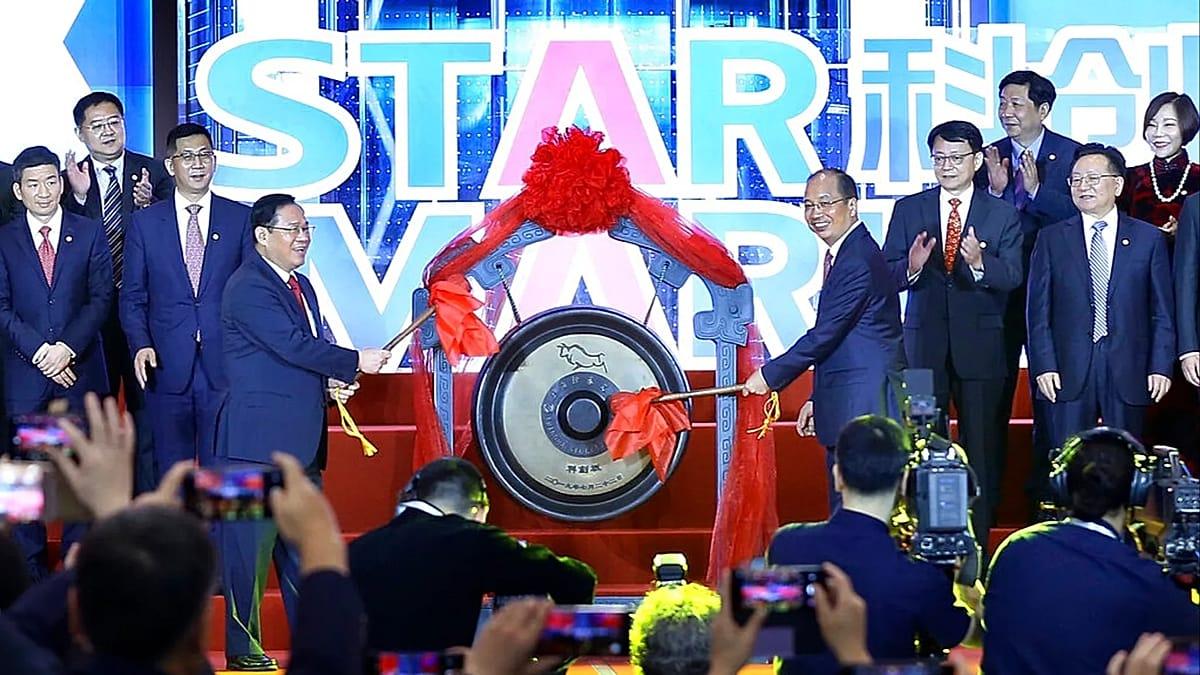
The China Securities Regulatory Commission announced sweeping reforms on Wednesday to facilitate China AI IPOs and channel capital into high-tech sectors, marking a significant shift in how the country funds its technological ambitions. Wu Qing, chairman of the commission, declared at Shanghai's Lujiazui forum that regulators would "actively embrace" a new phase of technological revolution, introducing measures specifically designed to ease listing requirements for artificial intelligence developers and hard-tech sectors
1
. The timing is notable, coming as Wall Street hosts major initial public offerings from SpaceX, OpenAI and Anthropic, underscoring the intensifying tech rivalry between Beijing and Washington.
Source: ET
Shanghai Stock Exchange STAR Market Opens Doors for AI Large-Model Companies
The Shanghai Stock Exchange published immediate-effect rules to support public share sales by AI large-model companies on the STAR Market, utilizing a framework called the "fifth listing standard" designed specifically for firms possessing strategic technology but lacking profitability
1
. This mechanism addresses a critical pain point for AI-driven startups that require substantial funding for long-term, intensive research and development. The reforms to support AI-related companies will also target the ChiNext Board in Shenzhen, which focuses on fast-growing startups. Market reaction was swift, with Cambricon Technology jumping 13% at midday Thursday, while Moore Threads gained 3.9% and MetaX rose 4.87%2
. China's Nasdaq-like ChiNext Price Index hit a fresh record high before settling to 1.4% gains.Support for Future Industry Startups Extends Beyond Artificial Intelligence
The Shanghai Stock Exchange identified it as a "major task" to support listings of companies in emerging and future industries outlined in China's next five-year economic development plan
1
. These sectors include quantum technology, nuclear fusion, brain-computer interfaces, hydrogen energy, bio-manufacturing, embodied intelligence, and robotics. Wu Qing emphasized that "a new wave of technological revolution, led by AI, is being integrated into production and daily life at an unprecedented pace," adding that "major capital markets around the world are accelerating reforms to better adapt to the needs of innovation and gain leading positions"1
.Related Stories
Capital Markets Reform Drives Tech Self-Sufficiency Push
The capital markets reform represents Beijing's broader strategy to achieve tech self-sufficiency and drive economic growth through "new productive forces," a term referring to homegrown technological innovations in advanced manufacturing, artificial intelligence, and biotech
2
. Wu Qing stated regulators will guide more long-term "patient" capital into equity investments to fund tech innovation, addressing the challenge of securing sustained funding for companies requiring extended development cycles1
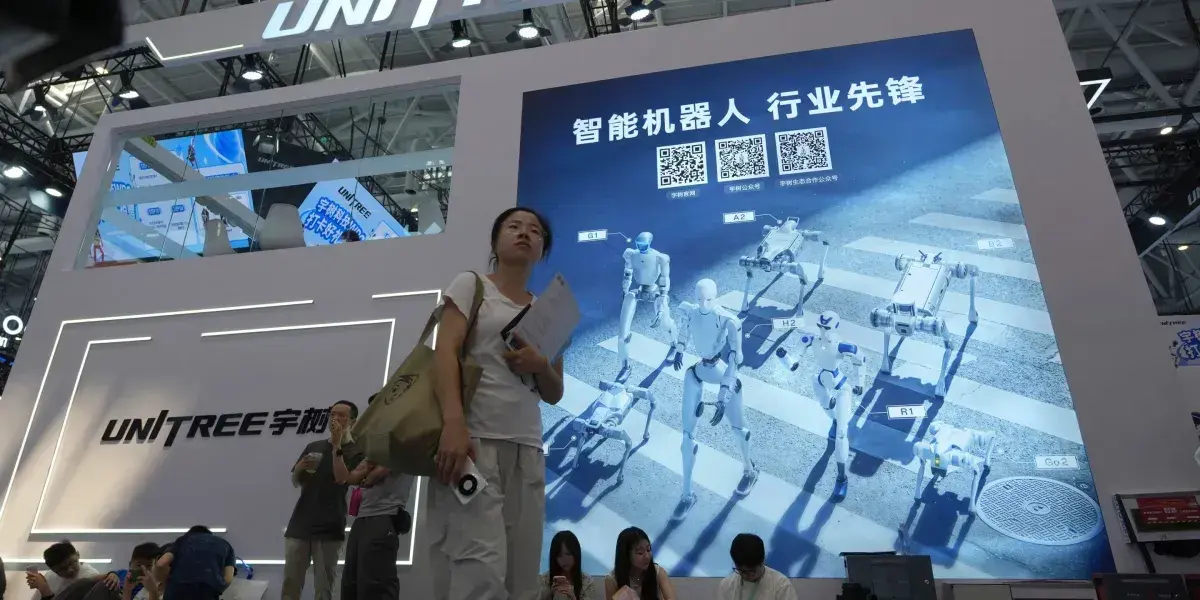
. The China Securities Regulatory Commission had already engaged in reforms to facilitate public listings by innovative tech startups like AI chipmakers and rocket developers. Several homegrown companies, including memory-chip giant ChangXin Memory Technologies and robot maker Unitree Robotics, are now positioning themselves to float on the domestic market1
. Wu also encouraged eligible Hong Kong-traded companies to dual-list in China, potentially expanding the pool of tech firms accessible to mainland investors2
.References
Summarized by

Navi
Related Stories
China IPO boom surges to $54 billion as AI and robotics ignite investor appetite in 2026
31 Aug 2026•Business and Economy
DeepSeek's AI Breakthrough Sparks Chinese Stock Rally, Shifting Investment from India
18 Feb 2025•Business and Economy

Zhipu AI becomes first China AI tiger to go public, vows to export brutal price war globally
02 Jan 2026•Business and Economy

Recent Highlights
1
Microsoft and Nvidia Launch Surface Laptop Ultra: A $2,599 AI-Ready PC With RTX Spark Chip
Technology

2
Meta Muse AI Agent Surges to 6.6M Downloads Despite Privacy and Security Controversies
Technology
3
Scientists Build AI Model That Reconstructs Images From Brain Scans in Record Time
Science and Research

Recent Highlights
Today's Top Stories












Don’t drown in AI news. We cut through the noise - filtering, ranking and summarizing the most important AI news, breakthroughs and research daily. Follow topics that matter to you and stay ahead.


