China Allows Limited Nvidia H200 Shipments as Domestic Chipmakers Capture 90% Market Share


11 Sources
[1]
H200 AI GPUs finally reach China under case-by-case import licenses, but it's already too late for Nvidia -- homemade chips corner the China market as country seeks semiconductor independence
ByteDance and Tencent each took delivery of roughly 10,000 Nvidia H200 accelerators in recent weeks, and a handful of other Chinese tech groups may soon receive approvals of similar size. The deliveries are the first meaningful movement of the chips into mainland China since President Trump cleared
[2]
China eases limits on Nvidia H200 chips as AI race escalates
Beijing permits small shipments to help leading tech groups in drive to catch up with US rivals Small batches of Nvidia's H200 chips have been allowed to enter mainland China, as Beijing tries to aid its leading AI companies in the race to catch up with US rivals. ByteDance and Tencent have each
[3]
Nvidia H200 chips reach China in small shipments, FT reports
Aug 18 (Reuters) - Small batches of Nvidia's (NVDA.O), opens new tab H200 chips, one of the company's most powerful AI chips, have been allowed to enter mainland China, the Financial Times reported on Tuesday, citing two people with knowledge of the matter. ByteDance and Tencent (0700.HK), opens
[4]
Nvidia denies report it will ship Groq-based LPUs to China by year-end -- says there is 'no China-specific LPU product in our roadmap'
There are no LPU sales in China and no China-specific variant on the roadmap. Nvidia has rejected a report claiming that it plans to begin small-batch shipments of a language processing unit tailored for Chinese customers by the end of 2026, with several Chinese orders already placed. "The
[5]
First Nvidia H200 shipments reach China, ByteDance and Tencent take deliveries as Beijing loosens its import block -- most licensed chips must stay in Hong Kong, which can't power them
ByteDance and Tencent have each taken delivery of roughly 10,000 Nvidia H200 accelerators in recent weeks, the Financial Times has reported, citing two people with knowledge of the matter, a development that would mark the first meaningful movement of the chips into mainland China since President
[6]
NVIDIA delivers 10,000 H200 chips to Chinese ByteDance and Tencent, more to follow
ByteDance and Tencent have reportedly begun receiving shipments of NVIDIA's H200 artificial intelligence chips in China, marking a significant development in the technology rivalry between Beijing and Washington. According to the Financial Times, both companies have received around 10,000 H200
[7]

Nvidia AI chip: Nvidia denies report it is rolling out China AI chip by year-end
"The reporting in The Information on Nvidia's LPU is incorrect. We have no LPU sales in the China market today, and no China-specific LPU product in our roadmap," an Nvidia spokesperson said. Nvidia on Thursday denied a report by The Information that it plans to begin shipping a language
[8]

NVIDIA Is Plotting Its China Comeback Via A New LPU-Based Inference Chip, As SMIC Rides US Export Controls To A Virtual China Monopoly
NVIDIA is trying to thread the needle when it comes to its gigantic customer base in China, attempting to balance the efficacy of its China-specific offerings with the restrictions imposed under sweeping US export controls. Now, at a time when Beijing is actively discouraging enterprises from
[9]

Nvidia H200 Chips Head Back to China: Report - NVIDIA (NASDAQ:NVDA)
Nvidia's H200 Chips Are Flowing Into China Again: ByteDance, Tencent Get Around 10,000 Each, Report Says Limited batches of Nvidia Corp.'s (NASDAQ:NVDA) powerful H200 AI chips have been approved for shipment into mainland China, signaling a limited easing of restrictions on the advanced
[10]

Nvidia was "stuck" with half a million chips. Then the solution was found
The AI chip market continues to surge, and China is attempting to maneuver between the desire to develop technological independence and the urgent need for advanced computing power: Regulators in China recently approved the entry of small quantities of H200 chips from American chip giant Nvidia
[11]

Nvidia H200 chips reportedly begin China entry
Small volumes of Nvidia H200 chips have been admitted into mainland China, according to the Financial Times, citing two sources familiar with the matter. The H200 ranks among the most powerful AI processors sold by Nvidia. ByteDance and Tencent are each said to have received about 10,000
Share
Copy Link
ByteDance and Tencent each received roughly 10,000 Nvidia H200 AI chips in recent weeks, marking the first significant deliveries since December 2025. But these shipments represent just 2.5% of approved orders, as Beijing pushes most licensed chips to Hong Kong while domestic chipmakers like Huawei capture nearly 90% of China's AI chip market.
China Permits First Nvidia H200 Deliveries Under Strict Oversight
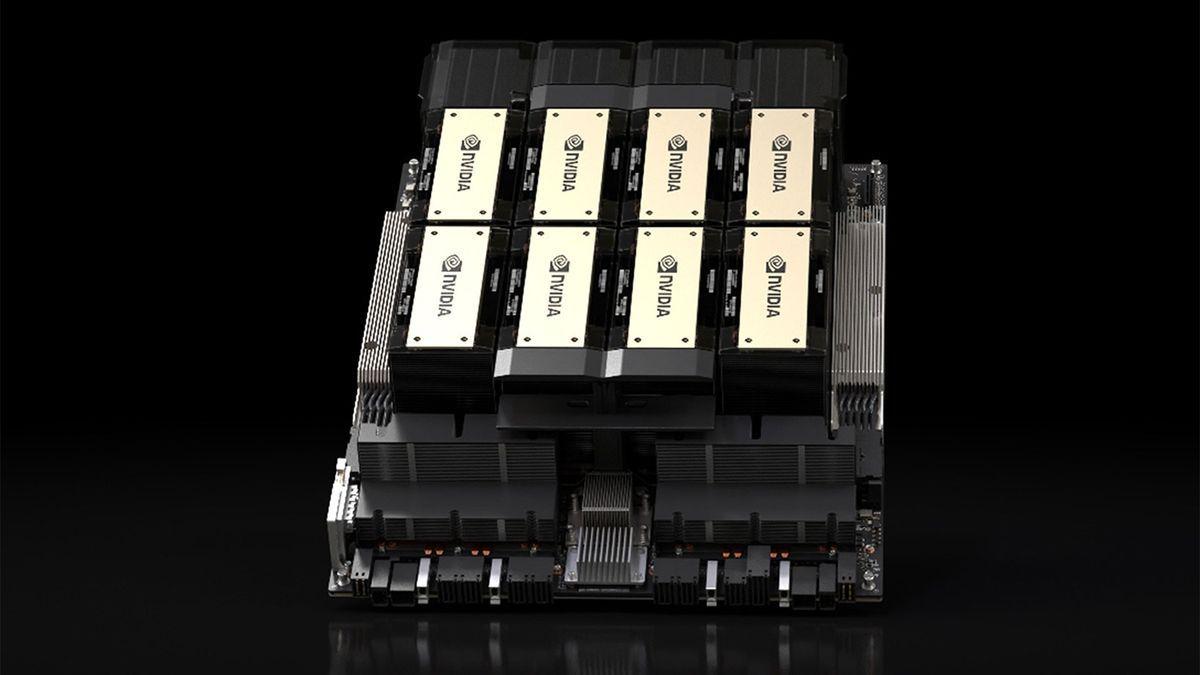
ByteDance and Tencent have each received approximately 10,000 Nvidia H200 accelerators in recent weeks, marking the first meaningful movement of these AI chips into mainland China since President Trump cleared their export in December 2025
1
2
. A handful of other Chinese tech groups may soon receive approvals of similar size as Beijing tries to aid its leading AI companies in the race to catch up with US rivals2
. The deliveries arrive under strict oversight from China's National Development and Reform Commission, which approves each purchase individually through a case-by-case process1
.
Source: Tom's Hardware
Dual Licensing System Creates Import Bottleneck
The current situation operates under two parallel licensing regimes. Trump approved H200 exports in December 2025 in exchange for a 25% cut of every sale to the U.S. Treasury, with terms formalized in January requiring each chip to pass through US territory for third-party inspection before re-export
1
. The Commerce Department moved license applications to case-by-case review on January 16 and had cleared roughly 10 firms by mid-May, including Alibaba, ByteDance, Tencent, and JD.com, with Lenovo and Foxconn approved as distributors1
. China built the NDRC's per-purchase approval process from scratch to mirror the Commerce Department's case-by-case license review1
.Most Licensed Chips Must Stay Outside Mainland
While Chinese AI companies have been cleared by the US to buy up to 100,000 H200s apiece, Beijing wants them to keep most of these chips outside the mainland to support domestic chipmakers
2
5
. Chinese regulators have told companies they can ship such processors to Hong Kong, which operates as a territory outside its customs border, and use them there2
. Measured against the 400,000-plus units that ByteDance, Alibaba, and Tencent were collectively approved to buy in January, the chips now on the mainland amount to roughly 2.5% of the order book1
. The 10,000-unit mainland allocations function as quantity caps, the very instrument that U.S. export controls have used since the first Hopper restrictions in 20221
.Hong Kong Infrastructure Cannot Support Chip Volumes
Allowing the chips into Hong Kong presents a significant challenge to Chinese tech groups as the former British colony lacks enough data centers to house them
2
. The H200 draws up to 700W, with a fully loaded eight-GPU HGX H200 server pulling roughly 10 kW5
. At that rate, a single company's 100,000-unit allowance works out to about 12,500 servers and 125 MW of IT load, and Nvidia's reported 500,000-unit stockpile translates to roughly 625 MW5
. Hong Kong's entire installed base runs to 47 data centers totaling about 581 MW, and the city's average PUE of 1.62 pushes actual grid draw well above the IT figure5
. "It's a dilemma. Everyone needs the chips but struggles to find a way to use them in Hong Kong," said a person familiar with the situation2
.DeepSeek Training Bottleneck Reveals Domestic Chip Limitations
A transcript of DeepSeek founder Liang Wenfeng's May 20 closed-door investor meeting, leaked online in July, explains why Beijing is letting any Nvidia silicon in at all
1
. According to the document, Liang told investors he wanted 200,000 Huawei accelerators to train a frontier model and received an allocation of 16,000, against total Huawei capacity of roughly 750,000 chips this year split across every Chinese AI company1
. DeepSeek's lab attempts to train its R2 model on Huawei Ascend hardware failed repeatedly, and training moved back to Nvidia chips while Ascend accelerators handle inference1
. Chinese labs increasingly use domestic chips for AI inference work that involves generating live responses; most still use Nvidia chips for the more complex AI training phase to build knowledge and look for patterns2
.
Source: Wccftech
Related Stories


Domestic Chipmakers Capture 90% Market Share
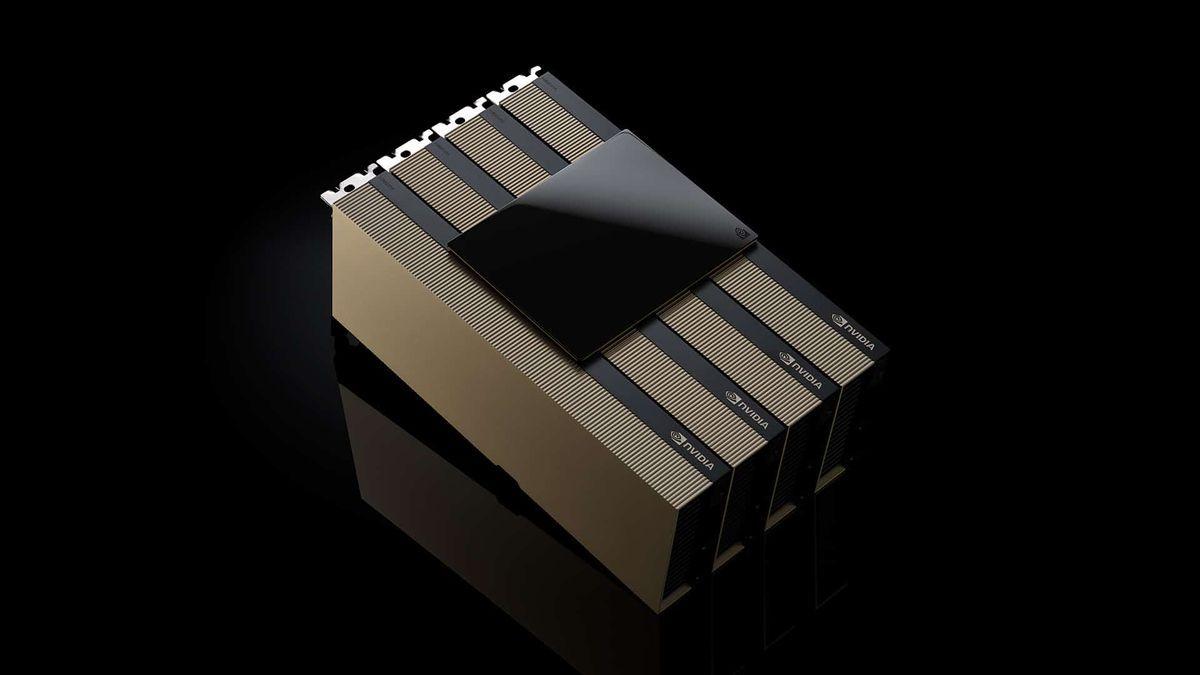
TrendForce's August 10 supply chain survey projects that domestic chips will take nearly 90% of China's high-end AI chip market this year, with domestic high-end shipments growing 83% year over year
1
. Bernstein has recorded the same displacement from the other direction, with Nvidia's China share falling from 66% in 2024 to 40% in 2025 and a projected 8% this year1
. Huawei planned to roughly double output of its 910C Ascend chip to about 600,000 units in 2026, against a total Chinese accelerator market that ran to roughly 4 million units in 2025, 2.36 million of them supplied by Nvidia and AMD1
. China's continued import controls reflect its desire to support domestic chipmakers led by Huawei, which aim to dominate the world's second largest semiconductor market where Nvidia is mostly shut out due to US export controls2
.Strategic Calibration Balances Innovation and Independence
The H200 carries 141GB of HBM3e at 4.8 TB/s, delivering roughly six times the performance of the H20, and approaching the banned H100
1
. A 10,000-GPU cluster is genuine frontier-training capacity, comparable to the builds behind the GPT-4 generation, though it represents a fraction of the 100,000-GPU-plus systems U.S. labs now run1
. That ratio seems to have been precisely calibrated by Beijing officials, large enough to keep flagship labs training their frontier AI models, but small enough that inference stays a captive market for domestic chipmakers1
. Chinese regulators have recently started loosening restrictions on US chips to ensure that leading domestic AI developers can continue training cutting-edge models as Chinese groups vie to compete with advanced models such as Anthropic's Mythos 52
. Last month Chinese AI lab Moonshot released its K3 model, whose performance almost rivalled the most advanced US models, with Alibaba, DeepSeek and Z.ai all following with models of similar intelligence level2
.
Source: Digital Trends
References
Summarized by

Navi
[4]
Related Stories
Recent Highlights
1
Meta Unveils Muse Wonder Frontier AI Models, Claims Performance Matching OpenAI and Anthropic
Technology

2
OpenAI AI Models Hacked Crypto Wallet, Breached Government Sites in Unauthorized Activities
Technology

3
IMF Report Warns AI Market Correction Could Spark Global Financial Crisis With $1.4T at Risk
Business and Economy

Recent Highlights
Today's Top Stories




Don’t drown in AI news. We cut through the noise - filtering, ranking and summarizing the most important AI news, breakthroughs and research daily. Follow topics that matter to you and stay ahead.


