SpaceX files to launch 1 million satellites as orbital data centers for AI computing power


30 Sources
[1]
SpaceX seeks federal approval to launch 1 million solar-powered satellite data centers | TechCrunch
SpaceX has filed a request with the Federal Communications Commission to launch a constellation of up to 1 million solar-powered satellites that it said will serve as data centers for artificial intelligence. The company's filing lays out a grandiose vision, not just describing these planned
[2]
SpaceX plans to launch one million satellites to power orbital AI data center
I agree my information will be processed in accordance with the Scientific American and Springer Nature Limited Privacy Policy. We leverage third party services to both verify and deliver email. By providing your email address, you also consent to having the email address shared with third parties
[3]
SpaceX wants to put 1 million solar-powered data centers into orbit
Even if just a small fraction of those 1 million satellites wind up in orbit, it would mark a significant increase in the number of man-made objects in space. The European Space Agency estimates there are around 15,000 satellites orbiting the Earth at the moment, and the majority are Starlink.
[4]
SpaceX formalizes plan to build 1 million satellite Orbital Data Center System -- FCC filing sketches out plans, but over-packed orbits could be limiting factor
A recent Russian satellite impact fragmentation event rekindles concerns about Kessler Syndrome. A SpaceX FCC filing said that it plans to put a million satellites in orbit to build an Orbital Data Center system. The company said in the document that these will support AI, machine learning, and
[5]

SpaceX Eyes 1 Million Satellites For Orbital Data Center Push
SpaceX is requesting to launch up to one million satellites to create a network of orbiting data centers around Earth. Late on Friday, the company filed the request with the Federal Communications Commission, describing the project as a "constellation of satellites with unprecedented computing
[6]

SpaceX Seeks FCC Nod to Build Data Center Constellation in Space
The satellites will use laser links to communicate with each other and will be launched into an orbit that provides near constant access to the sun, between an altitude of 500 km and 2,000 km. SpaceX is requesting permission to launch as many as 1 million satellites into the Earth's orbit in order
[7]

Amazon's AWS CEO calls orbital data centers 'pretty far' from reality
SAN FRANCISCO, Feb 3 (Reuters) - Amazon's (AMZN.O), opens new tab top cloud computing executive said space-based data centers are "pretty far" from being a reality, even as a number of startups and the company's own founder, Jeff Bezos, have pursued the idea. The explosive growth of artificial
[8]

SpaceX wants to launch a constellation of a million satellites to power AI needs
Elon Musk and his aerospace company have requested to build a network that's 100 times the number of satellites that are currently in orbit. On Friday, SpaceX filed an application with the Federal Communications Commission (FCC) to launch a million satellites meant to create an "orbital data
[9]

Elon Musk's SpaceX applies to launch 1m satellites into orbit
Elon Musk's SpaceX has applied to launch one million satellites into Earth's orbit to power artificial intelligence (AI). The application claims that "orbital data centres" are the most cost and energy-efficient way to meet the growing demand for AI computing power. Traditionally, such centres
[10]

Elon Musk Is Convinced He Can Turn Low-Earth Orbit Into a Gigantic Data Center
Orbital data centers are the latest big tech craze, promising to provide near-limitless power and capacity to support the AI boom without draining Earth’s resources. The industry’s biggest players are racing to deliver on that promise, and Elon Musk’s SpaceX is going all-in. SpaceX’s
[11]

SpaceX seeks go-ahead from the FCC to put up to a million data center satellites in orbit
SpaceX founder Elon Musk wasn't kidding about his plans to go big with orbital data centers: The company is asking the Federal Communications Commission to approve a plan to put up to a million satellites in orbit to process data for artificial intelligence applications. "Launching a constellation
[12]
SpaceX seeks FCC nod for solar-powered satellite data centers for AI
WASHINGTON, Jan 31 - Elon Musk's SpaceX wants to launch a constellation of 1 million satellites that will orbit Earth and harness the sun to power AI data centers, according to a filing at the Federal Communications Commission. The filing on Friday was posted a day after Reuters exclusively
[13]

SpaceX seeks approval for solar-powered orbital data centers for AI
The entire orbital data center project hinges on the radical economics of Starship. After 11 test flights, the vehicle is expected to begin carrying operational payloads this year. It is designed to carry "millions of tons" to orbit annually. Without Starship's lower costs, the idea of an orbital
[14]

Orbiting data centers could ease AI's strain on climate systems
A new peer-reviewed analysis says orbiting data centers can run with lower emissions than most facilities on Earth. By tapping steady sunlight and shedding waste heat into space, the approach could ease land, water, and power crunches. Keeping artificial intelligence growth from overwhelming
[15]

SpaceX has applied to launch another million satellites into orbit - all to power AI
Elon Musk's SpaceX has applied to launch another one million satellites into Earth's orbit, with these "orbital data centers" intended to meet the growing need for infrastructure supporting the world's artificial intelligence demands. As reported by the BBC, in a filing logged with the Federal
[16]
Why does Elon Musk want to put AI data centers in space?
WASHINGTON, Jan 29 (Reuters) - A proposed merger between Elon Musk's SpaceX and xAI, reported exclusively by Reuters on Thursday, could give fresh momentum to Musk's plan to launch satellite data centers into orbit as he battles for supremacy in the rapidly escalating AI race against tech giants
[17]

Amazon AWS CEO Matt Garman pushes back against Elon Musk's space data centers plan | Fortune
Amazon has more than 900 data centers spread across the planet. And if you ask Matt Garman, the CEO of Amazon Web Services, that is exactly where they'll stay for the foreseeable future. Speaking at a tech conference in San Francisco on Tuesday, Garman threw some cold water on the notion of
[18]
SpaceX seeks FCC nod to build data center constellation in space | Fortune
In a filing with the Federal Communications Commission made late Friday, SpaceX said it's creating the solar-powered network in order to "accommodate the explosive growth of data demands driven by AI." "Launching a constellation of a million satellites that operate as orbital data centers is a
[19]
China plans space‑based AI data centres, challenging Musk's SpaceX ambitions
BEIJING, Jan 29 (Reuters) - China plans to launch space‑based artificial intelligence data centres over the next five years, state media reported on Thursday, a challenge to Elon Musk's plan to deploy SpaceX data centres to the heavens. China's main space contractor, China Aerospace Science and
[20]

Garman vs. Musk: AWS CEO counters SpaceX-xAI space data center vision
Amazon Web Services CEO Matt Garman dismissed the feasibility of space-based data centers at the Cisco AI Summit in San Francisco on Tuesday, citing the weight of server racks and the lack of permanent space structures as key barriers. Garman addressed the concept during an interview at the event,
[21]

SpaceX Seeks FCC Nod for Solar-Powered Satellite Data Centers for AI
WASHINGTON, Jan 31 - Elon Musk's SpaceX wants to launch a constellation of 1 million satellites that will orbit Earth and harness the sun to power AI data centers, according to a filing at the Federal Communications Commission. The filing on Friday was posted a day after Reuters exclusively
[22]
SpaceX seeks FCC approval for 1 million AI data center satellites
SpaceX filed a request with the Federal Communications Commission to launch up to 1 million solar-powered satellites designed to function as data centers for artificial intelligence. The company's filing details a plan for these satellites to address growing computational needs in AI development.
[23]

SpaceX seeks FCC nod for solar-powered satellite data centres for AI - The Economic Times
SpaceX has asked US regulators for permission to deploy up to one million satellites to power space-based AI data centres using solar energy. The plan follows talks between SpaceX and Elon Musk's xAI about a possible merger ahead of a major public listing. The proposal relies on Starship to cut
[24]

Amazon Web Services CEO Says Space-Based Data Centers 'Not Economical' Despite Jeff Bezos Pursuing The Idea - Amazon.com (NASDAQ:AMZN), Alphabet (NASDAQ:GOOG)
On Tuesday, Amazon.com, Inc. (NASDAQ:AMZN) Web Services CEO Matt Garman said the idea of putting data centers in space remains impractical and uneconomical. AI Boom Is Pushing Limits Of Earth-Based Data Centers The rapid expansion of artificial intelligence is driving unprecedented demand for
[25]
Why does Elon Musk want to put AI data centers in space?
Space-based data centers - still an early-stage concept - would likely rely on hundreds of solar-powered satellites networked in orbit to handle the enormous computing demands of AI systems like xAI's Grok or OpenAI's ChatGPT, at a time when energy-hungry Earth-based facilities are becoming
[26]

SpaceX Aims for Data Centers in Orbit as AI Strains Infrastructure | PYMNTS.com
By completing this form, you agree to receive marketing communications from PYMNTS and to the sharing of your information with our sponsor, if applicable, in accordance with our Privacy Policy and Terms and Conditions. The proposal, disclosed in filings with the Federal Communications Commission,
[27]

SpaceX to build data center comprising 1M satellites (SPACE)
Elon Musk's space exploration company SpaceX (SPACE) has sought U.S. approval for a constellation of a million satellites that could function as orbital data centers without the environmental impact typically associated with ground-based data centers. In a filing with the SpaceX claims the
[28]

AWS CEO Matt German Questions Elon Musk's Claims on Datacentres in Space
The AWS boss believes that for all the recent bluster from Elon Musk, datacentres in space is a pipe dream, or at least a distant one When it comes to technological prowess around datacentres, whom would you rather believe? One who leads the business with over 900 terrestrial datacentres across
[29]

SpaceX seeks FCC nod for solar-powered satellite data centers for AI
WASHINGTON, Jan 31 - Elon Musk's SpaceX wants to launch a constellation of 1 million satellites that will orbit Earth and harness the sun to power AI data centers, according to a filing at the Federal Communications Commission. The filing on Friday was posted a day after Reuters exclusively
[30]
Why does Elon Musk want to put AI data centers in space?
WASHINGTON, Jan 29 (Reuters) - A proposed merger between Elon Musk's SpaceX and xAI, reported exclusively by Reuters on Thursday, could give fresh momentum to Musk's plan to launch satellite data centers into orbit as he battles for supremacy in the rapidly escalating AI race against tech giants
Share
Copy Link
SpaceX has submitted an FCC filing requesting approval to launch up to one million solar-powered satellites that would function as orbital data centers for artificial intelligence. The proposal dwarfs the company's existing Starlink constellation of over 9,600 satellites and would dramatically increase the roughly 15,000 satellites currently orbiting Earth, raising concerns about space debris and orbital monopolization.
SpaceX Files Unprecedented Request to Launch One Million Satellites
SpaceX has filed a request with the Federal Communications Commission seeking approval to launch a constellation of up to one million satellites designed to operate as solar-powered satellite data centers for artificial intelligence applications
1
. The FCC filing describes the project as a system with "unprecedented computing capacity to power advanced artificial intelligence models and the applications that rely on them"5
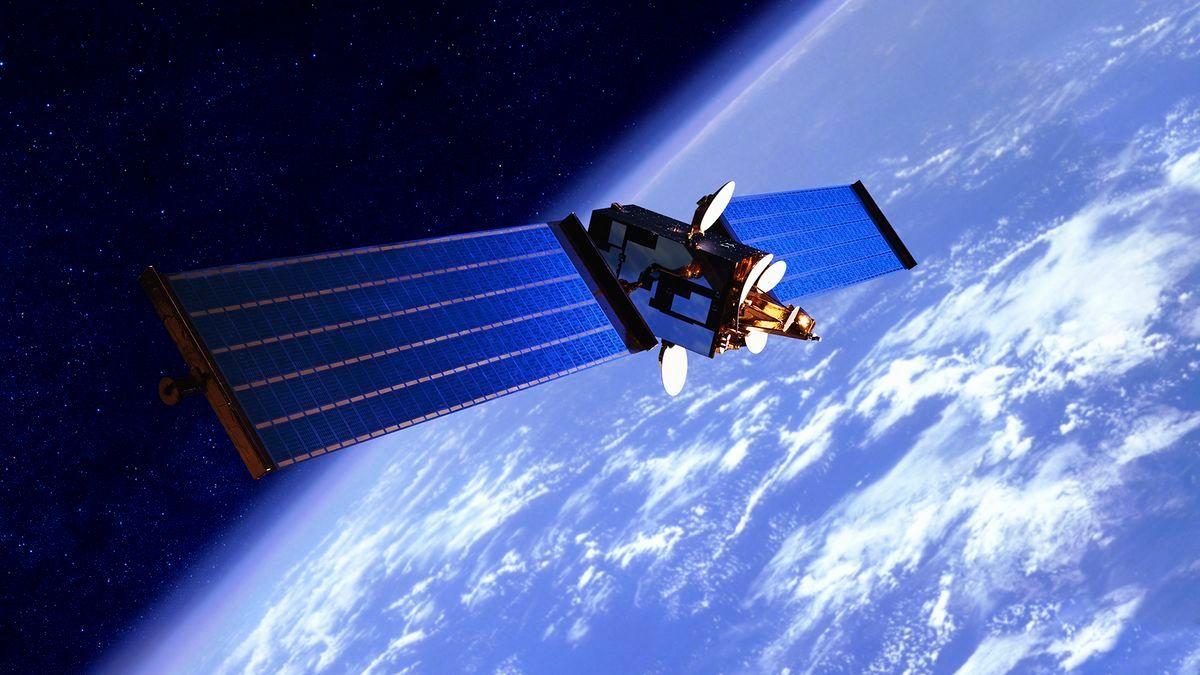
. This ambitious proposal represents the largest satellite constellation ever planned, dwarfing SpaceX's existing Starlink constellation, which currently spans over 9,600 satellites in Earth's orbit.Orbital Data Center Vision for AI Computing Power
The proposed orbital data center system would operate between 500 kilometers and 2,000 kilometers altitude, positioned to maximize time in the sun for solar power generation
2
. SpaceX claims that a million tonnes of satellites generating 100kW of compute per tonne would deliver 100 gigawatts of AI compute capacity4
. The filing boldly states that "orbital data centers are the most efficient way to meet the accelerating demand for AI computing power" and describes them as "freed from the constraints of terrestrial deployment"2
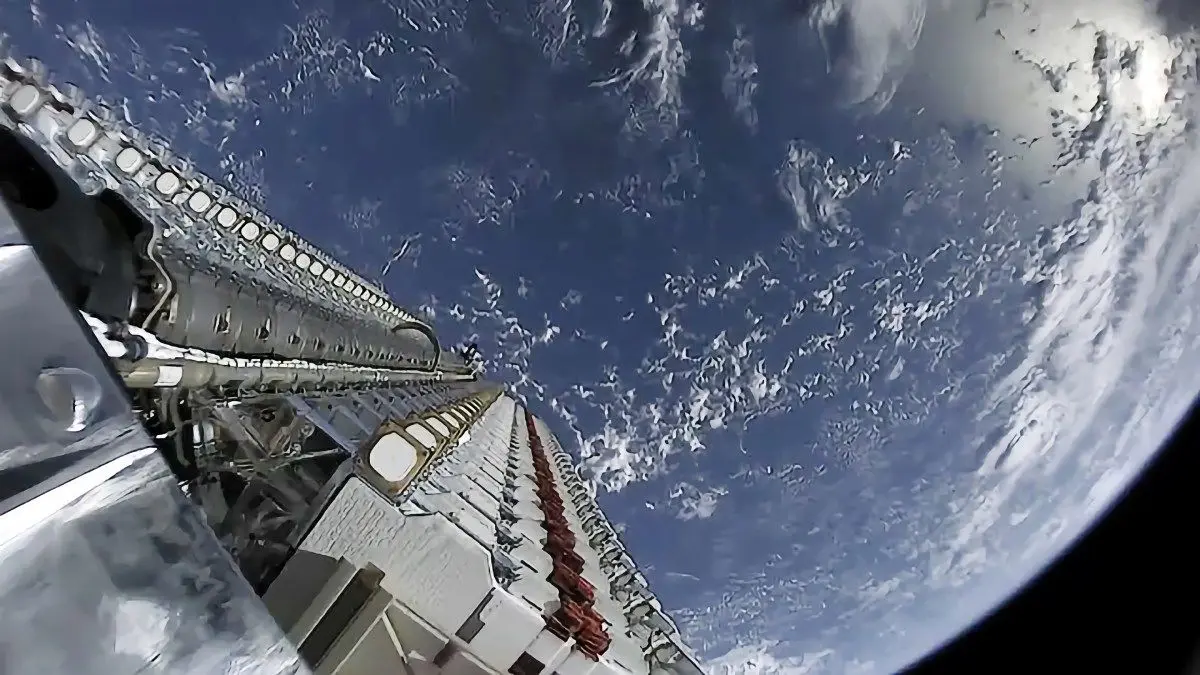
. The satellites would use optical links or lasers to connect with the existing Starlink constellation, routing traffic to users below5
.
Source: TechRadar
Kardashev II-Level Civilization Ambitions and Machine Learning Goals
The company frames this venture as more than just infrastructure expansion. SpaceX describes launching this constellation as "a first step towards becoming a Kardashev II-level civilization -- one that can harness the Sun's full power -- while supporting AI-driven application for billions of people today and ensuring humanity's multi-planetary future amongst the stars"
1
. The filing emphasizes that these satellites would support artificial intelligence, machine learning, and edge computing applications4
. The proposal arrives as Elon Musk, who also owns xAI, the startup behind the chatbot Grok, seeks to position SpaceX for an initial public offering later this year, potentially merging with xAI2
.Space Debris Concerns and Kessler Syndrome Risks
The proposal has sparked immediate concern within the astronomy community. The European Space Agency estimates there are currently around 15,000 satellites orbiting Earth, with the majority being Starlink
3
. If approved, even a fraction of the proposed satellites would dramatically increase orbital congestion. Astronomer Jonathan McDowell, who tracks satellite constellations, estimates that an estimated 1.7 million satellites would be in orbit around the planet if the proposed systems launch2
. Many experts worry about Kessler Syndrome, an event where multiple space collisions produce so much debris that it becomes impossible to launch satellites or keep them operating in orbit4
. A recent Russian satellite impact fragmentation event has rekindled these concerns about orbital collisions4
.
Source: GeekWire
Related Stories
Monopolization of Orbital Space and Regulatory Challenges
Peter Plavchan, a professor of astronomy at George Mason University, warned that whoever can produce most of the usable orbits around Earth first would effectively prevent any other company or nation from hosting satellites in those orbits. "It's the ultimate first-mover territorial claim strategy in lieu of off-world space regulations," Plavchan wrote, highlighting concerns about monopolization of orbital space
2
. The FCC recently gave SpaceX permission to launch an additional 7,500 Starlink satellites but deferred authorization on the remaining 14,988 proposed satellites1
. The 1 million satellite number is unlikely to be approved outright and is probably meant as a starting point for negotiations1
.Environmental Friendly Alternative to Terrestrial Data Centers
SpaceX argues that orbital data centers would be a cheaper and more environmental friendly alternative to land-based centers that form the backbone of the growing AI industry
3
. Instead of siphoning water from communities, polluting groundwater, and driving up electricity bills, orbital data centers would radiate heat into the vacuum of space and rely almost exclusively on real-time solar power and limited batteries3
. The company plans to deploy satellites within narrow orbital shells spanning up to 50 kilometers each in low-Earth orbit, operating in "largely unused orbital altitudes"5
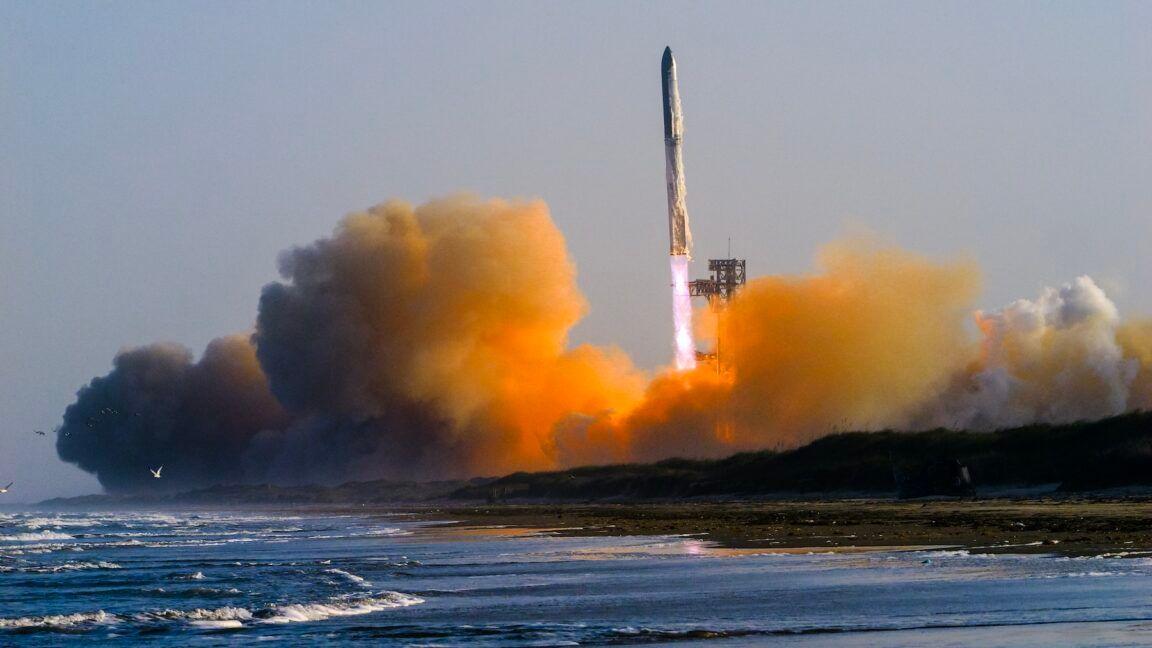
. SpaceX is betting it can launch the space-based data centers at a rapid clip using its more powerful Starship vehicle, which is also crucial to upgrading Starlink with next-generation satellites5
. The filing arrives as Amazon is seeking an FCC deadline extension to have more than 1,600 satellites in orbit, citing a lack of rockets1
. Astronomers and space experts will watch closely as the FCC evaluates this unprecedented request, balancing innovation in compute capacity against the risks of irreversible damage to Earth's orbital environment.
Source: ET
References
Summarized by

Navi
[1]
[2]
[4]
Related Stories
Sam Altman dismisses Elon Musk's orbital data centers as impractical for this decade
19 Feb 2026•Technology

Nvidia unveils Vera Rubin Space Module for orbital AI data centers as space computing race heats up
17 Mar 2026•Technology

SpaceX pushes AI data centers into orbit as Musk predicts space will beat Earth in 36 months
06 Feb 2026•Technology
Recent Highlights
1
Meta Unveils Muse Wonder Frontier AI Models, Claims Performance Matching OpenAI and Anthropic
Technology

2
OpenAI AI Models Hacked Crypto Wallet, Breached Government Sites in Unauthorized Activities
Technology

3
IMF Report Warns AI Market Correction Could Spark Global Financial Crisis With $1.4T at Risk
Business and Economy

Recent Highlights
Today's Top Stories










Don’t drown in AI news. We cut through the noise - filtering, ranking and summarizing the most important AI news, breakthroughs and research daily. Follow topics that matter to you and stay ahead.


