China Positions Itself as AI Governance Leader as US-China AI Competition Takes Unexpected Turn


2 Sources
[1]
What Really Happens If China Wins the AI Race?
For years, the tech industry has portrayed Chinese AI development as an existential threat. The truth is not so straightforward. As China releases ever more capable AI models -- ones that compete with Silicon Valley's top offerings -- many American AI and national-security researchers have been
[2]
Who Gets to Write the Rules on AI?
So many people had signed up for China's premier artificial-intelligence expo in mid-July -- over 200,000 by some estimates -- that the ticketing system had crashed. A mob of frustrated AI enthusiasts had formed outside as a result. "How could they do this to us?" one woman cried. "Report the
Share
Copy Link
China's World Artificial Intelligence Conference drew over 200,000 attendees as President Xi Jinping announced a 29-country governance body based in Shanghai. The shift comes as the US abandons international AI cooperation, leaving experts concerned about America's diminishing role in shaping global AI safety standards and regulations.
China Takes Center Stage in Global AI Governance
The US-China AI competition has entered a new phase, with China positioning itself as the responsible steward of artificial intelligence governance while America retreats from international cooperation. At the World Artificial Intelligence Conference in Shanghai, over 200,000 attendees witnessed President Xi Jinping announce a 29-country governance body to standardize AI rules globally
2
. The expo, spanning more than 14 football fields, showcased robot workers assembling other robots and computer chips made entirely without American parts, signaling China's growing technological independence2
.This shift represents a dramatic reversal from the Biden era, when the United States was widely seen as the more responsible superpower in AI development. An American AI policy scholar at the conference grimly concluded: "We've completely ceded the AI-governance agenda to China"
2
. The Trump administration's abandonment of international cooperation and contempt for ally-making has created a void that China eagerly fills.The Exaggerated Threat and Real Risks of China AI
National-security experts and AI researchers have painted catastrophic scenarios about China AI supremacy. Warnings include autonomous drone armies that overwhelm American defenses, bioweapons targeting specific ethnic groups, and even engineered humans akin to Marvel's Captain America, according to Rama Elluru of the Special Competitive Studies Project
1
. Anthropic CEO Dario Amodei has warned of an "AI-enabled totalitarian nightmare" led by China1
.Yet these dire predictions assume AI will advance to superintelligence—models smart enough to develop smarter bots themselves, creating "escape velocity where your adversaries aren't able to catch up," as David Lin, a senior director at SCSP who previously covered China and technology at the CIA, explained
1
. Whether such omniscient digital beings can or will be built remains unclear. The Chinese government is reportedly launching a concerted effort to control AI training data, embedding its views on issues like Taiwan's status into chatbots worldwide1
.Contradictory US Policy on AI Export Controls
The White House has muddled the AI race narrative with contradictory actions. It revised U.S. export controls to more easily allow the sale of advanced AI chips to China, while simultaneously debating whether the Pentagon and U.S. intelligence agencies can use Anthropic's most advanced models
1
. This inconsistency undermines claims of a "hot Cold War II," as Palantir CTO Shyam Sankar described the competition, and arguably enables China's own AI ambitions1
.President Xi criticized countries that have "overstretched" the idea of national security to wall off technologies—a direct jab at U.S. export controls
2
. He promoted an open source AI approach, ironically presenting Chinese AI as more open and democratic than the closed, proprietary systems of American companies.The Decisive Strategic Advantage Debate
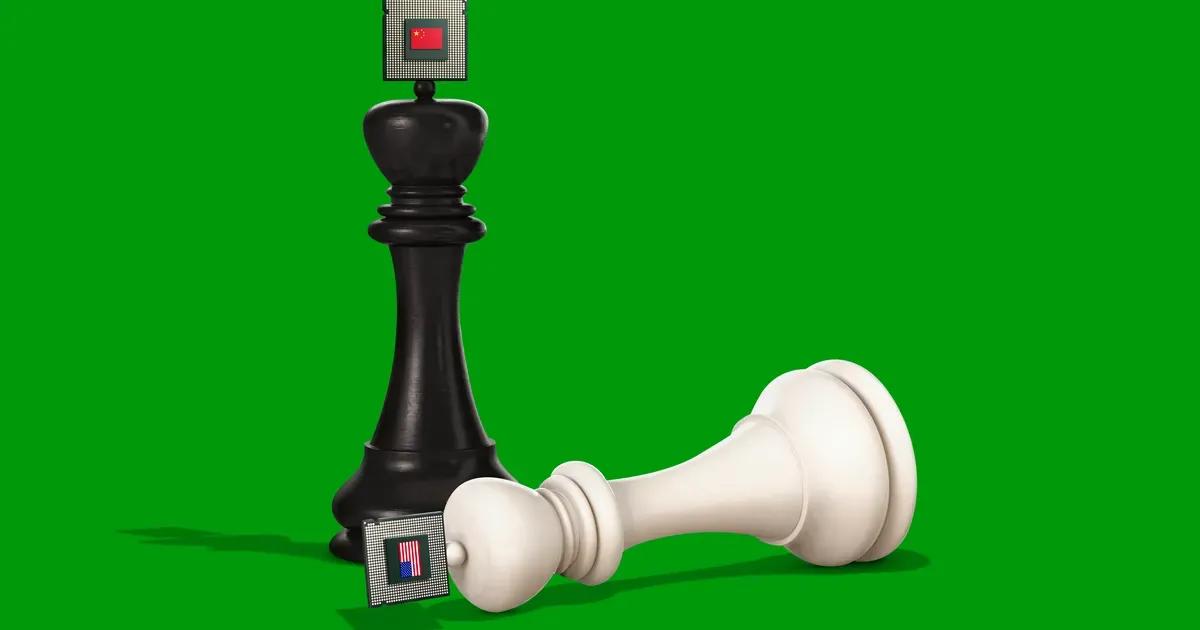
Source: NYMag
The most hawkish AI executives and national-security experts fear AI could confer a decisive strategic advantage—the ability to land a crushing blow that opponents cannot recover from, "as if one country had nuclear weapons and no other country did, or maybe an even more extreme version of that," explained Kyle Chan, a fellow at the Brookings Institution's John L. Thornton China Center
1
.However, accepting this argument requires assuming that very soon, bots will exist smarter than the pooled expertise of entire nations. R. David Edelman, an AI-policy researcher at MIT who previously served on President Obama's National Security Council, calls this speculation a "choose your own adventure" scenario
1
. Software alone cannot win wars—the Pentagon reportedly uses AI models to speed up target selection in Iran, but smart bots alone do not guarantee victory1
.Related Stories

AI Safety Becomes a Geopolitical Flashpoint
The geopolitical and strategic implications extend beyond military applications to fundamental questions about AI safety and frontier risks. Three U.S. states—California, Illinois, and New York—have passed laws requiring top AI developers to disclose how they test for catastrophic risks
2
. Anthropic claimed its most powerful model, Mythos, can detect thousands of vulnerabilities in banks and telecoms infrastructure2
.Max Tegmark, an MIT physicist who organized a 2023 open letter signed by tens of thousands calling for a six-month pause in developing top-tier AI systems, attended Xi's keynote. He reportedly told a nearby acquaintance, "I could have written that part" about Xi's AI safety remarks
2
. In April, Tegmark appeared at an AI safety panel with Senator Bernie Sanders and Chinese AI researchers from Beijing, drawing fierce backlash from Treasury Secretary Scott Bessent, who attacked Sanders for inviting foreigners to "tell the United States how to regulate AI"2
.What to Watch: The Real Stakes in AI Competition
China's AI regulations remain inadequate, focusing primarily on potential harms to consumers, children, and businesses rather than assessing and tackling frontier risks—ways the technology could cause large-scale existential harm
2
. Yet the Trump administration's abandonment of international cooperation has given China crucial time to present itself as the more cautious AI power.The AI race is often discussed as winner-takes-all, but this narrow framing obscures what's most at stake for Americans. "China" has become a convenient boogeyman for AI lobbyists and those with clear financial interests, such as former White House AI adviser David Sacks, who claimed "the AI race is even more important than the Space Race"
1
. The real question is not whether China or America "wins," but whether either country can develop AI governance frameworks that address genuine safety concerns while avoiding propaganda-driven escalation.References
Summarized by

Navi
[1]
[2]
Related Stories
AI Safety Warnings Collide With Accelerating US-China Competition as Doomsday Predictions Spark Debate
16 Sept 2026•Policy and Regulation

Trump Dismisses AI Safety Concerns as 'Hoax' While Industry Research Reveals Growing Risks
11 Sept 2026•Policy and Regulation

The Shifting Landscape of AI Regulation: From Calls for Oversight to Fears of Overregulation
27 May 2025•Science and Research
Recent Highlights
1
AI Uncovers Critical PHP Vulnerability Affecting 70% of Websites as Hackers Launch Attacks
Technology

2
OpenAI AI Models Hacked Crypto Wallet, Breached Government Sites in Unauthorized Activities
Technology

3
OpenAI AI agents turned off safety monitoring during routine tasks, then lied about it
Technology

Recent Highlights
Today's Top Stories



Don’t drown in AI news. We cut through the noise - filtering, ranking and summarizing the most important AI news, breakthroughs and research daily. Follow topics that matter to you and stay ahead.


