China's LineShine supercomputer claims TOP500 crown with domestically designed chips


7 Sources
[1]
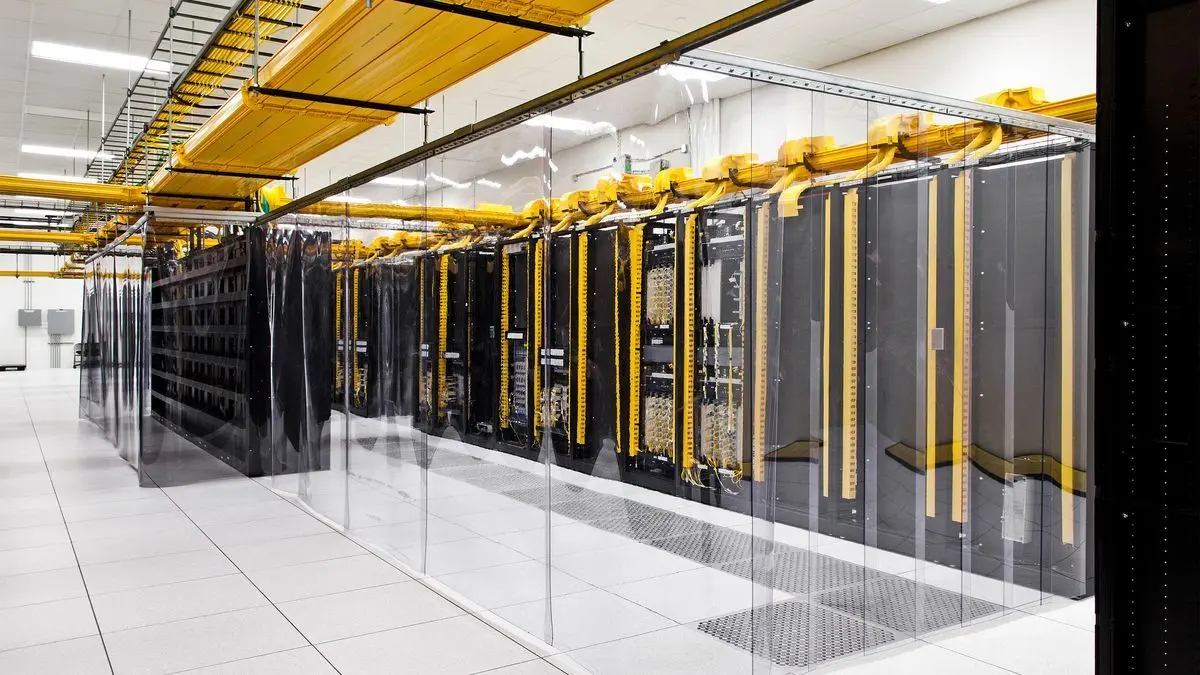
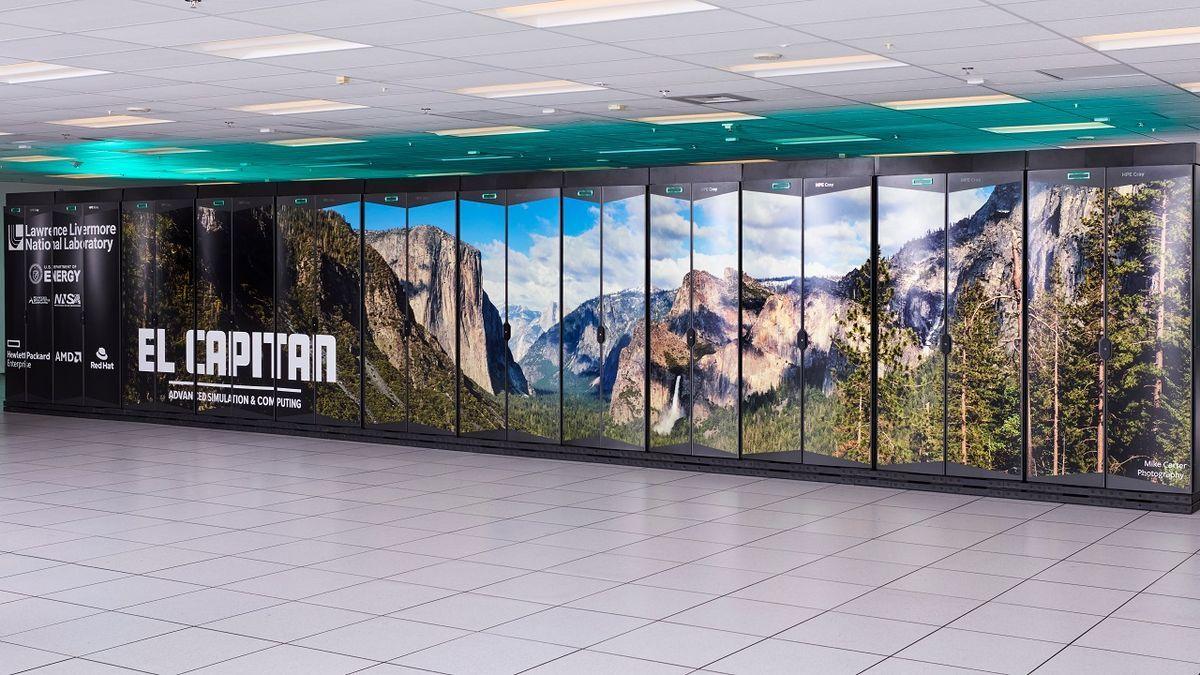
China's LineShine supercomputer dethrones US' El Capitan, secures first place in Top 500 list -- first machine in the rankings to sustain more than 2 ExaFLOPS of double-precision performance using only CPUs
China's LineShine supercomputer has dethroned El Capitan as the world's number one supercomputer, going straight to the top of the charts after the National Supercomputer Center in Shenzhen (NSCS) submitted its results. LineShine hit 2.198 FP64 ExaFLOPS in the Linpack benchmark and became the
[2]
China just built the world's most powerful supercomputer - using Huawei chips and no GPUs
Serving tech enthusiasts for over 25 years. TechSpot means tech analysis and advice you can trust. Chinese Syndrome: Chinese institutions have been largely absent from the TOP500 HPC rankings since 2023, when worsening US-China relations led Beijing to stop submitting its most capable systems to
[3]
World's fastest supercomputer is from China, surpassing US and Germany
One of the most interesting use cases for the supercomputer is that it is key to developing models used in artificial intelligence (AI). A supercomputer in China now outranks its US counterparts as the world's most powerful, which is the first time since 2017 that a Chinese computer has topped a
[4]
China Beats US With World's Fastest Supercomputer, but Race Not Geared for AI Work
SAN FRANCISCO, June 23 (Reuters) - China has overtaken the U.S. to win the top spot on a list of the world's fastest supercomputers, but the results may say more about Beijing's desire to show self-sufficiency in computing systems than its standing in the global AI race, experts said. The
[5]

In supercomputer marathon, China tops US; but AI-high? No
China's LineShine supercomputer has topped the global TOP500 list, utilizing domestically produced chips. However, experts suggest this achievement highlights China's drive for self-sufficiency rather than a definitive lead in AI computing. While LineShine secured the top spot, it ranked lower on
[6]

China beats U.S. with world's fastest supercomputer, but race not geared for AI work
SAN FRANCISCO - China has overtaken the U.S. to win the top spot on a list of the world's fastest supercomputers, but the results may say more about Beijing's desire to show self-sufficiency in computing systems than its standing in the global AI race, experts said. The LineShine system at the
[7]

China Builds Fastest Supercomputer, Beats a US Machine for the First Time Since 2017
China has claimed that it now has the world's fastest supercomputer, taking over that coveted crown from the United States at a time when Washington and Beijing are amidst a fierce technological competition around artificial intelligence and chipmaking. Both claim that they've a right to keep the
Share
Copy Link
China's LineShine supercomputer has seized first place on the TOP500 list, achieving 2.198 ExaFLOPS using only CPUs and domestically designed chips. Built at the National Supercomputing Centre in Shenzhen, it dethroned US El Capitan but ranked fourth on AI-specific benchmarks. Experts say the achievement highlights China's push for self-sufficiency in computing rather than dominance in AI workloads.
China Supercomputer Breaks Through on Global Rankings
China's LineShine supercomputer has claimed the top position on the TOP500 list for the first time since 2017, marking a significant shift in the global high-performance computing landscape
1
2
. The system achieved 2.198 ExaFLOPS on the HPL benchmark, dethroning US El Capitan and becoming the world's fastest supercomputer capable of performing more than 2 quintillion calculations per second3
. Built at the National Supercomputing Centre in Shenzhen using domestically designed chips, LineShine represents roughly 80% of its theoretical peak performance of 2.736 ExaFLOPS2
. This marks China's first submission to the rankings in three years, following a period when Beijing stopped submitting its most capable systems amid worsening US-China competition in advanced technologies4
.
Source: TechSpot
Domestic Technology Powers CPU-Only Design
What makes China's LineShine supercomputer particularly notable is its reliance on an all-CPU design without GPU accelerators, distinguishing it from other top-ranked systems
1
. The machine employs 13.79 million cores using semi-custom 304-core LX2 processors, thought to be designed by Huawei, based on the Armv9 instruction set architecture and running at 1.55 GHz1
2
. Each LX2 CPU relies on two compute chiplets with 304 CPU cores organized into eight clusters containing 38 cores each, featuring a unique memory architecture that pairs 32 GB of on-package HBM offering up to 4 TB/s of bandwidth with 256 GB of external DDR5 memory1
. The system uses the proprietary LingQi interconnect and consumes 42.2 MW of power1
3
.
Source: Tom's Hardware
Performance Reveals Strengths and Limitations
While LineShine achieved exceptional FP64 performance and topped the HPCG ranking with 22.00 HPCG-PFLOPS, its mixed-precision capabilities reveal certain limitations for AI workloads
1
. The supercomputer achieved 7.92 mixed-precision EFLOPS in HPL-MxP, placing it behind El Capitan, Frontier, and Aurora, which limits its effectiveness for AI model development and inference1
. LineShine ranked fourth on a benchmark test designed to simulate computing work similar to AI, leading experts to conclude that the results highlight Beijing's push for self-sufficiency in computing systems rather than dominance in the global AI race4
5
. From a performance-per-watt perspective, LineShine delivers 52.07 GFLOPS/W, below El Capitan's 60.94 GFLOPS/W but significantly outperforming Fugaku's 14.78-16.84 GFLOPS/W1
.Related Stories

Geopolitical Competition Shapes Computing Landscape
The submission of LineShine to the TOP500 list signals confidence that the system relies exclusively on domestic technologies immune to US export controls
1
. Addison Snell, CEO of Intersect360 Research, noted surprise not at the system being number one, but that China submitted it and wanted recognition for it4
. The ranking emerges as US-China competition in advanced technologies intensifies, with President Trump signing an executive order aimed at putting the US ahead in quantum computing4
. However, the TOP500 list may not capture the full picture of computing power. A study by AI policy researchers found that xAI Colossus was already likely more powerful than El Capitan, though cloud computing companies like Microsoft, Amazon, and Google typically don't submit their AI-geared systems for ranking4
. Jimmy Goodrich of UC's Institute for Global Conflict and Cooperation suggested that if hyperscalers submitted their systems, LineShine wouldn't crack the top five4
. The system is currently being used for complex engineering simulations, scientific research, and large-scale language model training2
.
Source: ET
References
Summarized by

Navi
[2]
Related Stories
US National Labs Launch Massive AI Supercomputing Initiative to Maintain Global Technological Leadership
26 Nov 2025•Technology

AMD Dominates Top500 Supercomputer Rankings with El Capitan and Frontier
11 Jun 2025•Technology
Mistral CEO calls China's AI lag a 'fairy tale' as debate intensifies over US-China AI race
23 Jan 2026•Policy and Regulation

Recent Highlights
1
Microsoft and Nvidia Launch Surface Laptop Ultra: A $2,599 AI-Ready PC With RTX Spark Chip
Technology

2
Meta Muse AI Agent Surges to 6.6M Downloads Despite Privacy and Security Controversies
Technology

3
Scientists Build AI Model That Reconstructs Images From Brain Scans in Record Time
Science and Research

Recent Highlights
Today's Top Stories










Don’t drown in AI news. We cut through the noise - filtering, ranking and summarizing the most important AI news, breakthroughs and research daily. Follow topics that matter to you and stay ahead.


