China's military wants Nvidia's best chips, and a new report says it is hunting them


6 Sources
[1]
China seeks advanced Nvidia chips for AI weapons despite US curbs, report says
Nov 18 (Reuters) - China's military is seeking advanced Nvidia chips for AI-enabled weapons as Chinese-made processors continue to lag US rivals, a congressional commission said in its annual report released on Wednesday. The US-China Economic and Security Review Commission said Beijing was
[2]
China's military seeks Nvidia's advanced chips for AI capabilities, commission says
* China's People's Liberation Army has been "actively soliciting" Nvidia's most advanced semiconductor chips to develop its artificial intelligence-enabled military capabilities, a new report by a congressional commission says. * "China is seeking to evade U.S. export controls to gain the most
[3]
US report: China's military seeks top Nvidia chips
A congressional report says China still trails the US in computing power, largely because of export controls on advanced chips. China's army has been trying hard to get Nvidia's best chips to build AI tools for war, a US congressional commission said on Wednesday. The finding is in the US-China
[4]
China's military seeks Nvidia's top AI chips, U.S. commission says
The U.S.-China Economic and Security Review Commission says Chinese firms also reached Nvidia chips through data centers in Malaysia China's People's Liberation Army is "actively soliciting" top-tier Nvidia $NVDA processors to power military applications driven by artificial intelligence,
[5]

China seeks advanced Nvidia chips for AI weapons despite US curbs, report says
China's military is seeking advanced Nvidia chips for AI-enabled weapons as Chinese-made processors continue to lag US rivals, a congressional commission said in its annual report released on Wednesday. The US-China Economic and Security Review Commission said Beijing was seeking to circumvent US
[6]

Chinese Military Wants NVIDIA's Best AI Chips, US Panel Says
A US commission report highlights China's attempts to access restricted NVIDIA AI chips and strengthen its military computing capabilities. China's army is trying to get NVIDIA's most advanced AI chips, a US congressional commission said in a new report. The US-China Economic and Security Review
Share
Copy Link
A report lands, and a rule follows
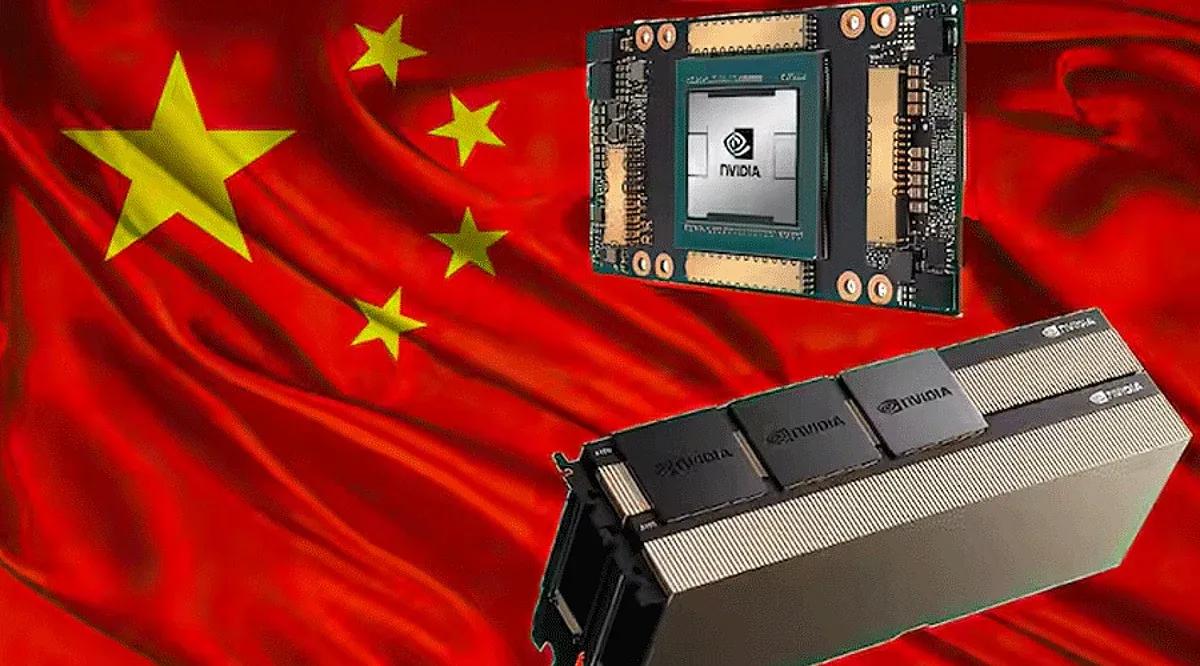
China's People's Liberation Army has been actively seeking Nvidia's most advanced chips for AI-enabled military capabilities, per the US-China Economic and Security Review Commission, a congressional body created in 2000 to monitor the security implications of US-China trade. The commission says so in its 2026 annual report, released Wednesday, November 18
2
1
.
Source: Analytics Insight
China is trying to evade US export controls to get the semiconductors behind the military's intelligentization drive, the report says
2
3
. "China is seeking to evade U.S. export controls to gain the most advanced semiconductors that underpin its intelligentization drive," the report states2
.The day before the report appeared, the Commerce Department's Bureau of Industry and Security issued its interim final rule aimed at the remote-access workaround. Per the agency, the rule is designed to keep existing restrictions from being bypassed via remote computing arrangements at third-country data centers; it says Treasury and the National Security Council wrote it
4
. The rule followed criticism from Treasury Secretary Scott Bessent and members of Congress that Commerce had not done enough to stop Nvidia's top chips being diverted to China2
6
.Why the chips still get through
The report's answer to why China wants Nvidia chips at all is quality. Chinese-made chips from Huawei and Cambricon still trail what Nvidia and AMD offer, and the report says China has not yet closed the hardest chokepoints in chipmaking and probably will not for some time
2
4
. The report puts that gap down largely to US export controls. "The resulting gap in compute is substantial, largely due to U.S. export controls on advanced chips," the report says2
.The workarounds are documented in specifics. Chinese companies have gotten remote access to Nvidia chips by way of data centers in third countries, Malaysia among them, per the report
2
4
. In October, Northwestern Polytechnical University, a school closely linked to China's military and on a US export blacklist, bought two Nvidia H200 chips for about $130,600; a procurement record on the university's own website shows the purchase4
. Documents reviewed by Bloomberg also link smuggled Nvidia chips to a Shanghai data center connected to Megaspeed, a company under US investigation for possible chip diversion. Megaspeed has denied the allegations4
.
Source: Reuters
A Reuters review, though, identified more than $3 billion in Chinese computing projects running on its restricted chips anyway
1
.Related Stories
Nvidia under pressure from inside and out
The scrutiny reached Nvidia's corner office this week. CEO Jensen Huang resigned after reports of an affair with Alice Huang, a former executive of Singapore-based Megaspeed, whom US officials suspect of spying for China. Megaspeed is under US investigation for possible diversion of Nvidia chips
2
1
. The company's China business is shrinking too. Interim chief executive Colette Kress said Tuesday that Nvidia is no longer shipping licensed Hopper data center chips to China. It sold $2.4 billion of them there in the third quarter, per Bloomberg3
.
Source: The Next Web
The open question, as Analytics Insight notes, is enforcement: whether the rule can hold, or whether China finds another route in
6
. Huang is scheduled to appear before House panels on December 13
.References
Summarized by

Navi
[3]
Related Stories
Chinese military acquired Nvidia AI chips despite US export controls, research reveals
02 Jun 2026•Policy and Regulation
Nvidia AI Chips Reach China Through Empty Offices as New Export Rules Tighten Access
03 Nov 2026•Business and Economy

Nvidia's China market share crashes from 66% to 8% as export curbs fuel domestic AI chip surge
14 Jan 2026•Policy and Regulation

Recent Highlights


Recent Highlights
Today's Top Stories







Don’t drown in AI news. We cut through the noise - filtering, ranking and summarizing the most important AI news, breakthroughs and research daily. Follow topics that matter to you and stay ahead.


