China's Moore Threads Unveils MUSA: A Homegrown Alternative to NVIDIA's CUDA


3 Sources
[1]
China's Moore Threads polishes homegrown CUDA alternative -- MUSA supports porting CUDA code using Musify toolkit
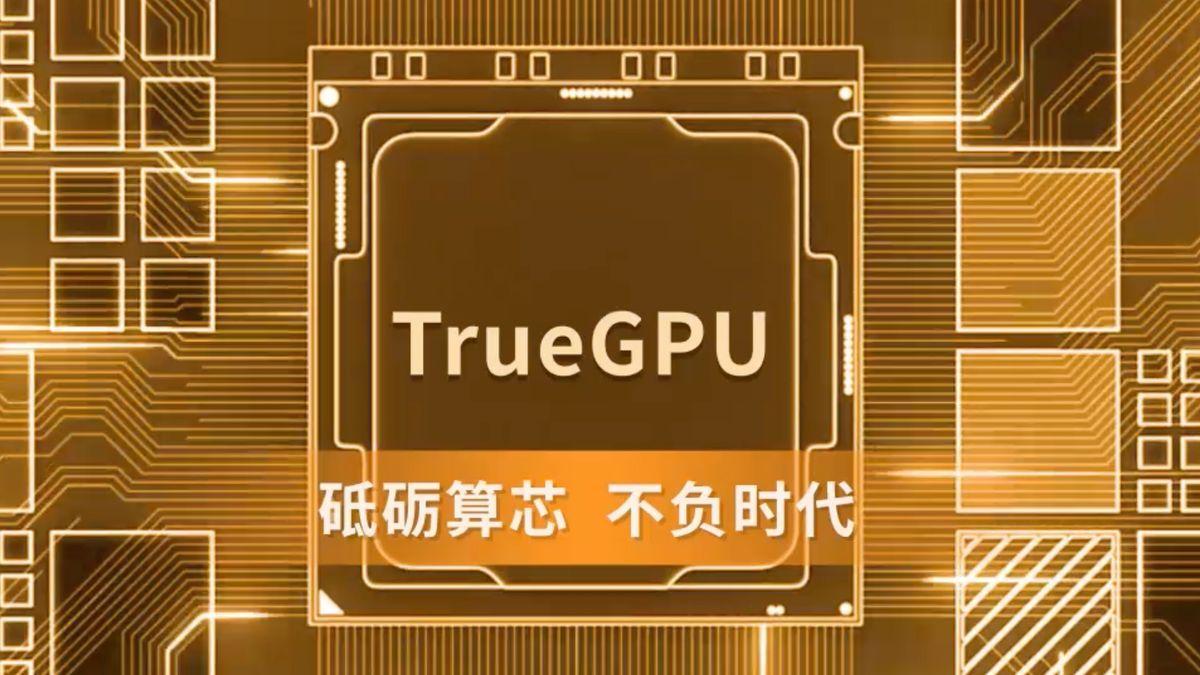
The first traces of Moore Threads' GPU programming software stack, dubbed MUSA, have surfaced online, furthering the nation's pursuit of tech-autarky. MUSA serves as an alternative to Nvidia's CUDA environment, compatible with the domestic MUSA MTT GPU lineup. Any open-source pedigree of the SDK
[2]
China's First "In-House" Alternative To NVIDIA's CUDA Emerges Online; The MUSA SDK From Moore Threads
It appears that the Chinese firm Moore Threads wants its share of the AI market, as the firm has released a new upgrade to its MUSA SDK, an alternative to NVIDIA's CUDA stack. When it comes to software capabilities, NVIDIA has managed to dominate the industry with its CUDA ecosystem, offering not
[3]
China has an alternative to NVIDIA's CUDA: What do we know about the new system? - Softonic
China now has a CUDA alternative with Moore Threads' MUSA, a new software ecosystem that promises compatibility and independence in the growing AI hardware race. China is making serious strides toward independence in artificial intelligence, and a key part of that effort is reducing reliance on
Share
Copy Link
Moore Threads, a Chinese GPU manufacturer, has introduced MUSA, a software ecosystem designed to rival NVIDIA's CUDA. This development marks a significant step in China's pursuit of technological self-sufficiency in AI and parallel computing.

China's Push for AI Independence
In a significant move towards technological self-sufficiency, China's Moore Threads has unveiled MUSA (MT Unified System Architecture), a homegrown alternative to NVIDIA's CUDA. This development comes amid increasing U.S. export restrictions on advanced AI chips and related technologies to China, pushing the nation to develop its own semiconductor ecosystem
1
2
.MUSA: A Comprehensive GPU Programming Ecosystem
MUSA, designed for Moore Threads' domestic MTT GPU lineup, offers a complete software stack for GPU programming. The SDK version 4.0.1 includes:
- A built-in compiler (MCC)
- Runtime libraries (MUSA Runtime)
- Specialized libraries (MUSA-X)
- Debuggers and profilers
1
The ecosystem supports Intel processors on Ubuntu and Hygon processors on Kylin, demonstrating compatibility with both international and domestic CPU architectures
1
3
.CUDA Compatibility and Code Porting
One of MUSA's key features is its ability to support existing CUDA code. The SDK includes Musify, a tool that translates CUDA code for the MUSA environment. This feature is crucial for easing the transition for developers and researchers currently relying on NVIDIA's ecosystem
1
2
.Demonstrations and Applications
Moore Threads is showcasing MUSA's capabilities through various demonstrations on its website, including:
- Speech synthesis
- AI-image generation
- Image processing
- AI-powered 3D face modeling
Some of these demos are reportedly running on Moore Threads' MTT S3000 datacenter GPUs, highlighting the practical applications of the technology
1
.Related Stories



Market Implications and Future Outlook
While MUSA is still in its early stages compared to CUDA's maturity and widespread adoption, it could find a significant market among domestic Chinese developers and researchers. The development of MUSA aligns with China's broader strategy to reduce reliance on Western technology and build a parallel AI ecosystem
2
3
.However, experts in AI development envision a heterogeneous future, emphasizing the need for hardware-agnostic and open-source platforms. While MUSA represents a step towards breaking CUDA's dominance, truly superior alternatives are still needed for widespread adoption beyond China's borders
1
.Geopolitical Context
The emergence of MUSA is closely tied to the evolving geopolitical landscape. U.S. export restrictions have made it increasingly difficult for Chinese tech companies to rely on NVIDIA's hardware and software solutions. This has accelerated China's efforts to develop domestic alternatives across the entire AI technology stack
2
3
.As the AI hardware race continues to intensify, MUSA's development signals China's determination to achieve technological independence in this critical field. While it may not yet match CUDA's capabilities, MUSA represents a significant milestone in China's pursuit of AI self-sufficiency.
References
Summarized by

Navi
[1]
[2]
Related Stories
Recent Highlights
1
OpenAI's AI Math Breakthrough on Millennium Problem Sparks Fierce Attribution Battle
Science and Research

2
Apple Launches iOS 27 and macOS 27 with Siri AI Overhaul and Liquid Glass Updates
Technology
3
Anthropic Researcher Quits, Warns Self-Improving AI Could End Humanity Within a Decade
Policy and Regulation
Recent Highlights
Today's Top Stories











Don’t drown in AI news. We cut through the noise - filtering, ranking and summarizing the most important AI news, breakthroughs and research daily. Follow topics that matter to you and stay ahead.


