China's robots serve your coffee. Workers in sensor gloves taught them how


3 Sources
[1]
Chinese robots learn from humans in tech hub Shenzhen
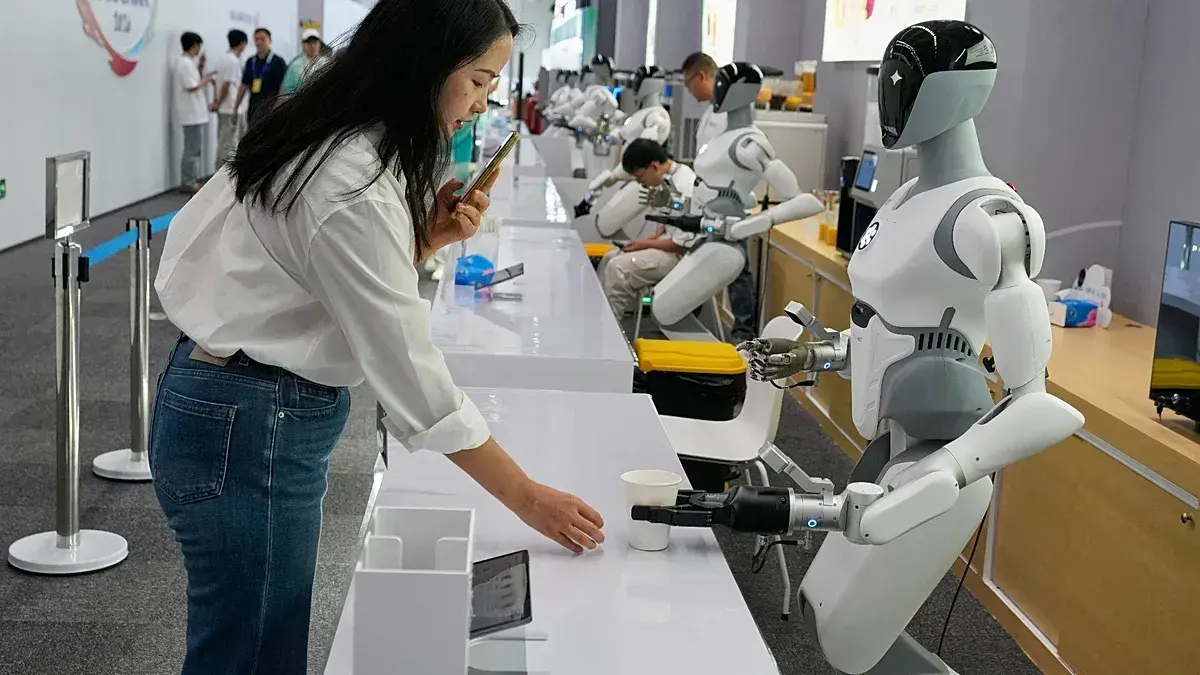
At a park refreshment stand in China's tech capital, Shenzhen, a humanoid robot grabs a cup and pulls a lever to form an ice cream spiral, then hands the customer their order. It's the kind of futuristic scene the country is keen to showcase as world leaders including Donald Trump and Vladimir
[2]
Chinese robots learn from humans in tech hub Shenzhen
Shenzhen (China) (AFP) - At a park refreshment stand in China's tech capital Shenzhen, a humanoid robot grabs a cup and pulls a lever to form an ice-cream spiral, then hands the customer their order. It's the kind of futuristic scene the country is keen to showcase as world leaders including
[3]
Video. Robots serve ice cream and coffee in China's tech hub
In Shenzhen, China, humanoid robots serve coffee and ice cream while AI developers use human-recorded movements to train machines for everyday jobs. Humanoid robots are serving ice cream and coffee in Shenzhen, China, as developers work to introduce artificial intelligence into everyday tasks. At
Share
Copy Link
In a Shenzhen park, a humanoid robot scoops ice cream while a second one makes coffee, at around $4 a treat. A human still has to refill the beans and empty the grounds.
2
3
The stand's maker, AI² Robotics, a startup building humanoid service robots, says 200 of its humanoid servers are already working in China, and up to 300 coffees sell at the park stand on a good day.2
1
The timing is no accident: the Asia-Pacific Economic Cooperation summit is in Shenzhen this week, with Donald Trump and Vladimir Putin among the leaders attending. The reporters frame the robots as something China is keen to show off.2
1

Source: Tech Xplore
How the robots learn
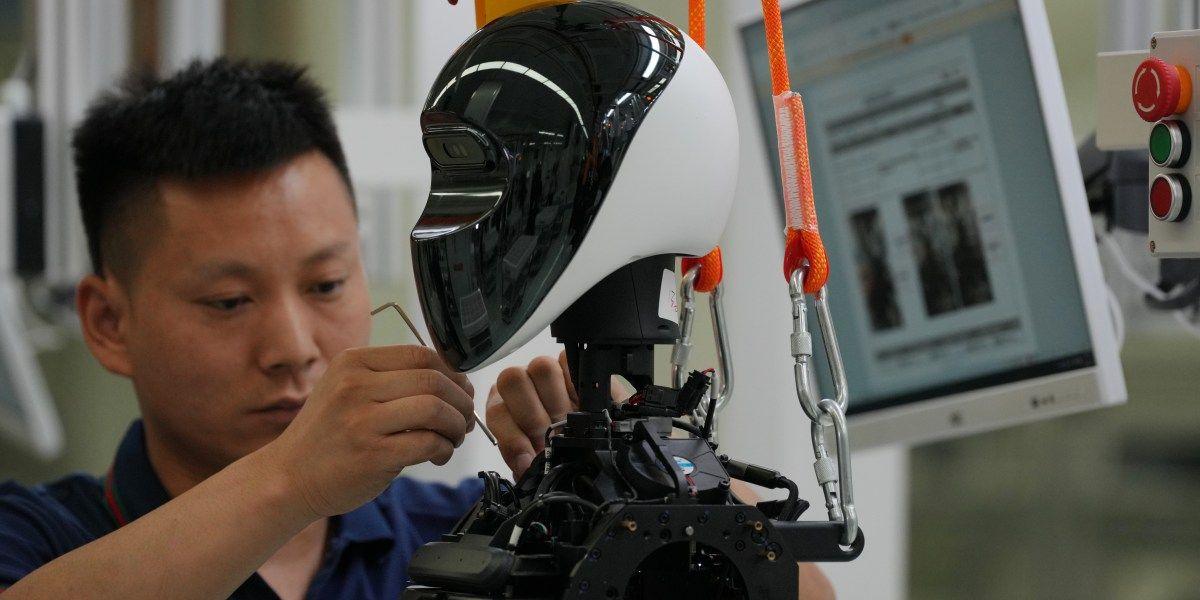
The machines are taught by watching people. Workers in China wear headcams, sensor gloves and helmet cameras while they do their jobs; startups record the movements and resell the data to AI developers. One of them, Strange Attractor, pays workers from cobblers to hairdressers to cleaners to record their skills. It says it collects data at around 1,600 sites in China and 1,000 abroad.
2
1
Source: Euronews
"We're getting data feedback from many real scenarios," says Guo Yandong, AI² Robotics' chief executive. The company says varied real-world conditions, such as lighting, help its robots adapt to unpredictable environments.
2
1
Wang Lin, a 23-year-old who stocks supermarket shelves in Dongguan, sees the upside: "Robots can replace humans in doing relatively dangerous and repetitive work, for example in factories or at heights."
2
The sector behind the showcase
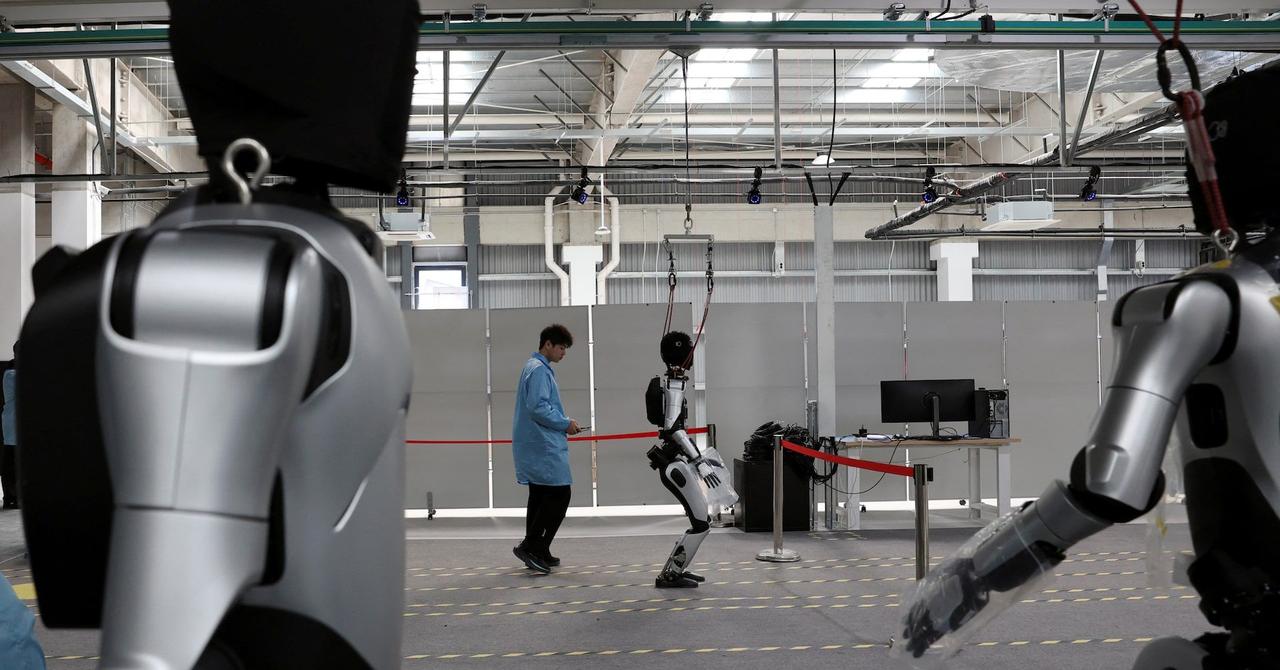
The deployments go beyond refreshment stands. At a logistics centre, two robotic arms from Shenzhen startup X Square Robot sort parcels of every shape. "If it's a soft bag, the robot grabs it with its grippers. If it's a cardboard box, it coordinates its two arms to move it," says Arnold Pei, the company's vice-president.
2
At battery maker Contemporary Amperex Technology, humanoids built by Spirit AI already plug in high-voltage connectors, taking over a hazardous job.2
1
Spending on robots built around embodied AI rose 230% year on year in January-May 2026, according to Chinese tax authorities.2
1
The ventures also enjoy government support, with planned uses running from meal-delivery droids to robots that tidy airport luggage.
2
1
Analyst Dermot McGrath of ZenGen Labs says China's manufacturing base gives robot makers an edge. Decades of factory experience and dense supplier hubs like 18-million-person Shenzhen let them test parts faster than almost anywhere.2
1
Related Stories
What the machines still can't do
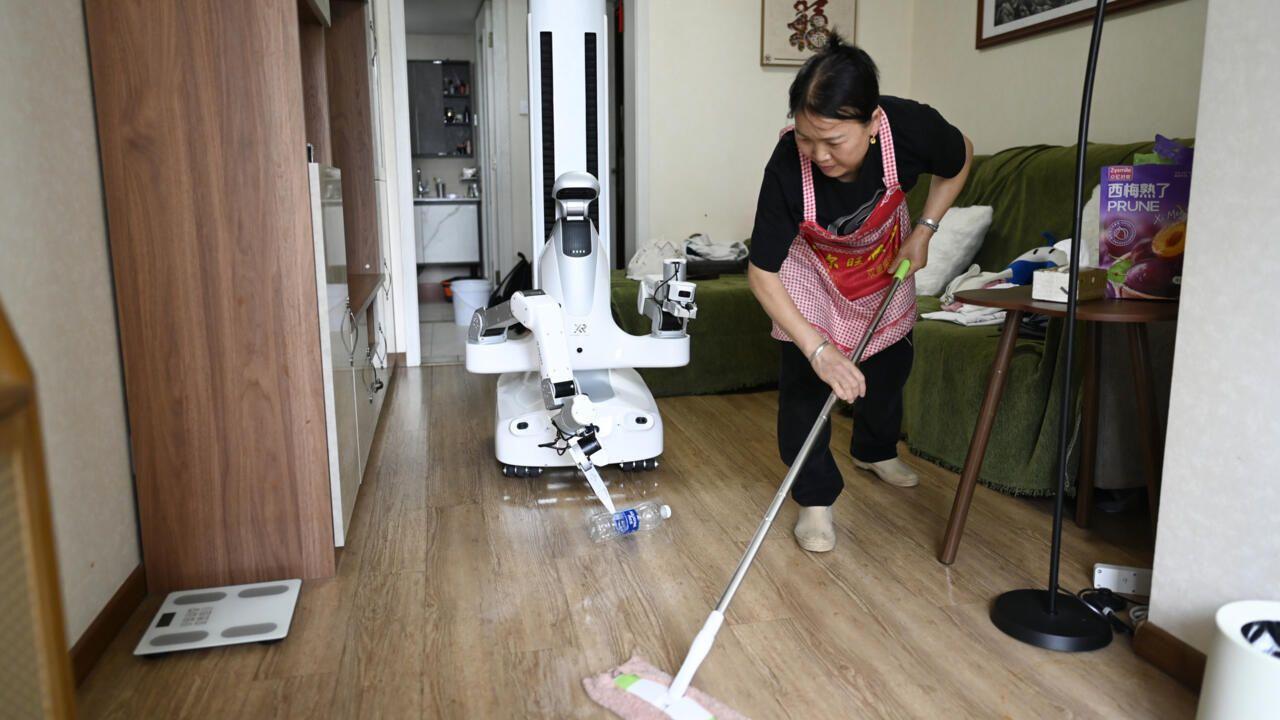
The showcase imagery sits against a blunter assessment from the people who study the technology. Pavlo Zvenyhorodskyi of the Carnegie Endowment says robots remain "confined to well-defined and repetitive" tasks, and complex jobs like cleaning or ironing unaided are still beyond them. Pei says unstructured home settings are harder.
2
1
Even the founders hedge. Strange Attractor's Kang Yu calls today's robots "like babies", though he forecasts a massive deployment of AI robots in China next year. Zvenyhorodskyi expects robots to spread widely across the Chinese economy once their abilities improve.
2
1
The early applications, Kang cautions, such as picking strawberries or doing housework, will be modest: "but for sure, it's not gonna be that intelligent, it's just the start."2
References
Summarized by

Navi
[1]
Related Stories
China's AI-Powered Humanoid Robots: Transforming Manufacturing and Driving Economic Growth
13 May 2025•Technology
China's Humanoid Robots Claim 97% of Global Market as Embodied AI Shifts from Spectacle to Scale
19 Aug 2026•Technology

AI robot cleaners enter China homes as companies gather data for embodied AI development
11 Jun 2026•Technology
Recent Highlights


Recent Highlights
Today's Top Stories







Don’t drown in AI news. We cut through the noise - filtering, ranking and summarizing the most important AI news, breakthroughs and research daily. Follow topics that matter to you and stay ahead.


