AI robot cleaners enter China homes as companies gather data for embodied AI development


2 Sources
[1]
AI robot cleaners leave the lab for China's living rooms
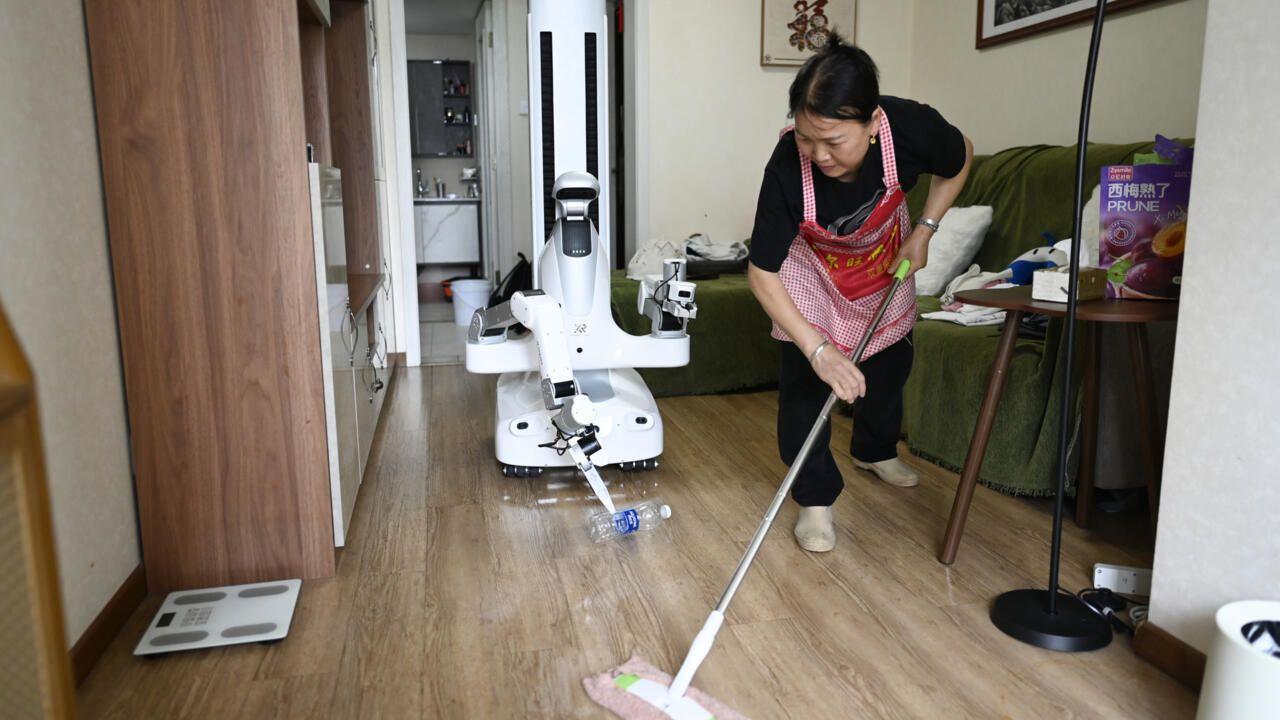
Beijing (AFP) - Beijing cleaner Lin Meiqiong found her work a little easier the day she was paired with an unlikely new colleague -- a tall, wheeled robot with AI-powered tidying skills. The 56-year-old and her white-and-silver partner, fitted with cameras and two mechanical claws, are part of a
[2]
Video. China tests AI robot cleaners in homes
China is testing AI robot cleaners in Beijing homes, where machines assist human cleaners in early trials focused on data collection and domestic tasks. In a Beijing apartment, cleaner Lin Meiqiong works alongside an AI-powered robot on a domestic cleaning job. The 56-year-old says the machine
Share
Copy Link
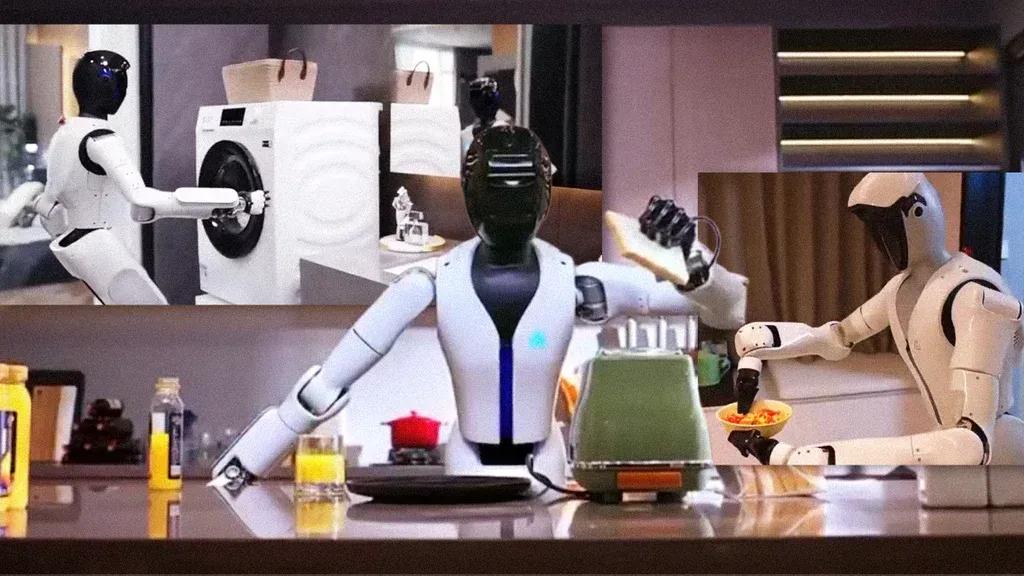
China is testing AI-powered cleaning robots in real homes across Beijing and Shenzhen, where machines work alongside human cleaners in early trials. About 200 households have tried the service since March, paying 149 yuan for three hours. The initiative by 58.com and X Square aims to collect real-world data to train embodied AI systems, though experts say widespread adoption faces hurdles including dexterity limitations, privacy concerns, and safety issues.
AI Robot Cleaners Begin Working Alongside Humans in China
Beijing cleaner Lin Meiqiong, 56, recently found herself working with an unusual partner—a tall, wheeled robot equipped with cameras and mechanical arms designed to assist with household chores
1
. The AI-powered cleaning robots are part of a new service launched by Chinese household help platform 58.com and X Square, a robotics company, marking a tentative step toward integrating machines into manual labor traditionally performed by humans2
. "It's definitely different," Lin told AFP, noting that the robot has "reduced the workload a bit" even as she continues to handle most tasks herself1
.
Source: France 24
The cleaning service costs 149 yuan ($22) for three hours and is currently available in Beijing and Shenzhen, two of China's major tech hubs
1
. Since the pilot service rolled out in March, around 200 households have booked the experience, many driven by curiosity about what these machines can accomplish1
. The Quanta X1 Pro robot uses its cameras to identify areas that need attention and can pick up rubbish and fold clothes, though the process resembles "a child learning to fold clothes for the first time," taking several minutes to complete basic tasks1
.Data Collection to Train Embodied AI Takes Priority Over Perfection
For companies deploying AI robot cleaners in homes, the current imperfections are less important than the data-gathering exercise underway. Unlike large language models trained on vast internet content, embodied AI systems lack comparable real-world datasets to learn from
1
. "We don't have a robot internet yet," explained Christoforos Mavrogiannis from the University of Michigan, adding that "it is much more informative to put the robot out there and study what happens than staying forever in the lab"1
.X Square engineer Hu Bowen emphasized that sending robots to work in "completely unfamiliar environment" presents significant challenges, but this unfamiliar data proves "very helpful for the robot's growth"
1
. Future iterations will respond to voice commands and engage in conversation, he noted1
. The early trials are designed to train these systems to handle domestic tasks in everyday settings where conditions vary dramatically from controlled laboratory environments2
.Investment Surges as China Expands Embodied AI Applications
Investors have poured more than 57.7 billion yuan ($8.5 billion) into China's embodied AI industry so far this year, already exceeding last year's total investment, according to business database ITjuzi
1
. This surge reflects growing confidence in future applications beyond household cleaning. Similar trials across China include robots directing traffic in cities like Hangzhou and working on factory floors1
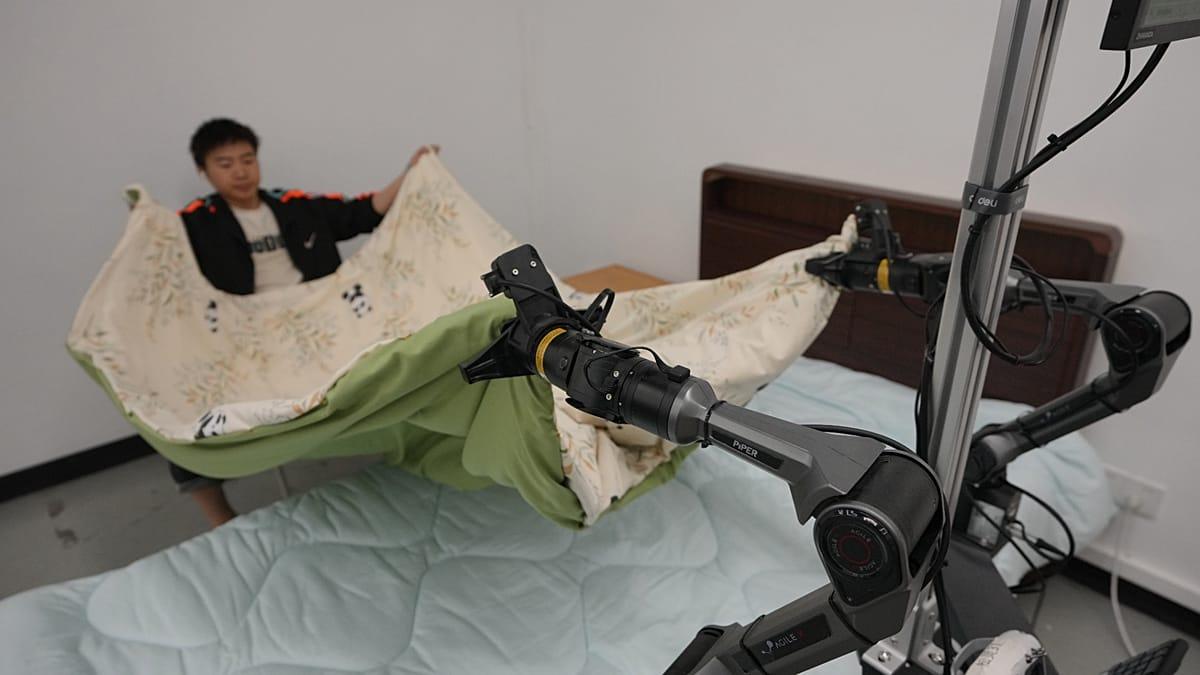
. Firm GigaAI plans to deploy 100 humanoid robots into households in central Wuhan this autumn for free home-service trials, expanding the scope of these experiments1
.
Source: Euronews
Tan Pei, a Beijing advertising professional who booked the service, said she was interested to "see what it could do" and found herself surprised by certain capabilities, such as the robot folding trousers "quite well" despite overall imperfections
1
. While China's robots have impressed audiences with fluid dancing and martial arts displays, their real-world performance remains limited, making these home deployments critical testing grounds1
.Related Stories
Dexterity Limitations and Regulatory Hurdles Slow Widespread Adoption
Despite the investment and enthusiasm, multiple obstacles stand between current prototypes and broad deployment. The robots still struggle with basic dexterity that humans take for granted. "Even though many companies are working on building better hands and building autonomy for hands, we don't have that yet," Mavrogiannis acknowledged
1
. As the Quanta X1 Pro's laborious clothes-folding demonstrated, machines cannot yet match human skill in manipulating objects2
.Privacy concerns loom large as these machines would access enormous amounts of personal data through their cameras and sensors. "We don't know where that data is going, where it's located... who is looking at that information," said Valeria Alessandra Macalupu Chira from Queensland University of Technology
1
. Safety remains another unresolved issue, with robots currently requiring human oversight to activate emergency stop functions and no recognized industry-wide safety standards yet established1
.Yang Jianfei from Singapore's Nanyang Technological University summed up the current state: "I think we are still at a very elementary stage"
1
. Cleaner Lin Meiqiong appeared unfazed by concerns that robots might replace her profession. "Compared with people, it's obviously still not quite there," she said. "After all, it's a robot"1
. Experts agree that resolving these regulatory hurdles and technical limitations means widespread adoption remains years away, even as companies continue gathering the data needed to tidy spaces more effectively and eventually reduce reliance on manual labor2
.References
Summarized by

Navi
[2]
Related Stories
Chinese robots shift focus from stunts to tackling household chores in real homes
22 Apr 2026•Technology
China's GigaAI deploys SeeLight S1 humanoid robot for household chores in 2027 pilot
25 May 2026•Technology
Startup offers free home cleaning in NYC to gather AI training data for future household robots
29 May 2026•Technology

Recent Highlights



Recent Highlights
Today's Top Stories






Don’t drown in AI news. We cut through the noise - filtering, ranking and summarizing the most important AI news, breakthroughs and research daily. Follow topics that matter to you and stay ahead.


