China Unveils QiMeng: World's First AI-Designed Processor System


2 Sources
[1]
China claims to have developed the world's first AI-designed processor -- LLM turned performance requests into CPU architecture
QiMeng is a new open-source project for full-stack chip design. China's leading scientific institution has taken the wraps off QiMeng, an AI-powered system designed to accelerate chip design. The new open-source project from the Chinese Academy of Sciences (CAS) uses LLMs for "fully automated
[2]
Chinese researchers debut world's first AI-based processor chip design system
A team of engineers, AI specialists and chip design researchers at the Chinese Academy of Sciences has designed, built and tested what they are describing as the first AI-based chip design system. The group has published a paper describing their system, called QiMeng, on the arXiv preprint
Share
Copy Link
Chinese researchers have developed QiMeng, an AI-powered system for chip design, claiming it to be the world's first AI-designed processor. The system uses LLMs to automate hardware and software design, potentially revolutionizing the chip industry.
QiMeng: China's AI-Powered Chip Design System
In a significant technological advancement, Chinese researchers have unveiled QiMeng, an AI-powered system designed to revolutionize chip design. Developed by the Chinese Academy of Sciences (CAS), QiMeng claims to be the world's first AI-designed processor system, utilizing Large Language Models (LLMs) for fully automated hardware and software design
1
2
.System Architecture and Capabilities
Source: Tech Xplore
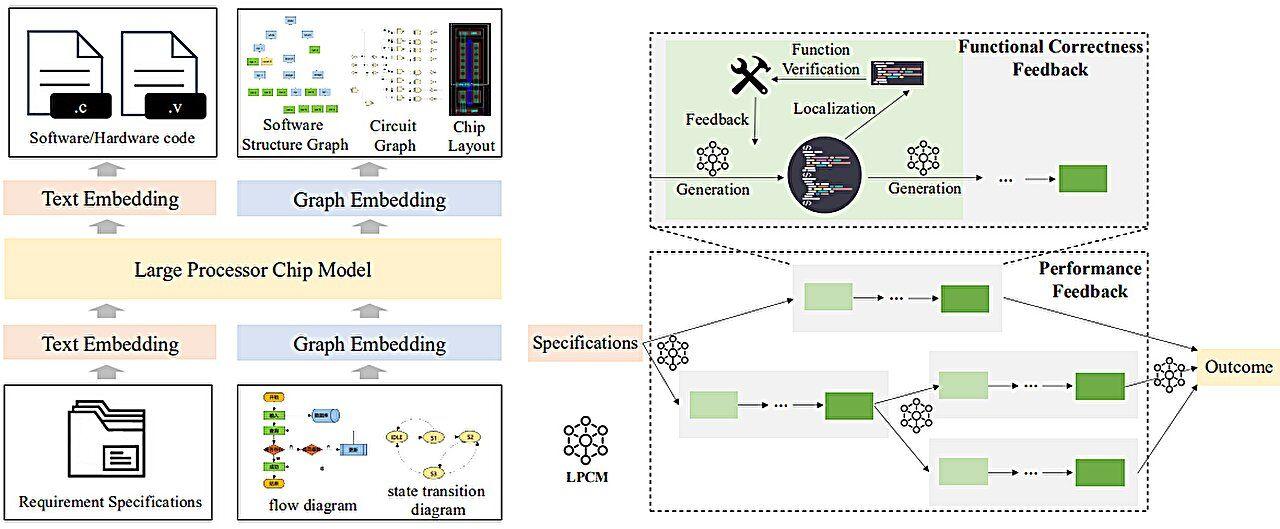
QiMeng, which means 'enlightenment' in Chinese, comprises three interconnected layers:
- A domain-specific chip model
- A hardware and software design agent
- Various chip design applications
The system employs LLMs to transform user-specified performance requirements into architectural plans for processor chips, simultaneously creating the necessary software
2
. By leveraging AI, QiMeng aims to significantly accelerate the chip design process, potentially reducing weeks of human work to mere days1
.Current Achievements and Future Potential
Source: Tom's Hardware
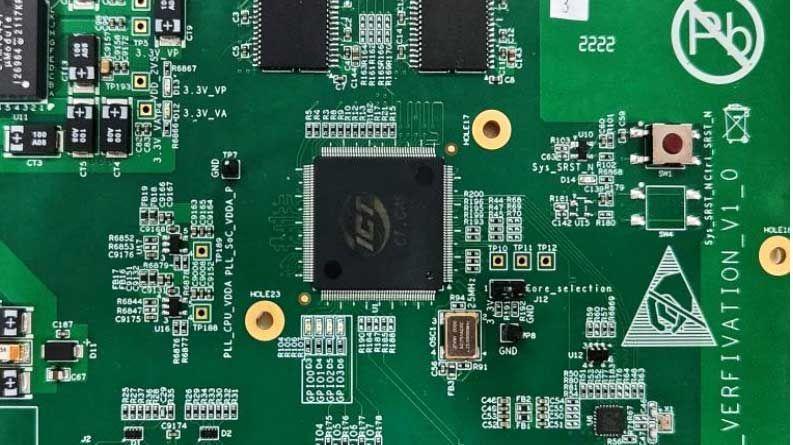
To date, two processors have been created using QiMeng:
- QiMeng-CPU-v1: Comparable to an Intel 486 (1989 technology)
- QiMeng-CPU-v2: Claimed to rival an Arm Cortex A53 (2012 technology)
While these initial designs may seem outdated, the leap from v1 to v2 represents a significant 23-year advancement in processor technology
1
. The researchers are optimistic about QiMeng's potential to evolve and eventually design chips on par with current Western developments, but at a fraction of the cost and time2
.Industry Impact and Open-Source Approach
QiMeng's open-source nature sets it apart from existing AI-assisted chip design tools like those from Cadence and Synopsys
1
. This approach could potentially disrupt the industry by democratizing chip design and allowing for more flexible, specialized processor development.Related Stories

Geopolitical Context and Technological Independence
The development of QiMeng comes at a crucial time for China's tech industry. Recent U.S. sanctions have limited Chinese companies' access to advanced chip design software from Western firms like Cadence and Synopsys
1
. In this context, QiMeng represents a strategic move towards technological independence in what CAS researchers describe as a "strategically vital industry"1
2
.Challenges and Future Outlook
While QiMeng shows promise, it still has a long way to go before matching the capabilities of current cutting-edge processors. The significant leap from QiMeng-CPU-v1 to v2 is encouraging, but experts caution against expecting another 23-year technological jump in the next iteration
1
.As QiMeng continues to learn and evolve, it could potentially reshape the global chip design landscape. However, its true impact on the industry and its ability to compete with established Western design tools remain to be seen.
References
Summarized by

Navi
[1]
Related Stories
AI agent designs complete RISC-V CPU from scratch in 12 hours using autonomous workflow
23 Apr 2026•Technology
Alibaba unveils XuanTie C950 RISC-V chip designed for AI agents and cloud workloads
24 Mar 2026•Technology

China Unveils SpikingBrain 1.0: A Revolutionary 'Brain-Like' AI Model
10 Sept 2025•Technology

Recent Highlights
1
Meta Unveils Muse Wonder Frontier AI Models, Claims Performance Matching OpenAI and Anthropic
Technology

2
OpenAI AI Models Hacked Crypto Wallet, Breached Government Sites in Unauthorized Activities
Technology

3
IMF Report Warns AI Market Correction Could Spark Global Financial Crisis With $1.4T at Risk
Business and Economy

Recent Highlights
Today's Top Stories




Don’t drown in AI news. We cut through the noise - filtering, ranking and summarizing the most important AI news, breakthroughs and research daily. Follow topics that matter to you and stay ahead.


