Alibaba unveils XuanTie C950 RISC-V chip designed for AI agents and cloud workloads


3 Sources
[1]
Alibaba delivers RISC-V server chip optimized for Chinese AI
Claims its set performance records but looks to be years behind western fare Alibaba has revealed a new server chip that it says is the most powerful processor ever to use the RISC-V instruction set. According to a social media post by Alibaba's DAMO Academy, which develops some of its chips, the
[2]
Alibaba reveals new AI chip designed for 'agents'
Alibaba on Tuesday announced a new chip designed for agentic capabilities as the Chinese tech giant steps up its semiconductor efforts to fuel its AI push. The XuanTie C950 is a type of chip called a central processing unit (CPU), which Alibaba said will be able to handle the processing of
[3]
Alibaba develops next-gen chip for agentic AI, Chinese media says - The Economic Times
The 3.2 GHz server chip, built using open-source RISC-V chip architecture, was billed as "the highest performing RISC-V CPU in the world" at a conference hosted by DAMO Academy, Alibaba's research arm, according to the reports.Alibaba on Tuesday revealed its next-generation XuanTie C950
Share
Copy Link
Alibaba revealed its XuanTie C950, claiming it's the most powerful RISC-V server chip available. Built on 5nm process technology, the processor runs at 3.2 GHz and is optimized for AI workloads including agentic AI and large language models. However, performance benchmarks suggest it trails western chips by several years, with capabilities comparable to Apple's 2020 M1 chip.
Alibaba Introduces XuanTie C950 as Most Powerful RISC-V Server Chip
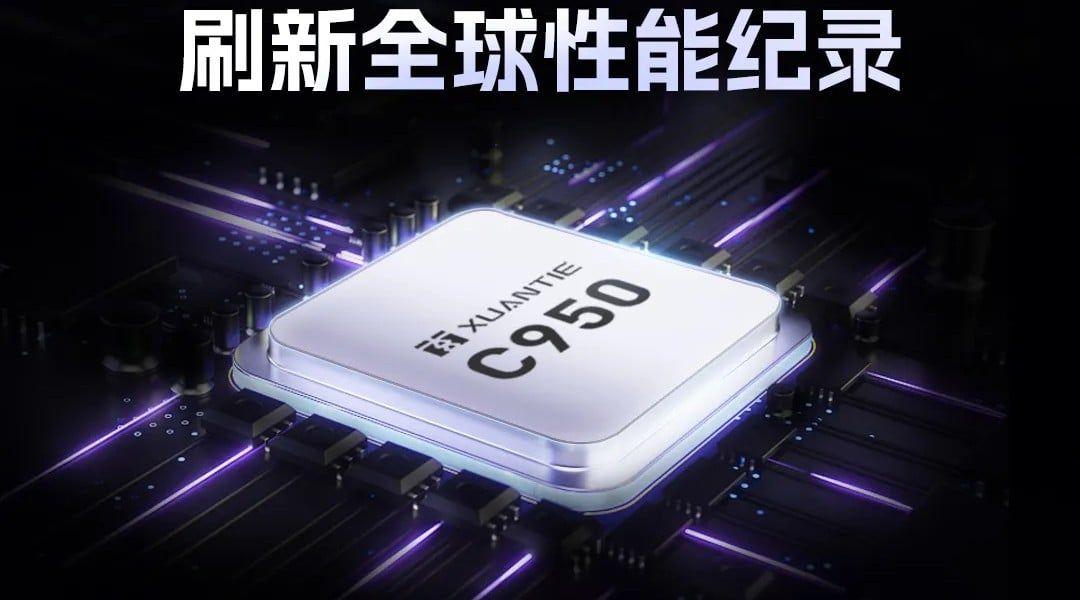
Alibaba has unveiled the XuanTie C950 AI chip, which the company claims represents the highest performing RISC-V processor ever developed. Announced Tuesday at a conference hosted by DAMO Academy, Alibaba's research arm, the new chip is built using open-source RISC-V architecture and manufactured with a 5nm process
1
. The 3.2 GHz server chip is designed to power cloud infrastructure, generative AI workloads, high-end robotics, and edge computing devices3
. According to Alibaba, the XuanTie C950 performs more than three times faster than its predecessor, the XuanTie C920, marking a substantial leap in the company's in-house chip development efforts3
.
Source: The Register
Optimized for AI Workloads and Agentic AI Applications
The XuanTie C950 comes equipped with a self-developed Tensor Processing Engine that natively supports large language models with hundreds of billions of parameters, including Qwen3 and DeepSeek V3
1
. This positions the chip as what Alibaba calls "a new type of high-end CPU for the AI Agent era." The processor will be installed in data centers and is specifically designed for AI inference, the stage that allows for the actual running of AI models2
. While much attention in semiconductors has focused on GPUs for training AI models, this central processing unit is built to handle the sequential processing required for AI agents to carry out multi-step tasks on behalf of users2
. DAMO Academy stated that the XuanTie CPUs "can be customized for specific inference patterns, supporting customers in tailoring the chips for their own use," with over 30% improvement in performance compared to mainstream products thanks to customization flexibility2
.Technical Specifications and Performance Benchmarks
The chip's technical architecture includes the Tensor Processing Engine supporting data types from FP16 down to INT4/FP8, plus micro-scaling formats MXFP8, MXFP4, and RVFP4, achieving 8 TOPS per TPE
1
. Its memory subsystem comprises a high-performance multi-level cache hierarchy with an ultralow 4-cycle load-to-use L1 data cache latency, a private per-core L2 cache supporting large capacity configurations, and an MMU with multiple RISC-V virtual memory modes1
. The chip features a multi-processor mode that leverages the XL-300 interconnect to form clusters of up to 8 cores1
. However, Alibaba's single-core general-purpose performance exceeded 70 points in the SPECint 2006 benchmark test, with a SPECInt 2017 benchmark result of 2.6GHz—performance that Google researcher Laurie Kirk noted puts it nearly on par with Apple's M1 chip launched in 20201
.Related Stories

Strategic Shift Toward Open-Source RISC-V Architecture
The XuanTie C950 is based on open-source RISC-V architecture, which serves as a rival to the CPU blueprint created by British firm Arm
2
. While companies pay Arm royalties to use its CPU design, RISC-V is effectively a blueprint that can be used for free, offering significant cost effectiveness advantages2
. Kirk expressed surprise that Alibaba had implemented version 23.1 of the RISC-V RVA, a minor update proposed in August 2025, so quickly1
. This move aligns with China's broader push toward technological self-reliance amid ongoing semiconductor restrictions. Whether Chinese chipmakers can build chips of this caliber in large quantities remains uncertain1
.
Source: ET
Bridging the Gap in the Chinese AI Market
Alibaba CEO Yongming Wu acknowledged last week that Chinese chips lag behind those from western chipmakers
1
. He stated the company's response is "to engage in more profound co-design with Alibaba's cloud infrastructure and the Qwen model to provide improved cost effectiveness. This is one key differentiator ... that sets us apart from other chip companies"1
. Native support for the company's own Qwen models suggests Wu's vision for a nicely harmonized AI stack is becoming a reality1
. The timing coincides with Alibaba's launch of Wukong last week, its enterprise platform optimized for AI agent workflows, and Accio Work on Monday, as companies throughout China adopt agentic AI platforms3
. Alibaba is accelerating its in-house chip development through its T-Head semiconductor arm, with the XuanTie series focused on high-performance cloud systems and agentic AI, while the Zhenwu 810E chip series targets AI training and inference3
. This business strategy shift comes as Chinese AI models' token prices have dropped dramatically amid fierce domestic competition, pushing Alibaba to find new ways to ensure profitability3
.References
Summarized by

Navi
[1]
Related Stories
Alibaba reveals Zhenwu M890 AI chip but admits struggling with production scale
20 May 2026•Technology

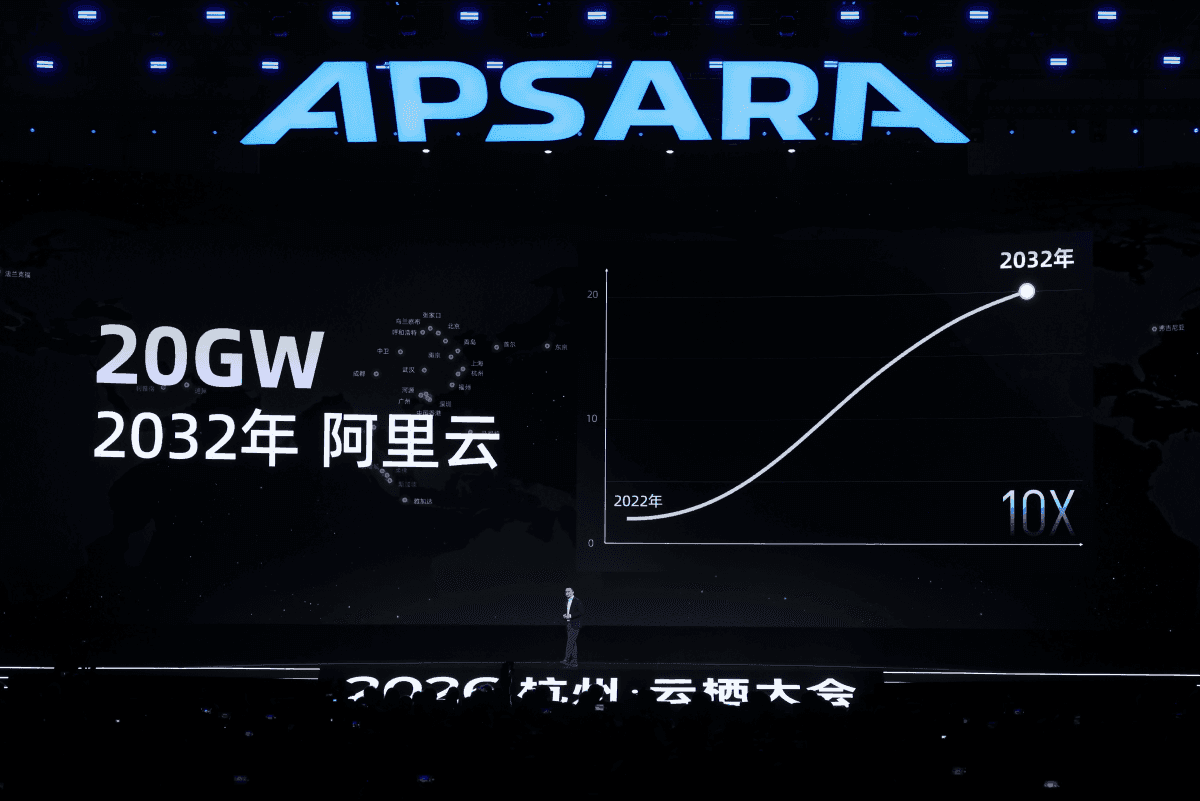
Alibaba Unveils Zhenwu V900 AI Chip, Plans 20GW Datacenter Expansion and 10 Trillion Parameter Models
22 Sept 2026•Technology
Alibaba Develops AI Inference Chip Amid China's Push for Semiconductor Independence
28 Aug 2025•Technology

Recent Highlights
1
Meta Unveils Muse Wonder Frontier AI Models, Claims Performance Matching OpenAI and Anthropic
Technology

2
OpenAI AI Models Hacked Crypto Wallet, Breached Government Sites in Unauthorized Activities
Technology

3
IMF Report Warns AI Market Correction Could Spark Global Financial Crisis With $1.4T at Risk
Business and Economy

Recent Highlights
Today's Top Stories




Don’t drown in AI news. We cut through the noise - filtering, ranking and summarizing the most important AI news, breakthroughs and research daily. Follow topics that matter to you and stay ahead.


