China Warns of Humanoid Robot Bubble as Investment Floods Emerging Industry


3 Sources
[1]
A humanoid robot-shaped bubble is forming, China warns
A humanoid robot bubble could be brewing, warned China's leading economic planning agency on Thursday. The alert comes amid growing fears that a bubble in a related industry -- AI -- is about to burst. Speaking at a press briefing, National Development and Reform Commission spokesperson Li Chao
[2]
China Is Officially Scared of Robots
Chinese officials are warning that the country's humanoid robotics industry could be forming a massive bubble. As Bloomberg reports, strategists from the National Development and Reform Commission (NDRC), which serves as the country's state-run macroeconomic management agency, say that extreme
[3]
China says humanoid robot buzz carries bubble risk
Government support and strong supply chains are helping Chinese firms push ahead in the race to develop AI-powered robots that could one day help perform everyday tasks. But the sector risks overcapacity as production scales up quickly without actual orders, Goldman Sachs warned recently. More
Share
Copy Link
China's economic planning agency warns of a potential bubble forming in the humanoid robotics sector, with over 150 companies producing similar robots amid massive investment but limited proven use cases.
Government Warning Signals Market Concerns
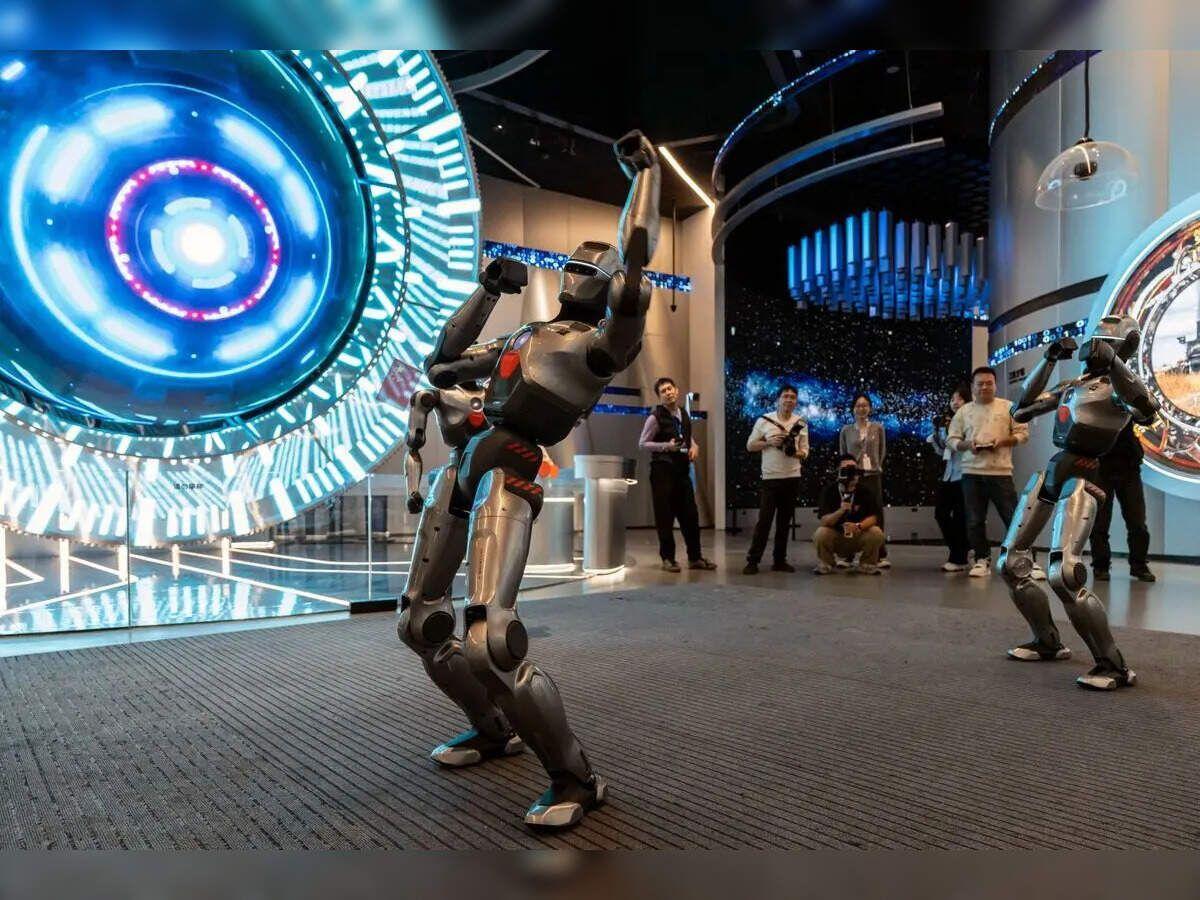
China's National Development and Reform Commission (NDRC) has issued a rare warning about the rapid growth of the country's humanoid robotics industry, cautioning that a market bubble could be forming amid massive investment and limited proven applications
1
. Speaking at a press briefing, NDRC spokesperson Li Chao emphasized the need to balance "the speed of growth against the risk of bubbles" in what Beijing has designated as a national priority sector1
.The warning comes as investment continues pouring into the sector despite few established use cases for humanoid robots, creating concerns about market saturation with "highly similar" models as research and development funding potentially shrinks
1
. This marks a notable shift in tone from Beijing, which earlier this year designated embodied intelligence—the technology behind humanoid robotics—as a national priority1
.
Source: ET
Market Scale and Investment Dynamics
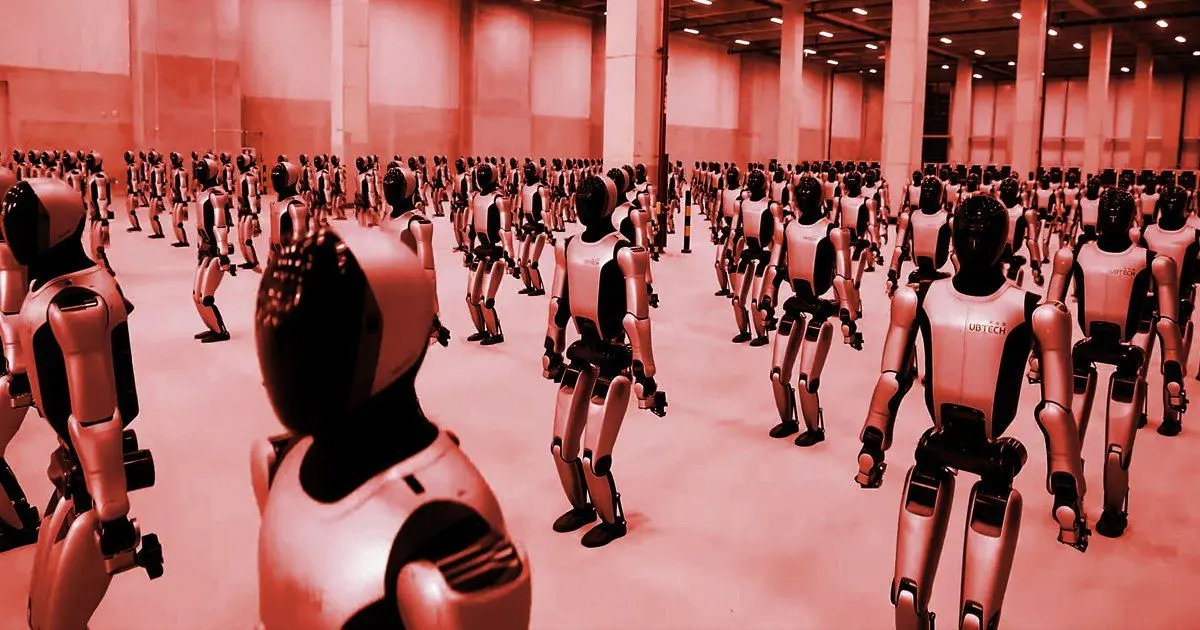
More than 150 humanoid robotics companies are currently operating in China, with over half being startups or companies entering from other industries
1
. This explosive growth has attracted billions of dollars in investment, aided by advancements in artificial intelligence that have opened new potential use cases and generated significant investor enthusiasm2
.The market projections are staggering, with Morgan Stanley predicting the global humanoid robot market could surpass $5 trillion by 2050, while Citigroup offers an even more optimistic forecast of $7 trillion
2
. An April report by specialist consulting firm Leaderobot predicted that China's humanoid robotics industry alone would reach 82 billion yuan ($11.6 billion) in 2025, accounting for half of global sales3
.Technology Advances and Market Reality
Despite the investment enthusiasm, the sector faces significant challenges in translating technological advances into viable commercial applications. Companies like Unitree have made bipedal robots more affordable and advanced than ever before, with their G1 robot gaining attention for abilities like throwing punches and playing basketball
2
.
Source: The Verge
Recent achievements have generated headlines, including Chinese robotics company UBTECH's claim of rolling out the "world's first mass delivery" of industrial humanoid robots, and startup AgiBot's A2 robot setting a Guinness World Record by walking over 66 miles while continuously swapping batteries
2
. Another AgiBot robot completed a three-day, 100-kilometer trek, further demonstrating the technology's advancing capabilities3
.Related Stories

Challenges and Risk Factors
However, turning humanoid robots into viable, affordable products with clear use cases remains a major challenge. Current androids still struggle significantly with completing household tasks, particularly without human teleoperator assistance
2
. Goldman Sachs recently warned that the sector risks overcapacity as production scales up quickly without actual orders3
.The situation mirrors historical market bubbles in China, particularly the bike-sharing app phenomenon of 2017-2018, where dozens of companies flooded the market simultaneously, ultimately resulting in streets littered with unused bikes
2
. Officials warn that without proper market consolidation, China could face a similar scenario with "armies of largely identical humanoid robots"2
.
Source: Futurism
References
Summarized by

Navi
[2]
Related Stories
China dominates humanoid robots market with 85% of global output, but finding buyers proves harder
03 Jun 2026•Business and Economy
China Ships 97% of Global Humanoid Robots as US Struggles to Compete in Physical AI Race
11 Aug 2026•Technology

China's humanoid robot industry dominates supply chain as U.S. scrambles for alternatives
01 Mar 2026•Technology

Recent Highlights
1
Microsoft and Nvidia Launch Surface Laptop Ultra: A $2,599 AI-Ready PC With RTX Spark Chip
Technology

2
Meta Muse AI Agent Surges to 6.6M Downloads Despite Privacy and Security Controversies
Technology
3
Scientists Build AI Model That Reconstructs Images From Brain Scans in Record Time
Science and Research

Recent Highlights
Today's Top Stories











Don’t drown in AI news. We cut through the noise - filtering, ranking and summarizing the most important AI news, breakthroughs and research daily. Follow topics that matter to you and stay ahead.


