3 Sources
[1]
America Wants to Make Its Own Humanoid Robots. That Won't Be Easy.
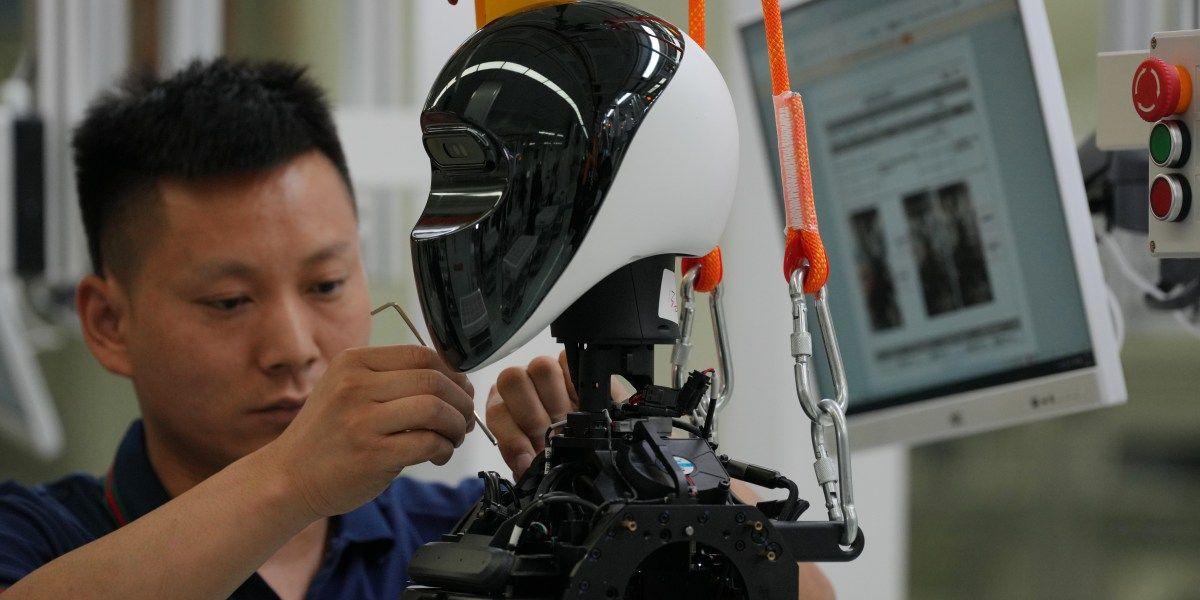
Meaghan Tobin is the Asia technology correspondent. She reported from Plainview on Long Island. Teddy Haggerty knew exactly what he was up against when he decided to build humanoid robots in the United States. Since 2022, Mr. Haggerty had been the main North American distributor for Unitree Robotics, China's leading humanoid robot manufacturer. That role has given him a close-up view of an industry Chinese companies command, producing robots more cheaply and at a scale that American manufacturers have yet to approach. "In China, these things are just walking around the streets," he said. "They have so much more experience than we do." But in a warehouse in a leafy industrial park on suburban Long Island, Mr. Haggerty, 30, is trying to pull off a seemingly quixotic task -- to produce humanlike robots in the United States. His new company, Robo Inc., is the latest venture for a serial entrepreneur who has spent the previous decade chasing the next big thing, from drone photography and Bitcoin mining to importing protective gear during the Covid-19 pandemic. Building robots, however, means taking on an industry China has designated a strategic priority. That is a challenge of a different magnitude. Mr. Haggerty plans to procure components from all over the world and make some in-house. But even as he sets out to establish a robotics beachhead in the United States, he has confronted a stark realization. China has near-total dominance of the supply chain. So building a robot entirely free of Chinese parts was not practical. Companies that went to great lengths to cut China out of their supply chains were in the end just making a more expensive product, he said. It was far more cost-effective to import certain parts, like batteries and the aluminum skeleton that makes a robot's body. "There are some pieces that are already dialed in -- what are you doing changing them?" he said. His office, in Plainview, shares space with a workshop littered with spare robot heads and hands, where a small team of engineers builds custom parts to adapt humanoid and four-legged robots for use in warehouse and health care work. In some ways, Mr. Haggerty is caught between China and Washington, where officials have called for more robots to be made in the United States. He believes the result will be a more fragmented global market for humanoids: Chinese robot companies will continue to sell in their home market, while companies like his will compete for customers in the United States. The United States and China are already vying for supremacy in artificial intelligence and semiconductors. Now robots that look and move like humans are increasingly emerging as another front in that competition. Companies in both countries increasingly see robots as the physical embodiment and next evolutionary step of A.I. The geopolitical tensions came into sharper focus last month when the Federal Communications Commission announced a ban on the import of new models of foreign-made humanoid robots into the United States, citing national security concerns. The measure did not explicitly target China, but most new humanoid robots are made by Chinese companies. This technology is still in the early stages of development, but supporters envision a future when humanoid robots become commonplace: cleaning homes, checking vitals in hospitals and working hazardous jobs in mines and chemical plants. But such activities would also give robots access to vast amounts of data about where and how people lived. For the United States government, this is potentially too sensitive for machines not made in America. Right now, though, very few are. China's robotics industry was built on billions of dollars in state funding and grew out of the country's world-beating electric vehicle industry. The country's leading humanoid robotics start-up, Unitree, is preparing to go public in Shanghai at a valuation of $9 billion. Fledgling U.S. robot makers will need substantial financial and policy support to compete, said Sunny Cheung, a fellow at the Jamestown Foundation, a think tank that studies Chinese government influence. "Merely banning Chinese robots is just the first step," he said. In the United States, humanoid robotics is still in its infancy. Analysts estimate that the top humanoid companies made just a few hundred robots last year. Most aren't available for purchase by the average consumer, but instead are part of test projects with other companies in warehouses and factories. By comparison, Unitree and another Chinese company, Agibot, together made about 10,000. Even Elon Musk's Optimus line of humanoids, which he recently predicted would be "the biggest product ever," relies heavily on components made in China. And makers of non-humanoid robots, like iRobot, the American company behind the Roomba, have struggled to compete with Chinese rivals. The Chinese supplier of iRobot took control when the company filed for bankruptcy in December. And Chinese humanoids are far cheaper and more widely available than their American counterparts. Unitree's flagship humanoid retails for under $14,000. Mr. Haggerty said that after he appeared at a trade show in Las Vegas alongside a Unitree robot last year, he was flooded with inquiries from companies like Amazon and OpenAI that wanted to try out humanoids. They wanted more robots than he could import. Start-up founders and investors say it is virtually impossible to set up factories in the United States that could compete with the output of China's supply chain on cost. It is more expensive to pay American workers. And raw materials, from the lithium in the batteries to the aluminum molded into the skeleton, have to be obtained from China anyway. China's dominance over the supply chain for robots that act like humans is closely tied to its electric vehicle industry. China became the largest E.V. exporter by focusing on producing virtually every component domestically, from screws to lithium-ion batteries. Now, many of the same companies that manufacture parts for electric vehicles supply robot makers, too. "If you are in China and you need a component, you can get it immediately -- where in the United States you might get it in a couple of days," said Brad Porter, the chief executive of Cobot, a robotics company in Santa Clara, Calif. Mr. Porter previously spent more than a decade at Amazon, where he led the company's effort to use robots. He pointed to Amazon's factory in Massachusetts where it makes equipment for its warehouses as an example of successful American robot making. But these are not humanoids. They are robotic devices that convey large loads across factory floors. Mr. Porter said humanoid robots were not the right solution in most situations for Amazon. "There was no use case at Amazon where legs conferred any advantage," he said. The actual usefulness of humanoids remains a live debate. Even robotics company executives concede that people are still far more efficient workers than the robots, which struggle to make complex decisions in rapidly changing settings. While Chinese companies have a lead on producing humanoid robots, none have demonstrated a clear use case for the technology. Chinese robots, including Unitree's, have drawn international attention for coordinated dancing displays on Chinese television and at the Super Bowl. But these robots are following preprogrammed scripts. Creating robots capable of complex decision-making in response to the changing world remains a challenge. More broadly, China has already established another key lead in robotics: using robots to automate manufacturing. In 2024, according to a report by the International Federation of Robotics, a nonprofit trade group, more than two million robots were working in Chinese factories, and another 300,000 were installed -- more than in the rest of the world combined.
[2]
China now builds almost every humanoid robot shipped worldwid
A new report puts Chinese makers at about 97% of global humanoid shipments, a lead built on cheap hardware, a homegrown supply chain and a wall of state and venture money. If a humanoid robot shipped anywhere in the world this year, the odds are overwhelming that it was made in China. A new report says Chinese manufacturers now account for roughly 97% of global humanoid shipments, a level of dominance that leaves every rival nation as little more than a rounding error. That figure is startling, yet it only sharpens a trend already well under way. Earlier analysis from Morgan Stanley found that about 90% of the 13,000 to 16,000 humanoids shipped in 2025 came from Chinese firms, while the US, Japan and others remained largely stuck at the prototype stage. The gap between the leaders and everyone else is enormous. Zhiyuan alone shipped some 5,100 units last year, close to two-fifths of the global total, with Unitree not far behind, whereas American names such as Figure, Tesla and Agility each managed only a few hundred. Put bluntly, a single Chinese maker can out-ship the entire American field several times over. By Morgan Stanley's reckoning the top Chinese firm shipped roughly 36 times as many robots as its US counterparts, a chasm that no amount of Silicon Valley hype has yet closed. The reasons run deeper than any one company, starting with the supply chain. More than half of the hundred key global suppliers of parts like reducers, servo motors and 3D-vision sensors are Chinese, which lets domestic makers build faster and far more cheaply than rivals who must import the same components. Cost is the whole game at this stage, and China has an edge there too. Surveys of Chinese firms suggest mass adoption only really kicks in once prices fall below a certain threshold, and the country's manufacturers are relentlessly cutting costs to reach it, exactly the discipline that turns prototypes into products. Money is pouring in to match. By early 2026 China was drawing close to half of all global venture funding for the sector, and its champions have been racing to the public markets, with Unitree having cleared its Shanghai listing as investors scramble for exposure. The state has made all of this a priority, and the momentum shows. Forecasts keep climbing, with Morgan Stanley doubling its shipment target for the country as the industry moves from demonstrations into early commercial use. Demand is starting to appear in ordinary places, too. China's carmakers are among the early adopters, with BYD planning to put a humanoid in its showrooms, the kind of concrete use case that helps justify the breakneck production. The contrast with the United States could hardly be sharper. American efforts are real but nascent, and even ambitious ventures aiming to build robots for the Pentagon are starting from a tiny base compared with China's factories. A dose of scepticism is still warranted, however. Many of the robots rolling off Chinese lines remain more performative than genuinely useful, better at demos and dance routines than at reliable work, so raw shipment numbers flatter the real state of the technology. Even so, scale has a way of becoming its own advantage. The country that builds the most machines gathers the most operating data, drives costs down fastest and cements the supplier relationships that lock in a lead, which is why a 97% share is about far more than bragging rights. Western firms would counter that the fight is far from settled, and they have a point. Software still matters enormously, and a robot is only as useful as the intelligence that guides it, so a US lead in AI models could yet blunt China's manufacturing edge if capable machines end up running on American brains. For the rest of the world, the report is a warning shot all the same. Whoever ends up dominating physical AI will shape a market some analysts think could eventually be worth trillions, and on current form the race to actually build the machines has a very clear front-runner.
[3]
After electric cars, China kicks off the battle for humanoid robots
Still modest, the first deployments are focused in particular on auto production lines, where BYD is said to be using about a hundred UBTECH robots, while Geely, FAW-Volkswagen and Audi FAW are also testing them to move parts, perform quality checks or carry out certain assembly operations. By quickly putting their machines up against real-world environments, Chinese manufacturers can rapidly accumulate the data needed to improve reliability, autonomy and the ability to handle multiple tasks. This lead is less about a single breakthrough in artificial intelligence than the depth of China's manufacturing ecosystem. The country is thought to control about 63% of the global market for key mechanical components used in robots, including motors, actuators and reducers, as well as nearly 90% of the processing of heavy rare earths needed for magnets. Capabilities built up in electronics, batteries and autos also help shorten development cycles and quickly drive down production costs. For investors, however, leadership in volumes does not necessarily determine how profits will ultimately be split. Chinese companies appear well positioned to dominate the hardware and its components, while US groups retain an edge in semiconductors, AI models, simulation and training software, particularly around the Nvidia ecosystem. As hardware becomes more standardized, a growing share of value could therefore shift toward embedded intelligence, data and fleet management. The electric vehicle experience ultimately calls for caution, since subsidies, a swelling field of competitors and falling prices can speed adoption while sharply compressing margins. China could therefore become the first country to industrialize humanoids at scale, without that manufacturing lead guaranteeing Chinese companies capture most of the economic and stock market value. Profitability for users, reliability and the ability to execute multiple tasks will be the real tests in the years ahead.
Share
Copy Link
China now controls 97% of global humanoid robot shipments, leaving the US and other nations far behind. Built on cheap hardware, a homegrown supply chain and massive state funding, Chinese firms like Unitree and Zhiyuan are shipping tens of thousands of units while American companies remain stuck at prototype stage.
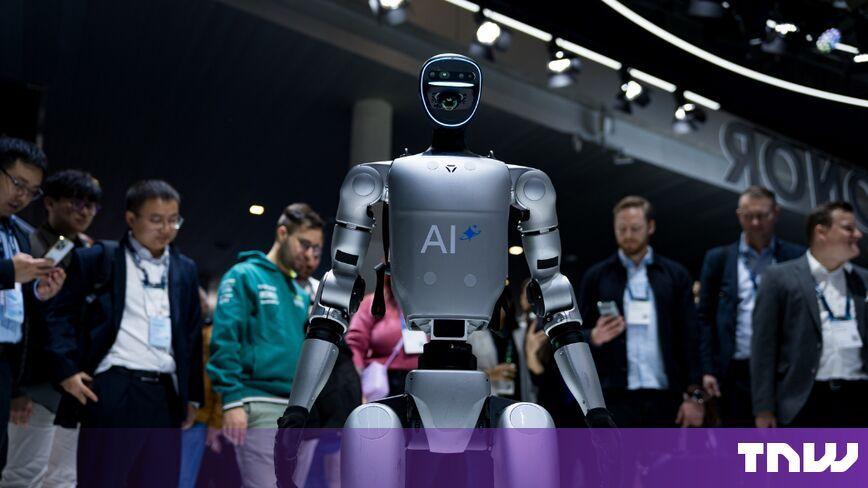
China now accounts for roughly 97% of global humanoid robot shipments, establishing near-total dominance in an industry that represents the next frontier of physical AI
2
. This staggering figure means that if a humanoid robot shipped anywhere in the world this year, the odds are overwhelming it was made in China. Earlier analysis from Morgan Stanley found that approximately 90% of the 13,000 to 16,000 humanoids shipped in 2025 came from Chinese firms, while the US, Japan and others remained largely stuck at the prototype stage2
.
Source: The Next Web
The gap between leaders and everyone else is enormous. Zhiyuan alone shipped some 5,100 units last year, close to two-fifths of the global total, with Unitree not far behind
2
. By comparison, American names such as Figure, Tesla and Agility each managed only a few hundred units. A single Chinese maker can out-ship the entire American field several times over, with the top Chinese firm shipping roughly 36 times as many robots as its US counterparts2
.China's dominance in humanoid robots is less about a single breakthrough in AI than the depth of its manufacturing ecosystem
3
. The country controls about 63% of the global market for key mechanical components used in robots, including motors, actuators and reducers, as well as nearly 90% of the processing of heavy rare earths needed for magnets3
. More than half of the hundred key global suppliers of parts like reducers, servo motors and 3D-vision sensors are Chinese, which lets domestic makers build faster and far more cheaply than rivals who must import the same components2
.China's robotics industry was built on billions of dollars in state funding and grew out of the country's world-beating electric vehicle industry
1
. The country's leading humanoid robotics start-up, Unitree, is preparing to go public in Shanghai at a valuation of $9 billion1
. By early 2026, China was drawing close to half of all global venture funding for the sector2
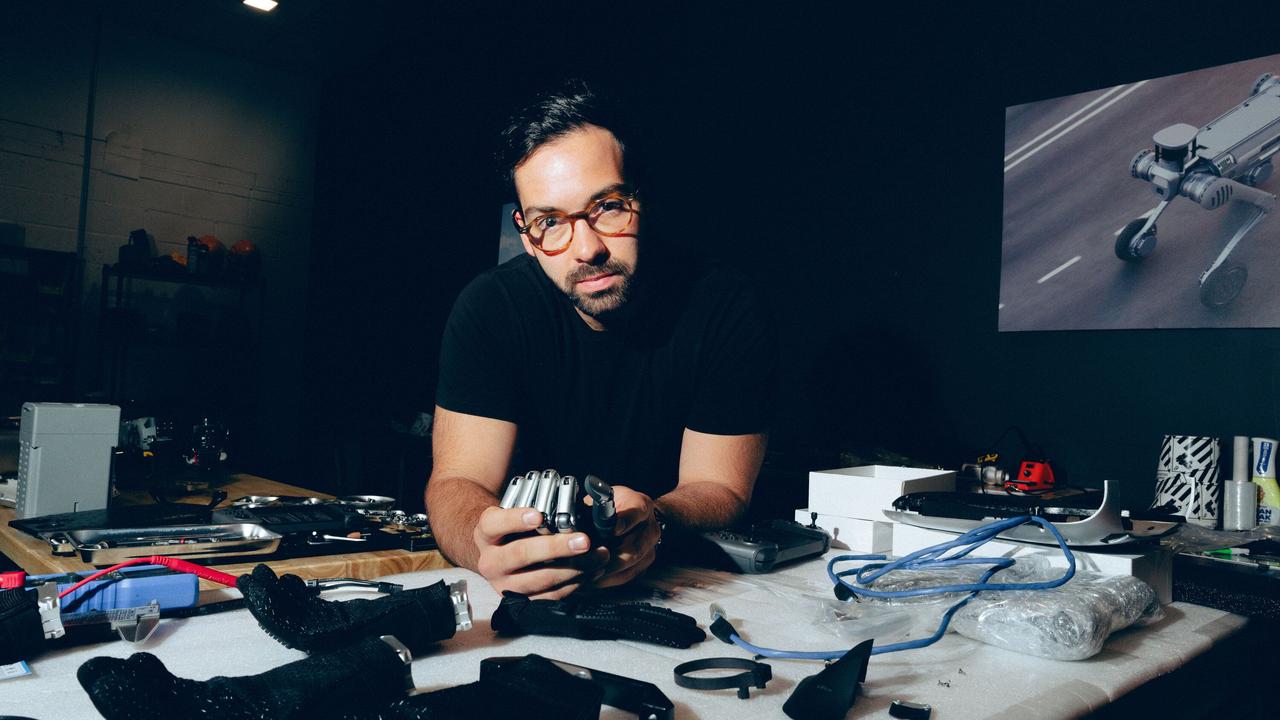
.In a warehouse in Plainview on Long Island, Teddy Haggerty is attempting to establish a robotics beachhead in the United States through his new company, Robo Inc.
1
. The 30-year-old serial entrepreneur had been the main North American distributor for Unitree Robotics since 2022, giving him a close-up view of an industry Chinese companies command. "In China, these things are just walking around the streets," he said. "They have so much more experience than we do"1
.
Source: NYT
Haggerty confronted a stark realization: China has near-total dominance of the supply chain, making it impractical to build a robot entirely free of Chinese parts
1
. Even Elon Musk's Tesla Optimus line of humanoids relies heavily on components made in China1
. The US humanoid robotics industry remains in its infancy, with analysts estimating that top humanoid companies made just a few hundred robots last year1
.Related Stories
The geopolitical competition between the US and China came into sharper focus last month when the Federal Communications Commission announced a ban on the import of new models of foreign-made humanoid robots into the United States, citing national security concerns
1
. The measure did not explicitly target China, but most new humanoid robots are made by Chinese companies. Officials envision a future when humanoid robots become commonplace in homes, hospitals and hazardous jobs, giving them access to vast amounts of data about where and how people live1
.Sunny Cheung, a fellow at the Jamestown Foundation, said fledgling US robot makers will need substantial financial and policy support to compete. "Merely banning Chinese robots is just the first step," he said
1
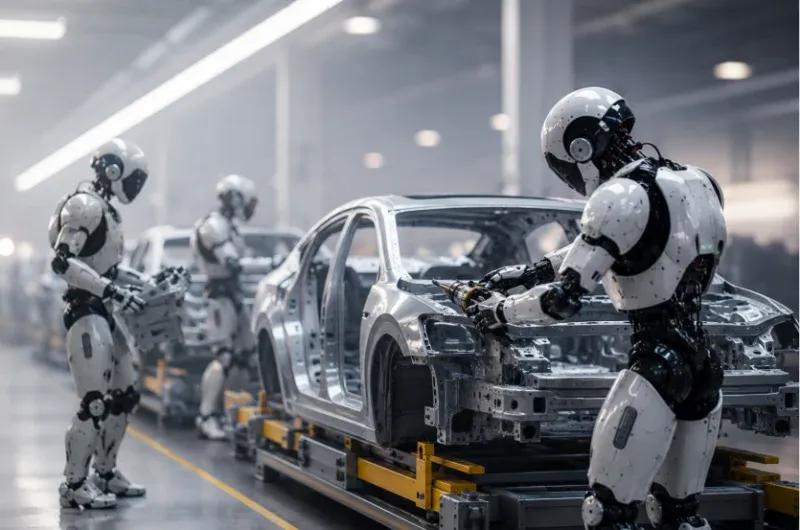
.First deployments are focused particularly on auto production lines, where BYD is using about a hundred UBTECH robots, while Geely, FAW-Volkswagen and Audi FAW are also testing them to move parts, perform quality checks or carry out assembly operations
3
. BYD is planning to put a humanoid in its showrooms, the kind of concrete use case that helps justify breakneck production2
. By quickly putting their machines up against real-world environments, Chinese manufacturers can rapidly accumulate the data needed to improve reliability and autonomy3
.
Source: Market Screener
Western firms argue the fight is far from settled. While China dominates hardware production, US groups retain an edge in semiconductors, AI models, simulation and training software, particularly around the Nvidia ecosystem
3
. As hardware becomes more standardized, a growing share of value could shift toward embedded intelligence, data and fleet management. The country that builds the most machines gathers the most operating data, drives costs down fastest and cements supplier relationships that lock in a lead, which is why a 97% share matters far beyond bragging rights2
.Summarized by
Navi
[2]
[3]
03 Jun 2026•Business and Economy

09 Jan 2026•Technology

01 Mar 2026•Technology

1
Science and Research

2
Technology

3
Technology