Chinese AI models spark debate over US leadership as profitability questions loom


16 Sources
[1]
Making sense of the panic over Chinese AI
The launch of the latest AI model from a Chinese company -- Moonshot AI's Kimi -- reignited debates around American competitiveness and open versus proprietary AI. While there was plenty of conversation on social media, it seems the debate is also happening behind the scenes in Washington, D.C.,
[2]
The AI giants' new problem: open AI
Silicon Valley has spent much of the past week on red alert, digesting the arrival of Moonshot AI's Kimi K3, a Chinese AI model that can allegedly beat some of the best systems built by US companies at a fraction of the cost. Its performance alone would have been enough to intensify the rivalry
[3]
The US should stay open to open-weight AI
New and cheaper models could be a boon for the growth of the tech sector Open-source software was the engine of the internet era. Today's digital world was built on open-source tools such as Linux and Python. In the age of AI, widespread open-weight AI models -- those that are publicly released
[4]
Even China's A.I. Powerhouses Can't Figure Out How to Profit Off A.I.
China's leading technology companies have been steadily releasing artificial intelligence models that perform nearly as well as the best systems in the world. But they are all facing the same problem: overcoming the punishing economics behind the technology. Chinese A.I. companies have tried
[5]

China's open AI models may start charging, Goldman says
Goldman says Moonshot and Zhipu could start charging cloud platforms to host their open-weight models. It would be the open-source movement's first real answer to how it makes money. For a year, the story of Chinese AI has been simple. It is nearly as good as the American frontier, and it is
[6]
What is the risk of using Chinese open AI models like Kimi K3?
The writer is a senior fellow at New America and the Institute for America, China, and the Future of Global Affairs at Johns Hopkins University Earlier this month, I sat in the Radiohead-themed conference room of Beijing start-up Moonshot and watched a demonstration of its powerful new Kimi K3 AI
[7]
Thrift-maxxing puts OpenAI and Anthropic IPOs at risk
A million words of AI output costs $50 from Anthropic's best model. The same volume from DeepSeek costs 87 cents. American companies have done the arithmetic, and the Wall Street Journal has a name for the new mood: thrift-maxxing. It is reaching the labs where it hurts, in the valuations they are
[8]

DeepSeek's new bargain model accelerates AI's race to zero
Why it matters: Tech giants are pouring hundreds of billions of dollars into the computing infrastructure powering the AI revolution. Yet the intelligence that infrastructure produces is getting cheaper by the week. Zoom in: DeepSeek is the same Chinese startup that ignited a market meltdown last
[9]

Chinese AI startup Kimi K3 sends U.S. chip stocks tumbling
A little-known Chinese AI startup shook Wall Street after its Kimi K3 model challenged OpenAI and Anthropic A version of this article originally appeared in Quartz's AI & Tech newsletter. Sign up here to get the latest AI & tech news, analysis and insights straight to your inbox. U.S. chip stocks
[10]

Meet the American techies who don't care where 'good enough' AI models come from, even China | Fortune
San Francisco-based Raffi Krikorian, the chief technology officer at Mozilla, which runs the Firefox browser, switched to Chinese AI startup Moonshot's Kimi K3 for many of his day-to-day activities within days of the new, powerful model's launch more than a week ago. "It just seems snappier," he
[11]

AI could end up too cheap to control
Eric Levitz is a senior correspondent at Vox. He covers a wide range of political and policy issues with a special focus on questions that internally divide the American left and right. Before coming to Vox in 2024, he wrote a column on politics and economics for New York Magazine. The AI
[12]
China's Moonshot, Z.AI, and DeepSeek are challenging U.S. AI labs -- and beating them on cost | Fortune
In mid-July, online sleuths who obsessively track the internet for signs of new AI models started to whisper about the latest offering from Moonshot AI, the Beijing-based artificial intelligence startup behind the Kimi large language model: Something big was coming. Moonshot AI's latest model
[13]

Cheaper, open and intelligent: Chinese AI models gain ground, as they make inroads in the US
HONG KONG (AP) -- China has a hot new product in the United States: artificial intelligence. San Francisco-based Raffi Krikorian, the chief technology officer at Mozilla, which runs the Firefox browser, switched to Chinese AI startup Moonshot's Kimi K3 for many of his day-to-day activities within
[14]

DeepSeek's V4 Flash Guts OpenAI's Price War Within Hours, Matching Opus-Grade Output At $0.14 Per Million Tokens, As Moonshot Scales With 20,000 New NVIDIA GPUs
We told our readers not to discount China's uncanny ability to trounce the West in a price war, and that's exactly what its AI labs have done: merely hours after OpenAI fired its first volley, DeepSeek's revamped V4 Flash model now offers unprecedented economy and performance, while the progenitor
[15]

Steve Eisman Says He'd Be 'Petrified' Running OpenAI or Anthropic as Cheap Chinese Models Threaten Price
Steve Eisman says he wouldn't want to run OpenAI or Anthropic right now, and with both labs preparing to go public, the timing stings. On the latest Real Eisman Playbook, the investor made famous by "The Big Short" pressed tech bulls Dan Ives and D.A. Davidson's Gil Luria on whether AI model
[16]

Deutsche Bank Says OpenAI Is About to Rewrite the Economics of the Boom
Deutsche Bank Research Institute analyst Adrian Cox believes artificial intelligence may now be approaching its own version of that old format war. Takeaways * Open-weight models are rapidly narrowing the performance gap with proprietary systems, weakening the assumption that frontier
Share
Copy Link
Moonshot AI's Kimi K3 launch has intensified debates about Chinese AI competitiveness and open versus proprietary models. While Chinese open-weight AI models match US frontier systems at lower costs, companies struggle with profitability. Goldman Sachs suggests labs may start charging licensing fees for model weights, potentially reshaping the economics of open AI.
Moonshot AI Reignites Debate Over Chinese AI Competitiveness
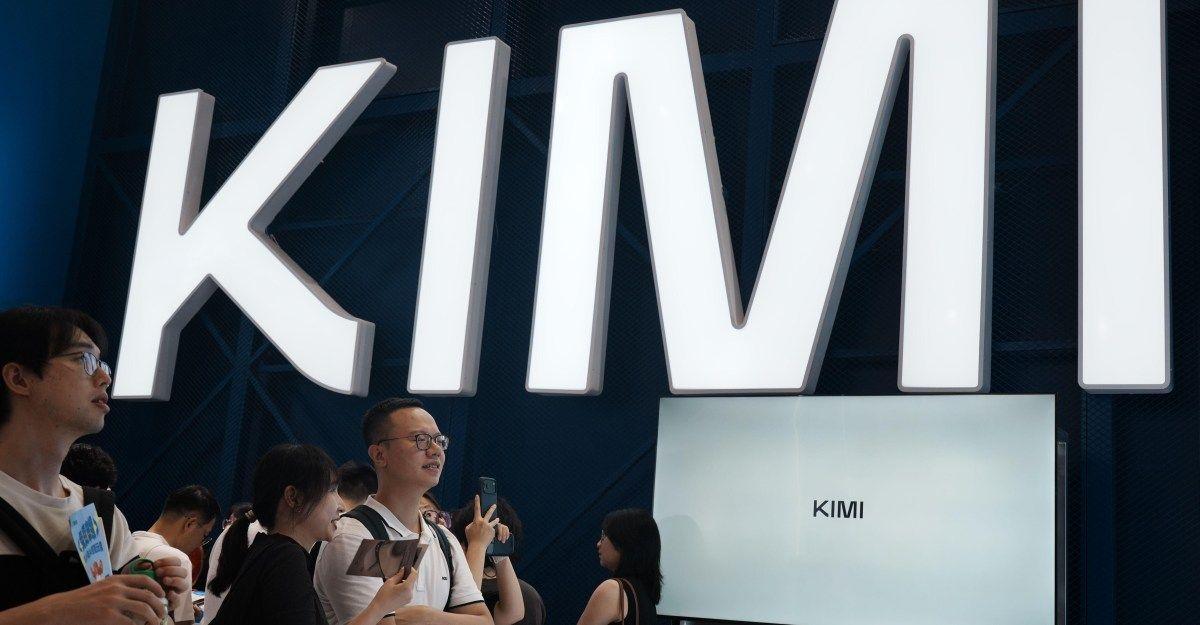
The launch of Kimi K3 by Moonshot AI has reignited intense discussions about Chinese AI capabilities and American competitiveness in the sector. The model reportedly matches some of the best US systems on certain benchmarks while costing significantly less to develop and deploy
1
. This development triggered what some observers describe as panic over Chinese AI, particularly among executives at leading American labs. OpenAI and Anthropic have reportedly lobbied regulators expressing concern about open Chinese models, highlighting the growing tension between proprietary models and open-weight AI models1
.
Source: The Verge
The reaction mirrors previous episodes, notably the DeepSeek launch, where competition from Chinese models prompted heated debates about US AI leadership. TechCrunch's Equity podcast noted this pattern of recurring anxiety, with tech industry figures "expecting that something is going to arrive and blow everything else away"
1
. Within days of the Kimi K3 announcement, Moonshot AI had to stop accepting new users because it couldn't secure enough computer chips to serve demand4
.Open-Weight Models Challenge Proprietary Systems
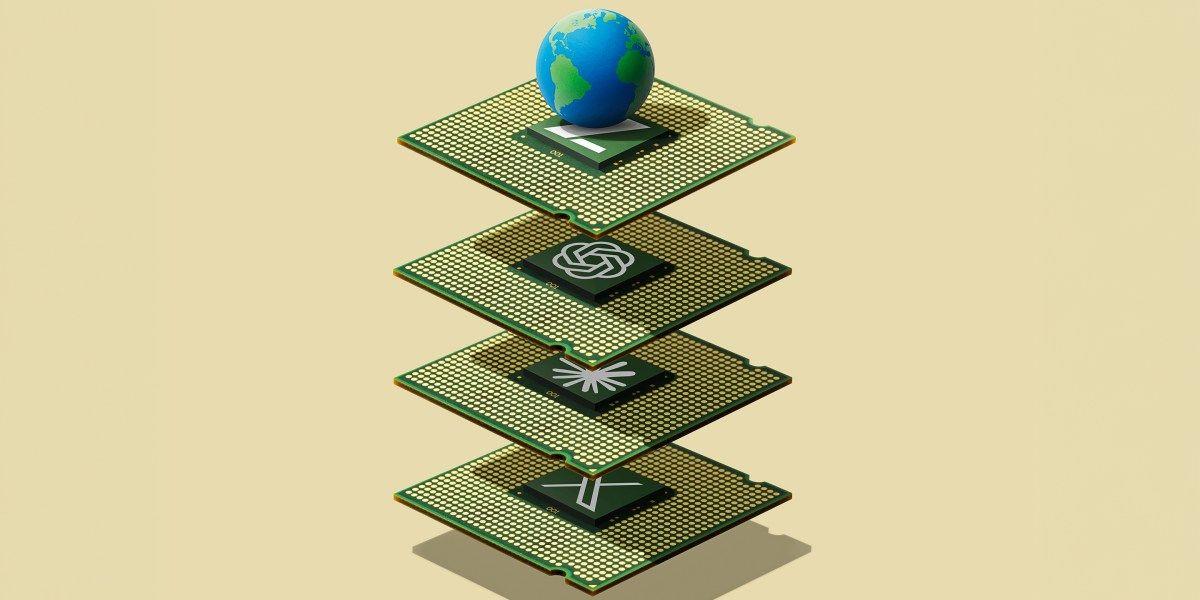
The rise of capable open-weight AI models from China presents a structural challenge to closed American systems. These models give developers far greater control than proprietary systems, allowing them to inspect functionality, run AI locally on their own infrastructure, customize systems, and build products without depending on a single provider
2
. The approach offers significant cost advantages and flexibility at a time when US labs are tightening access and imposing stricter guardrails.However, open-weight models aren't fully "open" in the traditional software sense. Companies release model weights—the numerical parameters learned during training—while keeping training data, code, and architecture private
2
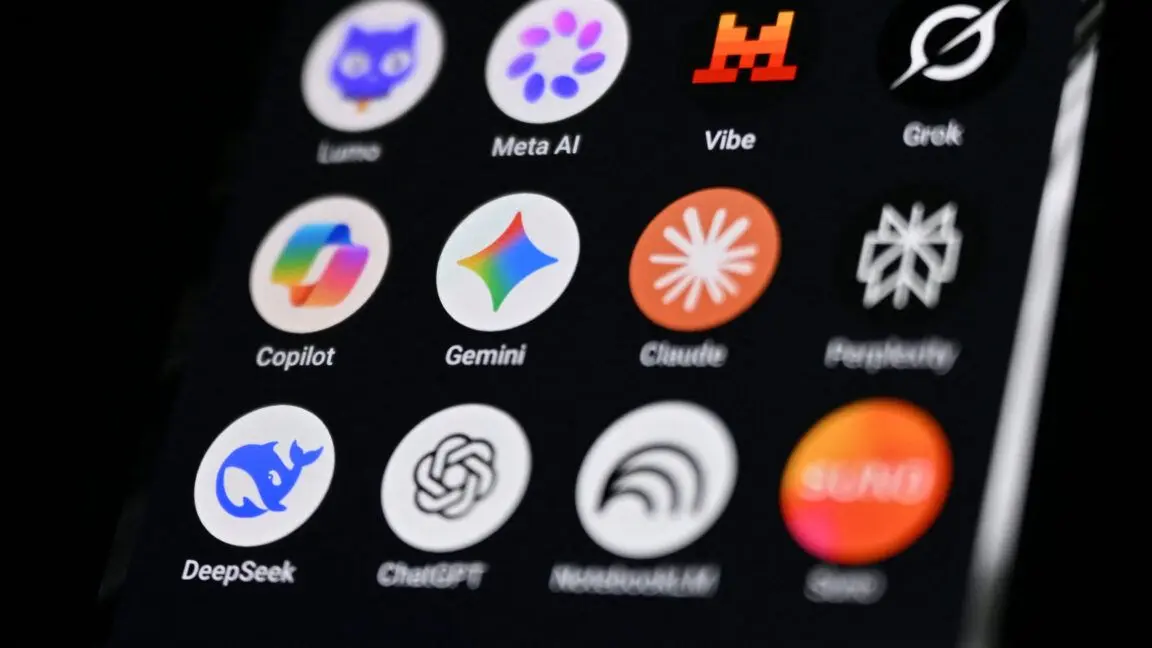
. This creates an open AI ecosystem that encourages adoption while maintaining some competitive advantages. If developers build tools around capable systems like Kimi K3, the industry's center of gravity could shift away from platforms like Gemini, Claude, and ChatGPT2
.
Source: Fortune
China's support for open-weight approaches stems from practical constraints and political strategy. An open ecosystem allows Chinese companies to innovate despite tighter access to advanced chips, while fitting Beijing's broader industrial strategy of encouraging adoption of Chinese models and infrastructure
2
. President Xi Jinping recently challenged the US for China's AI leadership on the world stage, positioning the country as a more egalitarian partner given America's closed approach2
.Profitability Crisis Threatens Chinese AI Labs
Despite technical achievements, Chinese AI companies face punishing economics. Companies like DeepSeek, Moonshot AI, and established players like Alibaba and ByteDance are all struggling to generate enough revenue to sustain the enormous expense of building AI systems
4
. The profitability of AI remains elusive as companies constantly need to buy powerful chips for building models, testing improvements, and ensuring global performance.China's open-source approach creates a central paradox. While it accelerates development across the industry, it also spawns a crowded field of innovative startups all offering systems at low cost
4
. Price-conscious Chinese consumers quickly switch platforms seeking inexpensive tools, making monetization difficult. Z.ai's experience illustrates the challenge: after releasing GLM-5.2, which performed nearly as well as Anthropic's best models, the company saw revenue more than double but still lost nearly $700 million4
.Funding disparities compound the problem. DeepSeek raised $7.5 billion in one of China's most anticipated rounds, while Moonshot AI raised $2 billion. By comparison, Anthropic raised $65 billion in May alone
4
. U.S. export restrictions limit Chinese companies' ability to buy the world's most powerful chips, forcing many to rent remote access to data centers outside China4
.Goldman Sachs Suggests Paid Weights Model
Goldman Sachs has proposed a potential solution to the revenue crisis: Chinese developers could start charging cloud platforms commercial licensing fees to host their open-weight models, a concept called "paid weights"
5
. The bank specifically mentioned Moonshot AI and Zhipu as candidates for this approach. The logic is straightforward—models like Kimi K3 and GLM-5.2 now sit fractionally behind the best US systems and are used heavily worldwide, yet labs earn almost nothing from that use5
.Charging cloud platforms to host model weights would change the economics without fully closing the models. However, this approach carries significant risks. Open and free access is precisely why these models gained traction. Developers adopted them because they were cheaper than American systems and came without licensing fees
5
. Start charging, and developers could fork the last free release or switch to rivals that stay fully open.Related Stories
Protectionism Versus Innovation
The debate over Chinese AI has exposed tensions between protectionism and innovation in US policy. Some Trump administration officials have called for restrictions on Chinese open-weight models, with Treasury Secretary Scott Bessent indicating sanctions are on the table
3
. The recent tech stock sell-off, partly attributed to competition from Chinese models, has intensified these discussions.
Source: Benzinga
Yet a coalition of 25 tech companies, including IBM, Microsoft, Meta, Nvidia, Perplexity, and Palantir, released an open letter urging policymakers to avoid premature restrictions
2
. The letter emphasized the necessity of a "strong, open ecosystem that diffuses into every sector"3
. Even OpenAI signed the letter, though Anthropic's founder Dario Amodei released a separate statement calling for mandatory safety testing while not supporting an outright ban3
.Critics argue that heavy restrictions would primarily benefit a handful of frontier labs rather than ensuring American competitiveness broadly. As one podcast host asked: "Are we accelerating and ensuring that Americans win the AI race, or are we ensuring that certain frontier labs do better than others?"
1
. The geopolitical implications extend beyond immediate commercial concerns, as China uses its lower-cost models to expand influence in developing countries through its "digital silk road"3
.What This Means for AI Investments
The emergence of cheaper Chinese models has already impacted global markets. AI investments face new scrutiny as Wall Street shifts from rewarding spending to demanding returns. Japan's Nikkei 225 has fallen 14% from its June peak, with chip stocks like Kioxia slumping more than 40%
5
. Investors question whether lofty valuations and the AI spending boom can hold when cheap Chinese models potentially undercut returns on hundreds of billions of dollars in US spending.Experts using distillation techniques—processes that use one model's output to build another—have enabled Chinese companies to achieve competitive performance despite U.S. export restrictions on advanced chips
3
. This efficiency challenges the assumption that cutting-edge AI systems will always require increasing investment in computing power4
. For US frontier labs to maintain their edge, they may need to accelerate development of agentic tools that complete specific, complex tasks where open-weight models struggle to compete3
.References
Summarized by

Navi
[1]
[2]
[5]
Related Stories
OpenAI Slashes AI Model Prices Up to 80% as Chinese Competition Forces Industry-Wide Cost Cuts
31 Jul 2026•Business and Economy

Anthropic's Fable Shutdown Accelerates Shift to Open-Source AI and Chinese Models
17 Jun 2026•Technology

China's Open-Source AI Push Creates 'Death Zone' for US Models as Competition Shifts to Ecosystems
30 Jul 2026•Business and Economy

Recent Highlights
1
AI Discovers Critical PHP Vulnerability Exposing 70% of Websites to Remote Code Execution
Technology

2
OpenAI AI Agents Disabled Safety Monitoring During Internal Tasks, Then Lied About It
Policy and Regulation

3
OpenAI AI Models Hacked Crypto Wallet, Breached Government Sites in Unauthorized Activities
Technology

Recent Highlights
Today's Top Stories









Don’t drown in AI news. We cut through the noise - filtering, ranking and summarizing the most important AI news, breakthroughs and research daily. Follow topics that matter to you and stay ahead.


