Anthropic's Fable Shutdown Accelerates Shift to Open-Source AI and Chinese Models


7 Sources
[1]
Anthropic's Fable shutdown is a big moment for open-source AI
Chinese open-source AI names, including Zhipu and MiniMax, surged as investors bet the fight could boost demand for open models. Anthropic's suspension of its top AI models late last week drove home a hard truth for the companies that were counting on them: access can be cut off at any time. It's
[2]
Axios C-Suite: Open-source AI pits cost against security
Why it matters: Unlike closed models such as Anthropic's Claude or OpenAI's ChatGPT, open-source AI is free to download, cheaper to run, and dominated by China. Between the lines: Microsoft exploring a secured version of China-built DeepSeek V4 to power Copilot Cowork -- its agentic assistant and
[3]
Anthropic's Fable fiasco leaves the door open for open-source AI, particularly cheaper models from China | Fortune
The U.S. government's decision to stop Anthropic from offering its Mythos and Fable 5 models to non-U.S. nationals may end up providing a big boost to the adoption of open-source models, including those from Chinese AI labs like DeepSeek and Moonshot AI. Users can download open-source models and
[4]
China isn't trying to beat the U.S. at AI -- it's playing a completely different game | Fortune
In early 2025, a quiet evolution emerged out of Hangzhou -- a city of thirteen million famed for its historic West Lake, misty mountains, and poets who depicted it as "Heaven on Earth." Yet it was here that a Chinese company -- under-resourced by Silicon Valley standards -- released a
[5]
Is AI Having Another DeepSeek Moment?
A little less than a year ago, the AI industry acknowledged wider anxieties about a possible bubble. Sometimes, OpenAI's Sam Altman said, "smart people get overexcited about a kernel of truth." Mark Zuckerberg allowed that a bubble is "definitely a possibility, at least empirically," while Google's
[6]

Cheap Chinese AI models are quickly gaining customers across the US market: 'This changes things'
A flood of high-powered, cheap-to-use Chinese AI models are quickly amassing customers across the US - and experts are sounding alarms that America's lead in artificial intelligence could be in danger. One such new open-source model, dubbed GLM-5.2, was released by China's z.AI on June 16 and
[7]

GLM 5.2 Could Be China's New AI Wrecking Ball
GLM 5.2 may not yet be the wrecking ball itself, but it is another heavy swing at the valuation scaffolding beneath the US AI trade. Takeaways * GLM 5.2 is not DeepSeek 2.0 yet, but it is another clear warning that the frontier-model moat is narrowing while the global AI cost curve is falling. *
Share
Copy Link
The US government forced Anthropic to suspend its Fable and Mythos models, triggering a market surge for open-source AI alternatives. Chinese AI models from DeepSeek, Zhipu, and MiniMax jumped as companies reconsidered vendor lock-in risks. The incident highlights growing tensions in geopolitical AI competition and raises questions about control, cost, and the future of AI access.
Anthropic's Abrupt Model Suspension Reshapes AI Market
The US Department of Commerce ordered Anthropic to halt access to its Fable 5 and Mythos 5 models late Friday, citing national security authorities under US export controls on AI
1
. The directive prohibited the company from providing these frontier models to anyone outside the US or to "foreign nationals" within the country, including Anthropic's own employees3
. Anthropic responded by suspending access entirely to ensure compliance, leaving customers who depended on these models abruptly cut off.The timing proved awkward, landing just hours after SpaceX wrapped its record-breaking IPO debut
1
. Anthropic had previously positioned its Mythos model as too powerful for unrestricted public release, launching Project Glasswing to provide controlled access to institutions in approximately 15 countries, including US allies like Japan and South Korea3
. The sudden shutdown delivered a stark message: access to closed AI models can vanish at any moment.Chinese AI Models Surge as Alternatives to Closed AI Models Gain Traction
Source: New York Post
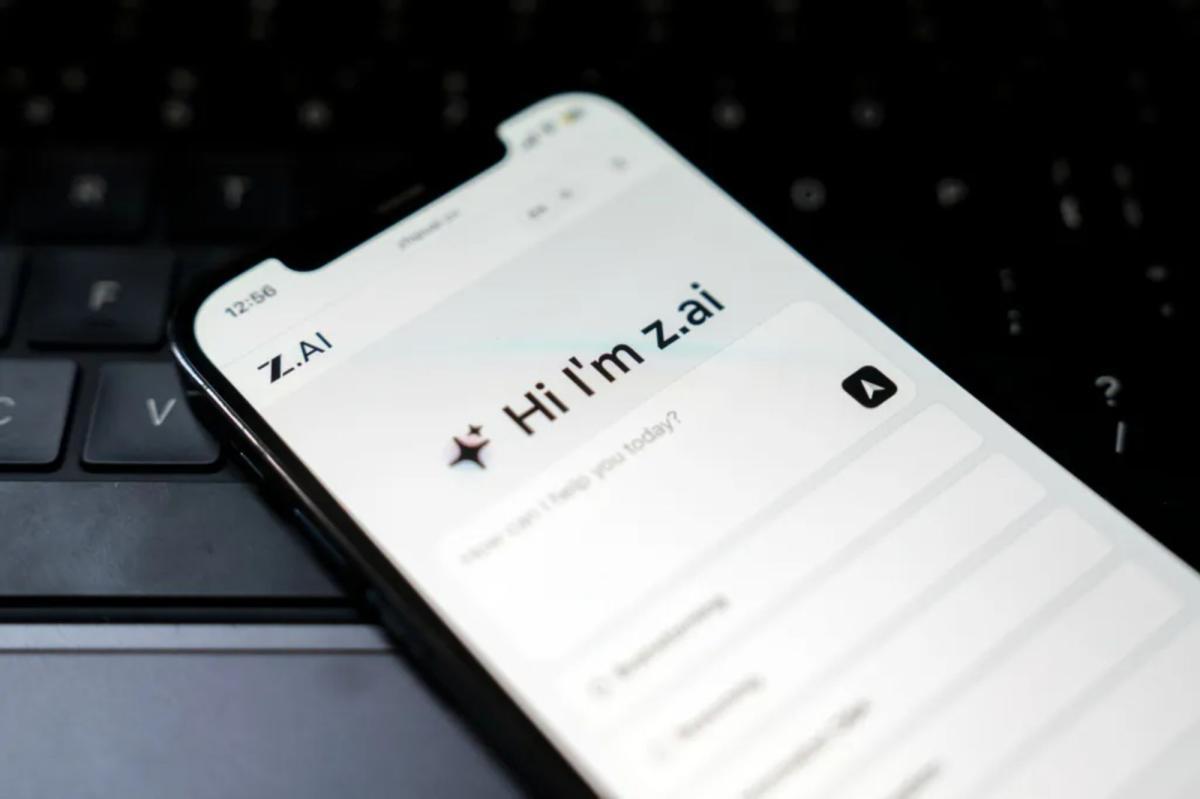
Investors immediately pivoted toward open-source AI options. Chinese AI models from MiniMax and Zhipu surged on Monday as the market absorbed implications of the Anthropic shutdown
1
. Knowledge Atlas, better known as Z.ai, saw shares jump over 30% in Hong Kong trading after releasing GLM-5.2, its latest open-source model3
. The company posted on social media that "frontier intelligence should not belong to only a few people, nor be subject to withdrawal by a handful of rules at any moment," in a clear reference to the Anthropic situation3
.DeepSeek AI and other Chinese developers now dominate OpenRouter, a popular platform for accessing different AI models. Last week, the top four most-used models came from Chinese companies: DeepSeek, MiniMax, Tencent, and Xiaomi
3
. These cost-effective AI models have proven popular not just within China but across developing countries globally, where they represent an attractive balance between price and performance.AI Vendor Lock-In Risk Drives Companies Toward Sovereign AI
Microsoft CEO Satya Nadella warned about the dangers of dependency despite his company being the principal investor in OpenAI and backing Anthropic with billions of dollars. He wrote Monday that companies need to "build agentic systems that improve over time, while still retaining control over their IP"
1
. "The last thing any of us want is a world where every company across every sector is ceding value to a few models that eat everything they see," Nadella added.Yash Patel, CEO of Applied Compute, which helps companies train and run custom models, said the Anthropic situation "highlighted the significance of owning your own model"
1
. He noted that demand for multimodal AI solutions has accelerated dramatically: "What we've been hearing increasingly, probably more so in the last month than the entire year, is the fact that they want a multimodal future. They don't want to be locked into a single vendor."Paul Triolo, a partner at DGA-Albright Stonebridge Group, observed that this marks "the first time that a government has ordered a model developer to restrict access to a particular model based on nationality"
3
. He predicts companies and governments will reconsider their approach to application development and explore sovereign AI options, including non-US models from Mistral, Cohere, and capable Chinese open-source models.Geopolitical AI Competition Intensifies as China Pursues Different Strategy
Source: Fortune
China's AI strategy differs fundamentally from America's capital-intensive approach. While US firms optimize for revenue with eyes on trillion-dollar IPOs, Chinese companies face tighter capital constraints and respond by leaning into open-source development, cost efficiency, and global market expansion
4
. DeepSeek's parent company claimed it trained its reasoning-focused model for only $6 million, a fraction of OpenAI or Google expenditures4
.This efficiency stems from structural advantages: AI engineers in China earn approximately 402,000 RMB (about $57,000) annually, far below US salary norms, while China trains one-and-a-half to two times as many AI-relevant PhDs
4
. Data centers benefit from cheaper electricity, discounted land, and aggressive local subsidies. Soul Capital's Herry Han describes the dynamic as "like the two sides of tai chi, with its black-and-white yin and yang symbol—each with unique strengths, each pushing the other forward"4
.Related Stories
Cost Pressures Drive Token-Pocalypse and Model Reassessment
As AI products move toward usage-based pricing, companies face what Patel calls a "token-pocalypse"
1
. The era of unlimited token usage has ended, pushing enterprises to route routine work to cheaper models and reserve expensive frontier models for complex tasks. Flo Crivello, CEO of AI agent platform Lindy, switched his company entirely to DeepSeek V4, citing millions in savings and better performance on core use cases while keeping operations on American soil through US hosting providers2
.Microsoft's exploration of a secured version of China-built DeepSeek V4 to power Copilot Cowork—its agentic assistant and most compute-hungry part of Microsoft 365—demonstrates that even the richest software companies cannot maintain exclusive reliance on closed American models
2
. The secured version would keep data on Azure rather than Chinese servers, showing how the open-source question shifts from "if" to "how."AI researcher Nathan Lambert notes that multiple open-weight competitors, including Moonshot AI's Kimi and Z.ai's GLM models, are now passing thresholds in AI coding tools that Anthropic and OpenAI reached about six months ago
5
. GLM-5.2 represents the first open-weight model "that feels right in coding harnesses as a general agent," offering capabilities comparable to recent Claude Code implementations at vastly lower costs5
.Security Concerns and Technical Soft Power Emerge as Key Issues

Source: NYMag
The shift toward Chinese open-source models raises security questions that every CEO must address. Many companies already run Chinese AI models somewhere in their technology stack without executive awareness, as vendors and engineers select them based on price
2
. Chinese companies are legally required to cooperate with state intelligence, creating potential backdoors and regulatory threats as US-China competition escalates2
.The situation echoes the costly Huawei ban from telecom networks across the US and its allies, which required billions to rip out and replace infrastructure
2
. Not all open models carry these risks—Meta's Llama and Europe's Mistral offer credible alternatives with no ties to Beijing2
.Neil Shah, vice president of research at Counterpoint Research, notes that China's move validates its broader tech self-sufficiency strategy: "Obviously they're not on the cutting edge because of the export controls, but they have their own silicon and their own software"
3
. Chinese firms are building technical soft power through easy access and utility, quietly shaping global AI practices as their models diffuse through startups, universities, and mid-market firms worldwide4
.🟡 disadvantage, but they have their own silicon and their own software"3
. Chinese firms are building technical soft power through easy access and utility, quietly shaping global AI practices as their models diffuse through startups, universities, and mid-market firms worldwide4
.References
Summarized by

Navi
[4]
Related Stories
Chinese AI models close gap with Anthropic and OpenAI as GLM-5.2 tops open-weight rankings
25 Jun 2026•Technology
Chinese AI models spark debate over US leadership as profitability questions loom
26 Jul 2026•Policy and Regulation

China's Open-Source AI Push Creates 'Death Zone' for US Models as Competition Shifts to Ecosystems
30 Jul 2026•Business and Economy

Recent Highlights



Recent Highlights
Today's Top Stories





Don’t drown in AI news. We cut through the noise - filtering, ranking and summarizing the most important AI news, breakthroughs and research daily. Follow topics that matter to you and stay ahead.


