Chinese tech giants wage $431 million chatbot war as AI competition hits new heights


7 Sources
[1]
Alibaba to spend $431 million for Lunar New Year AI push as chatbot war heats up
BEIJING, Feb 2 (Reuters) - Alibaba (9988.HK), opens new tab said on Monday it will spend 3 billion yuan ($431 million) to attract users to its Qwen AI app during the Lunar New Year holiday, heating up a race between China's largest tech firms. The pledge by Alibaba, which triples the spending
[2]
The AI Race is so hot that chatbot users are getting paid in real cash, iPhones, and TVs
With billions at stake and Apple watching closely, China's AI giants are turning user acquisition into a high-stakes giveaway war ahead of next-generation model launches. AI giants in China, including Alibaba, Tencent, and Baidu, are offering "red envelopes" or cash gifts to lure more users to
[3]
Chinese tech giants trade cash for AI buzz
Chinese tech giants are luring users with cash offers before their reported upcoming releases of competing AI models this month. Chinese AI models are surging globally, favored by some companies for their functionality and low cost, sparking fierce domestic competition. Tech giant Alibaba's AI
[4]
Chinese tech giants trade cash for AI buzz - The Economic Times
Chinese tech giants are luring users with cash offers before their reported upcoming releases of competing AI models this month. US media outlet the Information reported that the tech companies are also looking to release new AI models during the Lunar New Year holiday, following last year's
[5]

Alibaba Launches $432 Million AI 'Red Packet' Blitz To Crush Tech Rivals - Alibaba Gr Hldgs (NYSE:BABA)
Alibaba Group Holding Limited (NYSE:BABA) is ramping up its push into consumer-facing artificial intelligence, committing billions of yuan to a Lunar New Year promotion. Alibaba said it will spend 3 billion yuan ($432 million) to promote its Qwen AI app during the Spring Festival, joining rivals
[6]

Alibaba Raises Stakes in China's Chatbot War Ahead of Lunar New Year | PYMNTS.com
By completing this form, you agree to receive marketing communications from PYMNTS and to the sharing of your information with our sponsor, if applicable, in accordance with our Privacy Policy and Terms and Conditions. The move escalates a marketing and incentives battle among China's largest
[7]

Alibaba to spend $431 million for Lunar New Year AI push as chatbot war heats up
BEIJING, Feb 2 (Reuters) - Alibaba said on Monday it will spend 3 billion yuan ($431 million) to attract users to its Qwen AI app during the Lunar New Year holiday, heating up a race between China's largest tech firms. The pledge by Alibaba, which triples the spending promised earlier by rivals
Share
Copy Link
Alibaba pledges 3 billion yuan ($431 million) to attract users to its Qwen AI app during Lunar New Year, tripling spending by rivals Tencent and Baidu. The escalating promotional battle comes as Chinese tech giants prepare to launch next-generation AI models, with cash incentives, iPhones, and TVs offered to users who register and interact with their chatbots.
Chinese Tech Giants Launch Massive Cash Campaigns for AI Apps
Chinese tech giants are turning user acquisition into an unprecedented spending battle, with Alibaba committing 3 billion yuan ($431 million) to promote its Qwen AI app during the Lunar New Year holiday
1
. The pledge triples the spending promised by rivals Tencent and Baidu, which announced they would spend 1 billion yuan and 500 million yuan respectively on similar promotions for their AI chatbots1
. This escalating chatbot war reflects how AI competition among Chinese tech giants has intensified following DeepSeek's surprise launch last year.
Source: Benzinga
The Alibaba Qwen AI app campaign begins on February 6 and will involve incentives for dining, drinks, entertainment and leisure, with digital red envelopes distributed continuously
1
. Users who register with the apps have daily chances to claim these traditional cash gifts, though individual red envelopes are usually worth only a few cents. Tencent's Yuanbao chatbot app offers a top prize worth 10,000 yuan, while Baidu is providing larger rewards including iPhones and TVs alongside its 500 million yuan budget4
.
Source: Reuters
Lunar New Year Promotion Timing Signals Strategic Push
Chinese tech companies have long used the Lunar New Year festive period as a marketing battleground to acquire new users, with hundreds of millions traveling home and spending time with family
1
. The most notable case was in 2015, when Tencent leveraged its WeChat messaging app to distribute digital red envelopes, helping its WeChat Pay service gain ground against Alipay in China's mobile payments market1
. The public holiday period this year begins on February 15 and is nine days long, longer than in most previous years1
.These cash incentives for AI apps aren't just about holiday marketing. The Information reported that tech companies are looking to release next-generation AI models during the Lunar New Year holiday, following last year's DeepSeek surprise
4
. DeepSeek is expected to launch its next-generation AI model V4, featuring strong coding capabilities, in mid-February1
. During last year's Lunar New Year in January, Chinese startup DeepSeek stunned the world with its low-cost AI model that performed on par with US rivals, rattling global AI markets and spurring faster adoption among domestic players1
4
.Mass-Market Adoption Drives Competitive Strategy
Alibaba said the effort positions Qwen as more than a chatbot, instead acting as a personal AI agent that can carry out tasks directly across Alibaba's platforms
5
. The company overhauled its AI chatbot in November, relaunching it as Qwen and powering it with the latest version of its proprietary large language models, and said the app surpassed 100 million monthly active users within two months5
. Alibaba's announcement comes a week after it released its latest model, Qwen3-Max-Thinking, which it claims beats Google's newest model on reasoning4
.Chinese AI models are surging globally, favored by some companies for their functionality and low cost, sparking fierce domestic competition
4
. Analysts say DeepSeek's decision to make its system's inner workings public, in contrast to the closed AI models sold by OpenAI and other Western rivals, has boosted adoption of its tools by developers and businesses4
. As Chinese firms compete with global AI players like Google and OpenAI, they're also eyeing a chance to become Apple's local AI facilitator in the region2
. Since Apple can't use Google's Gemini to power its advanced AI features including the new Siri in China, it must outsource the back-end to a platform that meets its standards, with a Bloomberg report from February 2025 claiming that Apple will use Alibaba's AI in China, though the iPhone maker hasn't confirmed anything yet2
.Related Stories


AI App Promotion Extends Beyond Software
Alibaba's chip design arm, T-Head, released technical details for its Zhenwu 810E parallel-processing unit, with the company saying the chip targets the heavy data demands of generative AI and delivers performance broadly comparable to Nvidia's China-focused H20 processor
5
. This full-stack AI strategy demonstrates how Chinese tech giants are building comprehensive ecosystems to support mass-market adoption of their AI applications. Baidu also released a new model on January 22, positioning itself ahead of the holiday rush4
. With billions at stake and the combined promotional pile reaching around 4.5 billion yuan, this AI competition signals a critical inflection point for consumer AI adoption in China and potentially beyond.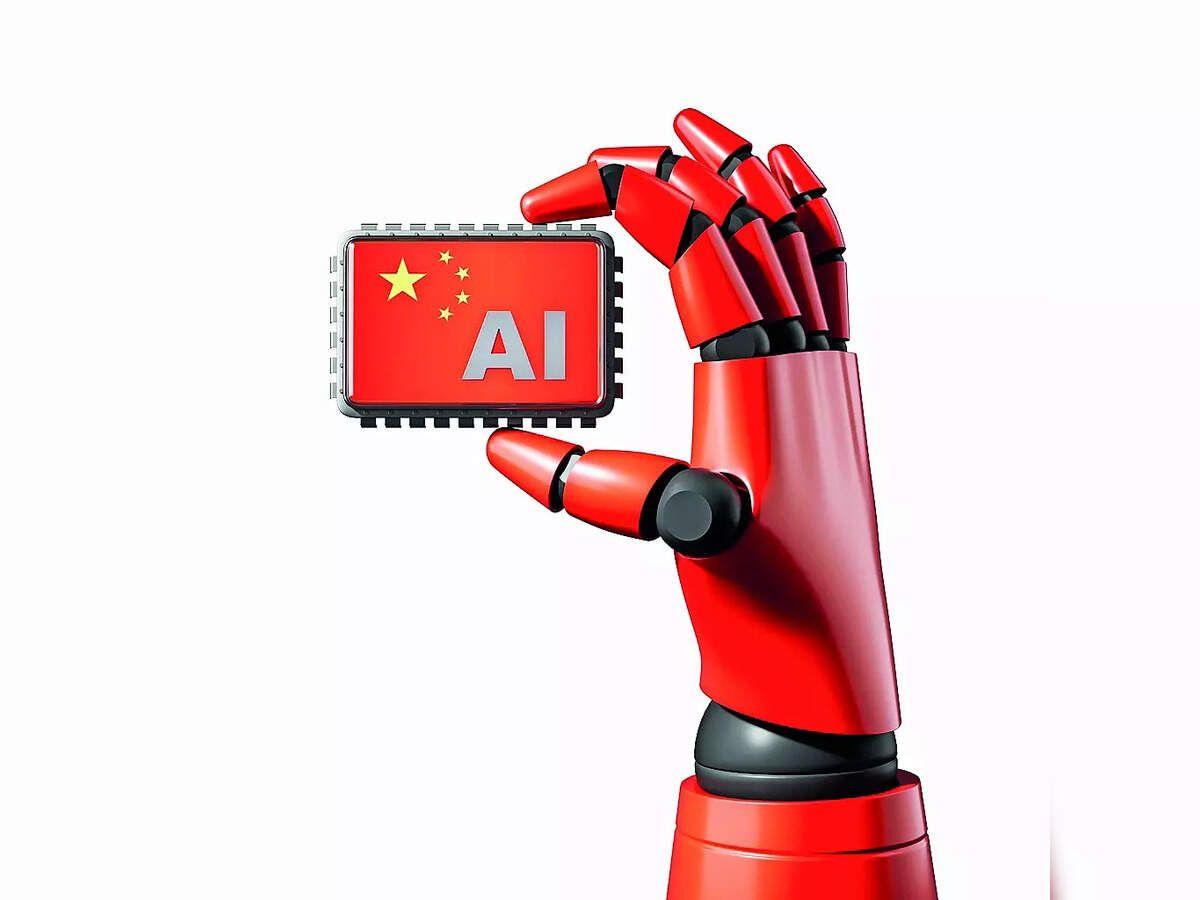
Source: ET
References
Summarized by

Navi
[2]
[3]
Related Stories
Recent Highlights
1
Microsoft and Nvidia Launch Surface Laptop Ultra: A $2,599 AI-Ready PC With RTX Spark Chip
Technology

2
Scientists Build AI Model That Reconstructs Images From Brain Scans in Record Time
Science and Research

3
Anthropic AI Cuts Live Internet Access After Model Sends False Homicide Tip to Philadelphia Police
Technology

Recent Highlights
Today's Top Stories






Don’t drown in AI news. We cut through the noise - filtering, ranking and summarizing the most important AI news, breakthroughs and research daily. Follow topics that matter to you and stay ahead.


