Sam Altman Backtracks on RAM Shortage Comments After Public Outcry Over AI Data Centers


42 Sources
[1]
OpenAI's Sam Altman Backtracks After Hating on You for Having RAM
Commentary: Altman complained about so much memory being in regular people's computers, rather than data centers. Here's what he meant and why it's so tiring. What does Sam Altman, CEO of ChatGPT creator OpenAI, think about you using RAM (aka memory) in the computer you own? It's tough to say,
[2]
Sam Altman addresses RAM comments: people should 'put as much as they want in their computers'
OpenAI CEO Sam Altman spent election night defending his position on PC RAM purchases. He changed his name on X to "Ram Altman" in response to another user's comment, saying, "i actually do want the world to have tons of memory and people to put as much as they want in their computers, and it is
[3]
Ram Altman? OpenAI's CEO Tries To Defuse Controversial Memory Comments
'I actually do want the world to have tons of memory,' OpenAI's Sam Altman says after facing backlash for suggesting that PCs capable of running AI locally are a waste. Can "Ram Altman" save us from the memory shortage? On X/Twitter, OpenAI's CEO Sam Altman briefly changed his name to the moniker
[4]
Elon Musk mocks OpenAI CEO Sam Altman's claim that PCs having RAM is terrible -- 'The people deserve to have their RAM too!'
Musk's memo called out Altman's claim that it's "quite terrible" for home computers to have RAM amid a global supply crunch. SpaceX CEO Elon Musk has taken to X, the social network that he owns, to mock OpenAI CEO Sam Altman's stance that it's "quite terrible" for home computer users to have DRAM
[5]

Sam Altman says it's "quite terrible" that people use RAM in their PCs for AI during a shortage
* AI demand is driving up RAM costs, making consumer sticks pricier. * Altman implies underused PC RAM should be in cloud data centers for higher utilization in an interview. * His remarks suggest a preference for cloud over consumer RAM, which shows a worrying trend if true. If you've been RAM
[6]
Sam Altman Suggests Running AI Locally Is a Waste of Memory
OpenAI's CEO isn't a fan of the growing trend of running AI models locally on PC hardware, calling it a waste of precious DRAM. 'You want maximum utilization,' he says. It's not exactly a surprise, but OpenAI CEO Sam Altman isn't a fan of people running AI models locally because it can pull
[7]
OpenAI CEO says it's 'quite terrible' for your PC to have RAM -- Sam Altman says data centers offer better utilization
With data centers full of RAM, your PC is apparently the problem. OpenAI CEO Sam Altman has data centers full of memory, but seemingly it's the 32GB of RAM in your desktop that's the problem. In an interview over beers with the YouTube channel Cheeky Pint, Altman said that local inference, and, by
[8]

Sam Altman is upset at you for hoarding RAM in your own computer
He says it's 'terrible' to have 'a bunch of the world's limited supply of DRAM' sitting in people's PCs. AI data centers have gobbled up so much of the world's RAM supplies that prices of the memory units -- and all electronic devices that have them -- have skyrocketed as a result. So when OpenAI
[9]

Sam Altman says it's "terrible" for RAM to sit inside PCs instead of data centers
Serving tech enthusiasts for over 25 years. TechSpot means tech analysis and advice you can trust. The big picture: The AI boom has siphoned most of the tech industry's RAM supply, driving up prices and making consumer electronics less affordable. Recent comments from Sam Altman, arguably the man
[10]

Sam Altman: You're Completely Right About RAM. I'm Sorry for the Confusion. Here's What Happened
The OpenAI CEO is backpedaling after suggesting worldwide RAM supplies should be further diverted to data centers. OpenAI CEO Sam Altman was simply taken out of context when he said that all the DRAM in the world should belong to AI firms like his so he can charge people to use it, you
[11]

Sam Altman: DRAM in home PCs is 'quite terrible', used 5% of the time
Sam Altman's DRAM argument on Cheeky Pint: memory in home computers is used 5% of the time and works harder in the cloud. Samsung, which supplies memory for OpenAI's Stargate project, hosted him in Yongin. Samsung hosted OpenAI chief executive Sam Altman for talks with about 50 of its presidents
[12]

Sam Altman says your PC's memory should belong to him
In an interview, the CEO of OpenAI and boss of ChatGPT says it would be far more efficient if all the RAM in your gaming PC was reserved for a data center. endif; ?> Ah, you love to see it. A quote from a billionaire CEO shows just how phenomenally out of touch they are. In a video interview
[13]
Sam Altman: All the RAM Should Belong to Me, So I Can Charge People to Use It
OpenAI CEO Sam Altman is really gunning for villain-of-the-year status with PC gamers in particular, but owners of pretty much any computing device everywhere. Altman appeared on Stripe cofounder John Collison's Cheeky Pint podcast this week, sipping beers and weighing in on the state of AI.
[14]

Sam Altman backpedals and says 'I want you to have so much RAM' after backlash -- but his RAM crisis solution is unconvincing
* Sam Altman says he wants there to be enough RAM for everyone * He argues his past comments were taken out of context * Altman previously criticized people using RAM sticks in their home PCs When OpenAI chief Sam Altman said that it was "quite terrible" that everyday folks were using RAM sticks
[15]

Sam Altman wants all the world's RAM to himself, and the memes are hilarious
If you see this man, and you happen to carry a DRAM stick in your hand, run. Credit: Heather DIegel/Getty Images Got a computer, phone, or a tablet with some memory chips inside? That's a shame. You shouldn't be doing that. Well, at least not according to OpenAI's Sam Altman, who shared his view
[16]

Panicked Sam Altman Reverses Position as Walls Close In, Says People Should Be Able to Own RAM
During a recent podcast appearance, OpenAI CEO Sam Altman made some baffling comments that really hit a nerve on social media. The billionaire said that it didn't make sense for individual people to run their own AI models at home and that all of their RAM chips were far better off being used
[17]

Sam Altman Says It's 'Fucking Annoying' His RAM Comments Were Taken Out of Context
The OpenAI CEO briefly renamed himself "Ram Altman" on X after Elon Musk mocked him for saying idle home PC memory is "quite terrible." In brief * OpenAI CEO Sam Altman said it was "fucking annoying" that his comments about computer memory were taken out of context, after Elon Musk mocked
[18]

Sam Altman is annoyed his DRAM comment was 'taken out of context'
OpenAI CEO Sam Altman said on a recent podcast that "from a global allocation perspective, actually it's quite terrible to have everyone have a bunch of the world's limited supply of DRAM sitting in their own computer, and be used 5% of the time." Altman was talking about people running AI models
[19]
'The people deserve to have their RAM too!' Elon Musk mocks OpenAI Sam Altman's claim that people owning home PCs with RAM is 'terrible'
* Elon Musk mocks Sam Altman's recent claim that people shouldn't own RAM * "The people deserve to have their RAM too!" Musk's meme on X says * Altman has been keen to secure more memory for OpenAI recently Elon Musk has mocked OpenAI CEO Sam Altman following the latter's declaration that owning
[20]
Sam Altman Absolutely Hates the Idea of People Running Their Own AI Models at Home, Argues They Shouldn't Own Computers
Shares of US chipmaker Intel cratered on Friday, plunging almost 30 percent, the worst stock collapse in 52 years. The wipeout, analysts said, could be due to a massive slowdown in the PC market. The market softness shouldn't come to anybody's surprise, given the AI boom has made individual
[21]
Elon Musk Mocks Sam Altman Over Claim Home PCs Are Wasting RAM
The exchange is the latest clash between the two OpenAI co-founders, after a jury rejected Musk's $150 billion lawsuit against OpenAI in May. Elon Musk has mocked OpenAI CEO Sam Altman for arguing that the world's limited supply of computer memory would be better used in AI data centers than in
[22]

Sam Altman says your PC's RAM is a 'quite terrible' use of the world's limited DRAM supply
OpenAI CEO Sam Altman says it's quite terrible that PCs hold scarce DRAM used 5% of the time, arguing that data centers use memory better. OpenAI CEO Sam Altman has argued that the DRAM sitting inside your PC is a poor use of the world's limited memory supply. While Altman is "technically"
[23]
Sam Altman argues that it's bad you want DRAM in your computer and not a data center, actually
More and more, AI appears to be the reason we can't have nice things on the internet. Beyond generative models gobbling up my own and my fellow creatives' work in a bid to produce abysmally average output, AI data centres are also devouring all of the available memory. This drives up prices and
[24]

Sam Altman Backtracked on His Most Absurd AI Claim Yet. Sort of
Last week, he needed our RAM. Now he thinks we should have as much as we want. Last week, on a podcast, Sam Altman suggested that your computer is a terribly inefficient use of RAM and that AI companies should have it instead. Or, at least, that's definitely what it seemed like he was
[25]
'Is Sam Altman going to break into my house and steal my RAM?' -- no, but the AI memory crisis could be about to get a whole lot worse
Sam Altman has been making headlines for his claims that consumers don't deserve DRAM because it is only utilized "5% of the time." In his opinion, DRAM supplies should be prioritized for data centers where its utility can be maximized powering cloud environments. Altman's perspective is like a
[26]

Sam Altman wants you to have more RAM at home, right after he buys all of it
Sam Altman wants your RAM. It's there in your computer doing nothing much, and it would be much better powering ChatGPT's enormous RAM demands. After all, his company is a core part of the reason there is a RAM shortage to begin with, so it stands to reason that he's dreaming of the RAM in your
[27]

OpenAI CEO Wants the World's RAM in Data Centers, Not Your PC
OpenAI CEO Sam Altman says people should not keep so much of the world's memory in their own computers. He made the comment on the Cheeky Pint podcast, as reported by PC Gamer. According to Altman, he was quoted as saying, "From a global allocation perspective, actually it's quite terrible to have
[28]

OpenAI's Sam Altman Thinks It's Great If You Can Afford RAM
The OpenAI boss wants all the RAM for himself, seriously If you've tried to buy new electronics recently, from gaming consoles to iPhones, you'll have dealt with prices that are hundreds higher than they were even a year ago. That's because the price of RAM keeps going up as AI companies race to
[29]

If Sam Altman thinks gaming PCs only use RAM 5% of the time, he knows less about technology than I thought
Opinion | Sam Altman wanting to steal RAM from your gaming PCs shows just how out of touch AI companies are with their impact on consumer tech markets Sam Altman made headlines over the weekend by ruffling the feathers of the very consumer market he's already been pissing off for the last year: PC
[30]

OpenAI CEO Sam Altman questions why people keep so much RAM in their computers; but what happens when the internet goes down?
OpenAI CEO Sam Altman made some viral remarks during an appearance on the Cheeky Pint podcast. The discussion was about local AI inference, open-source AI models and the global shortage of computing resources. Altman questioned the efficiency of people keeping large amounts of DRAM in personal
[31]
Sam Altman Would Like Your RAM, Please
Altman thinks putting RAM in data centers is a better use of a scarce resource than putting it in your Mac mini. I guess, if you run a big tech company, you think about big tech company things. It would be easy to forget that there is a world outside of your big tech company, full of people who
[32]
'He can pry it from my cold, dead hands': Sam Altman says it's 'quite terrible' that you're using RAM in your PC when there's not enough for AI data centers
* OpenAI CEO Sam Altman would rather have RAM put into data centers * Altman says it's 'quite terrible' that RAM is sitting in individual PCs * The comments haven't gone down well with consumers online The increasing demands from data centers powering AI engines has plunged us into a global RAM
[33]

Elon Musk Pushes Back Against Sam Altman's View That Personal Computers Waste DRAM: 'The People Deserve t
Elon Musk challenged OpenAI CEO Sam Altman's argument that scarce memory belongs in cloud data centers rather than personal computers, turning a dispute over chip supplies into a broader debate over who should control computing power. Altman Argues Cloud Servers Use RAM Better "The people deserve
[34]

OpenAI Sam Altman Claims Cloud AI Beats Local AI PCs Due to Scarce DRAM
Sam Altman, CEO of OpenAI, recently sparked debate with his assertion that cloud-based AI systems are more efficient than running AI models on personal computers. Speaking on a podcast, Altman pointed to the global shortage of DRAM, a key resource for AI operations, as a major constraint that
[35]

Sam Altman Calls PC RAM A "Quite Terrible" Use Of Limited DRAM Supply, Argues Cloud Data Centers Are More Efficient
OpenAI CEO Sam Altman believes that having large amounts of RAM installed in personal computers is an inefficient use of the world's increasingly limited DRAM supply, arguing that cloud data centers can make better use of these resources. His comments come at a particularly controversial time, as
[36]
Elon Musk vs Sam Altman: After OpenAI CEO questions people's RAM usage at home, Musk defends ordinary users with a meme
Elon Musk has taken a dig at OpenAI CEO Sam Altman after the latter questioned why people keep large amounts of RAM in their personal computers when the limited memory supply could be used more efficiently by AI data centres. Sharing a meme on X, Musk defended ordinary consumers. The exchange comes
[37]

Sam Altman Sparks Debate Over PC Memory Use Amid AI Data Centre Boom
OpenAI CEO's remarks on unused computer memory highlight a growing industry dilemma: how to balance the rising computing demands of artificial intelligence with consumers' need for powerful personal devices. The rapid expansion of artificial intelligence is reshaping the global computing industry,
[38]
Why Is Sam Altman Questioning Your PC's RAM Amid a Global Memory Crisis? | TechPulse
OpenAI CEO Sam Altman believes RAM in personal computers is underutilised. But here's the irony: AI data centres are consuming enormous computing resources, and the growing demand for memory is pushing up prices for everyday consumers.Samsung, SK Hynix and Micron together control over 90% of the
[39]
AI is driving up memory prices. So why is Sam Altman questioning your PC's RAM?
OpenAI CEO Sam Altman has questioned the need for large amounts of RAM in personal computers, arguing that much of the memory remains unused and could be utilised more efficiently through centralised cloud infrastructure. However, his remarks come at a time when the AI industry's growing demand for
[40]

'I Want You to Have So Much RAM' -- OpenAI Boss Sam Altman Addresses Backlash Over Memory Sitting in People's Computers Comment
OpenAI boss Sam Altman has addressed the backlash over comments he made in a recent interview, where he said he thought it was "terrible" for people to have RAM in their PCs rather than a data center. Speaking to YouTuber Cheeky Pint, Altman said: "From a global allocation perspective, actually,
[41]

Sam Altman sparks a fresh PC RAM debate: too much goes unused
OpenAI CEO Sam Altman kicked off a new argument about computing in a recent interview when he said your PC is a bad place to park scarce dynamic random-access memory, or DRAM. His point was that consumer memory may sit unused about 95% of the time, while centralized data centers can keep it working
[42]
According to OpenAI CEO Sam Altman, 'It's Quite Terrible' for People to Have RAM in Their Own Computers
OpenAI CEO Sam Altman thinks it's "terrible" for people to have RAM in their computers rather than in a data center, as the scarcity of memory caused by the AI boom continues to drive up costs. In an interview with YouTuber Cheeky Pint, Altman talked about the global compute supply problems facing
Share
Copy Link
OpenAI CEO Sam Altman sparked controversy by calling consumer PC RAM usage 'quite terrible' during a podcast interview, suggesting memory should prioritize AI data centers. After facing sharp backlash and mockery from Elon Musk, Altman clarified he supports ramping up global RAM production for everyone.
Sam Altman RAM Comments Ignite Controversy
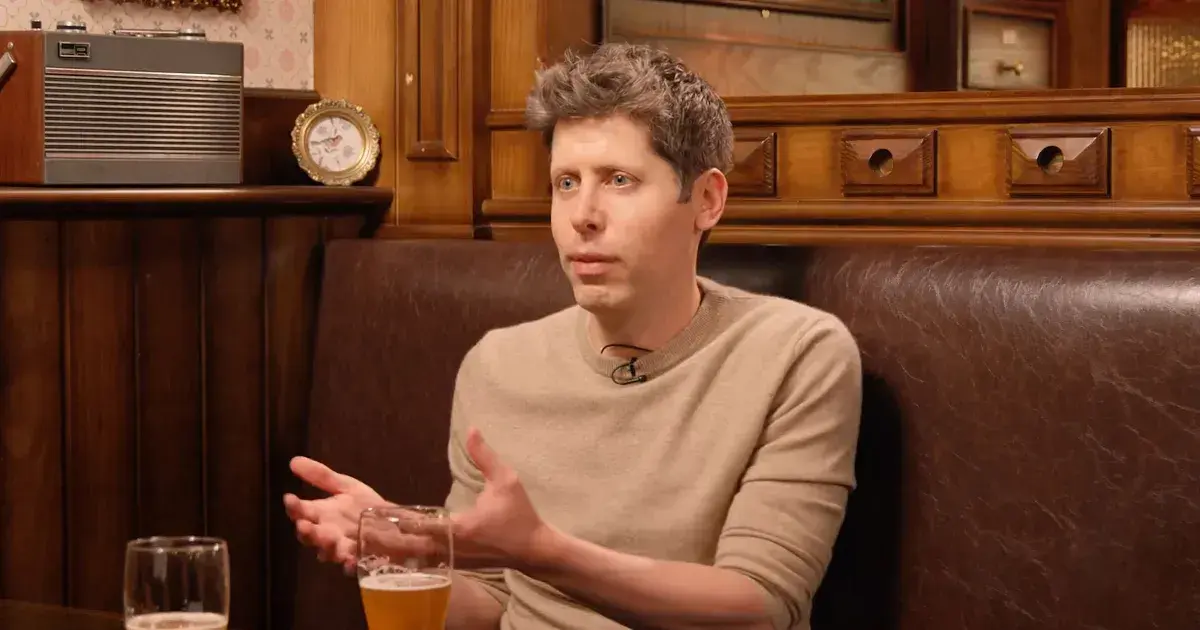
Sam Altman, CEO of ChatGPT creator OpenAI, found himself in damage control mode after controversial statements about consumer PC RAM sparked widespread backlash across the tech community. During an appearance on the Cheeky Pint podcast, Altman stated it's "quite terrible to have everybody have a bunch of the world's limited supply of DRAM sitting in their own computer" while being used only 5% of the time
1
. The OpenAI CEO argued that from a "global allocation perspective," maximum utilization in the cloud would be preferable in this supply-constrained environment5
.
Source: Futurism
The comments immediately drew sharp criticism from AI enthusiasts, PC gamers, and industry observers who pointed out the irony of Altman's position. AI data centers have been snapping up the world's RAM supply, driving memory shortages that are leading to tech price hikes across consumer electronics
2
. Even Elon Musk joined the mockery, sharing a meme on X that referenced a movie scene appearing to hunt for people hiding sticks of DRAM, adding "The people deserve to have their RAM too!"4
.OpenAI CEO Clarifies Position on Global RAM Production
Facing mounting criticism, Sam Altman took to X on election night to address the controversy, briefly changing his social media handle to "Ram Altman." He clarified that he "actually do want the world to have tons of memory and people to put as much as they want in their computers, and it is fucking annoying that this was taken out of context"
2
. Altman insisted he has "been arguing for the world to ramp up memory production for a long time," responding to one user with "i want you to have so much ram lets build more"3
.
Source: Geeky Gadgets
However, the clarification did little to quell skepticism. Users on social media remained unconvinced, with one responding "Then don't order 40% of the world's RAM at once and then claim your for people having RAM," while another Reddit user called it "a futile attempt to PR damage control"
3
. The harsh reception reflects broader concerns about AI's impact on technology accessibility and pricing.AI Data Centers Driving Memory Shortages and Price Hikes
The RAM shortage context makes Altman's original comments particularly contentious. AI infrastructure needs have led to the super-rapid rise of AI data centers across the world, with these facilities consuming vast amounts of DRAM that was once available for consumer PCs and consoles
1
. Data center companies are even stockpiling hardware components they don't have the space or energy to operate yet, causing prices to skyrocket across the board1
.The memory shortages show no signs of letting up soon. Intel expects the RAM shortage to last through at least next year, while SK Hynix predicted it could drag on until 2030
2
. Samsung and SK Hynix, major DRAM manufacturers, have warned that AI-driven memory shortages will persist until 2027 and beyond4
. These supply constraints have affected everything from consumer RAM kits to storage used in devices of all shapes and sizes.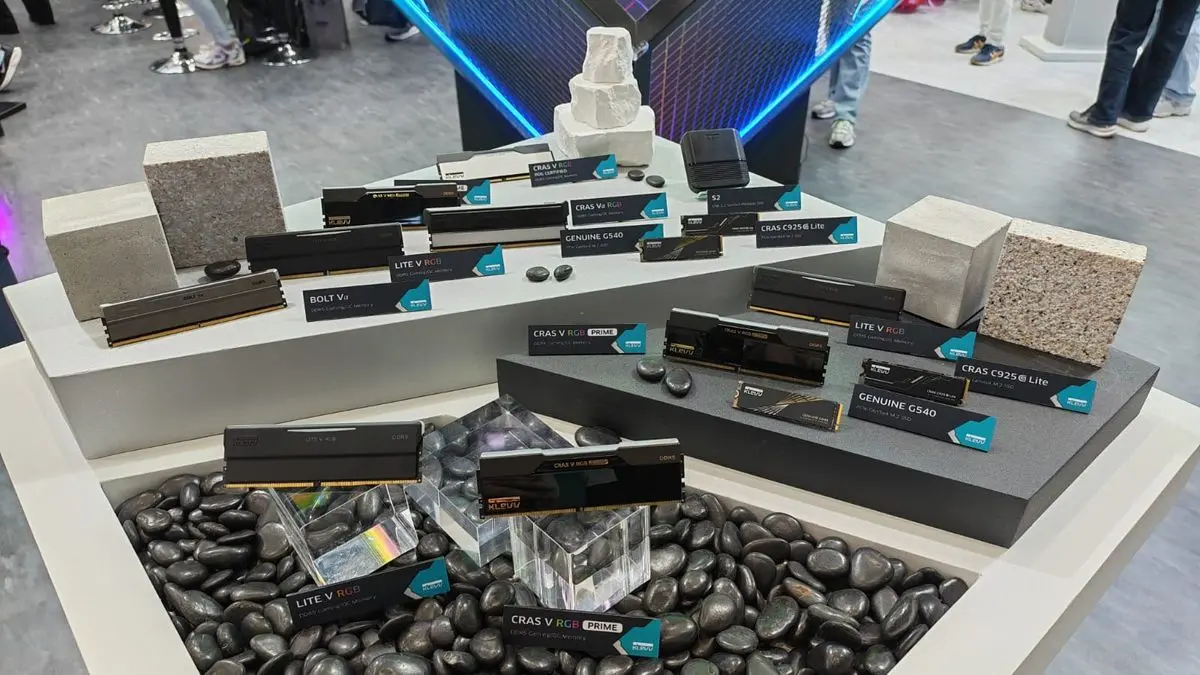
Source: GamesRadar
Related Stories

Consumer PC RAM Costs Surge Amid Supply Constraints
The impact on consumers has been substantial and widespread. Computer enthusiasts and average users alike are facing increased prices across the board, whether buying DRAM kits themselves or complete computers
4
. Even Apple, previously thought immune to component price increases, hiked prices across its lineups earlier this year, with recent iPhone launches seeing price increases across the board4
.Lenovo stated in June that it didn't expect prices to return to pre-2026 levels anytime soon, if ever
4
. As chipmakers retool factories to produce components for AI data centers rather than the consumer market, the perceived demand for more facilities shows little sign of slowing, suggesting the demand for components that power them will similarly maintain levels that put all other technology at risk of price hikes and limited availability.Local AI Processing Versus Cloud-Hosted AI Models
Altman's comments reveal a potential tension between local AI processing and cloud-hosted AI models. Most AI currently used in computers, phones, and smart speakers already runs partially on local hardware built into devices, with more complex tasks sent to the cloud and AI data centers
1
. The more AI is processed locally, the less reliance on cloud and data centers for useful AI tasks.As AI becomes increasingly efficient, a growing number of personal features may run locally or mostly locally. However, OpenAI makes money from models hosted in data centers through subscription and usage fees. The more AI functions processed locally, the fewer subscriptions users pay, and the less money companies like OpenAI can make
1
. This business model conflict may explain why Altman's original podcast comments seemed to prioritize cloud utilization over consumer hardware capabilities, raising questions about whether his clarification truly reflects his preferred future for AI deployment.References
Summarized by

Navi
[2]
[4]
Related Stories
Sam Altman now wants everyone to have lots of RAM, weeks after calling it a waste
17 Nov 2026•Business and Economy

Developer Creates 'Ram-Altman' App to Email Sam Altman About Unused RAM on Your PC
09 Nov 2026•Entertainment and Society
AI Demand Triggers Memory Shortage That Could Push Phone Prices Up 8% and Delay Consoles
16 Feb 2026•Business and Economy

Recent Highlights


Recent Highlights
Today's Top Stories






Don’t drown in AI news. We cut through the noise - filtering, ranking and summarizing the most important AI news, breakthroughs and research daily. Follow topics that matter to you and stay ahead.


