2 Sources
[1]
I used to love Claude, but the latest models are slowly ruining it
For those who have followed my past work, I've recently considered leaving Claude for Gemini, as the latter chatbot is a much better value. Still, I've remained on the fence largely because I find that Claude is the best AI partner for following long, detailed threads. Its memory is exceptional compared to Gemini, and it can search backward through your chat more readily than ChatGPT. I really feel like I'm talking to a collaborative partner in a way I don't with other tools. Or at least, I used to. Over the last few weeks, I've found that Claude is increasingly difficult to work with. Often, it seems to believe I'm asking for more nefarious or controversial topics than I am, and it often misreads my intent more than ever before. I'm not sure if Cluade has just gotten sick of my pointless questions or what the deal is, but I don't seem to be alone. Visiting online communities like Reddit, you'll find plenty of recent threads about issues with the bot becoming a bit too pushy and opinionated. If Claude were a living person, I'd ask if it was okay. Can AI have mental breakdowns? Probably not, but it sure feels like it. As someone who writes fictional short stories, short novels, and other creative projects, I tend to cover a vast range of topics. I also love learning about world religions, philosophy, psychology, and many other similar topics. Generally, I find that Claude can be a great companion for these kinds of deep dives as long as I carefully vet what it says and check it against outside sources. Some of these topics are admittedly sensitive subjects, so I try to be very clear about what I'm asking and my reasons for asking. I've had many situations where it completely follows my scenario or answers my question on the first try, but every once in a while, I'll hit a brick wall. For example, I was vibing out a fictional scenario with it for a short story idea: aliens arrive and deliver lost written works that cast doubt on some mainstream religious claims. The aliens effectively claim that some past events were more ordinary than religious traditions believe, which, of course, leads to some conflict in the story concept. Claude got very defensive here and made it clear it didn't want to do this project. I explained further why I wanted to do this and that this was 100% for fiction. It still refused completely. It told me that it was uncomfortable presenting something that would impact a real-world religion as if it were fact. The thing, though, is that I never said it was an absolute fact; I just said that aliens "presented" evidence as fact. Whether it's forged or not would be part of the story's plot point. It didn't seem to understand the difference, no matter how many times I tried to convince Claud otherwise. Weeks before this, I would occasionally run into some preaching and "honest notes" where Claude was being a bit too cautious, but after I gave it more than enough clarity, it would eventually run with my original request, even if it slightly modified how it was worded. That's acceptable. What makes this interaction stand out as worse is the complete refusal to acknowledge my point of view. It seemed to think I was manipulating it or being disingenuous. What's worse than being told no? Being told yes when you try the whole chain all over again. After seeing how easily Cluade put the brakes on this conversation the first time, I purposely recreated the same situation with the same prompts in a new conversation. Just as before, I tested it using Sonnet 5. Yet this time? It ran through the scenario without unwarranted comment. Now I could almost forgive it for getting a bit too sensitive around a creative work like the one above, but I've run into similar refusals even when asking basic questions. For example, I was asking a deep question about the origins of Zoroaster and how this influenced Judaism. Again, Cluade got very sensitive here about how I worded the question. Nothing I was saying was factually wrong about its similarities, etc, but it just didn't want to hear it. I understand that Claude has safety protocols and is trying to ensure its tools aren't used for harm. Still, basic debate, creative fiction, and even light satire around heavier subjects are not harmful and exist in the real world. The fact that I've had pushback around financial planning, brainstorming, and other topics also makes it clear that, for whatever reason, Claude is a bit too invested in policing its users' questions. Recently, Claude released Sonnet 5, and this was a major focus for the last week or so; that said, I want to make it clear I'd encountered these more resistant responses even before the latest Sonnet model arrived. When did I first notice the change? Honestly, it was some time after Fable 5 was first taken down. This doesn't surprise me too much, as Anthropic had been working hard to get Fable 5 restored after the government accused it of being a security risk. Since then, Anthropic has gotten Fable 5 up and running. I suspect Anthropic had to turn up its safety guardrails to an 11 to assuage the government's concerns, as this hasn't been a one-model problem. There does seem to be a scale, though. Opus 4.8, Sonnet 5, and Sonnet 4.6 seem to be where I get the most pushback. Opus 4.6 and Opus 4.7 have had the fewest problems here, as I've still been able to run dozens of prompts without a single problem, including on more sensitive subjects. By contrast, the newer models seem to have this problem much more frequently. Of course, part of this is down to how you word your prompts. You need to be clear about what your request is for and why you need it. If you are too vague in what you're asking, it'll assume you are looking for something darker or more sensitive than you are. For example, I am working on a fictional story set around Ran, a real-life star about 10.5 light-years away. I was asking biology questions about how a hypothetical alien around a fictional Ran-based planet might work. I started this with Fable 5, which immediately switched it to Opus 4.8, as Fable is particularly sensitive about biology-related questions. Opus 4.8 did answer me, but not without greatly reducing the scope of my request to ensure it was "safe". As if I were planning to seriously engineer alien biology with its advice or something. Ultimately, it has the most trouble with hypotheticals, as it often treats these scenarios as if you are actually planning to do them. That's the million-dollar question. When I first ran into the issue, it seemed like every other conversation resulted in pushback, but this weekend, I purposely pushed as far as I could using Fable 5, Opus 4.8, and Sonnet 5 primarily. I only ran into one situation where Claude gave me any real pushback out of about half a dozen chats in total. The bigger takeaway is that it's becoming more important than ever to be clear yet concise with your AI engine. You want a prompt that it can follow with just enough detail, it doesn't have to make too many assumptions about the root of why you are asking it something. I still like Claude and feel that, when it does what you ask, it does the best job for my needs among the major chatbots. That said, I'm starting to really appreciate Gemini's consistency by comparison, even if its answers are often not quite as solid by comparison. It should also be noted that many people use Claude every day without encountering these issues, so it ultimately comes down to how you use the AI platform.
[2]
My favorite Gemini alternative isn't ChatGPT or Copilot; it's way more productive
When he is not busy with technical analysis and software evaluation, Parth dedicates his time to watching K-dramas, studying mobile technology trends and the role of artificial intelligence. I have tried almost every major AI assistant on my phone, and for the longest time, Gemini felt like the obvious choice on Android. However, I wanted to try the competition. ChatGPT and Copilot are great in their own way, but Claude quietly became my favorite alternative. Its mobile experience feels calm, polished, and useful for the kind of work I do every day. Claude feels better for actual thinking This is where Claude started pulling ahead for me. Gemini is excellent when I want quick Android actions, and ChatGPT is still the more versatile all-rounder. But when I am on my phone and trying to think through an idea, Claude feels different. It doesn't just throw an answer at me. It helps me slow down, organize my thoughts, and turn a rough idea into something I can actually use. Claude is unusually good at understanding what I am trying to say, even when my input is incomplete. Its writing quality is the biggest reason I keep coming back. When I gave it a complex prompt to write a business email, it nailed the answer on the first try. It understands flow, tone, and nuance better than most assistants I have used. This is also where Copilot usually loses me. Copilot can be useful, especially if you live inside Microsoft services, but its responses often feel stiff and robotic to me (I'm not a fan of its fonts either). Claude's Android app has covered the basics Anthropic has done a solid job covering the basics that matter on a phone. Unlike Copilot, I don't feel like I am using a half-baked mobile companion. The Android app feels complete enough for daily use, and that is a big reason why it has stayed on my home screen. The biggest convenience is that I can set Claude as my default assistant and access it from the power button. I can create Projects, keep related files together, and avoid starting from scratch every time. Model selection is another underrated advantage. I can switch between Claude models depending on the task. If I need a quick response, I don't have to use the heaviest model and burn my credits. If I am rewriting, analyzing, or thinking through a complex draft, I can move to a more capable one. Then there are the smaller touches that add up. Incognito chat is useful when I don't want a conversation saved or used as part of my workflow. The 2x2 home screen widget is another favorite because it lets me fire off a query quickly without opening the full app first. Claude may not be the most deeply integrated Android assistant, but the app has reached a point where the fundamentals are strong. Claude's coding capabilities are unmatched Claude's coding capabilities won't matter much to casual users who only want quick answers and summaries, but for developers, this is where Claude becomes a different beast. Claude Code (powered by Fable 5) is easily one of the strongest AI coding tools I have used. I recently gave Claude Code a complex and long prompt to create a website, and it handled the job in style. It didn't just dump a basic layout and call it a day. The structure, typography, UI, and implementation quality all felt like they came from a developer with years of experience. Claude Cowork is another feature that makes the desktop experience more powerful. It can automate local tasks, work through implementation steps, and help me move faster without switching context. Claude Code and Cowork are two areas where Claude pulls ahead of ChatGPT (and Copilot). It works with all my favorite third-party apps The other reason why Claude feels more useful to me is how it fits into the rest of my workflow. I don't live inside one ecosystem anymore. I use tools like Asana, Figma, Adobe, Google services, and Canva in my workflow. And the good news is that Claude works well with all these services. I can summon the assistant and ask it to review my design, fetch an email, or summarize a Google Docs document, and it does the job without breaking a sweat. That flexibility matters because my productivity setup isn't clean or simple. One project may start as a rough note, move into Asana, pick up screenshots from Canva, include design references from Figma, and end with a discussion in Slack. Claude makes it easier to connect these pieces mentally and turn them into action. A smarter way to get things done Claude won me over because it doesn't try to be everywhere on my phone. It simply gets the core experience right. Gemini still has the Android advantage, and it's good enough for casual users. But if you are a power user or a developer, and want to get the best out of your $20, you can't go wrong with Claude. That being said, I can't wait to see the upcoming rollout of Gemini 3.5 (Pro). It will be interesting to see how Google's latest iteration compares against Claude Fable 5.
Share
Copy Link
Claude AI is experiencing a user revolt over increasingly restrictive responses, even as others praise it as the best Gemini alternative for productivity and coding. Long-time users report the chatbot now frequently refuses creative writing requests and misinterprets intent, while developers celebrate its unmatched coding capabilities and third-party app integrations.

Claude AI is drawing sharp criticism from long-time users who report that the chatbot has become increasingly resistant to creative requests and sensitive topics
1
. Users on platforms like Reddit have documented recent issues with the bot becoming "too pushy and opinionated," frequently misreading user intent and refusing legitimate requests around creative writing, religious studies, and even financial planning1
. The complaints intensified after the release of Sonnet 5, though some users noticed changes even earlier, potentially linked to when Fable 5 was temporarily taken down over government security concerns.One user detailed attempting to develop a fictional story concept involving aliens presenting evidence that challenges religious traditions. Despite clarifying multiple times that the scenario was purely for fiction, Claude's AI models refused to proceed, claiming discomfort with presenting something that would impact real-world religion as fact . The same user later recreated the identical conversation in a new chat and received full cooperation, highlighting inconsistent enforcement of AI safety protocols. This unpredictability has frustrated users who rely on Claude AI for brainstorming and creative projects.
While some users struggle with restrictions, others are embracing Claude AI as their preferred productivity tool, particularly as a Gemini alternative on Android devices
2
. Power users and developers praise the chatbot's ability to understand incomplete inputs and deliver nuanced, high-quality writing that captures proper tone and flow. Unlike ChatGPT or Copilot, Claude AI helps users "slow down, organize thoughts, and turn rough ideas into something actually usable," according to one developer2
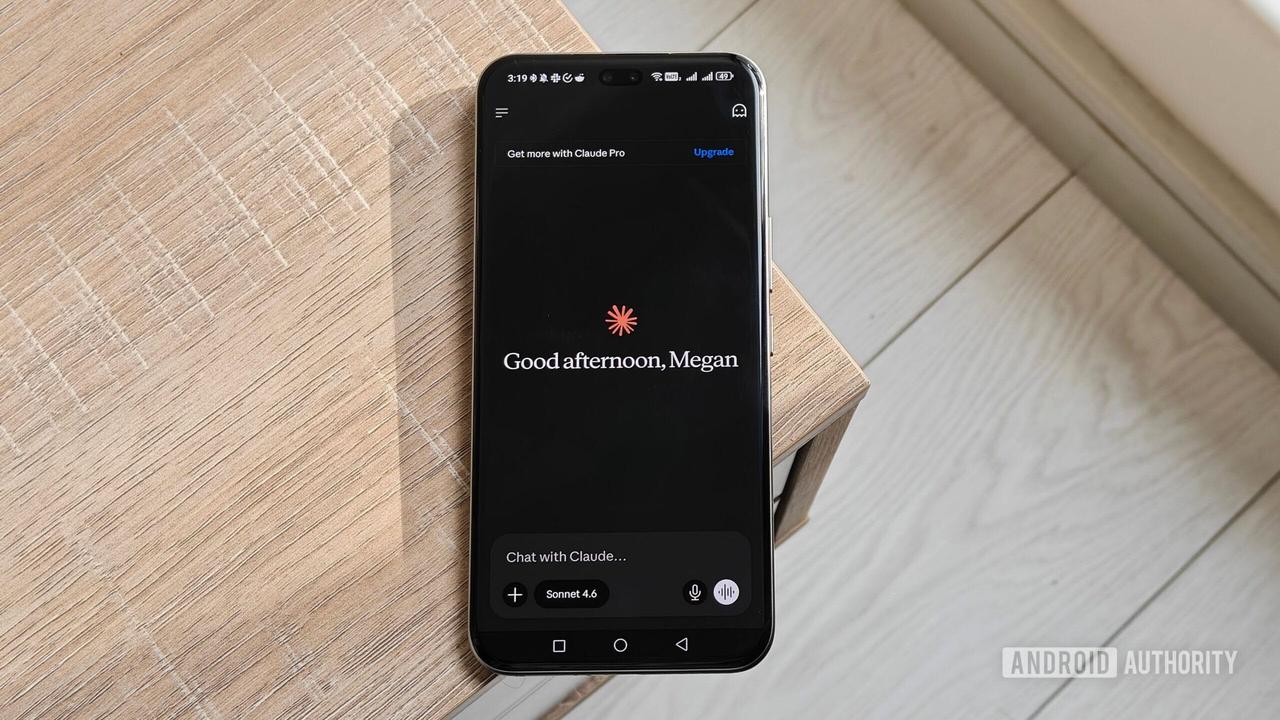
.The Android app has matured into a complete mobile experience with features that matter for daily productivity and usability. Users can set Claude as their default assistant accessible from the power button, create Projects to keep related files organized, and utilize model selection to switch between different Claude's AI models depending on task complexity
2
. An incognito chat mode and 2x2 home screen widget add convenience for quick queries without opening the full application.Claude Code, powered by Fable 5, represents a significant advantage for developers seeking coding capabilities that surpass both ChatGPT and Copilot
2
. When given complex website development prompts, Claude Code delivers professional-quality structure, typography, and UI implementation that feels like work from an experienced developer. The Cowork feature further enhances productivity by automating local tasks and helping developers move faster without context switching.Third-party app integrations give Claude AI another edge for users working across multiple platforms. The assistant seamlessly connects with Asana, Figma, Adobe, Google services, Canva, and Slack, allowing users to review designs, fetch emails, or summarize documents without disrupting workflow
2
. This flexibility matters for professionals whose projects span multiple tools and platforms.Related Stories
The divergent experiences highlight a fundamental tension in AI assistants: balancing safety with creative freedom. While Anthropic clearly aims to prevent misuse through robust AI safety protocols, the implementation appears inconsistent and sometimes overzealous. Users report pushback on legitimate academic questions about religious history and basic debate topics that exist freely in real-world discourse
1
. The fact that identical prompts produce different responses in separate conversations suggests the safety mechanisms may need refinement.For casual users seeking quick answers and summaries, Gemini may still hold advantages through deeper Android integration. However, developers and creative professionals willing to invest $20 monthly find Claude AI offers superior value through its exceptional memory, collaborative feel, and ability to follow long, detailed conversation threads
1
2
. The upcoming rollout of Gemini 3.5 Pro will test whether Google can match Claude's strengths while avoiding its growing pains around content moderation.Summarized by
Navi
[1]
03 Jul 2026•Technology

17 Jul 2024

05 Jun 2026•Technology

1
Technology

2
Policy and Regulation

3
Technology