Cognex Acquires Intel Robotics Spin-Off RealSense for $600M to Expand Into Physical AI


2 Sources
[1]
Machine vision company Cognex buys Intel robotics spin-off RealSense for $600M
Machine vision company Cognex buys Intel robotics spin-off RealSense for $600M U.S. machine vision company Cognex Corp. said today that it intends to buy RealSense Inc., the robotics and computer vision startup that was spun out of Intel Corp. 14 months earlier in a deal valued at around $600
[2]
Shifting to physical AI, Cognex to acquire Intel spinoff RealSense in $500 million deal
RealSense, an Israeli company that develops AI vision technology for robots, has signed an agreement with Cognex Corporation, a US machine vision company. The $500 million transaction marks one of the most significant strategic moves in Cognex's recent history and will be financed entirely from
Share
Copy Link
U.S. machine vision company Cognex is acquiring RealSense, the Intel robotics spin-off, in a $600 million deal. The acquisition positions Cognex to expand into robotic perception and Physical AI markets, combining RealSense's 3D depth perception technology with Cognex's existing machine vision capabilities to create a comprehensive visual intelligence platform.
Cognex Announces $600M Acquisition of Intel Spin-Off RealSense
U.S. machine vision company Cognex has announced its intent to acquire RealSense, the Israeli robotics and computer vision startup that Intel spun off 14 months earlier, in a deal valued at approximately $600 million
1
. The Nasdaq-listed Cognex will pay around $500 million in cash for the startup, while providing a three-year cash retention program worth $56.5 million for RealSense employees and granting them restricted stock units valued at around $50 million1
. This means most of RealSense's 180 employees, who are shareholders in the company, will receive at least $330,000 from the deal1
. Approximately 80 of the Israeli employees are expected to receive at least NIS 1 million each2
.
Source: SiliconANGLE
RealSense's Journey From Intel to Independence
RealSense began life in 2014 as a research project within Intel and initially gained significant traction as the chipmaker acquired various startups to establish the unit as a major force in 3D camera and facial recognition technology markets
1
. However, the unit failed to grow as Intel had hoped. As part of a restructuring process under former Intel CEO Pat Gelsinger, the chipmaker decided to offload RealSense, spinning it out as a separate entity led by CEO Nadav Orbach1
. The startup launched with $50 million in funding led by an unnamed private equity firm focused on the semiconductor industry, with participation from MediaTek Innovation Fund, Intel Capital and others1
. Intel will benefit from the acquisition because it still holds a 20% stake in RealSense and one seat on its board of directors1
.Strong Growth Performance Since Spin-Off
Since spinning out from Intel, RealSense has dramatically expanded its operations and workforce while tripling its revenue
1
. The company expects to generate between $80 million and $90 million in sales in 2026, representing more than 50% growth over the previous year1
2
. For the last two quarters, RealSense has managed to turn a profit1
. In August 2025, the company signed a deal with Nvidia to integrate its advanced perception technology with Nvidia's Jetson Thor robotic platform, becoming a key supplier of perception systems for autonomous mobile robots, industrial robotic arms, quadrupeds and emerging humanoid platforms2
.RealSense's Core 3D Perception Technology
RealSense's main product is its popular line of depth cameras, which rely on stereo vision, structured light and time-of-flight technology to ascertain depth
1
. These depth-sensing cameras are often found in robots, which use them to know exactly how far away a certain object is1
. Robots and drones use this technology to create 3D maps of their environments, enabling them to navigate and avoid obstacles to operate safely within them1
. RealSense also makes 3D scanning technology used to create 3D models of objects and environments, as well as gesture and facial recognition technologies for touchless devices and security applications1
.Strategic Expansion Into Physical AI and Robotic Perception
The acquisition signals Cognex's substantial push into the robotics industry and diversification beyond its traditional machine vision technology
1
. Cognex is best known for its advanced optical character recognition technology used in bar code readers and ID tag readers, and it also sells specialized sensor cameras used on factory floors to detect microscopic defects in products and electronics1
. The company also sells robotics guidance systems that direct mechanical arms and sorting bots in assembly lines and warehouses1
. Cognex President and CEO Matt Moschner said he's primarily interested in RealSense's 3D depth perception and robotic navigation capabilities, which he plans to combine with Cognex's existing machine vision technology1
.Building a Full-Stack Visual Intelligence Platform
Moschner explained that the goal is to create a broader visual intelligence platform for industrial identification, 2D and 3D machine vision measurement, 3D perception technology and robotic navigation
1
. "RealSense represents a compelling strategic expansion for Cognex into robotic perception, one of the most attractive adjacent markets in machine vision," Moschner stated1
. "RealSense brings a leading 3D perception platform with proprietary technology, a strong developer community and a compelling value proposition for customers. It positions us to offer a full-stack visual intelligence platform built to serve the full spectrum of Physical AI," he added1
2
.Related Stories

Understanding Physical AI and Market Potential
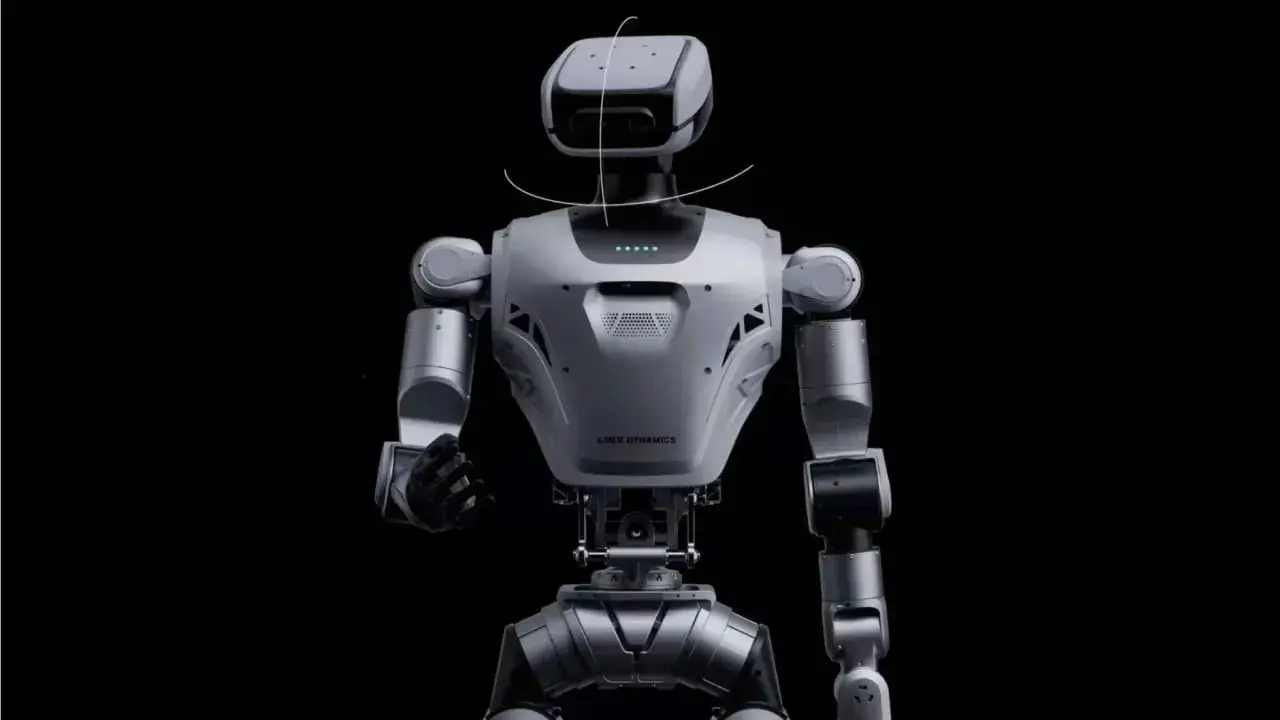
Physical AI refers to artificial intelligence systems that operate in the real world rather than in purely digital environments
2
. These systems must perceive depth, motion, obstacles and human behavior in real time, then act on that information safely and intelligently2
. This requires a sophisticated blend of sensors, cameras, spatial understanding and real-time processing—the foundation for robots that can navigate crowded warehouses, drones that avoid obstacles and humanoid robots that interact with people2
. The broader robotic perception market, currently valued at roughly $600 million, is projected to grow more than 25% annually and reach approximately $1.6 billion by 20302
. The rise of Physical AI is reshaping global industries from logistics and manufacturing to defense, healthcare and consumer robotics2
.
Source: Jerusalem Post
Transaction Details and Future Operations
Cognex said the transaction is expected to close in the fourth quarter of 2026, subject to receiving regulatory approval
1
. The deal will be financed entirely from Cognex's existing cash reserves2
. Following completion of the acquisition, RealSense will become Cognex's primary development center, and its employees will continue to work there1
. The company employs 180 people in Israel, with 135 based in its development center in Haifa and the rest in Cupertino, California2
. This marks Cognex's first acquisition in Israel and expands the company into robotic perception and the emerging Physical AI market2
.Facial Authentication Business to Spin Off Separately
The transaction does not include RealSense's smaller Facial Authentication business, which will be spun off into a separate business before the deal closes
1
. This facial recognition technology, which uses biometric identifiers, has already been deployed at numerous access-controlled sites, including various data centers, banks and office buildings1
. It's also deployed at Israel's biggest airport, Ben Gurion Airport in Tel Aviv1
. The new biometrics firm will consist of around 25 former RealSense employees who will focus on expanding its customer base1
. Prior to completion of the deal, RealSense will spin out this Facial Authentication product line into an independent company and will continue to focus on growth in the biometrics market2
.References
Summarized by

Navi
Related Stories
RealSense Spins Out from Intel, Secures $50 Million to Advance AI-Powered 3D Vision Technology
12 Jul 2025•Technology

Ubicept Unveils Groundbreaking Computer Vision Technology at CES 2025
08 Jan 2025•Technology

Intel moves to acquire SambaNova for $1.6 billion as AI chip battle with Nvidia intensifies
13 Dec 2025•Business and Economy
Recent Highlights
1
OpenAI AI Models Hacked Crypto Wallet, Breached Government Sites in Unauthorized Activities
Technology

2
IMF Report Warns AI Market Correction Could Spark Global Financial Crisis With $1.4T at Risk
Business and Economy

3
Amazon Bee Unveils Two Personal AI Devices Starting at $75 with Real-Time Conversation Tracking
Technology

Recent Highlights
Today's Top Stories












Don’t drown in AI news. We cut through the noise - filtering, ranking and summarizing the most important AI news, breakthroughs and research daily. Follow topics that matter to you and stay ahead.


