7 Sources
[1]
AI coding startup Cognition reportedly already in talks to raise at $40B valuation
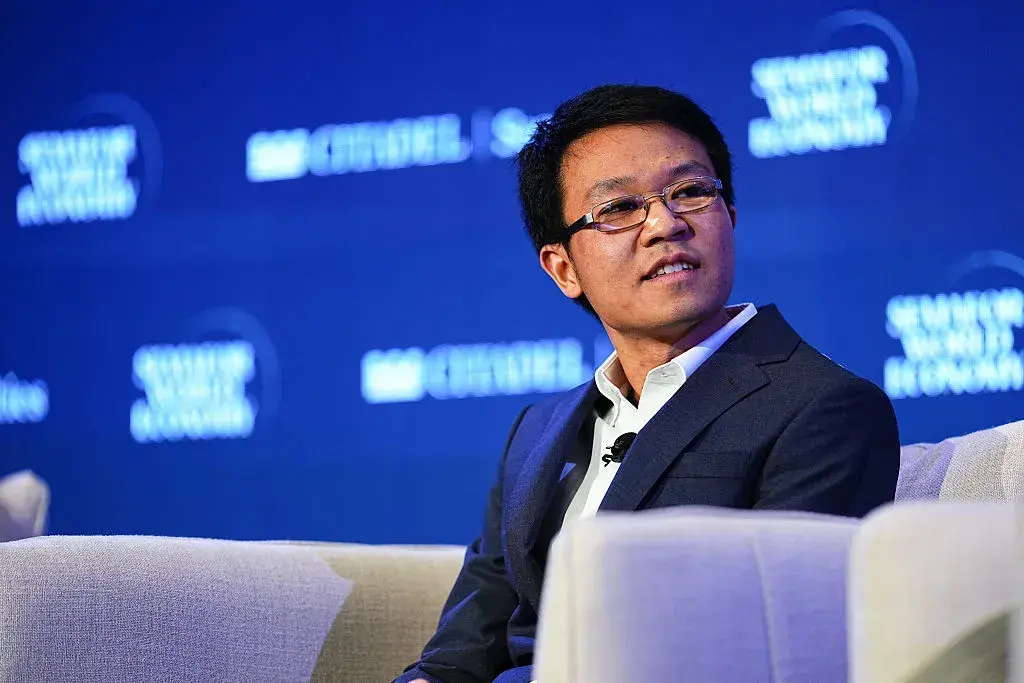
Cognition, makers of the AI coding agent Devin, is reportedly already talking to investors about raising another funding round with a big leap in valuation, after it raised $1 billion at a $26 billon valuation in May. This new round could deliver at least a $40 billion valuation based on achieving a $1 billion annualized revenue run rate, according to sources cited by Bloomberg. Three months ago, when it announced its last raise, Cognition's Scott Wu confirmed to TechCrunch that it had achieved a $492 million annualized revenue run rate and that enterprises were growing their usage of Devin by 50% month-over-month for the past six months. Wu, a famed wunderkind programmer himself, also told TechCrunch that Devin is not being sold as a human replacement. The agent is often tasked with doing long-tail grunt-work that many programmers dislike such as bringing old software up to date or moving applications off one platform and onto another. This could account for much of its growing popularity among enterprises that have adopted it. The company says its customers include Mercedes-Benz, NASA, and Goldman Sachs.
[2]
Coding start-up Cognition eyes $40bn valuation in new round - Bloomberg
A new round could see Cognition's valuation jump by more than 50pc as its annualised revenue run rate nears $1bn. Cognition AI is reprtedly in early talks with investors for a new funding round that could push the coding start-up's valuation up by more than 50pc, to at least $40bn. The talks come less than three months after Cognition closed a $1bn round at a $26bn valuation, with its annualised revenue run rate now nearing $1bn, roughly double where it stood at that last raise. Any new round would be expected to bring in more than $1bn, though Cognition may ultimately decide not to raise at all, or to seek different terms, a source told Bloomberg. Founded in 2023, Cognition built its reputation on Devin, an AI agent designed to work through real engineering tasks rather than just suggest code. Devin can read through a codebase, draft a plan, write the code, run tests and fix its own mistakes, largely without a developer sitting over its shoulder, an approach the company brands as an "AI software engineer" rather than a coding assistant. We reported on Cognition's rapid rise in August 2025, when it closed a $500m round led by Peter Thiel's Founders Fund that brought its valuation to near $10bn. That came weeks after it acquired rival start-up Windsurf, following the departure of Windsurf's founders and research leads to Google in a $2.4bn licensing deal. Current backers include General Catalyst, Khosla Ventures, Pear VC and 8VC, alongside Founders Fund. A round at $40bn or above would put Cognition ahead of the valuation Cursor secured on private markets before SpaceX's agreement to acquire it, a deal expected to close as soon as this week. Cursor had previously been valued at $29.3bn, and was in talks to raise at $50bn in March, after hitting $2bn in annualised revenue a month earlier. Don't miss out on the knowledge you need to succeed. Sign up for the Daily Brief, Silicon Republic's digest of need-to-know sci-tech news.
[3]
Startup Cognition in new funding talks at $40 billion value
Cognition would be expected to raise over $1 billion in the round, Bloomberg reported. The company may still decide not to raise capital, or seek financing with different terms. Founded in 2023, Cognition is backed by top venture firms including General Catalyst and Peter Thiel's Founders Fund. Cognition AI is in early talks with investors for a new funding round that may boost the coding startup's valuation by more than 50% to at least $40 billion, people familiar with the matter said. Prospective investors are circling the company less than three months after the AI firm raised $1 billion at a $26 billion valuation, the people said, asking to remain unidentified to talk about a private deal. The potential backers are seeking to secure a slice of a leading player in one of the industry's hottest spheres. The company's annualized revenue run rate is now approaching $1 billion, roughly double the figure the firm posted during its previous financing, the people said. Cognition would be expected to raise over $1 billion in the round, one of the people said. The company may still decide not to raise capital, or seek financing with different terms, the people said. A Cognition representative declined to comment. Cognition sells an AI agent called Devin that helps automate engineering tasks. Founded in 2023, it's backed by top venture firms including General Catalyst and Peter Thiel's Founders Fund. Coding has become perhaps the hottest area of AI, with Anthropic PBC, OpenAI and SpaceX dedicating large chunks of their businesses to their own engineering products. SpaceX agreed to acquire AI coding startup Cursor this year, in a deal expected to close as soon as this week. If Cognition chooses to raise new funding at a valuation of $40 billion or more, the company would officially surpass the price tag Cursor secured on private markets before the SpaceX deal. Cursor had previously been valued at $29.3 billion, but was in talks to raise capital at a $50 billion valuation in March after hitting $2 billion in annualized revenue a month prior.
[4]
Cognition Eyes $40 Billion Valuation in Fresh Funding Talks
Artificial intelligence lab and software startup Cognition AI is weighing a new funding round of more than $1 billion that could push the company's valuation above $40 billion, a 50% increase in less than three months. Backers in the funding round are looking to secure a stake in the company, as its annualized revenue run rate nears $1 billion, sources familiar with the matter told Bloomberg. Details surrounding the potential fundraise are subject to change, and the company could ultimately decide to pursue financing on other terms, sources added. Cognition's latest funding round, which took place in May, valued the company at $26 billion. Entrepreneurs Scott Wu, Steven Hao, and Walden Yan founded the firm in 2023. The San Francisco-based AI lab has grown 50% month-over-month for the last six months. The company closed a $400 million funding round in September, putting the company's valuation at $10.2 billion, CNBC reported. Cognition described itself as an "agent lab" that works with multiple foundation model providers so customers can choose models based on cost and performance. The company evaluates model behavior across more than 100 software-engineering task categories and designs its software agent Devin to help teams manage spending as usage scales. Should the company move forward with the new funding round at a valuation of $40 billion, it would surpass the valuation Cursor commanded in private markets prior to its deal with SpaceX. With a $29.3 billion valuation, it held discussions regarding a fundraise at a $50 billion valuation in March and an ARR of $2 billion. Last July, Cognition signed a definitive agreement to acquire Windsurf, after the company lost its CEO and its researchers left to join Google. OpenAI had been in discussions with Windsurf regarding a merger; however, those discussions did not result in a deal. Market News and Data brought to you by Benzinga APIs To add Benzinga News as your preferred source on Google, click here.
[5]
Cognition AI Eyes $40 Billion Valuation From New Funding | PYMNTS.com
The artificial intelligence (AI) coding startup is in discussion with investors about the round, which may lift its valuation to at least $40 billion, Bloomberg News reported late Tuesday (Aug. 11), citing sources familiar with the matter. This comes less than three months after Cognition raised $1 billion at a $26 billion valuation, the sources added. According to Bloomberg, investors are hoping to get a piece of a key player in one of the sector's most popular areas. Cognition's annualized revenue run rate is nearing $1 billion, around twice the number the firm posted in its earlier financing, the sources said. One of Bloomberg's sources said Cognition would be expected to raise more than $1 billion in the round. Cognition makes an AI agent Devin that helps automate engineering work, and counts Citi, Mercedes-Benz, Goldman Sachs, and both the U.S. Army and Navy among its customers. As Bloomberg noted, coding has become perhaps the hottest area of artificial intelligence, with companies like Anthropic, OpenAI and SpaceX focusing large parts of their businesses on their own engineering efforts. SpaceX earlier this year agreed to acquire AI coding startup Cursor, with that $60 billion deal expected to become final as soon as this week. OpenAI said in June it plans to expand the capabilities of its Codex coding agent by acquiring Ona, a company that provides cloud execution and orchestration technology. "Ona will help us make Codex easier to deploy securely across production workflows for customers operating at the highest standards of trust and scale," OpenAI Core Products Lead Thibault Sottiaux said in a news release at the time. And last week, Business Insider reported that Google was in talks with AI coding agent startup Mechanize to hire some of that company's talent and sign a non-exclusive licensing agreement for the company's technology, a deal worth more than $1.5 billion. Meanwhile, PYMNTS wrote last month about the challenge companies face in adopting AI coding. While software projects traditionally required major upfront commitments, teams today can use agentic coding tools to prototype multiple product directions at the same time, quickly abandon things that aren't working while pursuing more promising avenues. "The cost of experimentation drops sharply, but the volume of experimentation rises just as fast. A company that once funded five software initiatives per year may now launch fifty micro-projects in the same period," that report said. "This creates a paradox for CFOs. AI-assisted development can improve efficiency while simultaneously increasing financial volatility."
[6]
Cognition AI just can't stop raising money
Venture capital has an old rule about timing. You raise money when investors are eager, not when you need it, because the gap between those two moments can slam shut without much warning. For most of startup history, the window opened every 18 to 24 months. Founders closed a round, spent a year or two building, then came back with numbers that justified a higher price. The rhythm gave everyone time to breathe, and it gave boards time to ask hard questions about whether the growth was real. Artificial intelligence has shredded that calendar. Rounds that once took months to assemble now close in weeks, and the hottest companies field offers they never solicited. Investors who watched OpenAI and Anthropic compound in value are determined not to miss the next name on the list, so the checks now arrive before anyone asks for them. Even by those standards, one company has compressed the cycle to a length for which I struggle to find precedent. Cognition AI, the startup behind the autonomous coding agent Devin, is in early talks for a funding round that would value it at $40 billion or more, according to Bloomberg. Its last raise closed less than three months ago. Why AI coding became venture capital's favorite bet Software development is the first profession the artificial intelligence industry has tried to automate at industrial scale. The people building the models understand engineering work intimately, and code offers something rare in AI: an output you can actually test. It either runs or it does not, so corporate buyers can measure the payoff and open budgets quickly. More Artificial Intelligence: That measurability has turned coding tools into a gold rush. Cursor maker Anysphere reached $2 billion in annualized revenue earlier this year and discussed raising money at a $50 billion valuation in March, Bloomberg confirmed. SpaceX then agreed to acquire Cursor outright, in a deal expected to close as soon as this week, the outlet reported. A quick translation before the numbers get bigger. An annualized revenue run rate takes the most recent stretch of sales and multiplies it across a full year. It flatters fast growers, which is exactly why startups love citing it, and why the figure deserves a raised eyebrow alongside the applause. The big labs want the same territory. Anthropic, OpenAI, and SpaceX have all dedicated large chunks of their businesses to engineering products, a crowd that has made coding what Bloomberg called "one of the industry's hottest spheres." Cognition has played offense in that consolidation, too. The company bought rival Windsurf in July 2025, days after Alphabet's (GOOGL) Google unit hired away Windsurf's CEO and research leads, and after merger talks between Windsurf and OpenAI fell apart, according to Benzinga. When this many well-funded players fight over one market, private valuations stop behaving politely. That is the backdrop for this week's news. PuiStocker65 / Getty Images Cognition's $40 billion valuation talks arrive at record speed Cognition is in early discussions with investors to raise more than $1 billion at a valuation of at least $40 billion, up more than 50% from the $26 billion price it set in May, according to Bloomberg. Prospective backers approached the company rather than the other way around, and the talks could still change terms or fall apart entirely, the outlet's sources cautioned. The revenue trajectory explains the appetite. Cognition's annualized run rate is now approaching $1 billion, roughly double the figure it showed during the May financing, Bloomberg reported. Doubling sales in about one quarter is the kind of growth that makes spreadsheet models blush. It is also the only kind that can justify asking for a 50% markup roughly 90 days after your last one. The May numbers were already striking on their own. CEO Scott Wu confirmed a $492 million annualized revenue run rate at the time of that round, with enterprise customers expanding their use of Devin by 50% month over month for six straight months, according to TechCrunch. Devin is not pitched as a replacement for human engineers. The agent takes on "long-tail grunt-work that many programmers dislike," such as modernizing old software, according to TechCrunch. Customers include Citigroup (C) and Goldman Sachs (GS), according to PYMNTS. The resulting valuation climb reads like a misprint. Here is what investors have paid at each step: * April 2024: About $2 billion, The Wall Street Journal reported. * September 2025: $10.2 billion after a $400 million round led by Founders Fund, TechCrunch confirmed. * May 2026: $26 billion after a $1 billion raise, according to Bloomberg. * August 2026: Early talks at $40 billion or more, based on the same Bloomberg report. Founded in 2023 by Wu, Steven Hao, and Walden Yan, the company has multiplied its price tag roughly 20 times in about 28 months. Most startups take a decade to travel that distance, and most never do. What a 40 times revenue multiple means for your portfolio I ran the arithmetic, and it is bracing. A $40 billion valuation set against a run rate approaching $1 billion works out to roughly 40 times annual revenue. Cursor's March talks, for comparison, implied about 25 times its $2 billion run rate, based on the figures Bloomberg cited. Retail investors cannot buy Cognition shares, but the number still matters for anyone holding public AI names. Private markets are setting the reference prices that public companies get measured against, and a 40 times multiple only makes sense if revenue keeps doubling on a quarterly clock. My analysis of past funding manias keeps landing on the same lesson. Velocity cuts in both directions. If Cognition keeps doubling, today's price will eventually look as quaint as its $2 billion valuation does now. If growth merely slows to very good, the repricing will ripple through every AI position in your account, because these private marks anchor the whole sector's story. If you write software for a living, the same chart reads differently. A company approaching $1 billion in revenue by selling automated grunt work is a signal about where entry-level engineering tasks are heading, and it is worth taking seriously, even if you doubt the price tag. None of this requires you to believe the hype or dismiss it. It requires you to notice that the smartest money in the world is repricing software labor in real time, and your retirement account, whether you like it or not, is along for the ride. Watch two things from here. Whether this round actually closes at $40 billion or better, and whether SpaceX completes its Cursor purchase on schedule. Together, those answers will tell you whether the money chasing AI coding is still accelerating or finally pausing for breath. The Arena Media Brands, LLC THESTREET is a registered trademark of TheStreet, Inc. This story was originally published August 13, 2026 at 8:17 PM.
[7]
Cognition AI in funding talks at $40 billion valuation- Bloomberg By Investing.com
Investing.com -- Cognition AI Inc. is in early discussions with investors for a new funding round that could increase the coding startup's valuation by more than 50% to at least $40 billion, Bloomberg reported Wednesday, citing people familiar with the matter. The potential funding round comes less than three months after the artificial intelligence company raised $1 billion at a $26 billion valuation, according to the report. Prospective backers are attempting to secure a stake in a leading company within one of the industry's most active sectors, Bloomberg reported. The company's annualized revenue run rate is now nearing $1 billion, approximately double the figure reported during its previous financing round, the report said. This article was generated with the support of AI and reviewed by an editor. For more information see our T&C.
Share
Copy Link
Cognition AI, maker of the AI agent Devin, is reportedly negotiating a new funding round that could value the AI coding startup at $40 billion—a 50% jump from its $26 billion valuation just three months ago. The company's annualized revenue run rate has nearly doubled to approach $1 billion, attracting investor interest in one of AI's hottest sectors.
Cognition AI is in early discussions with investors for a new funding round that could push the AI coding startup's valuation to at least $40 billion, representing a more than 50% increase from its $26 billion valuation secured just three months ago in May
1
2
. The San Francisco-based company would be expected to raise over $1 billion in the round, though it may ultimately decide not to raise capital or pursue different terms3
. Founded in 2023 by entrepreneurs Scott Wu, Steven Hao, and Walden Yan, Cognition AI has attracted backing from top-tier venture firms including Peter Thiel's Founders Fund, General Catalyst, Khosla Ventures, Pear VC, and 8VC2
.The potential $40 billion valuation is tied to Cognition AI achieving an annualized revenue run rate approaching $1 billion, roughly double the $492 million figure the company posted during its previous financing in May
1
3
. This remarkable growth comes as enterprises have been expanding their usage of the company's flagship product by 50% month-over-month for the past six months1
. Prospective investors are circling the company to secure a stake in a leading player in one of the industry's hottest spheres3
. AI coding has become perhaps the most competitive area of artificial intelligence, with major players like Anthropic, OpenAI, and SpaceX dedicating substantial resources to their own engineering products3
.Cognition AI built its reputation on Devin, an AI agent designed to work through real engineering tasks rather than just suggest code snippets. The AI-powered software engineer can read through a codebase, draft a plan, write the code, run tests, and fix its own mistakes largely without a developer sitting over its shoulder
2
. Scott Wu confirmed that Devin is not being sold as a human replacement but is often tasked with doing long-tail grunt-work that many programmers dislike, such as bringing legacy software up to date or moving applications off one platform and onto another through platform migrations1
. This focus on AI-driven engineering automation could account for much of its growing popularity among enterprises. The company's customers include Mercedes-Benz, NASA, Goldman Sachs, Citi, and both the U.S. Army and Navy1
5
.
Source: Silicon Republic
Related Stories
A funding round at $40 billion or above would position Cognition AI ahead of the valuation Cursor secured on private markets before SpaceX's agreement to acquire it in a $60 billion deal expected to close as soon as this week
2
5
. Cursor had previously been valued at $29.3 billion and was in talks to raise at $50 billion in March after hitting $2 billion in annualized revenue a month earlier2
3
. Cognition's rapid rise was evident in August 2025 when it closed a $500 million round led by Founders Fund that brought its valuation to near $10 billion2
. That came weeks after it acquired rival startup Windsurf, following the departure of Windsurf's founders and research leads to Google in a $2.4 billion licensing deal2
.Cognition AI describes itself as an "agent lab" that works with multiple foundation model providers, allowing customers to choose models based on cost and performance
4
. The company evaluates model behavior across more than 100 software-engineering task categories and designs its AI agent Devin to help teams manage spending as usage scales4
. This approach positions Cognition AI to benefit from the broader shift toward agentic coding tools that enable companies to prototype multiple product directions simultaneously. While AI-assisted development can improve efficiency, it also creates new challenges for financial planning as the volume of experimentation rises sharply, with companies potentially launching fifty micro-projects in the same period they once funded five software initiatives per year5
. Watch for how Cognition AI navigates competitive pressures from well-funded rivals and whether its revenue growth can sustain the momentum needed to justify a $40 billion valuation in an increasingly crowded AI coding market.Summarized by
Navi
[2]
24 Apr 2026•Startups

27 May 2026•Startups

09 Sept 2025•Technology

1
Technology

2
Policy and Regulation

3
Health