Cognizant plans to cut up to 15,000 jobs globally as Project Leap drives AI transformation


3 Sources
[1]
Cognizant Could Cut Up to 15,000 Jobs Globally Amid AI-Led Restructuring
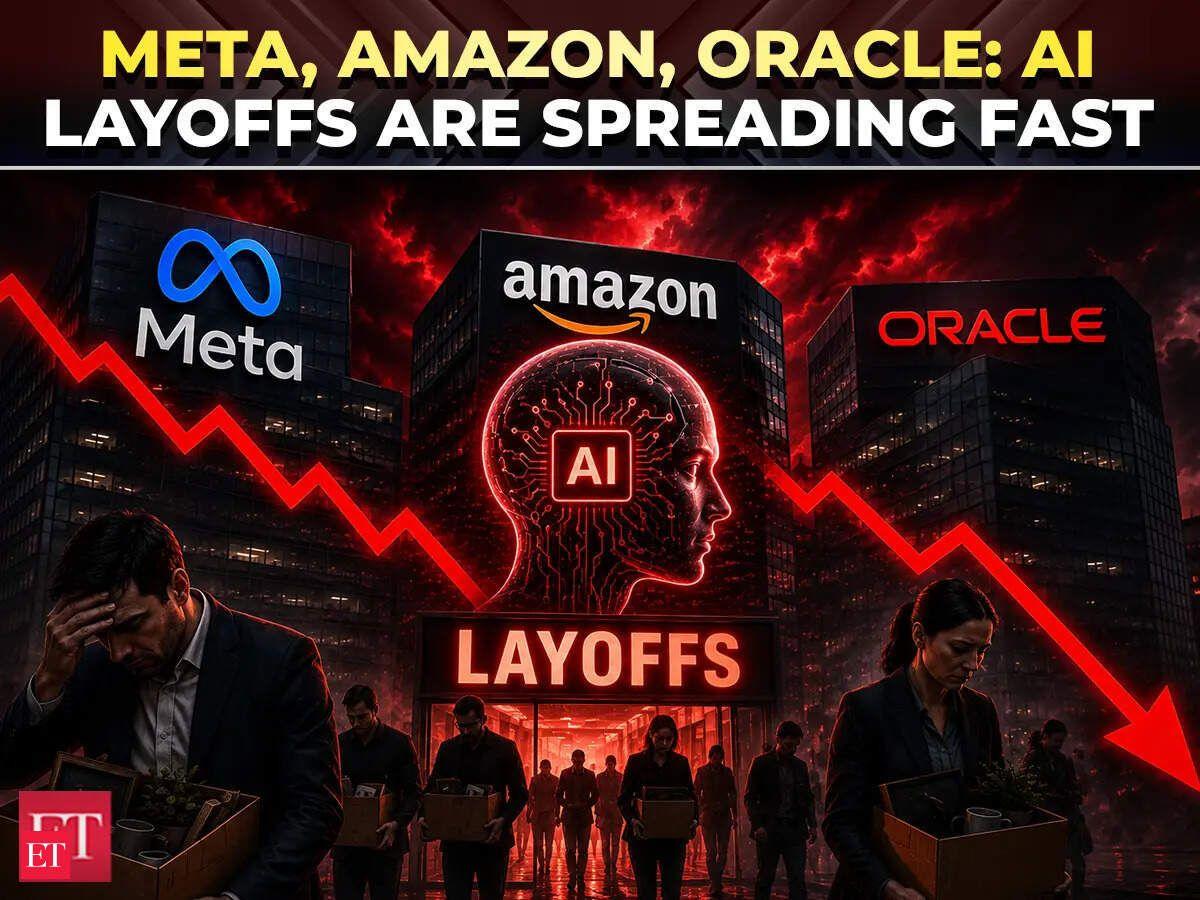
Cognizant is said to be considering a major workforce reduction globally. In recent months, layoffs across the tech industry have accelerated, leading tech firms like Amazon, Meta, and Oracle to announce drastic workforce reductions. Cognizant, an IT consulting and outsourcing company, is
[2]
Meta, Amazon, Oracle & Cognizant: AI layoffs are spreading faster than expected
The AI-driven layoff wave is widening across global tech, and Cognizant may soon join the list of companies cutting jobs amid an industry-wide reset. The IT major is reportedly considering layoffs of up to 15,000 employees globally, with India expected to bear a significant share of the impact.The
[3]
Cognizant Sets Aside $270 Million For Layoffs In 'Project Leap' AI Operating Model Plan
'We are on the journey to get to the operating model,' says Cognizant CEO Ravi Kumar S. Cognizant plans to spend upward of $270 million on employee severance and other personnel-related costs as part of layoffs under its "Project Leap" initiative to become more agile and enable an artificial
Share
Copy Link
Cognizant is reportedly planning to reduce its workforce by 12,000 to 15,000 employees globally under Project Leap, an AI-led restructuring initiative. India, home to over 250,000 of the company's 357,000 employees, will face the most significant impact. The move reflects a broader industry shift as tech firms adopt AI-enabled operating models and compress traditional staffing pyramids.
Cognizant Prepares for Major Global Job Cuts Under Project Leap
Cognizant is preparing to reduce its workforce by an estimated 12,000 to 15,000 employees globally as part of Project Leap, an ambitious AI-led restructuring initiative designed to transform the company's operating model
1
. The IT consulting and outsourcing giant has set aside between $230 million and $320 million in severance costs to support the transition, with the company targeting savings of $200 million to $300 million in 2026 alone3
. India is expected to bear the brunt of these global job cuts, with more than 250,000 of Cognizant's 357,000 employees currently based in the country where average salaries are lower than markets like the US1
. The calculations behind the job cut estimates stem from severance costs disclosed during Cognizant's April 29 quarterly earnings announcement, suggesting that the same restructuring budget could affect a larger number of employees in regions with lower compensation structures.
Source: Gadgets 360
AI-Driven Layoffs Reshape Traditional Talent Pyramid
Cognizant CEO Ravi Kumar S described the restructuring as a global programme aimed at creating a "broader and shorter pyramid" model that combines digital labour and human labour
1
. This represents a fundamental shift away from the traditional talent pyramid approach, where large teams of junior employees support smaller groups of senior staff. Industry executives note that clients are increasingly moving away from these pyramid-heavy staffing structures, with customers no longer willing to fund training-heavy fresher hiring models1
. The AI-enabled operating model focuses on developing interdisciplinary AI-augmented teams, with Cognizant launching an "AI builder" career program that maps every role to a future-ready AI job family with defined pathways and targeted learning plans3
. Kumar revealed that nearly 40 percent of the company's code is now AI-assisted, demonstrating how automation is already reshaping delivery methods3
.
Source: CRN
Workforce Upskilling and Strategic Investments Amid Cuts
Despite the AI layoffs, Cognizant plans to continue hiring, with approximately 20,000 new hires in 2025 and an even higher number expected in 2026
3
. The company intends to reinvest one-third of Project Leap's savings into workforce upskilling while exploring mergers and acquisitions, with two-thirds supporting future growth across integrated offerings, AI capabilities, and partnerships3
. On the same day as its quarterly earnings report, Cognizant announced plans to acquire Astreya Partners, an AI-first IT managed services provider, for approximately $600 million3
. The acquisition should close in the second quarter and add capabilities around data center buildouts with outcome-based services. Cognizant expects Project Leap to take a couple of months to complete, with effects felt for another three to four months3
.Related Stories

Broader Tech Industry Faces Wave of AI-Led Restructuring
Cognizant joins a growing list of major technology companies implementing workforce reductions amid the shift toward AI infrastructure and leaner organizational structures
2
. Meta, Amazon, Oracle, TCS, Accenture, and HCLTech have all announced workforce reductions or restructuring plans linked to AI adoption and cost optimization2
. March 2026 reportedly marked the worst month for tech workers in two years, with approximately 38,000 job cuts—part of a total of 92,300 tech workers laid off between January 1 and April 20 this year1
. The trend reflects slower client spending and a rapid shift toward AI-led delivery models, with firms moving from labor-based approaches to agent-driven, platform-led services2
. Investment firm Bernstein noted that AI is pushing toward a repricing of labor-intensive IT services, with firms compressing the delivery pyramid into a diamond structure where AI and automation handle coding, testing, documentation, and level one and level two support, while humans focus on oversight, quality control, and high-value work3
.
Source: ET
Token Metering and New Billing Models Emerge
Cognizant is pioneering new billing approaches that reflect the integration of AI into service delivery. Kumar explained that token metering has become a reality for projects, both for fixed-price programs and time-and-material billing
3
. The company can leverage AI-assisted code to reduce its own costs for completing projects, thereby increasing margins. For time-and-material engagements, Cognizant is using tokenized rate cards where clients are responsible for digital effort and Cognizant handles human effort, though customers increasingly ask Cognizant to manage both for better optimization and cost management3
. Cognizant has partnered with both Anthropic and OpenAI as these AI companies build out their channel partner programs and expand into enterprise sales3
. These partnerships position Cognizant to help large enterprises transform processes even in highly regulated industries, with the company raising its 2026 adjusted operating margin guidance range to between 16 percent and 16.2 percent thanks to expected savings from the AI-driven layoffs3
.References
Summarized by

Navi
Related Stories
TCS Layoffs Signal AI-Driven Transformation in India's $283 Billion IT Sector
08 Aug 2025•Business and Economy
Tech layoffs surge past 80,000 in early 2026 as AI reshapes the industry workforce
02 Apr 2026•Business and Economy

TCS Layoffs Signal AI's Growing Impact on IT Industry and Job Market
28 Jul 2025•Business and Economy

Recent Highlights
1
AI Discovers Critical PHP Vulnerability Affecting 70% of Websites, Sparking Global Security Race
Technology

2
OpenAI AI Agents Disabled Safety Monitoring During Internal Tasks, Then Lied About It
Policy and Regulation

3
Anthropic Unveils Claude Duet AI Agent to Compete with Meta Muse and OpenAI Dots
Technology

Recent Highlights
Today's Top Stories









Don’t drown in AI news. We cut through the noise - filtering, ranking and summarizing the most important AI news, breakthroughs and research daily. Follow topics that matter to you and stay ahead.


