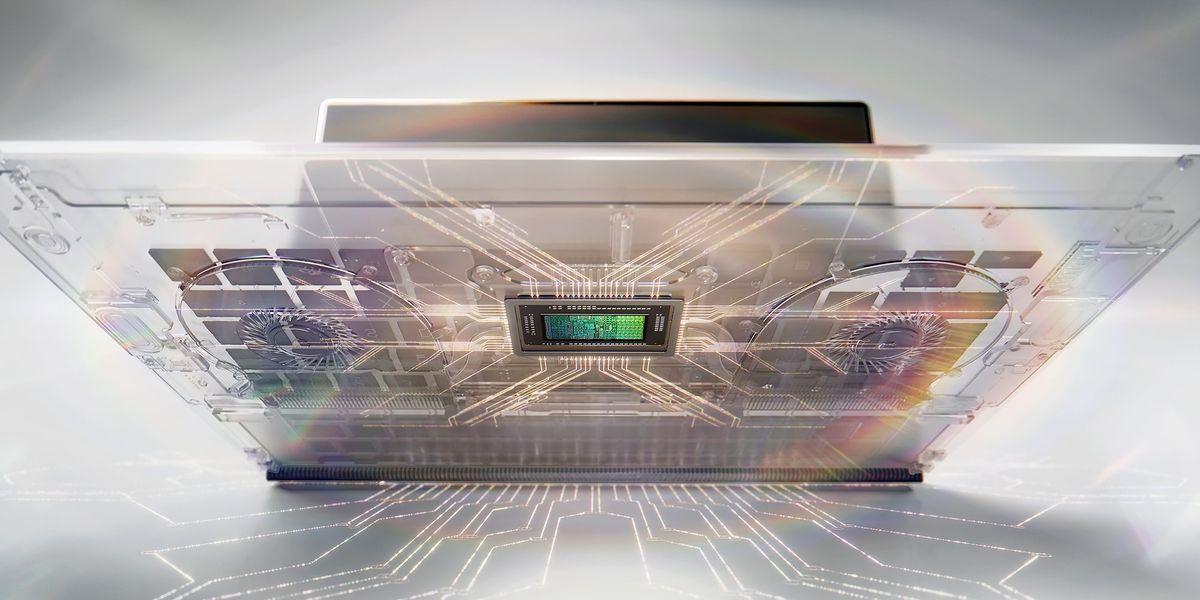
24 Sources
[1]
Nvidia chases $200B CPU market with AI agent PCs from Microsoft, Dell, and HP
Nvidia opened Taipei's enormous Computex trade show on Sunday with a spark, literally. The chipmaker unveiled a new PC CPU called the RTX Spark, which it dubbed a "superchip," and named a who's who list of PC makers that will soon deliver AI PCs powered by it. The super-fast, 1-petaflop chip is designed to run AI agents like OpenClaw or Hermes Agent securely, according to Nvidia. Such RTX Spark Windows PCs will be available this fall from ASUS, Dell, HP, Lenovo, Microsoft Surface and MSI, with models from Acer and Gigabyte to follow. In addition to being equipped with secure sandboxes (jointly developed with Microsoft) to run agents securely, the PCs will also have enough CPU, GPU, RAM and underlying Nvidia CUDA software to run local versions of large language models. Nvidia said that its RTX technology will deliver faster performance for AI, better image quality, and support for AI features in more than 1,000 games and applications. The chipmaker is marketing this as an alternative for creators making AI content, as well as providing a significant upgrade to its traditional market of gamers. Nvidia said more than 100 Windows software makers have signed on to support the new chip, including Adobe, Blender, ComfyUI, Riot Games and Xbox. But Nvidia founder and CEO Jensen Huang's vision for these new PCs is far larger. He wants to end the days of launching apps, pointing, clicking and typing. "With RTX Spark and Microsoft Windows, you ask -- and the PC does the work," he said in the press release. "Frontier models. Creative workflows. RTX games. All on a laptop." Last month, after delivering another record quarter, Huang promised investors he had found a new $200 billion market for Nvidia in selling CPUs for AI, not just GPUs. He made specific mention of the high-end server CPU released earlier this year called Vera -- of which Nvidia says it has already sold $20 billion worth. He also hinted at his bigger ambitions. "We'll have billions of agents, and those billions of agents will all use tools. And those tools are going to be like PCs, just like us humans using using PCs today," he said on the earnings call in May. "We're going to need a lot more CPUs." Nvidia ARM-based Windows devices have been tried before -- and failed. Back in 2013, Microsoft famously had to write off $900 million on its Nvidia ARM-based Surface RT, with partners like Dell also bailing on the product. But at this point, after delivering record after record of quarterly revenue, it's hard to bet against Huang as he pursues his PC dreams once again. And this chip is an entirely different beast. It's more powerful, not less. Microsoft is positioning its own RTX Spark PC as so mighty that it named it the Surface Laptop Ultra, and is calling it "the most powerful Surface Laptop ever built." Still, PC manufacturers have not released a lot of specifics about each of their offerings, including pricing. These systems appear to be full-fledged Windows versions of the DGX Spark mini-computer that Nvidia already sells to developers for about $4,800. We'll have to wait and see if these PCs will compete on price with the affordable Mac Mini that has become a popular choice for running OpenClaw. Or perhaps they will sit at the high end of the PC market, like Nvidia's own agent-running mini computer. Either way, if Nvidia has cracked the code on bringing AI agents easily, safely, and usefully to the masses, it could -- and should -- be big.
[2]
What are AI PCs that Nvidia's Jensen Huang is betting on?
June 1 (Reuters) - Nvidia has turned the spotlight on AI PCs after CEO Jensen Huang launched a new chip that would put artificial intelligence capabilities directly into laptops and desktop computers, amid mixed demand for such devices already in the market. HP (HPQ.N), opens new tab last week said AI-optimized computers helped lift its quarterly results, whereas Dell (DELL.N), opens new tab said in January that the AI boom had not generated the kind of demand it had anticipated. Here's everything we know about AI PCs: WHAT DOES "AI PC" MEAN? Manufacturers say AI PCs can process data more swiftly than traditional ones and can handle a greater volume of AI tasks directly on the device, including chatbots. They do not have to rely on cloud data centers powering most AI applications like OpenAI's ChatGPT and Anthropic's Claude, and some variants can also support training AI models -- a compute-intensive task typically done on servers -- locally on the device. The rise of AI agents, or software that can perform tasks on the computer by itself with minimal human intervention, is also drawing fresh attention to AI PCs. Nvidia's (NVDA.O), opens new tab RTX Spark, unveiled ahead of the Computex conference in Taiwan, is part of what the company called an effort with Microsoft (MSFT.O), opens new tab to "reinvent the PC" for the AI era. The new chip has been developed in collaboration with MediaTek (2454.TW), opens new tab to run agents locally rather than relying on cloud computing. PC makers are hoping such powerful AI features will help draw in buyers as more people lean on generative AI for everything from sending emails to planning vacations. HP said late in May that AI PCs made up 44% of its PC shipments in the second quarter, up from more than 35% in the previous quarter, helping it top revenue and profit estimates. However, AI PC adoption could be hampered by the memory chip supply squeeze and rising costs. Market research firm IDC expects total global PC shipments to decline in 2026 due to memory shortages, rising component prices and supply constraints, even as higher average selling prices lift market value. WHAT TECHNOLOGY IS USED IN AI PCS? AI PCs come with specialized processors called neural processing units that handle the majority of on-device AI workloads. These NPUs work in tandem with central processing units and graphics processors to manage complex tasks, deliver enhanced processing speeds and power applications such as AI assistants. WHAT ARE SOME OF THE AI PCS AVAILABLE ON THE MARKET? Nvidia said RTX Spark laptops and compact desktops are expected this fall from ASUS (2357.TW), opens new tab, Dell, HP, Lenovo (0992.HK), opens new tab, Microsoft and MSI (2377.TW), opens new tab, with Acer (2353.TW), opens new tab and Gigabyte (2376.TW), opens new tab to follow. Several of these brands, along with Microsoft and Qualcomm (QCOM.O), opens new tab, already offer Copilot+ PCs, which require processors designed specifically to handle AI tasks on the device. ARE THERE ANY CONCERNS? When announced in 2024, Microsoft's "recall" feature had raised some privacy concerns. The feature would track every action performed on the laptop from voice chats to web browsing, and create a detailed history stored on the device. The user can then search this repository and go through past actions. Following a strong backlash over privacy and security, Microsoft delayed the release of the feature and instead made it available through a preview mode for certain users after adding stronger protections. The optional feature is available in the newer Copilot+ PCs. On the other hand, some experts maintain that managing more AI-related tasks directly on the device offers greater privacy, by eliminating the need to use personal data to train large AI models. Reporting by Anhata Rooprai in Bengaluru; Editing by Sriraj Kalluvila Our Standards: The Thomson Reuters Trust Principles., opens new tab
[3]
Nvidia announces new AI chip for personal computers
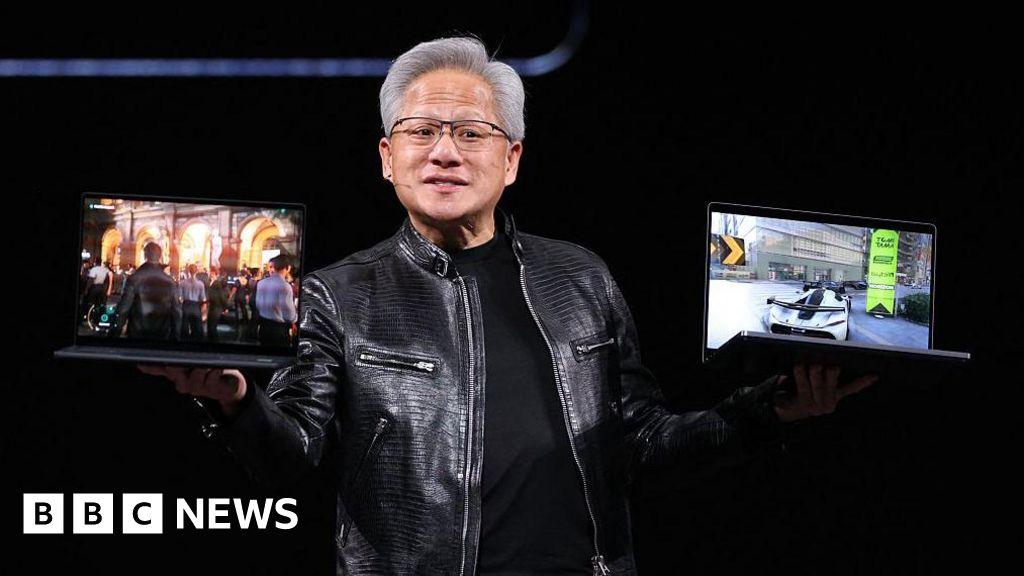
Nvidia has announced a new chip for personal computers as it moves into the consumer market for devices integrated with artificial intelligence (AI) technology. "This reinvention of the computer is as big of a deal as the reinvention of the phone into what we now know as the smartphone," Nvidia's chief executive Jensen Huang said as he unveiled the RTX Spark chip. Huang made the announcement on Monday as he delivered a keynote speech ahead of the opening of the Computex technology show in Taipei, Taiwan. Separately on Sunday, the US tightened its rules on selling Nvidia's most advanced chips to Chinese firms. The RTX Spark is "a new superchip... for the era of personal AI agents - offering a new class of computer that moves from tool to teammate," Nvidia said on its website. It will be included in a new line of Windows PCs made by Asus, Dell, HP, Lenovo, Microsoft Surface and MSI. They are due to be available in the autumn, with models from Acer and Gigabyte to follow. The move marks a challenge to high-profile names in the PC market like Apple and Intel. The AI boom has helped Nvidia become the world's most valuable company, with a stock market valuation of more than $5tn (£3.7tn). On Sunday, the US Department of Commerce moved to close a potential loophole that may have allowed the export of the most advanced AI technology, like Nvidia's Blackwell processors, to subsididiaries of Chinese companies based outside China. Washington has been trying to stop Chinese firms buying the advanced computer chips needed to develop key AI technology.
[4]
Nvidia Has a Plan to Put Its Chips in Personal Computers
Nvidia became the world's most valuable company by selling the artificial intelligence chips that are used in enormous data centers. Now it's looking to put its technology in people's homes. The chipmaker said on Monday that it had developed a new chip called the RTX Spark that will power laptop and desktop computers from Dell, HP, Microsoft, Lenovo and others. The computers, which will be available this fall, are designed to run local A.I. systems that can sort through files and quickly perform tasks with more privacy and security. With its push into laptops, Nvidia is the latest tech company seeking to reinvent the computer for the A.I. era. Microsoft and Qualcomm teamed up two years ago to launch the Copilot+ PC, which it said would make it easier to find documents and edit photos. But those computers have struggled to gain traction. Nvidia is betting its computers will hit the market at the right time, just as A.I. assistants, known as agents, are becoming more popular. The company has been working with Microsoft and laptop makers to allow agents to navigate PCs by autonomously operating the mouse and keyboard like a user. The PC chip headlined a two-hour showcase of Nvidia's A.I. products at a computer and electronics conference in Taipei, Taiwan. The company also announced a collaboration on a new robot with the Chinese company Unitree Robotics and a new software system to help customers manage its chips in data centers. Jensen Huang, Nvidia's chief executive, said an A.I. supercomputer might become a common home appliance in the future, in the way that home theaters, large televisions, lawn mowers and dishwashers are not unusual anymore. "I could totally imagine someday there's an A.I. supercomputer in your house," he said. "It's running all of your agents, it's running all your assistants, and they're doing all kinds of things for you all the time." Nvidia's entrance into the PC market was made possible by the struggles of Microsoft's longtime partner, Intel. Once the undisputed king of PCs, Intel's performance slipped in key areas like battery life. In 2021, Microsoft responded by making it possible to run Windows software with Qualcomm, Nvidia and others. Nvidia has also been working with Microsoft for several years on a PC chip. The PCs that include Nvidia's chips are designed to appeal to people who develop A.I. systems, play video games and create computer graphics. The company said it would provide details on battery life and other performance metrics in the fall. It's unlikely that PCs will lift Nvidia's business because the A.I. and video game markets for PCs are niches, said Max Weinbach, a technology analyst at Creative Strategies, a tech research firm. But it could allow them to extend the reach of their technology among A.I. developers, which could help their brand and business. Apple has been one of the biggest beneficiaries of the rising demand for A.I. computers. The MacBook Pro, with its highest-performing chips, is popular with A.I. developers. Its Mac Mini, a desktop that features a sizable amount of memory, has also flown off shelves this year because A.I. developers are using the model to host A.I. agents that can send emails and debug software code. "Apple more or less owns this market today," Mr. Weinbach said. "Nvidia wants to build a laptop ecosystem for Windows that's an alternative." Nvidia also said it had worked with Unitree, China's leading robotics firm, on a new humanoid robot. The robot has five-finger hands and stands more than five-feet tall. It is powered by the Nvidia Jetson chip and runs on Nvidia's A.I. model for robots. It is slated to be available in October. The robot is designed to be used by universities interested in doing research with humanoids, said Rev Lebaredian, Nvidia's vice president of physical A.I. "It's an extremely capable humanoid robot," he said in a briefing before the event. The Unitree partnership has the potential to raise concerns in Washington, where lawmakers have been worried that Chinese robots could be used by the People's Liberation Army. Last year, the House Select Committee on China called for Unitree to be designated a military company. The House Committee on Homeland Security also held a hearing to examine Unitree's "national security risks." Under the partnership, Nvidia said its technology will power the machines, while the robots will be built with Unitree components. It also said data will stay with users and not go back to China. Nvidia also provided updates on software it had developed to help design data centers. It allows developers to simulate how a data center will be constructed and operated before it's built, so that they can manage how chips are cooled and power is distributed, said Ian Buck, Nvidia's vice president of high-performance computing. This year, the biggest tech companies have committed to spend nearly $1 trillion on data centers. But some of those projects have been delayed by power constraints and pushback from communities. Mr. Buck said the system would help developers with such challenges by allowing them to coordinate with utility companies to reduce their electricity use on hot days when nearby homes might be using more air conditioning.
[5]
Nvidia launches 'superchip' putting AI power into laptops and PCs
Firm says its RTX Spark PC chip for Microsoft Windows will let AI agents replace the mouse and keyboard A new front has opened up in the battle for dominance in AI chips, as Nvidia said its latest development could replace the mouse and keyboard in how people use computers. The $5tn (£3.7th) US semiconductor company has launched a "superchip" that puts AI capabilities into laptops and desktop computers, a move that will pit it against Intel, Apple, Qualcomm and AMD. The RTX Spark chip will be launched this year, and will be used by computer makers including Dell, Lenovo, Asus and HP, paired with Microsoft's Windows software, according to the Nvidia chief executive, Jensen Huang. Speaking at the Computex conference in Taiwan, Huang said the chip would "reinvent the PC" for the AI era, after three years of collaboration between Nvidia and Microsoft. A combination of microprocessor and graphics chip, developed with help from Taiwan's MediaTek, it is designed to run AI agents locally, rather than relying on cloud computing. It will allow agents to navigate PCs autonomously, replacing humans' traditional mouse and keyboard interactions. Because the chip is very powerful, computers will still be thin and light, the company said. Huang said Nvidia was reimagining the PC "for the first time in 40 years". The company's foray into the consumer PC industry will open up a new business line, but this will take time, analysts said. Nvidia, which dominates the booming AI semiconductor market, is pushing beyond graphics cards into integrated chips that power the whole computer. Neil Shah, a co-founder of Counterpoint Research, compared the "RTX Spark moment" to the advent of the iPhone, ChatGPT and DeepSeek. "The RTX Spark looks to transform the traditional app-centric PC to a real useful agentic AI personal computer which will eventually be in every home in coming years as private edge AI agents become pivotal," he said. The new chip and Nvidia's Vera central processing unit demonstrate the company's growing focus on PC and central processing unit (CPU) products. The Vera CPU is designed for AI agents and early adopters, including OpenAI, Anthropic and SpaceX. Susannah Streeter, the chief investment strategist at Wealth Club, said: "Nvidia's latest push into AI-powered personal computers marks a bold attempt to extend its dominance beyond datacentres and into consumers' everyday lives. The unveiling of the RTX Spark chip reinforces Jensen Huang's vision of PCs evolving from simple productivity tools into hyper-intelligent digital co-workers. "While strategically significant, investors are likely to view the move as a longer-term growth opportunity rather than an immediate earnings driver. For now, Nvidia's fortunes still depend overwhelmingly on relentless global demand for AI infrastructure and data centre computing power." As chip wars heat up, Intel intends to start shipping an AI chip later this year that uses cheaper memory and cooling technology than its Californian rivals Nvidia and AMD. Intel announced a new graphics processing unit (GPU), Xe3P, codenamed Crescent Island. It is "purpose-built for this upcoming AI generation of agents", according to Anil Nanduri, the vice-president of AI products at Intel's Data Center Group. Amid fears that AI will destroy vast swathes of jobs, Huang said it was "complete nonsense" that the technology would reduce demand for software engineers, arguing that it would increase hiring by making workers more productive. "This is the promise of AI," he said. "The number of engineers, software engineers, is actually increasing. People talk about AI reducing jobs - complete nonsense. It's causing more software engineers to be hired." Meanwhile, Rene Haas, the chief executive of Arm, is in line for a pay package that would make him a billionaire if he hits targets to turn the microchip firm into the UK's first trillion-dollar company. Arm, which is listed in New York but has its global headquarters in Cambridge, has proposed a pay scheme including generous share awards that is worth more than $1bn in total by 2031, if Haas can hit certain "exceptional growth metrics".
[6]
Scoop: First Windows PCs powered by Nvidia chips to debut next week
Why it matters: Microsoft's first AI PC push stumbled, but Nvidia's arrival gives it a second chance, this time with the world's hottest chipmaker attached. Driving the news: Nvidia and Microsoft will unveil their joint work and the first computers running the chips at two key industry conferences -- the Computex trade show in Taiwan and Microsoft's Build developer conference in San Francisco. * Nvidia-powered PCs are expected both from Microsoft's homegrown Surface brand as well as other computer makers, including Dell, sources confirmed. * Microsoft is also expected to debut software that makes it easier for people to have AI agents do work locally on their Windows computer. * A Microsoft representative declined to comment. Dell declined to comment. Nvidia did not immediately respond to a request for comment. Catch-up quick: Nvidia, which got its start making PC graphics chips, has been working on entering the PC processor business for years now, though only recently has it become clear that the debut was imminent. * "A new era of PC," Nvidia teased in a Friday post on X, pointing to coordinates that match a location in Taiwan. * Meanwhile. Windows head Pavan Davuluri engaged in his own vagueposting. "Something new is coming for developers," he said on X. "And no, it's not a new OS version. See you at Build next week!" The big picture: The move comes as Microsoft is trying to reposition Windows to take advantage of the massive momentum behind AI. * Microsoft's first effort at an AI PC, the Copilot+ PC, was marred by a series of setbacks, including a lengthy delay and security concerns over its signature feature, Recall. * However, the move toward agents that can automatically perform tasks on local PCs has provided what it sees as a fresh opening. * The company has been embracing OpenClaw since earlier this year, creating a new team led by veteran coder Omar Shahine. The company also has OpenClaw founder Peter Steinberger (now employed by OpenAI) scheduled to host a breakout session at Build. Between the lines: While most AI work has been done in the cloud, Microsoft's push to have things run locally could find newly receptive ears. * Businesses are starting to struggle with massive computing costs that have accompanied the shift from unlimited-use chatbots to agents, which can rack up giant bills as they do their autonomous work. What they're saying: Nvidia's entry in the PC market could help not only it and Microsoft, but also rival Qualcomm, which uses a similar type of chip as Nvidia rather than the traditional PC chip architecture used by Intel and AMD.
[7]
Jensen Huang says Nvidia is 'reinventing the personal computer' as it unveils new powerful AI chips | Fortune
While Santa Clara, California-based Nvidia has already been massively successful in supplying high-end chips for data centers riding the worldwide AI demand boom, it is plotting different plans to expand its presence across AI systems and products. Jensen Huang, the Taiwanese-American founder and CEO of Nvidia, made the announcement in Taipei at the annual Nvidia GTC event. Microsoft and Nvidia "are going to reinvent the PC (personal computer)," he said in his keynote speech. "This is going to be the new PC," Huang said as he unveiled Nvidia's RTX Spark superchip -- which combines CPU, or central processing unit, and GPU, or graphics processing unit, capabilities -- that would power new Windows laptop and desktop computer models in what the company called "AI personal computers," expected to debut in the fall of this year. Nvidia is already the world's most valuable company, ahead of Apple, Google's parent Alphabet and Microsoft. Its new superchips for PCs will challenge chipmaking rivals including Intel and AMD. Nvidia's shares were up nearly 4% in early U.S. trading, while Intel and AMD both fell more than 3%. The company said it will be "reinventing the personal computer" for creating and gaming. "When it has an autonomous (AI) agent, an agent that's helping you, that understands you, you could talk to it. It could look at you. You could ask it to read files, go help you do some research. It could do a lot more," Huang said. Microsoft said in a separate statement that the personal computers running on Nvidia's RTX Spark superchips would be able to support "highly capable AI models" and complex workloads. With the new superchips, these personal computers can run AI agents locally, Nvidia said. "This is the first across the lineup of PC reinvention for 40 years," said Huang. Nvidia's move is significant at a time when demand is growing for the use of personal AI agents, said Lian Jye Su, chief analyst at the technology research and advisory group Omdia. "For consumers, it means more choices, which is always a good thing," Su said. Neil Shah, analyst and co-founder of Counterpoint Research, described Nvidia's announcement as a move that's "revolutionizing how PCs would look like in the next 10 years." The new laptops and desktop computers "will drive agentic AI applications in every home," Shah said, with an aim of having an "AI supercomputer" in each household. Also during Monday's speech, Nvidia's Huang said its new Vera CPUs for data centers are in full production and are "going to be our new major growth driver" on the boom of AI agents, with early customers including Anthropic, OpenAI and SpaceXAI. Huang also revealed a humanoid robot reference design that could act as a blueprint for future research, especially within the higher education sector. Nvidia said its "Isaac GR00T" stands nearly six feet tall and has the humanoid chassis of Chinese robot maker Unitree's H2. It is equipped with five-fingered dexterous hands, made by Singapore-based robotics startup Sharpa, that are capable of finely controlled movements.
[8]
Nvidia unveils 'new era of PC' for AI age: 5 Key takeaways from GTC
The headline announcement was a new PC developed in partnership with Microsoft, which Huang called "the biggest reinvention in 40 years. Nvidia CEO Jensen Huang stepped onto the stage in his trademark leather jacket to unveil the artificial intelligence company's latest innovations at its annual GTC conference in Taiwan, often referred to as the "Super Bowl" of AI. From praising the place he was born and a new PC with Microsoft to touting AI agents. Here are the top five takeaways from the event in Taipei. The AI PC Huang kept the most exciting news until the end and unveiled what he called "a new era of PC" in partnership with Microsoft, which he called the biggest "PC reinvention in 40 years". Microsoft and Nvidia are reinventing desktops, laptops and workstations. "The first reinvented line of engineering that has happened in 40 years," Huang said. The tech boss said his theory is that just as homes have lawnmowers and dishwashers, one day homes will have an AI supercomputer which will become part of normal life. "I imagine someday an AI supercomputer in your house running [AI] agents. And you have to have it in your house and these in time become more like R2-D2 to you than a PC to you," he said. There is "no question" that the technology is just like the reinvention of the phone to smartphone and this is "the beginning of that journey," he said. The computers will run on RTX Spark, a new "superchip" that brings AI agents, content creation, and gaming together on a single portable device. The RTX Spark-powered laptops will launch later this autumn but the price has not been disclosed. Huang also said Adobe is rebuilding Photoshop and Premiere Pro to use RTX Spark's architecture. 2. AI agents "Today, agentic and useful AI has arrived," Huang said at the beginning of the talk, marking AI agents as central to the conference. In theory, AI agents are designed to take autonomous actions to assist humans and do not require a human to tell them what to do, as they gather data based on user preferences. However, the technology is still not sophisticated enough and still needs human input. 3. The economics of AI Jensen, however, was more confident about the technology and went into the economics of AI and spoke a lot about "super agents", which can be a "profit generator" for companies. "Compute is revenue. The more you buy, the more you make," he said. "All of you are experiencing this with me; everyone wants to make money. They realise profitable AI is here, compute demand is incredibly high. Let's go help the world and build AI factories around the world," he said. To run these agents at a speed that is fast enough, Huang unveiled Nvidia Vera, a new class of processor enabling 1.8x faster task completion. He described Vera as a Central Processing Unit (CPU) for AI agents, which he called the "last computer science breakthrough". The only sustainability part mentioned by Huang was that the Rubin GPU and Vera CPU architectures are expected to be designed for full liquid cooling. What is also interesting is that there are no cables, no hoses, and no fans. 4. AI isn't taking jobs Huang began the conference by saying that it is 'complete nonsense' that AI is taking jobs from software engineers and the industry is instead hiring more of them. The Nvidia chief has long repeated that the real risk is not AI taking your job but rather someone who knows how to use AI taking it. 5. The cringe close Nvidia closed out the two-hour presentation with an AI-generated video of robots strolling down Taipei's night markets and singing a song about the announcements from the keynote. While the graphics were impressive, it was just a little bit cringe.
[9]
Nvidia making consumer PC push with new AI superchip
Taipei, Taiwan -- Nvidia unveiled new powerful chips on Monday that would bring advanced artificial intelligence functions into laptops and desktop computers, with new personal computer models from brands including Microsoft and Dell set to roll out later this year. While Santa Clara, California-based Nvidia has already been massively successful in supplying high-end chips for data centers riding the worldwide AI demand boom, it is plotting different plans to expand its presence across AI systems and products. Jensen Huang, the Taiwanese-American founder and CEO of Nvidia, made the announcement in Taipei at the annual Nvidia GTC event. Microsoft and Nvidia "are going to reinvent the PC (personal computer)," he said in his keynote speech. "This is going to be the new PC," Huang said as he unveiled Nvidia's RTX Spark superchip - which combines CPU, or central processing unit, and GPU, or graphics processing unit, capabilities - that would power new Windows laptop and desktop computer models in what the company called "AI personal computers" expected to debut in the fall of this year. Nvidia is already the world's most valuable company, ahead of Apple, Google's parent Alphabet and Microsoft. The company said it will be "reinventing the personal computer" for creating and gaming. "When it has an autonomous (AI) agent, an agent that's helping you, that understands you, you could talk to it. It could look at you. You could ask it to read files, go help you do some research. It could do a lot more," Huang said. "If you want to run digital biology, no problem. If you want to do seismic processing, no problem. You want astrophysics, no problem," Huang added, calling it "as big of a deal as the reinvention of the phone into what we now know as the smartphone," according to French news agency AFP. Microsoft said in a separate statement that the personal computers running on Nvidia's RTX superchips would be able to support "highly capable AI models" and complex workloads. With the new superchips, these personal computers can run AI agents locally, Nvidia said. Nvidia's move is significant at a time when demand is growing for the use of personal AI agents, said Lian Jye Su, chief analyst at the technology research and advisory group Omdia. "For consumers, it means more choices, which is always a good thing," Su said. Neil Shah, analyst and co-founder of Counterpoint Research, described Nvidia's announcement as a move that's "revolutionizing how PCs would look like in the next 10 years." The new laptops and desktop computers "will drive agentic AI applications in every home," Shah said, with an aim of having an "AI supercomputer" in each household. Also during Monday's speech, Nvidia's Huang said its new Vera CPUs for data centers are in full production and are "going to be our new major growth driver" on the boom of AI agents, with early customers expected to include Anthropic, OpenAI and SpaceXAI. He also revealed a humanoid robot reference design that could act as a blueprint for future research, especially within the higher education sector.
[10]
Nvidia PC chip hailed as 'game changer' in race for AI device
Taipei (AFP) - Laptop chipmakers such as Intel and AMD should be worried about their new rival Nvidia, experts say, after the US hardware titan announced Monday a push into the personal computer market. But despite Nvidia boss Jensen Huang's assertion that homes will soon contain AI supercomputers, the race is still on to develop an ubiquitous, one-size-fits-all intelligent device. Huang vowed to "reinvent the PC" with Nvidia's powerful chip for Windows machines, calling it "as big of a deal as the reinvention of the phone into what we now know as the smartphone". Lian Jye Su, a chief analyst at Omdia, told AFP that "legacy" laptop chip makers were now facing a challenge from Nvidia laptops optimised for AI. "Both Intel and AMD are ready hardware-wise, but the question is software -- and creating the right type of device that can match consumer expectations," he said. Nvidia is the world's most valuable company thanks to a construction boom of AI data centres packed with its advanced chips. Zhibin Xiao, CEO of the US company ZFlow AI, said in Taipei -- where major industry show Computex takes place this week -- that Nvidia bringing its AI prowess to laptops was a "game changer". "There will be more people working on AI agents," and then "once you have developers, then you have more applications, and then people will buy the AI PC as a consumer", he said. Others gave similar assessments, although Al Benzoni of Aperion Technologies said he would wait before buying one of the new Nvidia-powered Windows PCs, available later this year. "I wouldn't want to be the first guinea pig," as "it's not so easy to have everything just smooth" like Apple has managed to do with its laptops. Next big thing Creating the world's next big gadget -- whether static, handheld, or wearable like earbuds, pendants and brooches -- is something of a holy grail for AI companies. "It could be PC, but we are also looking at AI glasses," although neither can be seen as a killer device in the industry at this point, Omdia's Su said. "There was a point where even an AI PC was not a convincing pitch," but the sudden popularity of agent tool OpenClaw has changed that, he added. Some companies are also betting on smartphones, although attempts to ditch apps for agentic AI have so far run into problems with computing power and gaining permission to access on-device tools run by different firms. And ChatGPT maker OpenAI is working with renowned industrial designer Jony Ive on a mystery device for interacting with AI, expected to be ready by next year. Glasses are the top pick for tech influencer Selina Liu, whose "gptsavyy" Instagram account has more than 300,000 followers. "Because it's really close to what we see and how we talk, how we interact with people," she reasoned. In Taipei, Qualcomm boss Cristiano Amon also weighed in on the topic on Monday. "At home, you're going to have agents. They're going to basically update everyone on your activity and your schedule -- all of the things that you need to do at work," he said. "Today's devices were not designed for those experiences," Amon said. But what kind of gadget people will use isn't too important, he added, because "the agent isn't tied to the device". "It actually moves with the user and is there with the user, regardless of the device that you have."
[11]
Chip stocks shakeup: Arm soars, Intel falls as Nvidia and Microsoft announce new AI superchip for Windows PCs
Shares in Arm Holdings are soaring today after Nvidia CEO Jensen Huang announced a fresh foray into the personal computer market with a new AI chip designed to power Windows PCs later this year. Here's what you need to know. Nvidia announces RTX Spark superchip and N1X processor Nvidia has never been a stranger to the personal computer market, despite now being best known as the maker of chips that power AI servers. Its enterprise AI chips and associated products are what have driven Nvidia to become the most valuable publicly traded company ever in the last several years. But before the AI boom, a large majority of Nvidia's business came from making graphic processing units (GPUs) for personal computers, especially PCs designed for gaming, which required processors that could render advanced graphics. Today, Huang announced that, in addition to its enterprise AI business, Nvidia will launch a new AI chip for personal computers, designed for Windows laptops and desktops.
[12]
Nvidia Bets on AI Personal Computers With New Chip Powering Windows Laptops
TAIPEI, Taiwan (AP) -- Nvidia unveiled Monday new powerful chips that would bring advanced artificial intelligence functions into laptops and desktop computers, with the new personal computer models from brands including Microsoft and Dell set to roll out later this year. While Santa Clara, California-based Nvidia has already been massively successful in supplying high-end chips for data centers riding the worldwide AI demand boom, it is plotting different plans to expand its presence across AI systems and products. Jensen Huang, the Taiwanese-American founder and CEO of Nvidia, made the announcement in Taipei at the annual Nvidia GTC event. Microsoft and Nvidia "are going to reinvent the PC (personal computer)," he said in his keynote speech. "This is going to be the new PC," Huang said as he unveiled Nvidia's RTX Spark superchip -- which combines CPU, or central processing unit, and GPU, or graphics processing unit, capabilities -- that would power new Windows laptop and desktop computer models in what the company called "AI personal computers," expected to debut in the fall of this year. Nvidia is already the world's most valuable company, ahead of Apple, Google's parent Alphabet and Microsoft. The company said it will be "reinventing the personal computer" for creating and gaming. "When it has an autonomous (AI) agent, an agent that's helping you, that understands you, you could talk to it. It could look at you. You could ask it to read files, go help you do some research. It could do a lot more," Huang said. Microsoft said in a separate statement that the personal computers running on Nvidia's RTX superchips would be able to support "highly capable AI models" and complex workloads. With the new superchips, these personal computers can run AI agents locally, Nvidia said. Nvidia's move is significant at a time when demand is growing for the use of personal AI agents, said Lian Jye Su, chief analyst at the technology research and advisory group Omdia. "For consumers, it means more choices, which is always a good thing," Su said. Neil Shah, analyst and co-founder of Counterpoint Research, described Nvidia's announcement as a move that's "revolutionizing how PCs would look like in the next 10 years." The new laptops and desktop computers "will drive agentic AI applications in every home," Shah said, with an aim of having an "AI supercomputer" in each household. Also during Monday's speech, Nvidia's Huang said its new Vera CPUs for data centers are in full production and are "going to be our new major growth driver" on the boom of AI agents, with early customers expected to include Anthropic, OpenAI and SpaceXAI. He also revealed a humanoid robot reference design that could act as a blueprint for future research, especially within the higher education sector. ___ Chan reported from Hong Kong.
[13]
Nvidia bets on AI personal computers with new 'superchip' powering Windows laptops
TAIPEI, Taiwan (AP) -- Nvidia on Monday unveiled new powerful chips that would bring advanced artificial intelligence functions into laptops and desktop computers, with the new personal computer models from brands including Microsoft and Dell set to roll out later this year. While Santa Clara, California-based Nvidia has already been massively successful in supplying high-end chips for data centers riding the worldwide AI demand boom, it is plotting different plans to expand its presence across AI systems and products. Jensen Huang, the Taiwanese-American founder and CEO of Nvidia, made the announcement in Taipei at the annual Nvidia GTC event. Microsoft and Nvidia "are going to reinvent the PC (personal computer)," he said in his keynote speech. "This is going to be the new PC," Huang said as he unveiled Nvidia's RTX Spark superchip -- which combines CPU, or central processing unit, and GPU, or graphics processing unit, capabilities -- that would power new Windows laptop and desktop computer models in what the company called "AI personal computers," expected to debut in the fall of this year. Nvidia is already the world's most valuable company, ahead of Apple, Google's parent Alphabet and Microsoft. Its new superchips for PCs will challenge chipmaking rivals including Intel and AMD. Nvidia's shares were up nearly 4% in early U.S. trading, while Intel and AMD both fell more than 3%. The company said it will be "reinventing the personal computer" for creating and gaming. "When it has an autonomous (AI) agent, an agent that's helping you, that understands you, you could talk to it. It could look at you. You could ask it to read files, go help you do some research. It could do a lot more," Huang said. Microsoft said in a separate statement that the personal computers running on Nvidia's RTX Spark superchips would be able to support "highly capable AI models" and complex workloads. With the new superchips, these personal computers can run AI agents locally, Nvidia said. "This is the first across the lineup of PC reinvention for 40 years," said Huang. Nvidia's move is significant at a time when demand is growing for the use of personal AI agents, said Lian Jye Su, chief analyst at the technology research and advisory group Omdia. "For consumers, it means more choices, which is always a good thing," Su said. Neil Shah, analyst and co-founder of Counterpoint Research, described Nvidia's announcement as a move that's "revolutionizing how PCs would look like in the next 10 years." The new laptops and desktop computers "will drive agentic AI applications in every home," Shah said, with an aim of having an "AI supercomputer" in each household. Also during Monday's speech, Nvidia's Huang said its new Vera CPUs for data centers are in full production and are "going to be our new major growth driver" on the boom of AI agents, with early customers including Anthropic, OpenAI and SpaceXAI. Huang also revealed a humanoid robot reference design that could act as a blueprint for future research, especially within the higher education sector. Nvidia said its "Isaac GR00T" stands nearly six feet tall and has the humanoid chassis of Chinese robot maker Unitree's H2. It is equipped with five-fingered dexterous hands, made by Singapore-based robotics startup Sharpa, that are capable of finely controlled movements. ___ Chan reported from Hong Kong.
[14]
Nvidia bets on artificial intelligence personal computers with new chip powering Windows laptops and desktops
Nvidia is launching powerful new chips for laptops and desktops. These will bring advanced AI functions to personal computers. Microsoft and Dell will release new models later this year. This move aims to create 'AI personal computers' that can run AI agents locally. Experts believe this will revolutionize PCs over the next decade. Nvidia unveiled Monday new powerful chips that would bring advanced artificial intelligence functions into laptops and desktop computers, with the new personal computer models from brands including Microsoft and Dell set to roll out later this year. While Santa Clara, California-based Nvidia has already been massively successful in supplying high-end chips for data centers riding the worldwide AI demand boom, it is plotting different plans to expand its presence across AI systems and products. Jensen Huang, the Taiwanese-American founder and CEO of Nvidia, made the announcement in Taipei at the annual Nvidia GTC event. Microsoft and Nvidia "are going to reinvent the PC (personal computer)," he said in his keynote speech. Also Read: Jerome Powell sounds alarm on Fed independence, says central bank faces 'stress test' "This is going to be the new PC," Huang said as he unveiled Nvidia's RTX Spark superchip - which combines CPU, or central processing unit, and GPU, or graphics processing unit, capabilities - that would power new Windows laptop and desktop computer models in what the company called "AI personal computers," expected to debut in the fall of this year. Nvidia is already the world's most valuable company, ahead of Apple, Google's parent Alphabet and Microsoft. The company said it will be "reinventing the personal computer" for creating and gaming. "When it has an autonomous (AI) agent, an agent that's helping you, that understands you, you could talk to it. It could look at you. You could ask it to read files, go help you do some research. It could do a lot more," Huang said. Also Read: Minimum wage, social security on the table as global gig work talks begin Microsoft said in a separate statement that the personal computers running on Nvidia's RTX superchips would be able to support "highly capable AI models" and complex workloads. With the new superchips, these personal computers can run AI agents locally, Nvidia said. Nvidia's move is significant at a time when demand is growing for the use of personal AI agents, said Lian Jye Su, chief analyst at the technology research and advisory group Omdia. "For consumers, it means more choices, which is always a good thing," Su said. Neil Shah, analyst and co-founder of Counterpoint Research, described Nvidia's announcement as a move that's "revolutionizing how PCs would look like in the next 10 years." The new laptops and desktop computers "will drive agentic AI applications in every home," Shah said, with an aim of having an "AI supercomputer" in each household. Also during Monday's speech, Nvidia's Huang said its new Vera CPUs for data centers are in full production and are "going to be our new major growth driver" on the boom of AI agents, with early customers expected to include Anthropic, OpenAI and SpaceXAI. He also revealed a humanoid robot reference design that could act as a blueprint for future research, especially within the higher education sector.
[15]
What's Going On With NVIDIA Stock Wednesday? - NVIDIA (NASDAQ:NVDA)
NVIDIA's Jensen Huang Wants To Reinvent PC That Has Not Changed In 40 Years NVIDIA Targets Intel's PC Stronghold Bloomberg tech editor Vlad Savov said on Wednesday that NVIDIA's RTX Spark product stood out because it combines a GPU with a CPU, moving NVIDIA directly into Intel's long-held PC territory. Savov noted that CEO Jensen Huang argued the PC industry "hasn't changed for 40 years" and positioned RTX Spark as part of NVIDIA's effort to reinvent personal computing for the AI era. Huang tied the launch to the rise of AI agents, which he said will require new computing architectures capable of handling more autonomous tasks without human intervention. Ian King Says NVIDIA Looks More Credible This Time Bloomberg semiconductor reporter Ian King said NVIDIA has tried to enter the PC market before, but the company now approaches the opportunity from a much stronger position. King said NVIDIA argues that its new chips could make those tasks more responsive. He said NVIDIA's stronger revenue base, high margins, and PC graphics history give it more credibility than it had a decade ago. Arm, Qualcomm And Intel Face New Competitive Questions King said NVIDIA's move could pressure Qualcomm over time, especially if NVIDIA gains meaningful PC share. He also said Arm's plan to make chips complicates its relationships with customers such as NVIDIA and Qualcomm. On Intel, King said the company still needs to prove that its products and factory strategy can attract major customers. Cramer Says NVIDIA's Move Helps Arm However, CNBC's Jim Cramer said NVIDIA's Computex 2026 announcements strengthened Arm's position, calling the Arm-based NVIDIA superchip "obviously additive" and "amazing for club holding Arm." Cramer highlighted NVIDIA's deeper use of Arm designs in its Vera CPU and RTX Spark AI PC platform as a major boost for Arm versus rivals. Experts Say The AI Boom Still Looks Like A Bubble Risk Bloomberg's Mayumi Negishi said the AI market is clearly in a bubble, but she framed the bigger question as whether the boom leaves useful infrastructure behind when it eventually cools. She compared the situation to the dot-com bubble, which left internet infrastructure in place after the crash. King said no one can know yet whether the spending will prove justified. He said the rapid buildout is not sustainable in the long term. King said the industry needs broader adoption of accelerated computing across the economy for the spending to pay for itself. Apple Still Faces No Immediate Paradigm Shift Savov said Apple users may not see a radical shift from NVIDIA's AI PC push in the next one or two years. He said Apple computers still offer familiar advantages, and noted that AI has not yet transformed smartphones into a major new consumer sales driver despite years of industry promises. Kuo Says Windows Will Decide The AI PC Upgrade Cycle Analyst Ming-Chi Kuo said NVIDIA's N1X processor could give AI power users a strong on-device alternative to Apple's Mac. Still, he said it will likely remain a niche product unless pricing and Windows support improve. Kuo said Microsoft's ability to make Windows useful for AI workflows will matter more than NVIDIA's hardware in driving a broader PC upgrade cycle. NVIDIA Price Action NVDA Price Action: NVIDIA shares were down 0.28% at $222.19 at the time of publication on Wednesday, according to Benzinga Pro data. Photo via Shutterstock Market News and Data brought to you by Benzinga APIs To add Benzinga News as your preferred source on Google, click here.
[16]
Nvidia enters Windows PC market, taking on Intel and AMD
Nvidia is entering the Windows PC market with a new chip aimed at loosening the stranglehold of Intel technology in that arena and modernizing the machines for the artificial intelligence era. Starting this fall, Nvidia's new RTX Spark Superchip will debut in laptop and desktop computers from leading PC brands including Dell and Lenovo, Chief Executive Officer Jensen Huang said at the Computex trade show in Taipei. The product is a combination of microprocessor and graphics chip, built with help from Taiwan's MediaTek, that will run Microsoft's Windows for Arm operating system. Now a dominant player in data centers, Nvidia is taking another run at the personal computer processor market after being part of an effort that fizzled out more than a decade ago. This time, it's doing so from a position of strength and is able to devote more resources to the effort than any incumbent or would-be rival, such as Qualcomm with its line of Snapdragon products for PCs. For Nvidia, the venture also adds to efforts to keep its central role at the heart of all AI development and use.
[17]
Nvidia and Microsoft Bet the PC Can Beat the Cloud | PYMNTS.com
Employees typed prompts into browser windows, queries traveled to data centers and responses came back. That model suited hyperscalers. It suited corporate IT and security teams less. Nvidia and Microsoft moved to change that at GTC Tapei, unveiling what they called in a Sunday (May 31) press release a new class of Windows PC built for agentic computing. Laptops and compact desktops will be shipping this fall from ASUS, Dell, HP, Lenovo, Microsoft Surface and MSI, powered by Nvidia's new superchip, RTX Spark. They are designed to run AI agents directly on the device. The pitch to enterprise buyers is straightforward. Keep the data, the decisions and the agents inside the building. Keeping Data Where It Starts For enterprise buyers, the case centers on what stops leaving the building. Agents running locally can work across files, calendars and internal applications without sending data to a third-party server, cutting the latency, privacy exposure and usage costs that come with constant cloud inference. Nvidia said earlier this year that traditional processors were "becoming the bottleneck" as agentic workloads grew, CNBC reported Monday (June 1). On-device processing removes that constraint and keeps sensitive business data inside the firewall. To govern what agents can see and do, Nvidia said in the release that it introduced OpenShell, a tool that lets users define access permissions and masks personal information before anything leaves the device. Microsoft built new security controls directly into Windows to manage agent identity and containment at the OS level. Hermes Agent and OpenClaw, two open-source agent projects that have reached record download numbers on GitHub, will build their Windows apps on the joint security stack. Adobe committed to rebuilding Photoshop and Premiere for the platform, with tools like Generative Fill and Generative Extend among the accelerated features, targeting performance gains of up to 2x across AI and creative workflows, the release said. A Stalled Market Gets a New Pitch The launch comes as PC makers navigate a difficult year. IDC projected in March that global PC shipments will decline by 11.3% in 2026, a revision from its forecast just months earlier, driven by rising memory costs and supply constraints. The boom year before the slide offered little comfort. Most of 2025's shipment growth reflected Windows 10 end-of-life deadlines and tariff timing rather than genuine AI-driven demand. Copilot+ devices sold on the promise of local AI features that rarely changed how people worked. Agent-ready devices are Nvidia's answer to that gap. On-device agents that handle real tasks like drafting, researching and editing across applications make a more direct case for replacing hardware. Nvidia sees the broader CPU market reaching $200 billion, with Arm-based chips gaining ground over the x86 processors that Intel and AMD have long dominated, according to the CNBC report. Nvidia CEO Jensen Huang predicted in March that AI tokens would become a standard job perk, with companies issuing token budgets alongside base salaries so employees could run agents at scale. The Sunday announcement extends an agent push Nvidia began earlier in March, when it debuted NemoClaw, an enterprise-hardened version of OpenClaw that adds security controls, policy enforcement and audit capabilities for companies in regulated industries. For all PYMNTS AI coverage, subscribe to the daily AI Newsletter.
[18]
Nvidia N1X AI PCs Could Ship 10 Million Units, But Windows Is Real Test - NVIDIA (NASDAQ:NVDA)
Nvidia's N1X AI PCs Could Ship 10 Million Units, But Windows Is Real Test, Says Ming-Chi Kuo: 'If The Goal Is A Real Upgrade Cycle...' N1X Processor To Create A Niche Market, Says Kuo The N1X processor is expected to create a niche market, focusing on users who need advanced AI compute directly on their devices. However, the success of these shipments will largely depend on pricing and the ability of Windows to support applications that fully utilize on-device AI capabilities. Currently, AI computing on PCs, whether Windows or Mac, primarily relies on cloud-based services. The N1X could give AI power users another option for running models locally, though Kuo cautioned that hardware alone is unlikely to drive a broader PC upgrade cycle, Kuo said in a post on X. However, the operating system's support is crucial for integrating AI into user workflows and maintaining data privacy, he added. "For power users running LLMs on-device, an N1X device is a solid alternative to the Mac when it comes to capable on-device AI compute and large memory. But if the goal is a real upgrade cycle, then beyond price, OS support (Windows) is still what matters," he added. N1X Impact Will Depend On Windows' Ability To Support AI Features While the N1X offers a promising option for AI power users, its impact on the broader market will depend on how well Windows can enhance its OS to support these advanced AI features, beyond just first-party app enhancements. AAPL Making Waves With MacBook Neo This device, designed to attract Windows PC users, is expected to reshape the low-cost laptop market and expand Apple's ecosystem. Counterpoint Research predicts a significant increase in the sub-$700 market due to this move. The competition between Nvidia's on-device AI capabilities and Apple's entry into the low-cost laptop segment highlights the evolving landscape of personal computing. Disclaimer: This content was partially produced with the help of AI tools and was reviewed and published by Benzinga editors. Photo courtesy: Shutterstock Market News and Data brought to you by Benzinga APIs To add Benzinga News as your preferred source on Google, click here.
[19]
Nvidia launches new chip to bring AI directly to personal computers - The Korea Times
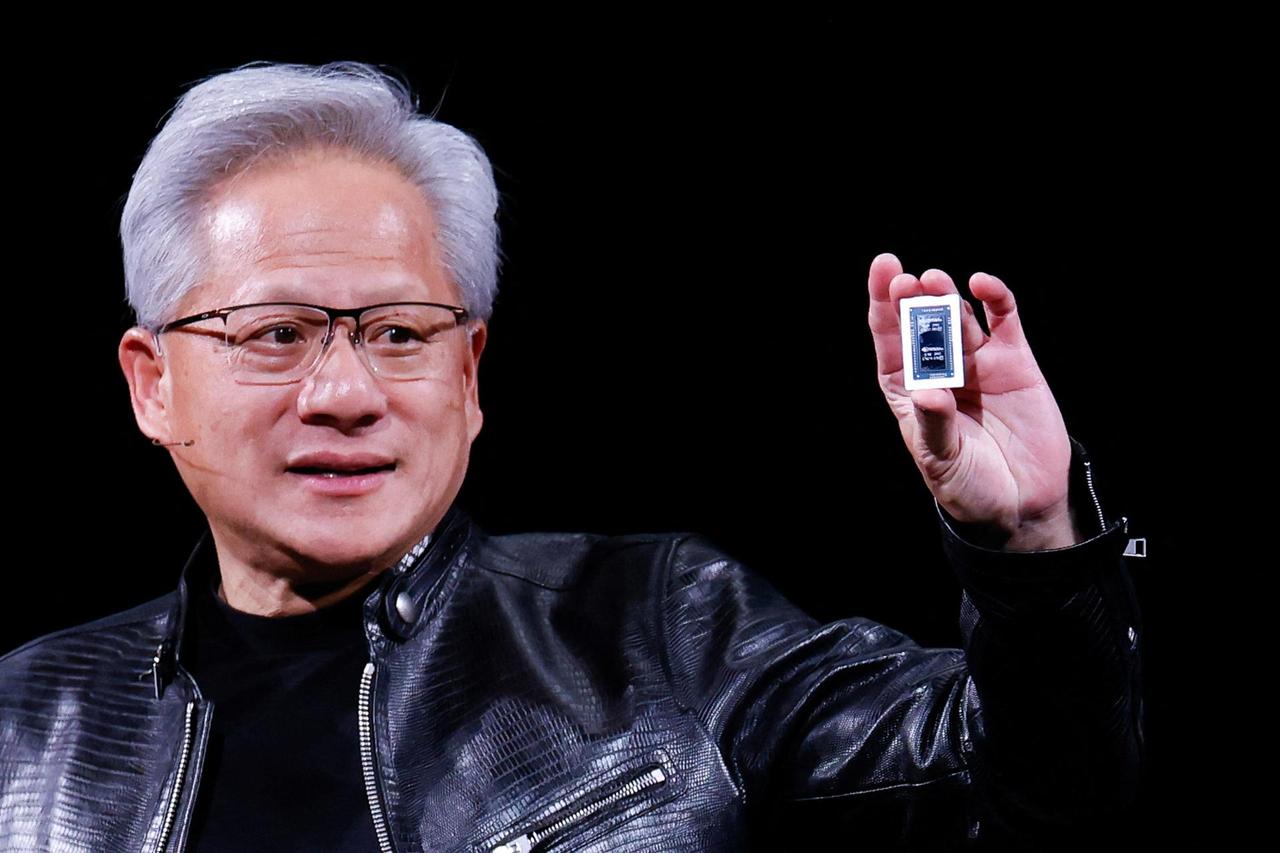
Nvidia CEO Jensen Huang introduces the RTX Spark GPU during a keynote address on the sidelines of the annual Computex in Taipei, Taiwan, Monday. Reuters-Yonhap TAIPEI -- Nvidia on Monday unveiled a new chip that puts artificial intelligence capabilities directly into laptops and desktop computers, pitting it against the likes of Advanced Micro Devices, Intel and Apple. CEO Jensen Huang, who is in Taiwan for the Computex conference, said the RTX Spark PC chip is part of Nvidia's effort with Microsoft to "reinvent the PC" for the AI era after three years of collaboration between the companies. The chip, developed with Taiwan's MediaTek, will debut this fall in laptops and compact desktops from Dell , HP, Lenovo, ASUS, Microsoft Surface and MSI, with models from Acer and GIGABYTE to follow. Industry experts said the processor would overhaul engagement with AI as it is designed to run autonomous AI agents locally rather than relying solely on cloud computing. After dominating chips that train AI models, Nvidia is now pushing to capture an expected surge in demand for inference processors, chips that power AI responses to user queries and the agents built to handle routine tasks. By targeting PCs, Nvidia is betting on its scale and AI expertise to prise open a large new market when deepening competition has worried investors. Reception for AI PCs has been mixed so far. HP reported last week the devices helped prop up quarterly sales, but Dell said earlier this year that demand had fallen short of initial expectations. Qualcomm, looking to capitalize on AI demand, has also been offering AI PCs with Microsoft. "The RTX Spark looks to transform the traditional app-centric PC to a real useful Agentic AI personal computer which will eventually be in every home in coming years as private edge AI agents become pivotal," said Neil Shah, Counterpoint Research co-founder. "This is going to be the 'RTX Spark' moment for the personal computing segment like how iPhone, ChatGPT or DeepSeek have been." Nvidia shares jumped 4 percent, while AMD, Intel and Qualcomm were down between 4.9 percent and 8.5 percent. Apple dipped 0.8 percent and Microsoft was up 2.7 percent, also buoyed by a rebound in software stocks. HP and Dell were both up more than 7 percent each, while shares of Lenovo closed more than 5 percent higher in Hong Kong. Huang, who devoted much of his keynote on Monday to the company's PC and CPU push, said early adopters of its Vera central processor include OpenAI, Anthropic and SpaceX. MOVING TOWARDS FULLY AUTONOMOUS AGENTS Dressed in his signature black leather jacket, Huang was speaking ahead of the Computex trade show, which runs June 2 to 5 and has drawn leaders from some of the world's largest technology companies. Nvidia's highlight on AI agents running locally on PC hardware echoed comments laid out by Qualcomm's CEO Cristiano Amon, who also spoke ahead of Computex and framed 2026 as the turning point for agentic AI. "Two years ago we talked about how AI will change the human computer interface, and as a consequence will change the architecture of all of our personal computing devices. And that is starting to become a reality in 2026. That's why we call 2026 the year of agents," he said, adding the industry is moving past AI as a simple prompt-answering tool toward fully autonomous agents. Amon said the shift to agentic AI makes local edge computing unavoidable, because today's device architectures were not built for always-on, autonomous operation. "All of these devices today, they have been built for actions initiated by the user, not by the agents," he said. During an earnings call in May, Huang said Nvidia's new Vera central processors give it access to a new $200 billion market. "This (Vera CPU) is going to be our new major growth driver," said Huang during a lengthy speech outlining Nvidia's latest AI products and highlighting the island's central role in the global technology industry. Huang dismissed as "complete nonsense" concerns that AI would reduce demand for software engineers, arguing instead that the technology would drive hiring by making workers more productive. "This is the promise of AI. The number of engineers, software engineers, is actually increasing. People talk about AI reducing jobs - complete nonsense. It's causing more software engineers to be hired." Huang, who was born in Taiwan's southern city of Tainan, announced plans last week to invest around $150 billion a year in Taiwan, describing it as the epicentre of the AI revolution. The speech at the Taipei Music Hall comes around two weeks after he accompanied U.S. President Donald Trump on a visit to Beijing, part of a high-powered corporate delegation, to meet Chinese leader Xi Jinping.
[20]
Nvidia unveils new processor for Windows PC with Microsoft By Investing.com
Investing.com-- Nvidia on Monday unveiled a new processor for Microsoft Windows, which will be used in a line of Windows laptops and desktop PCs. Nvidia CEO Jensen Huang unveiled the new line of processors-- the RTX Spark-- during a keynote address at the COMPUTEX conference in Taiwan. Get more breaking news on Nvidia and the AI trade by subscribing to InvestingPro Huang said the chips were aimed chiefly at running locally hosted artificial intelligence agents, and that Nvidia had collaborated with Windows on the software platform. Microsoft's Surface laptops will feature the new chips, as will offerings from HP, Dell, Lenovo, Asus, Acer, and MSI, Huang said during the conference. A host of reports over the past week had telegraphed Nvidia's new chips, which put it squarely at odds with Intel and AMD in the PC processor market. The new Nvidia-powered laptops could also compete with Apple's Macbook line. Nvidia unveils new AI agent chip, says Vera Rubin ramping up Along with the RTX Spark reveal, Huang also unveiled a new chip aimed at running AI agents, called Vera, and said the company's next-generation Vera Rubin AI processors were entering full production. Huang said Vera was aimed specifically at running AI agents, and that it could deliver "80% faster agentic task completion" compared to current technology. Additionally, Huang said that Nvidia's next-generation Vera Rubin AI platform was entering full production, with its biggest suppliers manufacturing the processors at scale. Production shipments of Vera Rubin are set to begin from fall, Nvidia said in a statement. Huang touted agents- AI programs that can carry out independent tasks and functions- as the future of the industry. He said the new Vera CPU was aimed at facilitating more agentic processes. Beyond Vera, Nvidia also unveiled a host of AI products for enterprise, data center and physical AI applications.
[21]
Nvidia to unveil first Windows PCs powered by its chips next week - Axios By Investing.com
Investing.com-- Nvidia (NASDAQ:NVDA) is expected to unveil its first Windows personal computers powered by its own processors next week, in a major push by the AI chip leader into the PC market and giving Microsoft (NASDAQ:MSFT) a fresh opportunity to revive its AI-focused computer strategy, Axios reported on Friday. According to the report, Nvidia and Microsoft will showcase the new systems at the Computex trade show in Taiwan and Microsoft's Build developer conference in San Francisco. Get real-time updates on market-moving news with InvestingPro The devices are expected to include models from Microsoft's Surface lineup as well as systems from PC maker Dell (NYSE:DELL), Axios reported, citing sources familiar with the plans. The launch would represent Nvidia's most significant move yet beyond its dominant position in AI data-center chips and into mainstream computing. Axios reported that Microsoft is also expected to introduce software designed to let AI agents perform tasks locally on Windows computers, reducing reliance on cloud computing. The effort comes after Microsoft's Copilot+ PC initiative faced delays and criticism over security concerns surrounding its Recall feature, according to the report. Nvidia's entry could intensify competition in the PC processor market, currently dominated by Intel (NASDAQ:INTC), AMD (NASDAQ:AMD), and Qualcomm (NASDAQ:QCOM).
[22]
Nvidia aims to dominate the personal AI agent market with its latest chip
For several years, Jensen Huang's keynote at Computex has served as a premier showcase for Nvidia's strategic direction in artificial intelligence. This year's edition is no exception. The CEO notably highlighted Vera, the group's new processor now in mass production to meet the surging demand for agentic AI. However, the announcement that most captured the market's attention was the RTX Spark, a new chip designed for laptops. Despite a name that recalls the RTX line intended for gamers, this product does not target the gaming market. According to Wedbush, this chip aims to "reinvent Windows PCs for the era of personal AI agents." Developed in collaboration with Microsoft, it directly targets the professional laptop segment, where it competes with solutions offered by Intel, Qualcomm and Apple. During his presentation, Jensen Huang did not hesitate to emphasize the significance of this evolution. "This reinvention of the computer is as significant as the reinvention of the phone into what we know today as the smartphone," he stated. The commercial launch of the RTX Spark is scheduled for this fall, with integration into new computer lineups from Microsoft, Dell, HP, Asus, Lenovo, and MSI. This diversification into personal AI agents appears to appeal to the market, which sees it as a new growth opportunity for Nvidia beyond data centers and AI infrastructure. Matt Bryson, however, takes a more measured approach regarding the potential financial impact of this strategy. "We believe Nvidia's prior work leveraging GPUs for AI workloads on PCs should support its strategy to define the agentic PC. However, we question the actual impact, even if successful, given the relatively modest size of the PC market compared to its data center accelerator business," the analyst explained. While the commercial potential remains to be proven, this announcement nonetheless confirms Nvidia's determination to extend its influence across the entire artificial intelligence ecosystem, from massive infrastructure to personal computers.
[23]
Nvidia enters the PC processor market with Arm architecture
Nvidia unveiled its new N1X processor at the Computex trade show, developed in collaboration with Microsoft, to power a new generation of AI-centric Windows computers. The chip will be integrated into the RTX Spark superchip, expected this autumn in models marketed by Microsoft, Dell, HP, ASUS, Lenovo and MSI. Jensen Huang believes this development represents a transformation comparable to the emergence of the smartphone and marks the beginning of a profound overhaul of personal computing centered around AI. The RTX Spark combines a Blackwell GPU and the Arm-based N1X central processor, designed with MediaTek and featuring 128 gigabytes of unified memory. Nvidia anticipates the launch of over 30 laptops and a dozen desktop PCs based on this platform. The group is primarily targeting content creators, AI developers, and gamers, with high-end machines focusing on performance and energy efficiency against the x86 architectures dominated by Intel and AMD. Alongside this, Nvidia announced the start of large-scale production for the Vera processor destined for data centers. Utilized notably by OpenAI, Anthropic, xAI, Oracle, and CoreWeave, it reportedly allows for AI token generation 1.8 times faster than current x86 processors. With this simultaneous offensive in PCs and servers, Nvidia seeks to extend its influence well beyond the graphics accelerators that have driven its success in artificial intelligence.
[24]
PC Chip Stocks Fall as Nvidia Prepares to Break Into Market
Shares of Qualcomm, Intel and Advanced Micro Devices fell after Nvidia said it was entering the personal-computing market, encroaching on their market share. Qualcomm's stock slid 9.5%, to $227.20, in premarket trading Monday. Shares of Intel and AMD were down 5.7% to $108.19, and 3.5% to $497.91, respectively. The declines came after Nvidia unveiled the first personal laptop computers designed for running artificial-intelligence agents, which use a newly designed version of the company's signature AI chips. The new PCs will be as slim as 14 millimeters, with the lightest weighing less than 3 pounds. To start, Nvidia will work with six manufacturers--Dell Technologies, Lenovo Group, Microsoft, HP, Asus and MSI--to build the laptops. PCs that use the chip will be "targeted at creators, AI developers and gamers" and priced at the premium end of the market, Mark Aevermann, Nvidia's senior director of product development, told The Wall Street Journal.
Share
Copy Link
Nvidia launched its RTX Spark chip at Computex in Taiwan, marking a major push into the consumer PC market. The 1-petaflop superchip will power AI agent PCs from Microsoft, Dell, HP, Lenovo, and others this fall. CEO Jensen Huang aims to capture a $200 billion CPU market opportunity by enabling AI agents to replace traditional mouse and keyboard interactions.
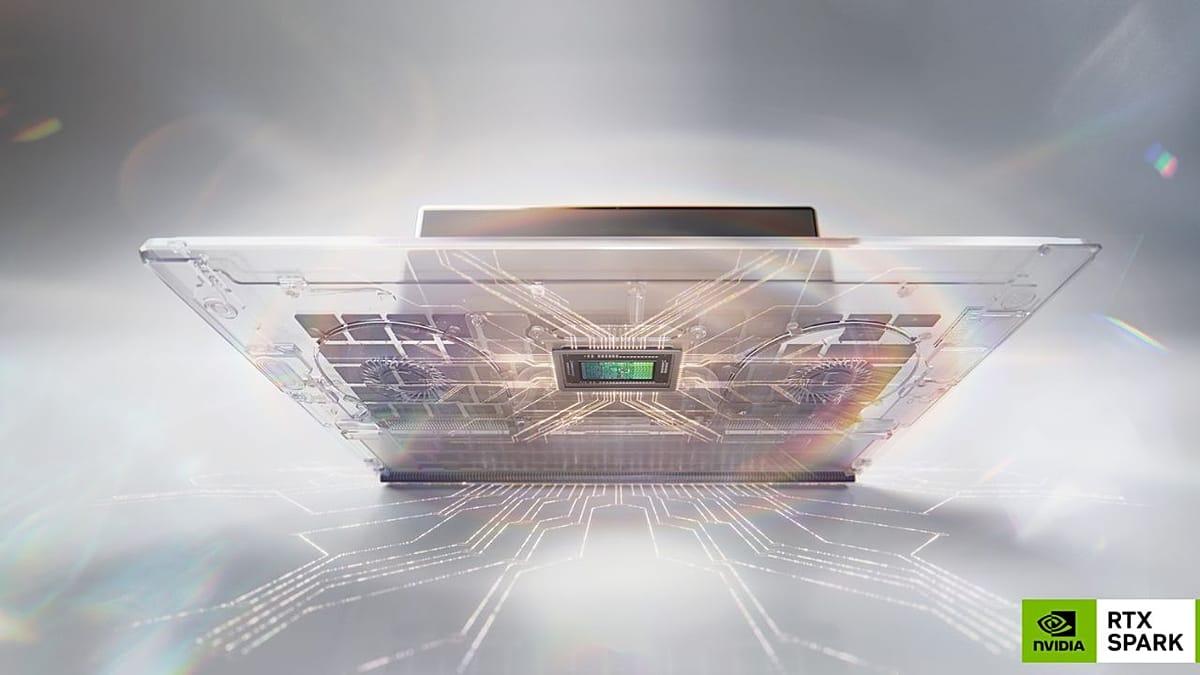
Nvidia opened Taipei's Computex conference with a bold move into the consumer market, unveiling the RTX Spark, an AI chip for personal computers designed to transform how people interact with technology
1
. The 1-petaflop superchip represents what CEO Jensen Huang calls a "reinvention of the PC" comparable to the smartphone revolution3
. This marks Nvidia's most aggressive push beyond its dominant position in data centers into homes and offices worldwide.
Source: Korea Times
The RTX Spark will power a new generation of personal computers from major manufacturers including ASUS, Dell, HP, Lenovo, Microsoft Surface, and MSI, with models expected this fall
1
. Acer and Gigabyte will follow with their own offerings. Microsoft is positioning its RTX Spark-powered device as the Surface Laptop Ultra, calling it "the most powerful Surface Laptop ever built"1
. The chipmaker has secured support from more than 100 Windows software makers, including Adobe, Blender, ComfyUI, Riot Games, and Xbox.The defining feature of these AI PCs is their ability to run AI agents locally rather than relying on cloud computing
5
. Developed in collaboration with MediaTek and Microsoft over three years, the RTX Spark includes secure sandboxes to run agents like OpenClaw or Hermes Agent safely1
. These systems will have sufficient CPU, GPU, RAM, and underlying Nvidia CUDA software to run local large language models directly on the device.
Source: Euronews
"With RTX Spark and Microsoft Windows, you ask -- and the PC does the work," Huang said, emphasizing his vision to end the days of launching apps, pointing, clicking, and typing
1
. The chip enables AI agents to navigate PCs autonomously, operating the mouse and keyboard like a human user4
. This represents a fundamental shift in human-computer interaction, moving from tool to what Nvidia describes as a "teammate."After delivering another record quarter last month, Huang revealed to investors that he had identified a new $200 billion market for Nvidia in selling CPUs for AI applications
1
. He specifically mentioned the high-end server CPU called Vera, released earlier this year, of which Nvidia claims to have already sold $20 billion worth. The RTX Spark represents the consumer-facing component of this broader CPU market strategy."We'll have billions of agents, and those billions of agents will all use tools. And those tools are going to be like PCs, just like us humans using PCs today," Huang explained during the May earnings call
1
. "We're going to need a lot more CPUs." This vision positions Nvidia to challenge established players like Intel, Apple, Qualcomm, and AMD in the PC processor space5
.AI PCs equipped with specialized neural processing units can process data more swiftly than traditional computers and handle a greater volume of AI tasks directly on the device
2
. Unlike cloud-based AI applications like OpenAI's ChatGPT and Anthropic's Claude, these systems don't need to rely on data centers for most tasks. Some variants can even support training AI models locally, a compute-intensive task typically performed on servers.Experts suggest that managing AI-related tasks directly on the device offers greater privacy by eliminating the need to use personal data to train large AI models
2
. The RTX Spark systems appear to be full-fledged Windows versions of the DGX Spark mini-computer that Nvidia already sells to developers for approximately $4,8001
.Related Stories

The AI PC market has shown mixed demand signals. HP reported last week that AI-optimized computers made up 44% of its PC shipments in the second quarter, up from more than 35% in the previous quarter, helping the company top revenue and profit estimates
2
. However, Dell said in January that the AI boom had not generated the anticipated demand.Apple has emerged as a major beneficiary of rising demand for AI computers. The MacBook Pro with its highest-performing chips is popular with AI developers, while the Mac Mini has flown off shelves this year because developers use it to host AI agents
4
. "Apple more or less owns this market today," said Max Weinbach, a technology analyst at Creative Strategies4
. "Nvidia wants to build a laptop ecosystem for Windows that's an alternative."
Source: BBC
Market research firm IDC expects total global PC shipments to decline in 2026 due to memory shortages, rising component prices, and supply constraints, even as higher average selling prices lift market value
2
. This presents both challenges and opportunities for Nvidia's entry into the market.Nvidia ARM-based Windows devices have been attempted before with disappointing results. In 2013, Microsoft wrote off $900 million on its Nvidia ARM-based Surface RT, with partners like Dell also abandoning the product
1
. However, the RTX Spark represents an entirely different approach—more powerful rather than less, designed for an era when AI agents are becoming increasingly popular.Neil Shah, co-founder of Counterpoint Research, compared the "RTX Spark moment" to the advent of the iPhone, ChatGPT, and DeepSeek, suggesting it could "transform the traditional app-centric PC to a real useful agentic AI personal computer which will eventually be in every home in coming years"
5
.Huang even speculated that AI supercomputers might become common home appliances in the future, similar to home theaters and dishwashers. "I could totally imagine someday there's an AI supercomputer in your house," he said
4
. "It's running all of your agents, it's running all your assistants, and they're doing all kinds of things for you all the time."Summarized by
Navi
21 Feb 2025•Technology

02 Jun 2026•Technology

02 Jan 2025•Technology

1
Startups

2
Policy and Regulation

3
Policy and Regulation