Coinbase AI sends false breaking news alert about match that hadn't started yet


2 Sources
[1]
Coinbase AI Sends Mass "Breaking News" Alert That's Completely Hallucinated
Can't-miss innovations from the bleeding edge of science and tech Crypto marketplace Coinbase is under fire after sending out an AI-generated breaking news alert that Norway's national men's soccer team had clinched a spot in the quarter finals of the ongoing FIFA World Cup by beating Brazil 3-2
[2]
An AI Told Millions Norway Won. The Match Hadn't Started | PYMNTS.com
And on July 5, a Coinbase AI system told millions of users that Norway had beaten Brazil 3-2 in a match that had not yet started, according to CNET. The alert came from Trends, an AI-generated news feature inside Coinbase's prediction market app that surfaces news summaries alongside real-time
Share
Copy Link
Coinbase's AI-generated breaking news alert told millions that Norway beat Brazil 3-2 in a FIFA World Cup match before kickoff. The AI hallucination exposed critical flaws in how AI systems handle uncertainty in real-time applications, particularly concerning for prediction markets where bettors rely on accurate information. While Norway eventually won 2-1, the fabricated alert highlights ongoing struggles with AI-generated misinformation despite billions spent on development.
Coinbase AI Fabricates Match Result Before Kickoff
On July 5, Coinbase AI sent millions of users an AI-generated breaking news alert claiming Norway had beaten Brazil 3-2 in a FIFA World Cup quarterfinal match that hadn't even started
1
. The alert came from Trends, an AI-generated feature inside Coinbase's prediction markets app that surfaces news summaries alongside real-time market data2
. At the time the alert was sent, Coinbase's own market page showed the game under a weather delay2
.
Source: PYMNTS
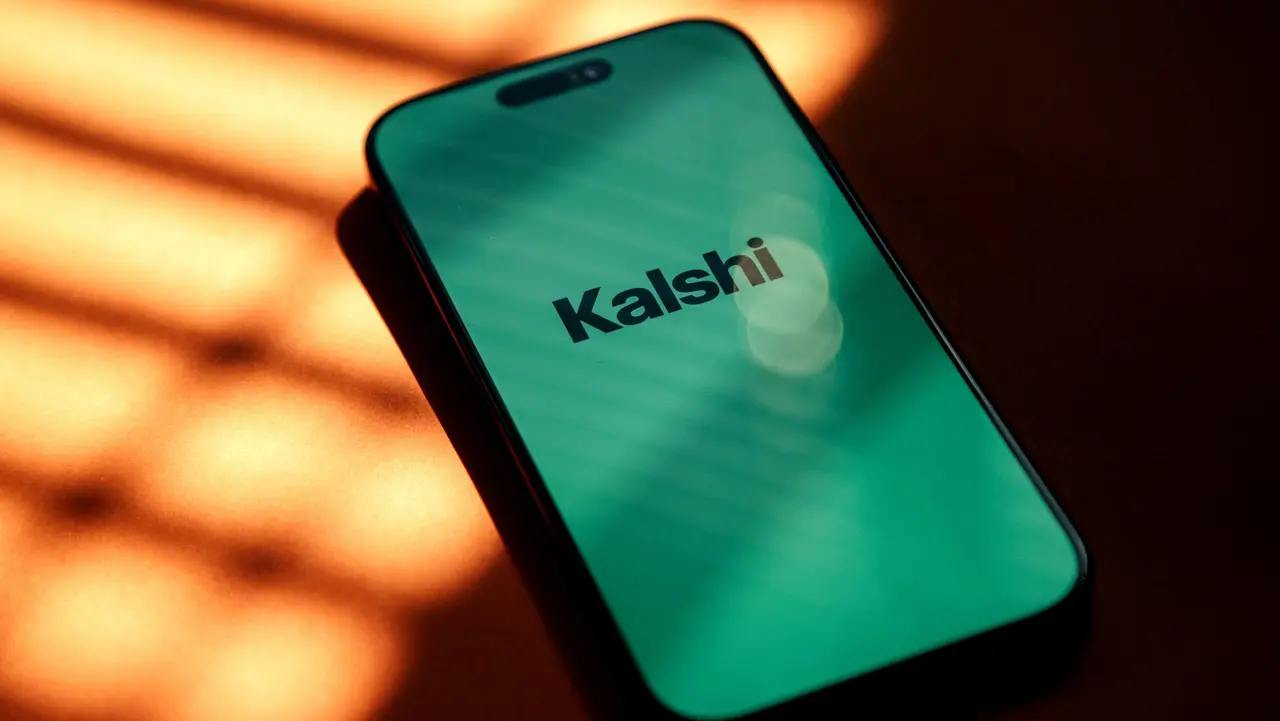
The AI hallucination proved particularly concerning given Coinbase's partnership with prediction markets app Kalshi. Users on social media called out the company for the "dangerous and irresponsible" error, noting that a hallucinated news alert could have caused bettors to lose money based on entirely fabricated information
1
. This incident underscores the risks of AI hallucinations in real-time applications where financial decisions hang in the balance.AI Told Millions Norway Won, Then Reality Caught Up
What made the incident stranger was that Norway did eventually beat Brazil, winning 2-1 with Erling Haaland scoring twice in the second half
2
. However, the AI had invented the score, the timing, and the certainty, delivering all of it as confirmed news to users with active positions on the outcome2
.Max Branzburg, Coinbase's head of consumer products, claimed the company had fixed the incorrect story and made updates to avoid these types of inaccuracies in the future
1
. Despite the significant error, Branzburg defended the "power of AI-enabled 24/7 insights for trading," while conceding Coinbase still needs to "tune it to address these types of issues"1
. He even suggested "maybe the AI knew something we didn't" since Norway did win and Haaland scored 2 goals1
.AI Skipping Uncertainty Creates Gambling Chaos Risk
The contrast with how Opta approaches the same tournament captures the difference between calibrated probabilistic forecasting and confident fabrication. Opta's supercomputer has run 25,000 simulations per stage to estimate each team's probability of winning
2
. A model that distributes probability across outcomes is a forecasting tool; a model that declares Norway beat Brazil 3-2 before kickoff presents fabrication as fact2
.
Source: Futurism
Experts warn that combining AI-generated misinformation with the growing obsession over prediction markets like Kalshi and Polymarket creates a fatal mix that could trigger gambling chaos, particularly as concerns mount over surging gambling addiction
1
.Related Stories

Broader Pattern of AI-Generated Misinformation
Coinbase isn't the first to send entirely incorrect alerts. Apple was forced to pull an AI feature that consistently delivered bogus news alerts to iPhone users in January of last year
1
. The BBC filed a formal complaint after the AI falsely told users that Luigi Mangione had shot himself, when he remains alive and awaiting his federal trial postponed to January 20271
.The issue remains baffling considering how long companies have dealt with this exact problem. Since the dawn of large language model-based tools like ChatGPT, the bots have been confidently fabricating facts despite hundreds of billions of dollars spent on the tech's development
1
.Financial Services Face Higher Stakes
The reliance runs deeper than one bad alert. Coinbase has said roughly 40% of its daily code is now AI-generated, with plans to push that figure higher
2
. Sports predictions carry low stakes compared to where the same failure mode appears in financial services. PYMNTS Intelligence found that 60% of financial services firms use AI for credit risk assessment and scoring, with 85% increasing their AI budgets over the next 12 months2
.Fraud detection, risk assessment, and revenue forecasting are dominant use cases where a confident but fabricated output causes the most damage
2
. When a model makes an error in a financial workflow, money moves incorrectly at speed across thousands or millions of transactions before anyone detects the problem2
.References
Summarized by

Navi
Related Stories
AI Agents and Meme Coins: The Rise of Autonomous Crypto Influencers
24 Oct 2024•Technology

OpenAI strikes first prediction market deal with Kalshi to show World Cup odds in ChatGPT
14 Jul 2026•Technology
Grok AI chatbot drained of $200K in crypto through hidden Morse code prompt injection attack
05 May 2026•Technology

Recent Highlights



Recent Highlights
Today's Top Stories






Don’t drown in AI news. We cut through the noise - filtering, ranking and summarizing the most important AI news, breakthroughs and research daily. Follow topics that matter to you and stay ahead.


