Commvault launches AI Protect to monitor and roll back rogue AI agents across cloud environments


2 Sources
[1]
Commvault has a Ctrl+Z for rogue AI agents
The company's new software keeps an eye on your agents and backs up data. Keep your agents close and your agent-monitoring software closer. Commvault's new AI Protect can discover and monitor AI agents running inside AWS, Azure, and GCP environments and even roll back their actions when something
[2]
Commvault Unveils Innovations to Advance Secure, Controlled Agentic Transformation in the Enterprise Commvault Unveils Innovations to Advance Secure, Controlled Agentic Transformation in the Enterprise
Next-generation AI capabilities will leverage Commvault Cloud to safely activate AI and build agentic workflows with trusted data, governance, and recovery Commvault today announced new and forthcoming AI capabilities that help organizations confidently adopt AI while maintaining control over
Share
Copy Link
Commvault unveiled AI Protect, Data Activate, and AI Studio to help enterprises govern AI agents and maintain control over AI-driven environments. The new tools discover agents across AWS, Azure, and GCP, monitor their behavior, and roll back actions when things go wrong. According to Deloitte, 60% of AI leaders cite risk and compliance concerns as top barriers to agentic AI adoption.
Commvault Introduces Tools to Control AI Agents
Commvault has launched a suite of products designed to address one of the most pressing challenges facing enterprises today: governing and securing AI agents that operate autonomously across cloud environments. The 30-year-old data protection company announced AI Protect, Data Activate, and AI Studio as part of its push to position itself at the center of AI resilience and data protection
1
. These tools arrive as organizations race to deploy AI agents but struggle with maintaining visibility and control over what these autonomous systems can access and modify.The timing reflects growing industry concern. According to Deloitte, 60% of AI leaders cite risk and compliance concerns and legacy system integration as the top barriers to agentic AI adoption
2
. Identity access and management platform Okta launched similar capabilities last month, signaling that the market for agent oversight is rapidly expanding1
.AI Protect Discovers and Monitors Agents Across Cloud Platforms
AI Protect operates across AWS, Azure, and GCP environments, discovering agents, mapping their dependencies, and monitoring their behavior for anomalies
1
. Commvault's field CTO Vidya Shankaran described the system as a baseline deviation model that ingests events over time, establishes normal behavior patterns, and flags deviations like an agent suddenly gaining access to payroll data it previously couldn't reach1
.When something goes wrong, AI Protect can restore an agent's configuration or repair corrupted data by reverting to a known good state. However, Shankaran emphasized that the tool can only monitor and revert, not stop or control third-party agents directly. "We would rather stay in our own swim lane and not really overreach," she told The Register
1
. This approach to manage agentic workflows focuses on recovery rather than prevention, addressing the reality that in agentic environments, agents mutate state across data, systems, and configurations in ways that compound fast and are hard to trace2
.Protection of Vector Databases Becomes Critical
Shankaran highlighted a vulnerability many organizations overlook: the protection of vector databases, which store the embeddings that large language models rely on. "A lot of organizations tend to miss the fact that you need to start protecting the vector databases, which is essentially the brains of your entire AI stack," she said
1
. If compromised or lost, organizations would need to rebuild from scratch or retrain the model—a luxury few can afford in terms of time.This focus on full-stack recovery in AI-driven environments extends beyond just data. Pranay Ahlawat, Chief Technology and AI Officer at Commvault, explained that teams need to recover not just data, but the full stack—applications, agent configurations, and dependencies—back to a known good state
2
.Data Activate Helps Prepare Backup Data for AI
Data Activate enables organizations to classify and curate data from protected backup copies and prepare approved datasets in formats like Apache Iceberg and Parquet for use with platforms such as Snowflake and Databricks
1
. This capability to prepare backup data for AI puts less strain on live systems while extracting more value from data that would otherwise sit idle in machine learning pipelines.Teams can identify and exclude personally identifiable information before activating datasets for model development
2
. Built on Commvault Cloud's data governance and zero-trust architecture, Data Activate continuously publishes updated and vetted datasets, making it easier to keep AI pipelines in sync with trusted data while reducing the risk of exposing sensitive information through AI2
.Related Stories

AI Studio Adds to the Agent Ecosystem
Even as Commvault promises to help lock down rogue agents, AI Studio will add new ones to the ecosystem. The platform provides prebuilt agents for common data-protection tasks and tools for organizations to build custom agents
1
. The idea is to let Commvault's agents interact with agents from other platforms—so a Salesforce agent might coordinate with a Commvault agent to ensure data is both accessible and protected.The studio supports Commvault's Model Context Protocol (MCP) server for integration with other enterprise systems
1
. This approach to agentic transformation reflects the company's vision of becoming what CEO Sanjay Mirchandani calls "the system of record for AI resilience." He noted that if data powering AI is compromised, AI is compromised, and if data can't be recovered, AI can't be trusted2
.What Enterprises Should Watch
As organizations accelerate deployment of autonomous agents, the need for a unified platform for AI resilience becomes more acute. Marius Horja, CCoE Compute Architecture and Engineering with Emerson Electric, emphasized that maintaining visibility and control over what agents can access and how they interact with sensitive data will be a key concern. "Having the ability to view, manage, govern, and orchestrate our agent ecosystem in real time from a single platform will give us greater confidence to scale AI innovation without sacrificing safety or resiliency," he said
2
.The partnership between Commvault and Lumen, including the Lumen Validated Design for Cyber Resilience, demonstrates how AI resilience is converging with broader cyber resilience strategies
2
. As the application stack evolves and more agents can enact unwanted and unbounded changes across data, systems, and configurations, organizations will need unified approaches to manage both complexity and threats across on-prem, SaaS, and hybrid cloud environments.References
Summarized by

Navi
[1]
Related Stories
Veeam Intelligent ResOps Tackles Agentic AI Risks as 82% of Enterprises Face Unknown Agent Threats
Today•Technology

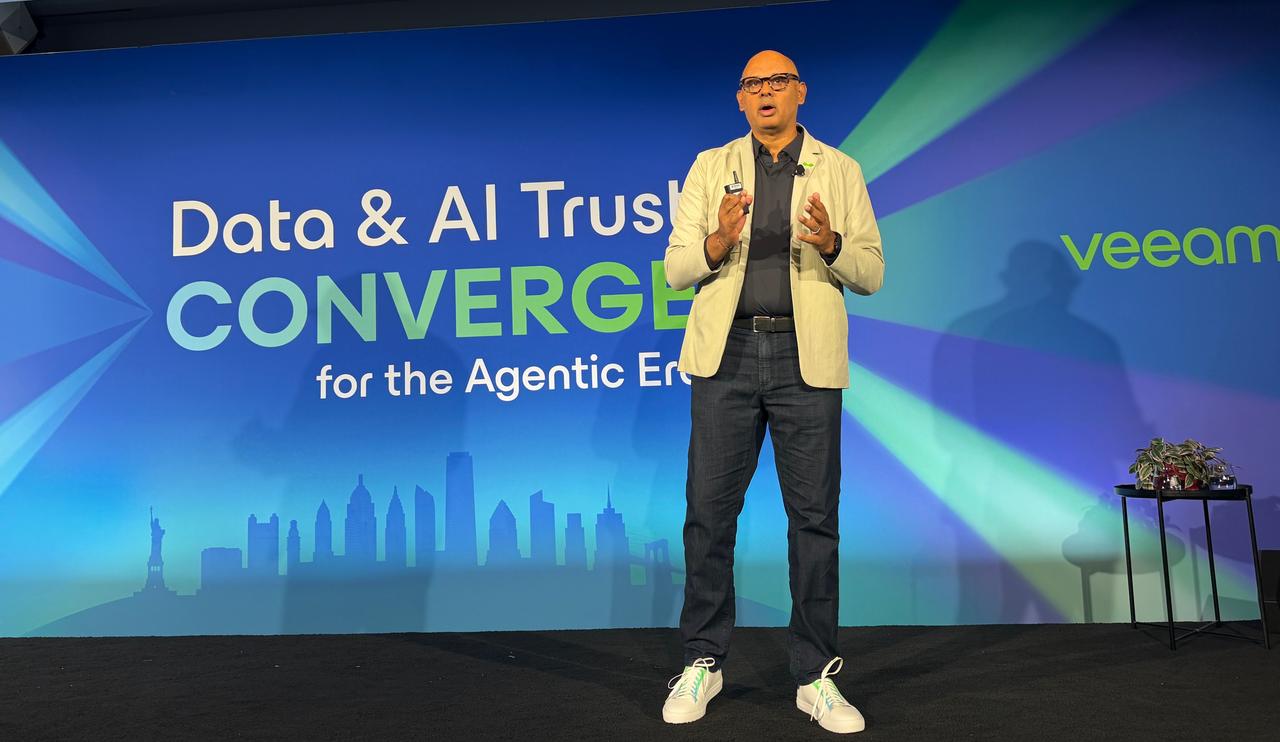
Veeam shifts from backup to data and AI trust with new platform targeting agentic era
13 May 2026•Technology
Aviatrix launches AI agent containment platform to limit blast radius in cloud workloads
29 Apr 2026•Technology

Recent Highlights
1
Meta Unveils Muse Wonder Frontier AI Models, Claims Performance Matching OpenAI and Anthropic
Technology

2
IMF Report Warns AI Market Correction Could Spark Global Financial Crisis With $1.4T at Risk
Business and Economy

3
Eight States Sue OpenAI Over ChatGPT Safety Concerns and Unlawful Collection of Children's Data
Policy and Regulation
Recent Highlights
Today's Top Stories










Don’t drown in AI news. We cut through the noise - filtering, ranking and summarizing the most important AI news, breakthroughs and research daily. Follow topics that matter to you and stay ahead.


