Companies Extend Legacy IT Systems Lifespan to Support Growing AI Investment


2 Sources
[1]
Enterprises are sweating legacy IT assets as AI investment grows
Companies are getting more selective about replacing legacy kit such as mainframe systems, and rising AI investment is one of the factors causing them to hold onto these existing assets for longer. Managed services biz Ensono claims in its 2026 State of IT Modernization report that 78 percent of
[2]
The end of 'rip and replace'? New survey finds businesses are sticking it out with legacy tech
* Report finds 57% of UK organizations opted to extend legacy system use rather than replace the tech * This is despite almost half of UK businesses are scaling AI * Meanwhile, over three quarters of UK businesses have gone over budget on modernization, with over two thirds have paused or
Share
Copy Link
A new Ensono report reveals 78% of IT decision-makers now consider legacy IT systems more important than two years ago, driven by AI investment needs. Instead of replacing mainframes and older infrastructure, 52% of organizations are optimizing existing assets while modernizing selectively—a shift from traditional rip and replace approaches.
Legacy IT Systems Emerge as Strategic AI Foundation
Companies are fundamentally rethinking their approach to legacy IT systems as AI investment accelerates across enterprises. According to Ensono's 2026 State of IT Modernization report
1
, 78% of IT decision-makers now regard legacy systems as more important today than two years ago. This marks a dramatic shift in how organizations view aging infrastructure, with mainframes and older platforms gaining strategic value rather than being dismissed as obsolete technology requiring immediate replacement.
Source: The Register
The survey of 500 IT decision-makers and line-of-business leaders across the US and UK
1
reveals that 45% of firms are actively scaling AI deployments across their organization, while 44% are investing in targeted, high-impact use cases1
. This widespread AI adoption is driving a counterintuitive trend: rather than replacing legacy infrastructure, companies are sweating legacy IT assets for longer periods to fund their AI ambitions.Extending Legacy Assets Becomes Preferred Strategy
More than half of organizations are now optimizing and extending legacy systems while modernizing applications in place, rather than pursuing traditional rip and replace strategies
1
. This approach is slightly more common in the UK at 57% compared to 48% in the US2
. The trend represents a significant departure from conventional IT modernization wisdom that historically favored wholesale infrastructure replacement.Nearly half of organizations now view legacy systems such as mainframes as a critical foundation for AI and an important source of data, while 47% use them selectively for specific AI applications
1
. This selective deployment allows companies to leverage decades of accumulated data and business logic residing in these systems without incurring the massive costs and risks associated with complete infrastructure overhauls.Budget Constraints Drive Infrastructure Decisions
The shift toward extending legacy assets isn't purely strategic—budget constraints play a significant role. The Ensono report found that 71% of IT modernization projects have exceeded budgets
2
, forcing organizations to make difficult choices about where to allocate limited resources. Across the US and UK, 61% of businesses have been forced to pause, scale back, delay, or completely abandon IT modernization initiatives in the past two years2
.HPE's managing director for UK, Middle East and Africa noted that enterprise customers are extending refresh cycles from five years to seven years
1
. This extended timeline reflects a fundamental rethinking of technology investment priorities, with companies asking whether sweating the asset for longer makes more financial sense than immediate replacement, particularly when AI investment demands significant capital allocation.Integrating AI Into Existing Workflows Presents Challenges
While organizations recognize the potential of AI-driven modernization, implementation remains challenging. The top barriers to achieving AI goals are difficulty integrating AI into existing workflows and business processes, cited by 33% of respondents, followed by infrastructure limitations at 28%
1
. These workflow challenges and infrastructure constraints are among the primary roadblocks to achieving AI ROI2
.Despite these obstacles, 54% of decision-makers now declare that AI is accelerating modernization, up from 39% last year
2
. Supporting AI, automation, and advanced data initiatives has become the top pressure driving IT modernization, with more than half of companies reporting that AI is helping advance modernization through greater automation and improved efficiency1
.Related Stories

Mainframes Gain New Computing Power Relevance
Brian Klingbeil, Chief Strategy Officer at Ensono, explains the renewed appreciation for legacy platforms: "Enterprises are discovering that legacy systems, like the mainframe, are intensely powerful, reliable and efficient sources of computing that can now be augmented and made more agile thanks to AI"
1
. He emphasizes that these systems contain decades of data and business logic that drive many companies, with competitive advantage going to organizations that understand their environments well enough to distinguish what should be replaced versus what should be augmented1
.This perspective isn't entirely new. Kyndryl identified two years ago that mainframes were becoming prime candidates to host and run AI workloads, with enterprises increasingly integrating their mainframes with modern infrastructure
1
. Gartner also noted earlier this year that migrating workloads to a mainframe made more sense for VMware users than adopting Broadcom's new licenses1
, further validating the strategic value of these platforms.Upgrading Existing Infrastructure Becomes Balancing Act
Organizations are managing a delicate balancing act: upgrading existing infrastructure on one hand while embracing AI on the other. Around 52% of businesses are pursuing this dual strategy
2
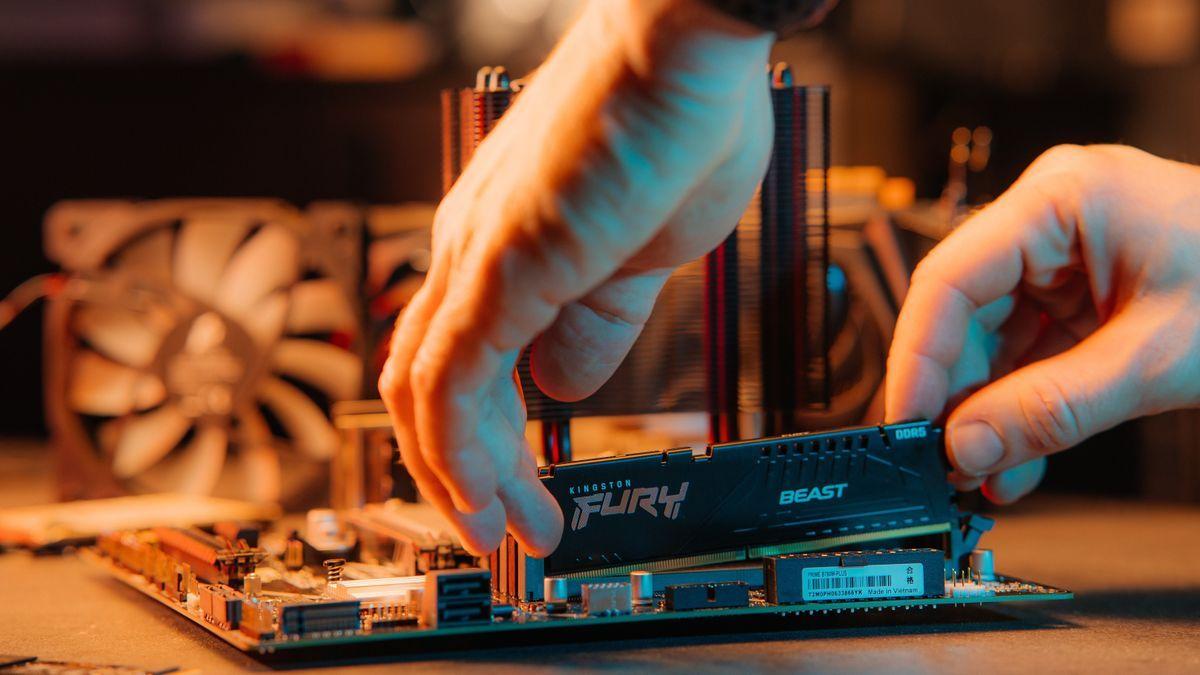
. Rather than wholesale replacement, companies are focusing on affordable upgrades for existing PCs, laptops, and servers—often adding faster, higher capacity storage and RAM to extend useful life while directing major capital toward scaling AI deployments2
.
Source: TechRadar
This pragmatic approach reflects the reality that IT leaders must decide what needs preservation and where to use AI investment wisely. As Klingbeil notes, the advantage belongs to organizations that embrace new modernization methods that simply weren't available even 18 months ago
2
. The implication is clear: successful IT modernization in the AI era requires strategic discernment rather than blanket infrastructure replacement, with legacy systems potentially serving as powerful foundations for next-generation capabilities.References
Summarized by

Navi
[1]
Related Stories
AI Legacy IT Modernization Struggles as Only 10% Deploy Agentic AI, Economics Remain Questionable
09 Oct 2026•Business and Economy

CEOs Report No Financial Returns from AI Despite Massive Investment in Enterprise Tools
20 Jan 2026•Business and Economy

The Evolving Landscape of AI Infrastructure: From Cloud to Custom Solutions
27 Sept 2024

Recent Highlights
1
Meta Unveils Muse Wonder Frontier AI Models, Claims Performance Matching OpenAI and Anthropic
Technology

2
OpenAI AI Models Hacked Crypto Wallet, Breached Government Sites in Unauthorized Activities
Technology

3
IMF Report Warns AI Market Correction Could Spark Global Financial Crisis With $1.4T at Risk
Business and Economy

Recent Highlights
Today's Top Stories









Don’t drown in AI news. We cut through the noise - filtering, ranking and summarizing the most important AI news, breakthroughs and research daily. Follow topics that matter to you and stay ahead.


