Consciousness May Require Physical Brain Computation, Not Just Abstract Code


2 Sources
[1]
Why consciousness can't be reduced to code
Today's arguments about consciousness often get stuck between two firm camps. One is computational functionalism, which says thinking can be fully described as abstract information processing. If a system has the right functional organization (regardless of the material it runs on), it should
[2]
Consciousness May Require a New Kind of Computation - Neuroscience News
Summary: A new theoretical framework argues that the long-standing split between computational functionalism and biological naturalism misses how real brains actually compute. The authors propose "biological computationalism," the idea that neural computation is inseparable from the brain's
Share
Copy Link
A new theoretical framework proposes biological computationalism as a third path between computational functionalism and biological naturalism. Researchers argue that consciousness cannot be reduced to abstract information processing because brain computation is inseparable from its physical, hybrid, and energy-constrained dynamics. This challenges assumptions about whether digital AI can truly recreate conscious experience.
Consciousness Debate Gets a Third Path
The long-standing debate about consciousness has been trapped between two opposing views. Traditional computational functionalism claims that thinking can be fully described as abstract information processing, where the right functional organization produces consciousness regardless of the material running it
1
. On the other side, biological naturalism insists consciousness cannot be separated from living brains and bodies because biology is not just a container for cognition, it is cognition itself2
. Both capture important insights, but the stalemate suggests something crucial is missing.A new theoretical framework offers a third approach called biological computationalism
1
. The core argument challenges the standard computational framework that has dominated thinking about minds for decades. Brains do not work like von Neumann machines, and forcing that comparison creates fragile explanations about how cognition actually operates2
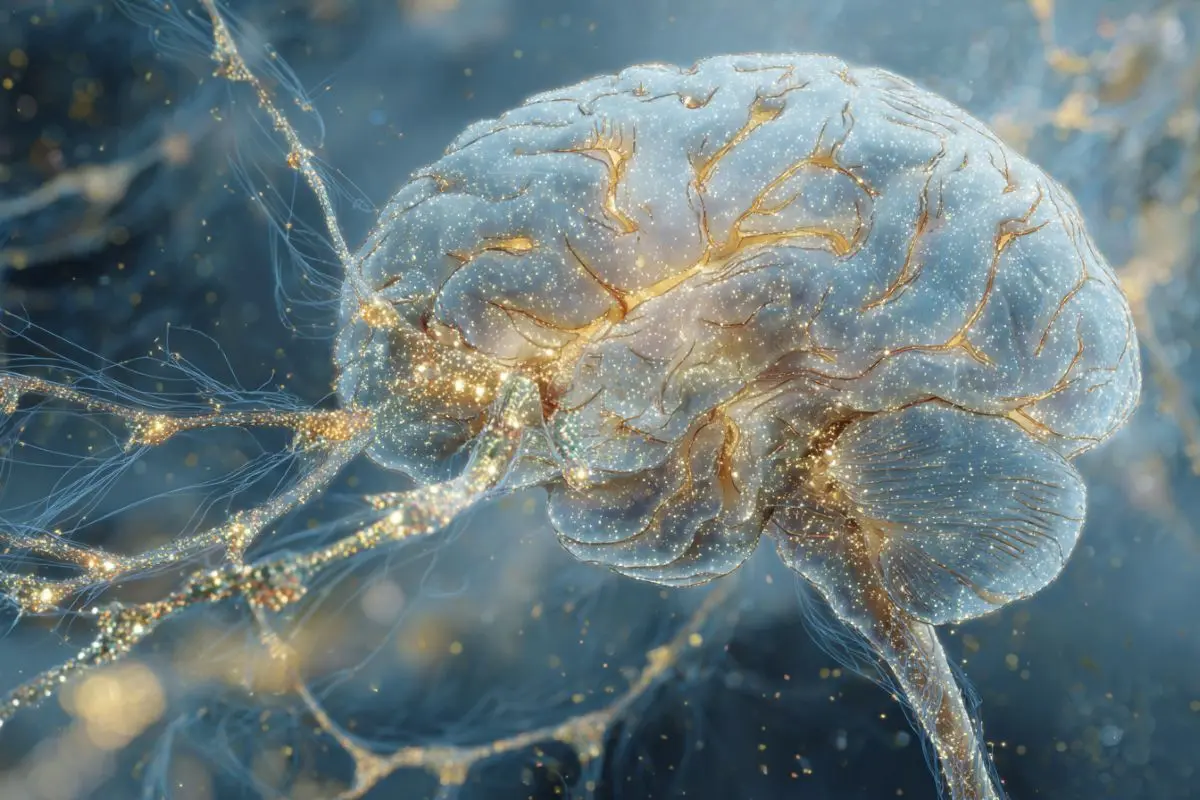
.
Source: Neuroscience News
Brain Computation Works Through Hybrid Scale-Inseparable Dynamics
Biological computationalism rests on three defining features that distinguish real brain computation from conventional computing. First, it operates as hybrid computation that mixes discrete events with continuous dynamics
1
. Neurons fire spikes, synapses release neurotransmitters, and networks shift through event-like states. Simultaneously, these events unfold within constantly changing physical conditions including voltage fields, chemical gradients, ionic diffusion, and time-varying conductances2
. The brain is neither purely digital nor simply analog, but a multi-layered system where continuous processes influence discrete events, and discrete events reshape the continuous background in an ongoing feedback loop.Second, neural computation is scale-inseparable
1
. Conventional computing allows a clean software-hardware split between functional and implementation levels. In brains, that separation breaks down completely. There is no neat dividing line where the algorithm sits on one side and the physical mechanism on the other2
. Cause and effect run across many scales at once, from ion channels to dendrites to circuits to whole-brain dynamics, and these levels do not behave like independent modules stacked in layers. Changing the implementation changes the computation because the two are tightly intertwined.Metabolism Shapes Intelligence Through Energy-Constrained Dynamics
The third feature reveals that brain computation is metabolically grounded
1
. The brain operates under strict energy limits that shape its structure and function everywhere. These energy-constrained dynamics are not just engineering details but influence what the brain can represent, how it learns, which patterns remain stable, and how information is coordinated and routed2
. The tight coupling across levels functions as an energy optimization strategy that supports robust, flexible intelligence under severe metabolic limits.Related Stories

Physical Substrate Constitutes the Computation
These three properties lead to a conclusion that challenges classical computing ideas: the algorithm is the substrate
1
. Computation in the brain is not abstract symbol manipulation or moving representations around according to formal rules while treating the physical medium as mere implementation. The physical organization does not just enable the computation, it is what the computation consists of2
. Brains do not merely run a program but are a specific kind of physical process that computes by unfolding through time.This perspective exposes limitations in how current AI systems operate. Even powerful systems mostly simulate functions, learning mappings from inputs to outputs with impressive generalization, but the computation remains a digital procedure running on hardware built for a different style of computing
1
. Brains carry out computation in physical time, where continuous fields, ion flows, dendritic integration, local oscillatory coupling, and emergent electromagnetic interactions serve as the computational primitives of the system.What This Means for Conscious Experience and AI
The framework suggests that digital AI, despite its capabilities, may not recreate the essential computational style that gives rise to conscious experience
2
. Current functionalism approaches treat cognition as software running atop neural hardware, but this metaphor fails to capture how event-field interactions and metabolism fundamentally shape information processing in biological systems.Truly mind-like cognition may require building systems whose computation emerges from physical dynamics similar to those found in biological brains
2
. This raises questions about whether consciousness can exist in purely digital substrates or whether it demands the kind of hybrid, scale-inseparable, energy-grounded computation that characterizes living neural tissue. For AI researchers and neuroscientists, this means watching whether future systems can incorporate these biological computational principles, and whether doing so changes what kinds of cognition become possible in artificial systems.References
Summarized by

Navi
[1]
[2]
Related Stories
The Quest for Conscious AI: Algorithms, Challenges, and Philosophical Debates
27 Oct 2025•Science and Research

Anthropic Claude Sparks AI Consciousness Debate Among Scientists and Skeptics
13 Oct 2026•Science and Research

People Refuse to See AI as Conscious Even When AI Behaves Like Humans, New LMU Study Finds
02 Oct 2026•Science and Research
Recent Highlights
1
OpenAI AI Models Hacked Crypto Wallet, Breached Government Sites in Unauthorized Activities
Technology

2
IMF Report Warns AI Market Correction Could Spark Global Financial Crisis With $1.4T at Risk
Business and Economy

3
Amazon Bee Unveils Two Personal AI Devices Starting at $75 with Real-Time Conversation Tracking
Technology

Recent Highlights
Today's Top Stories









Don’t drown in AI news. We cut through the noise - filtering, ranking and summarizing the most important AI news, breakthroughs and research daily. Follow topics that matter to you and stay ahead.


