Consumer goods giants use AI to slash product development time from years to months


2 Sources
[1]
From shampoo to cookies, consumer products get an AI makeover
VIENNA, July 6 (Reuters) - French cosmetics company L'Oreal (OREP.PA), opens new tab has used AI to identify molecules in its skincare products that can be repurposed for use in shampoo and can now create products four times faster than before, a senior executive told Reuters. Consumer companies,
[2]
Shampoo and cookies get an AI makeover as consumer giants rewire their labs
Procter & Gamble, Unilever and Mondelez are using AI to formulate products and steer campaigns, compressing timelines that once ran into years. The AI story has mostly been told through chips, data centres, and the companies building the models. It is now being told through the shampoo
Share
Copy Link
L'Oreal now creates products four times faster using AI to identify molecules for skincare and shampoo. Mondelez, Procter & Gamble, and Unilever are deploying artificial intelligence across labs to compress R&D cycles, generate recipes, and address supply chain vulnerabilities as they race to innovate faster.
AI in Consumer Goods Transforms How Products Reach Shelves
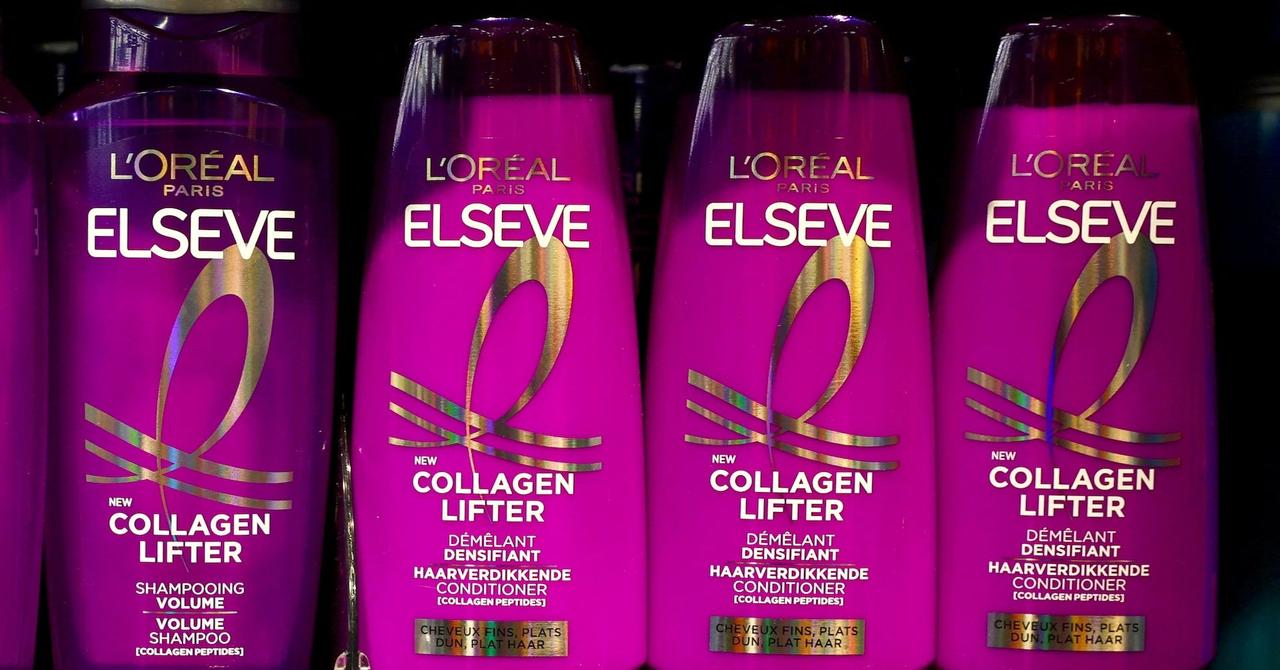
The world's largest consumer goods companies are deploying artificial intelligence to fundamentally reshape how they develop everyday products, from shampoo to cookies. French cosmetics giant L'Oreal now creates products four times faster than before by using AI to identify molecules in its skincare products that can be repurposed for use in shampoo, according to Fabrice Megarbane, president of its consumer products unit
1
. The company, which started using AI in its labs four years ago, has identified new molecules for beauty products by predicting the effect they will have on skin and hair. L'Oreal's recent innovation was repurposing molecules used in skincare products for a shampoo that uses collagen to add lift and fullness to hair1
.
Source: Reuters
Accelerating Innovation with AI Across Product Formulation
Consumer goods giants using AI are compressing product development timelines that once stretched for months or years into weeks. Mondelez, the maker of Cadbury and Toblerone, describes the technology as a game-changer that helps speed up processes and reimagine recipes
1
. Chief Information and Digital Officer Filippo Catalano told Reuters that AI in product formulation can create recipes, including out-of-the-box ideas, which human experts then assess. The company's AI tool helped develop Gluten Free Golden Oreo cookies and a refreshed recipe for Chips Ahoy cookies. In the biscuit category, 60% of recipes produced using its AI tool performed better in areas such as nutrition, sustainability and cost1
. Procter & Gamble used AI to screen tens of thousands of peptides when developing a formula for a Pantene product, drawing on an internal database of more than 8,500 formulations to predict how a mixture would feel on skin or hair before anyone mixed it2
. Mondelez says an AI makeover for consumer products has helped developers move between two and five times faster than conventional methods2
.Addressing Supply Chain Vulnerabilities and Shifting Consumer Tastes
The push to integrate AI-driven product development comes as consumer goods companies face pressure to innovate faster and cut costs amid shifting consumer tastes
1
. Companies including Nestle, Haleon, and Mondelez are using artificial intelligence in innovation to help them test ingredients faster, generate recipe ideas and address supply chain vulnerabilities1
. Catalano pointed to the possibility for reduced dependency on single sourcing in supply chains and the ability to adapt formulas to respond to changing consumer tastes. Mondelez's AI tool is reducing the number of samples typically generated through innovation1
. L'Oreal CEO Nicolas Hieronimus launched a beauty stimulus plan last year to spur innovation after the company posted its slowest group sales growth in years1
.Related Stories
From R&D Cycles to Marketing Campaigns
The same generative systems are being pointed at marketing campaigns, producing personalized images, text, and video at a pace traditional studios cannot match
2
. Unilever has leaned hardest into the campaign side, with its Dove brand running a cookie-scented body-care line in partnership with Crumbl, with AI involved across the effort from product direction to the selection of influencers and the creative itself. The company reported the campaign drew billions of impressions and brought a large share of new buyers to the brand2
. What ties these examples together is compression: in consumer goods, the traditional cost of experimentation is measured in months of lab work and test batches. AI attacks both by turning reformulation into a search problem over known ingredients2
. For shoppers, the visible result will be more variants, faster refreshes, and scents and textures that arrive and vanish more quickly than they used to. A bottle of shampoo is increasingly the output of a search2
.References
Summarized by

Navi
Related Stories
Mondelez International Harnesses AI for Snack Innovation: Oreos and Beyond
18 Dec 2024•Technology

AI Startup Ai Palette Disrupts Market Research Industry with Predictive Analytics
14 Nov 2024•Business and Economy

Mondelez Embraces AI: Revolutionizing Snack Marketing with $40 Million Investment
24 Oct 2025•Business and Economy

Recent Highlights



Recent Highlights
Today's Top Stories





Don’t drown in AI news. We cut through the noise - filtering, ranking and summarizing the most important AI news, breakthroughs and research daily. Follow topics that matter to you and stay ahead.


