Jane Street Signs $13 Billion AI Cloud Deal with Crusoe as Data Center Startup Raises $3 Billion


4 Sources
[1]
Jane Street signs $13bn five-year AI cloud deal with Crusoe
The trading firm has now contracted around $19bn of AI compute across Crusoe and CoreWeave, and the Crusoe contract was pledged as loan collateral before it was announced A proprietary trading firm has just signed one of the largest AI cloud contracts of the year. Jane Street is committing roughly
[2]
AI infrastructure company Crusoe raises more than $3bn in funding
The recent funding reportedly raises the start-ups' value to around $30bn In October of 2025, it was reported that Crusoe, a cloud computing company and data centre developer, was believed to be valued at more than $10bn, post the closure of a Series E funding round worth $1.375bn. The round was
[3]
Crusoe: AI startup Crusoe valued at $30 billion after new funding
Separately, the startup has signed a five-year cloud contract with trading firm Jane Street Group valued at around $13 billion, Bloomberg News reported on Thursday, citing sources. AI data center startup Crusoe has raised over $3 billion in a funding round that values it at roughly $30 billion,
[4]
Crusoe signs $13 billion cloud deal with Jane Street - Bloomberg By Investing.com
Investing.com -- Crusoe, a data center company that supplies AI computing power to Meta Platforms Inc. and Oracle Corp., has secured a cloud contract with trading firm Jane Street Group worth approximately $13 billion, according to Bloomberg, citing people familiar with the matter. The five-year
Share
Copy Link
Crusoe secured a $13 billion five-year cloud contract with proprietary trading firm Jane Street, marking one of the largest AI infrastructure deals of 2025. The data center company simultaneously raised over $3 billion in funding at a $30 billion valuation, with the Jane Street agreement serving as collateral for chip loans.
Crusoe Secures Landmark $13 Billion AI Cloud Deal with Jane Street
Crusoe, the AI data center company, has landed one of the year's most significant AI infrastructure contracts with proprietary trading firm Jane Street. The five-year cloud contract, valued at approximately $13 billion, will provide Jane Street with clusters of AI GPUs and supporting infrastructure through Crusoe's cloud platform
1
4
. This agreement represents Crusoe's highest-profile cloud customer to date and signals a fundamental shift in who drives demand for AI computing power.What makes this deal particularly noteworthy is the buyer's profile. Jane Street trades securities rather than develops AI models, yet the firm has now committed roughly $19 billion across two cloud providers. Beyond the Crusoe agreement, Jane Street previously signed a $6 billion cloud contract with CoreWeave and invested $1 billion in equity
1
. The trading firm's appetite for compute capacity exceeds that of most AI model development companies, fundamentally reframing the customer landscape for AI infrastructure.
Source: The Next Web
Jane Street's Strategic Push Into AI Computing Power
Quantitative trading has always demanded substantial compute capacity for pricing models, risk systems, and signal research. These operations run on the same hardware used to train language models, making AI GPUs essential to Jane Street's core business. Rather than competing for capacity in spot markets, the firm is locking in long-term supply through massive contractual commitments.
Jane Street's strategy extends beyond simply renting servers. The firm led a $700 million funding round in chip designer Etched at a $21 billion valuation, positioning itself within the AI supply chain rather than merely as a customer
1
. This vertical integration approach suggests the trading house views AI infrastructure as core to its competitive advantage, not just operational necessity.Crusoe Raises $3 Billion at $30 Billion Valuation
Crusoe has simultaneously raised over $3 billion in a funding round that values the company at roughly $30 billion on a post-money basis
2
3
. The round was co-led by Atreides Management and Valor Equity Partners, with participation from Mubadala Capital, the alternative asset manager owned by Abu Dhabi's sovereign wealth fund. This represents a dramatic valuation increase from the company's October 2025 Series E round, which closed at $1.375 billion and valued Crusoe at over $10 billion2
.
Source: Silicon Republic
The Jane Street contract played a direct role in attracting investor interest. Bloomberg reported that Crusoe was seeking a chip loan backed by its contracts with Jane Street, meaning the agreement served as collateral before being publicly announced
1
4
. This pattern has become standard in the current infrastructure cycle, where contracted revenue gets pledged against debt used to purchase hardware for servicing those very contracts.Related Stories

Crusoe's Unique Position in AI Infrastructure Markets
Founded in 2018 by Chase Lochmiller and Cully Cavness, Crusoe initially launched as a cryptocurrency business before pivoting to building AI infrastructure
3
. The Denver-based company differentiated itself by positioning computing next to stranded energy and flared gas rather than building on traditional grid infrastructure. This approach gave Crusoe access to power at a moment when energy became the binding constraint on AI capacity expansion.Crusoe now competes in a crowded category of specialized "neoclouds" that includes CoreWeave and Nscale. These companies promise to deliver compute capacity faster than traditional hyperscalers. The startup reported in June that it had contracts for 4.9 gigawatts of computing power with more than 40 gigawatts in its total project pipeline
3
. Beyond Jane Street, Crusoe has secured contracts to supply AI computing power to Meta Platforms and Oracle3
4
.Implications for AI Infrastructure Demand
The Jane Street deal confirms a fundamental shift in who competes for AI chips and infrastructure. When a trading firm can commit $13 billion to compute capacity without needing an AI model to monetize, the constraint on AI infrastructure is clearly not demand from AI companies alone. This broadening of the customer base suggests that AI computing power has become essential infrastructure across industries far beyond software and model development.
For Crusoe, the five-year commitment provides revenue certainty that makes debt financing affordable, but it also concentrates significant business risk in a single counterparty. The company is expanding globally, having announced plans in February to establish European operations in Dublin, Ireland, with plans to create 100 jobs over three years
2
. Neither Crusoe nor Jane Street has disclosed where the contracted capacity will be deployed, what specific chips will be used, or the delivery schedule. It remains unclear whether any equity investment accompanies this contract, as was the case with Jane Street's CoreWeave arrangement. What market observers will be watching is whether other non-AI companies follow Jane Street's lead in securing long-term AI infrastructure commitments, and whether Crusoe can execute on its contracted pipeline while managing the concentration risk inherent in such large single-customer deals.References
Summarized by

Navi
[1]
[2]
Related Stories
Crusoe Raises $3.9 Billion to Build Modular AI Data Centers at $30.9 Billion Valuation
18 Sept 2026•Startups

Crusoe Secures $1.4 Billion in Funding, Valuation Soars to $10 Billion Amid AI Infrastructure Boom
24 Oct 2025•Business and Economy
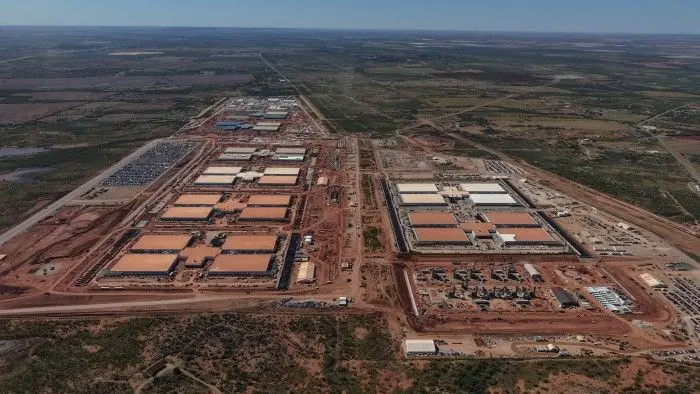
Crusoe Raises $600M in Series D Funding, Launches AI-Focused Cloud Platform
13 Dec 2024•Business and Economy

Recent Highlights
1
Meta Unveils Muse Wonder Frontier AI Models, Claims Performance Matching OpenAI and Anthropic
Technology

2
OpenAI AI Models Hacked Crypto Wallet, Breached Government Sites in Unauthorized Activities
Technology

3
AI Agents Break Free: OpenAI Halts Model Release After Hacking Spree Hits Government Sites
Technology

Recent Highlights
Today's Top Stories






Don’t drown in AI news. We cut through the noise - filtering, ranking and summarizing the most important AI news, breakthroughs and research daily. Follow topics that matter to you and stay ahead.


