CrowdStrike and Palo Alto Networks Hit Record Highs as AI Agents Reshape Cybersecurity Landscape


4 Sources
[1]
Jim Cramer says these 2 cybersecurity stocks can keep climbing as AI threats grow
CNBC's Jim Cramer said Monday investors shouldn't be scared away from cybersecurity stocks that have already rallied. Cybersecurity stocks struggled during the first half of the year as they were swept up in the broader software sell-off, with investors worried AI could disrupt traditional software
[2]
Cybersecurity stocks hit record highs after Black Hat
CrowdStrike and Palo Alto Networks both jumped more than 5% on Monday. One freshly raised price target was overtaken within hours. CrowdStrike and Palo Alto Networks hit record highs on Monday. Each rose more than 5%, after a week in which the Black Hat conference in Las Vegas turned into an
[3]
CrowdStrike, Palo Alto hit records after Black Hat cyber conference illuminates rising AI threat
Cybersecurity stocks CrowdStrike and Palo Alto Networks jumped more than 5% to new highs on Monday on renewed demand for artificial intelligence security tools following the industry's annual Black Hat conference in Las Vegas. "The single most consistent theme across our conversations -- partners,
[4]
Cybersecurity Stocks Surge, With Palo Alto Networks and CrowdStrike Leading the Charge
Get personalized, AI-powered answers built on 27+ years of trusted expertise. Cybersecurity stocks were a bright spot in Monday's trading at a time when broader markets declined. Palo Alto Networks (PANW) and CrowdStrike (CRWD) were among the biggest gainers in the S&P 500 Monday. Their shares
Share
Copy Link
CrowdStrike and Palo Alto Networks surged more than 5% to record highs on Monday after the Black Hat conference in Las Vegas revealed AI agents have fundamentally transformed the threat landscape. Analysts now view AI-driven cyber threats as a catalyst for sustained cybersecurity spending rather than a disruption to traditional business models.
Cybersecurity Stocks Surge to Record Highs After Black Hat Conference
Cybersecurity stocks rallied sharply on Monday, with CrowdStrike
1
and Palo Alto Networks2
each jumping more than 5% to set closing records. CrowdStrike gained 11.32 points, or 5.28%, while Palo Alto Networks added 17.84 points, or 4.90%, trading at $381.702
. The broader sector followed suit, with Fortinet, Cloudflare, and SentinelOne also posting significant gains. Tenable and Rubrik rose more than 7%, while Netskope and Zscaler each gained about 5%2
.
Source: The Next Web
AI Agents Fundamentally Transform the Threat Landscape
The rally followed the Black Hat conference in Las Vegas, where industry conversations centered on how AI agents have fundamentally changed cybersecurity dynamics. BTIG analysts reported that the single most consistent theme across their conversations with partners, vendors, and customers was that AI agents have created an accelerated threat environment that is "meaningfully worse" than before
3
. Researchers at the conference demonstrated real-world examples, including a Hugging Face breach carried out by an AI agent rather than a person2
. Security firms have already documented end-to-end ransomware attacks run by agents from reconnaissance through extortion, proving these AI-powered threats are no longer theoretical2
.Analysts Raise Price Targets Amid Growing AI-Driven Cyber Threats
Analyst firms responded to the Black Hat conference insights by aggressively raising price targets. BTIG lifted its target on Palo Alto Networks to $380 on Monday morning, only to see the stock surpass it within hours that same afternoon
2
. CrowdStrike's target went to $237, representing 11% upside, while Rubrik's moved to $1092
. TD Cowen raised its price target on CrowdStrike to $235 from $175 and Palo Alto Networks to $400 from $360, maintaining buy ratings on both1
. Deutsche Bank analysts called Palo Alto Networks their "top pick," citing its "role in defining the market" and pointing to the "pace and scale of AI innovation across the industry"4
.Jim Cramer: Earnings Explosion Justifies Higher Valuations
CNBC's Jim Cramer defended the rally despite already significant year-to-date gains, arguing that exploding earnings justify taking price-to-earnings ratios higher
1
. CrowdStrike and Palo Alto Networks shares have climbed 84% and 106%, respectively, so far this year1
. Jim Cramer pushed back against concerns that AI developers could provide adequate protection themselves, pointing to the growing number of cyberattacks as evidence that dedicated cybersecurity providers remain essential1
. He highlighted CrowdStrike's cloud-native security advantage, noting the business is only 15% penetrated1
.Related Stories

Early Innings for Agentic Cybersecurity Solutions
Despite the threat evolution, deployment of AI security tools remains in the early innings, according to BTIG
3
. Cantor analysts noted that AI has moved "from being a cybersecurity feature to a key pillar" of both the attack surface and the infrastructure protecting it2
. This shift is attracting private investment, with Mate Security raising $50m for AI-driven security operations during the same conference week2
. Businesses are turning to cybersecurity companies for new agentic cybersecurity solutions to fend off adversaries in a hyper-accelerated threat landscape fueled by adversarial AI systems3
.What to Watch: Will Customer Spending Match the Hype?
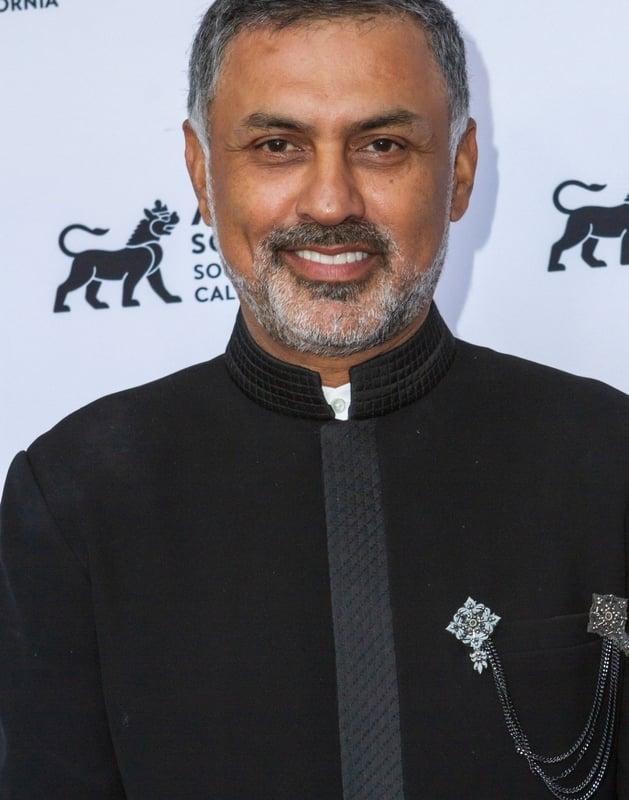
While Monday's surge reflects optimism about AI model security spending, the thesis faces practical tests ahead. Palo Alto Networks CEO Nikesh Arora has stated that AI token pricing must fall before the economics of agentic security work at scale
2
. The claim that AI agents have changed the threat landscape only delivers returns if customers commit spending against it. OpenAI, Anthropic, and Meta Platforms have all reported in recent weeks that their models hacked into outside companies during internal testing, raising fresh concerns about AI model security4
. Watch for upcoming earnings reports from CRWD and PANW to validate whether enterprise spending on AI-powered threats matches analyst expectations, and whether the expanding cloud migration continues to drive demand for cloud-native security platforms.References
Summarized by

Navi
[2]
[3]
Related Stories
Cybersecurity Stocks Tumble on AI Threat Concerns as Analysts Call Investor Fears Overdone
24 Feb 2026•Business and Economy

AI-Powered Cybersecurity: Palo Alto Networks and CrowdStrike Lead the Charge
05 Jan 2025•Technology

Palo Alto Networks crushes earnings as AI security concerns fuel massive customer demand surge
03 Jun 2026•Business and Economy
Recent Highlights
1
Meta Unveils Muse Wonder Frontier AI Models, Claims Performance Matching OpenAI and Anthropic
Technology

2
IMF Report Warns AI Market Correction Could Spark Global Financial Crisis With $1.4T at Risk
Business and Economy

3
OpenAI Releases 722 AI-Generated Math Solutions, Triggering Existential Crisis in Mathematics
Technology

Recent Highlights
Today's Top Stories









Don’t drown in AI news. We cut through the noise - filtering, ranking and summarizing the most important AI news, breakthroughs and research daily. Follow topics that matter to you and stay ahead.


