Deepgram Acquires Daily to Strengthen Voice AI Infrastructure with Open-Source Pipecat Framework


2 Sources
[1]
Deepgram acquires Pipecat-maker Daily to bolster its voice AI infrastructure
The voice AI sector is hot, and top players are trying to consolidate their position as more business models come to the fore through partnerships and acquisitions. Deepgram is the latest to make such moves: The company said on Thursday that it is acquiring Daily, the maker and maintainer of one of
[2]
'Keeping Pipecat open was fundamental': Deepgram Daily acquisition
The price of the Deepgram Daily acquisition was not disclosed. Deepgram is also launching an open standard that lets voice agents pick up tone, whispers and who is speaking. Voice AI company Deepgram is buying Daily, the maker of Pipecat, an open-source framework for building voice agents. Pipecat
Share
Copy Link
Deepgram announced its acquisition of Daily, the company behind Pipecat, one of the most popular open-source frameworks for building voice agents. The deal keeps Pipecat open-source under its BSD V2 license and establishes an independent Pipecat Foundation. Deepgram also launched the Real-Time Context Standard (RCS), an open protocol that captures tone, whispers, and speaker identity in voice AI systems.
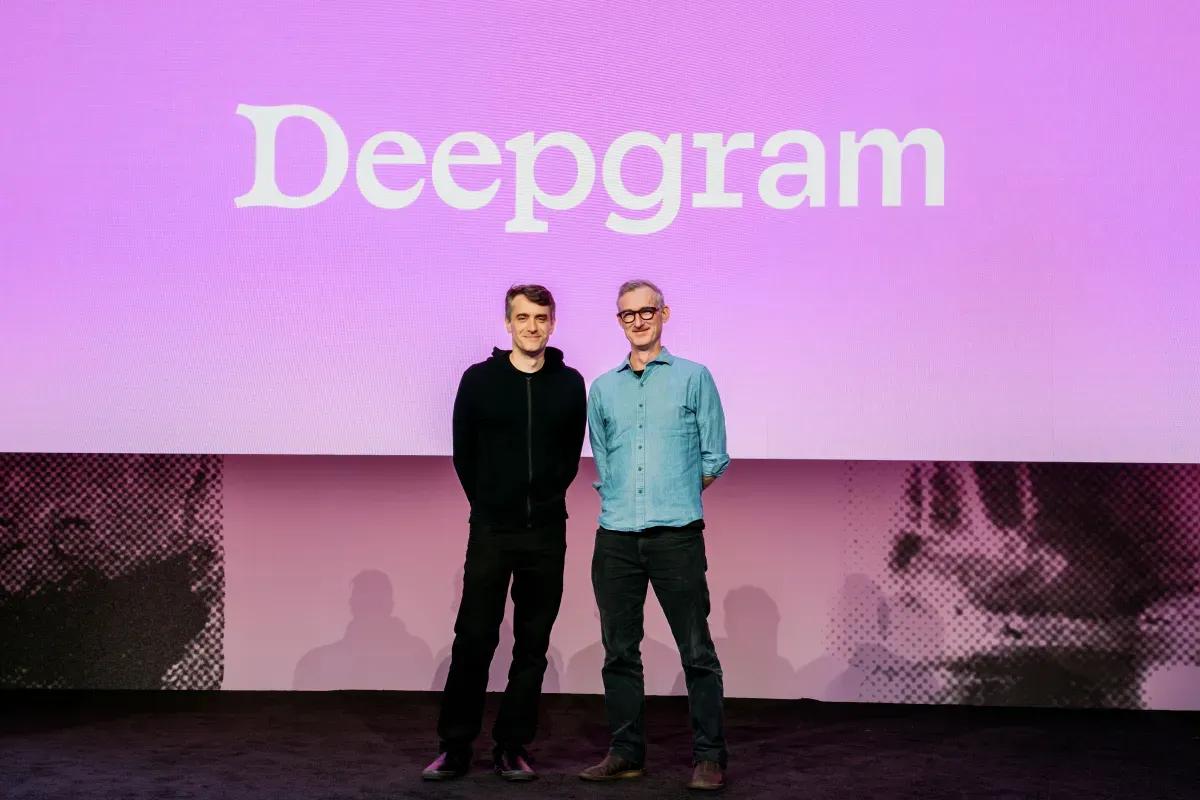
Deepgram Acquires Daily to Expand Voice AI Capabilities
Deepgram announced on Thursday that it is acquiring Daily, the maker and maintainer of Pipecat, one of the most popular open-source frameworks for building voice agents
1
2
. The announcement came during Deepgram Speak, the company's first conference in San Francisco2
. While the companies did not disclose the deal amount, they confirmed that Pipecat will remain open-source under its existing BSD V2 license1
2
. This acquisition marks another significant consolidation move in the rapidly growing voice AI sector, where companies are seeking to strengthen their positions through strategic partnerships and acquisitions.Understanding Pipecat's Role in Voice AI Infrastructure
Pipecat is an open-source framework that manages voice and video streams while orchestrating multiple components in the pipeline, including speech-to-text (STT), large language models, and text-to-speech (TTS) models
1
. The framework focuses on reducing latency, a critical factor in real-time voice and video infrastructure1
. Built by 18 engineers, Pipecat has grown to include more than 200 integrations and nearly 400 contributors2
. Daily, the company behind Pipecat, provides hosted infrastructure for voice and video calls of any kind and operates a network of 75 points of presence2
. Daily has raised over $62 million in funding from investors such as Tiger Global, Highfield Capital, Nat Friedman, Lachy Groom, and Kevin Weil1
.Commitment to Open Source Drives Deal Structure
Kwindla Hultman Kramer, Daily's co-founder who becomes Deepgram's head of open source, explained that keeping Pipecat open-source was fundamental to the decision to join Deepgram
2
. "Scott was super committed to Pipecat being open source and vendor-neutral forever. I think there is both a personal commitment and commercial driver there," Kramer told TechCrunch1
. The companies are establishing an independent Pipecat Foundation managed by a steering committee that will include companies competing with Deepgram2
. Deepgram CEO Scott Stephenson emphasized that the company wants developers to use the best models for their use cases, even if they come from competitors1
. "We want to open up the ecosystem so everybody can build voice agents," Stephenson said1
.Related Stories

Real-Time Context Standard Addresses Critical Gap
Deepgram is launching the Real-Time Context Standard (RCS), an open protocol co-developed with the Pipecat team
1
2
. The protocol addresses a significant limitation in current voice AI systems, which only pass words between models while losing crucial audio context such as tone, speaker identity, and background noise2
. RCS adds three types of metadata: signals from the audio like whispers or unclear words, instructions for how large language models should interpret these signals, and guidance on how responses should sound1
2
. This enables voice agents to ask for clarification when they don't hear clearly or respond quietly when someone whispers2
.Strategic Implications for AI-Native Software Development
The acquisition positions Deepgram to explore areas beyond voice through Pipecat, as the framework supports real-time communication across different formats
1
. "We never thought about Pipecat as a voice toolkit. We thought about it as the toolkit we needed to build this new kind of AI-native software," Kramer explained1
. Deepgram reached unicorn status with a $130 million Series C round in January1
2
. Both companies were in the same Y Combinator batch in 2016, and Deepgram has powered transcription inside Daily's products since 20192
. Chief product officer Ed Anuff is set to preview the Deepgram Voice Agent Platform, built on Deepgram's models and Pipecat, along with two new models for live conversation2
. The deal reflects broader investment trends in voice AI, with model makers like ElevenLabs, Gradium, and Fish Audio raising millions, while infrastructure companies like LiveKit and Vapi have secured multi-million-dollar funding rounds this year1
.References
Summarized by

Navi
Related Stories
Deepgram raises $130 million at $1.3 billion valuation, acquires YC-backed startup for voice AI
13 Jan 2026•Startups

Gradium Emerges from Stealth with $70M to Revolutionize Voice AI with Ultra-Low Latency Models
02 Dec 2025•Startups

OpenAI acquires Weights.gg, a voice AI startup known for hyper-realistic celebrity voice cloning
17 May 2026•Technology

Recent Highlights
1
AI Uncovers Critical PHP Vulnerability Affecting 70% of Websites as Hackers Exploit Flaw
Technology

2
OpenAI's AI Models Disprove 27-Year Exponential Time Hypothesis, Rendering Decades of Research Obsolete
Science and Research
3
Google DeepMind unveils Genie 4 world model with audio and 2-minute interactive simulations
Technology

Recent Highlights
Today's Top Stories








Don’t drown in AI news. We cut through the noise - filtering, ranking and summarizing the most important AI news, breakthroughs and research daily. Follow topics that matter to you and stay ahead.


