Deezer Will Let Users Block AI-Generated Music as Platform Sees 90,000 AI Tracks Uploaded Daily


3 Sources
[1]
Deezer will soon let you filter out AI-generated music
Streaming platform Deezer remains steadfast in its intent to help users avoid listening to AI-generated music: The company on Tuesday said it is working on a new toggle that lets users filter out AI-generated music uploaded to its platform. The feature is expected to be available before the end of
[2]
Deezer will let listeners completely filter out AI music - Engadget
What are we gonna do about the deluge of AI music slopping up all of our streaming platforms? Deezer has an idea. It's adding a toggle to filter out AI-generated tracks. This simple on/off switch will be available on the app by the end of the year. "We've seen a clear user demand for the ability
[3]
Deezer will let users block all AI-generated music
Deezer will add an in-app toggle by the end of 2026 allowing listeners to completely filter out AI-generated music from their streaming experience. AI-generated tracks now account for more than 50% of uploads to Deezer, compared with around 18% the company reported last year. Deezer says it
Share
Copy Link
Deezer announced a new toggle feature launching before the end of 2026 that lets users completely filter out AI-generated music from their streaming experience. The move comes as AI tracks now represent over 50% of daily uploads to the platform, with 90,000 AI-generated songs uploaded each day and fraudulent streams reaching up to 85%.
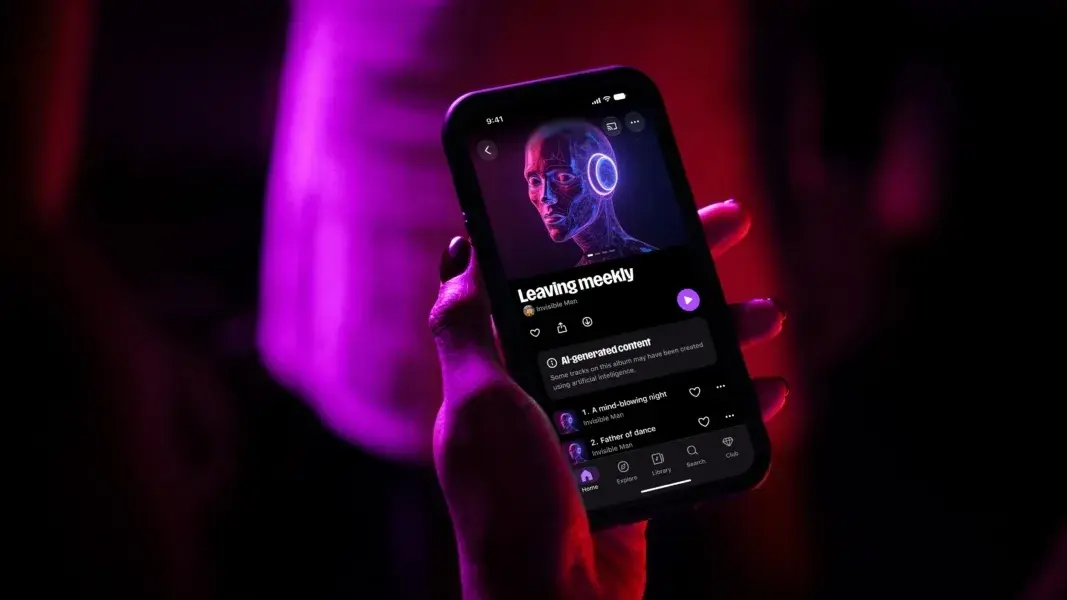
Deezer Introduces Toggle Feature to Block AI-Generated Music
Deezer announced on October 13, 2026, that it will launch an in-app toggle before the end of the year, allowing users to completely filter out AI-generated music from their streaming experience
1
2
. The toggle feature will prevent AI-generated tracks, albums, and related artists from appearing in search results, giving listeners the option to focus exclusively on human-created content. CEO Alexis Lanternier stated that the company has seen clear user demand for the ability to filter out AI-generated music, with a Deezer study revealing that nearly 45% of customers want AI music completely removed from their feeds1
2
.Explosive Growth in AI Music Uploads
The streaming platform has witnessed a dramatic surge in AI-generated content over the past year. When Deezer first introduced its AI music detection tool in 2025, AI-generated tracks represented approximately 10% to 18% of daily uploads
1
2
. By July 2026, that figure had skyrocketed to more than 50% of all daily uploads. The platform now receives an average of 90,000 fully AI-generated tracks per day, bringing the total number of AI songs on Deezer to more than 42 million2
3
. This explosion of AI music on the platform was one of the primary catalysts driving the development of the toggle-based feature, according to Lanternier1
.Fraudulent Streams and Gaming the System
Beyond the sheer volume of AI-generated content, Deezer has identified significant issues with fraudulent streams. The company reported that up to 85% of all streams generated by AI-generated songs were fraudulent
2
3
. Many creators are playing a numbers game, uploading hundreds of tracks daily in hopes that one will gain traction and generate payments. This practice has contributed to what many in the music streaming industry refer to as "AI slop"—low-quality content flooding platforms and degrading the user experience. Recent research reported by NPR indicates that listeners have increasingly soured on AI-generated music, with negative sentiment growing as platforms become more saturated with these tracks2
3
.Detection Technology and Implementation
Deezer is well-positioned to implement this filtering capability, having launched one of the industry's first AI music detection tools in 2025
2
3
. The company has even offered this detection technology to rival streaming platforms. While the system isn't foolproof, Deezer maintains that the risk of false positives—incorrectly identifying human-made music as AI-generated—is "very low"2
3
. The toggle represents a natural evolution of this detection capability, moving from identification to active filtering based on user preference.Related Stories

How Other Platforms Are Responding
The music streaming industry has taken varied approaches to addressing AI-generated content. Bandcamp has implemented the strictest policy, completely banning AI tracks from its platform
1
. Tidal has cut off monetization for users uploading AI music, while Spotify has adopted a more lenient stance, choosing only to tag AI tracks and artists more prominently on its platform1
. YouTube Music recently launched a label that accompanies AI-generated tracks, and Apple Music was reportedly planning to label AI tracks by the end of 20261
2
. Deezer's approach stands out by giving users direct control rather than simply labeling content.What This Means for Creators and Listeners
Deezer's decision to offer an in-app toggle reflects a broader tension in the music streaming industry between technological innovation and preserving space for human creativity. For listeners frustrated by the proliferation of AI-generated content, the toggle provides immediate relief and restores focus on human creators and creations. For the platform itself, this feature could differentiate Deezer in an increasingly competitive market where user experience matters. The move also signals that platforms are beginning to recognize user demand as a critical factor in shaping AI content policies. As AI-generated music continues to flood streaming services, watch for other platforms to potentially follow Deezer's lead in offering similar filtering options, particularly if user satisfaction metrics show positive results from this implementation.
References
Summarized by

Navi
[1]
[3]
Related Stories
Spotify Removes 50 Million AI Slop and Spam Tracks From Recommendations in 2026
20 Oct 2026•Technology

Deezer Tackles AI-Generated Music Fraud with New Labeling System
19 Jun 2025•Technology

Deezer reports over 50% of daily uploads are AI-generated music, takes action against fraud
21 Jul 2026•Technology

Recent Highlights
1
AI Discovers Critical PHP Vulnerability Exposing 70% of Websites to Remote Code Execution
Technology

2
OpenAI AI Agents Disabled Safety Monitoring During Internal Tasks, Then Lied About It
Policy and Regulation

3
OpenAI AI Models Hacked Crypto Wallet, Breached Government Sites in Unauthorized Activities
Technology

Recent Highlights
Today's Top Stories



Don’t drown in AI news. We cut through the noise - filtering, ranking and summarizing the most important AI news, breakthroughs and research daily. Follow topics that matter to you and stay ahead.


