Dell and AMD expand on-premises AI platform with next-generation MI350P GPU support


2 Sources
[1]
Dell and AMD Expand On Premises AI Platform with Next Generation MI350P GPU Support
Complementing this, Dell is expanding the Dell AI Platform with AMD to help organizations seamlessly scale AI workloads from pilot to production. Dell PowerEdge XE7745 and R7725 servers will support AMD Instinct MI350P PCIe GPUs, providing enterprises with a high-performance, cost-effective
[2]
Dell and AMD Are Expanding What's Possible for On-Premises AI
Dell PowerEdge servers with AMD Instinct MI350P PCIe GPUs make it easier than ever to scale generative and agentic AI -- right inside your existing data center infrastructure. AI for enterprise is no longer an option, but an imperative. The right on-premises solutions offer a competitive
Share
Copy Link
Dell and AMD are expanding their collaboration to deliver enterprise-grade on-premises AI infrastructure. Starting July 2026, Dell PowerEdge XE7745 and R7725 servers will support AMD Instinct MI350P PCIe GPUs, enabling organizations to scale generative and agentic AI workloads within existing data center infrastructure without costly redesigns.
Dell and AMD Strengthen On-Premises AI Infrastructure
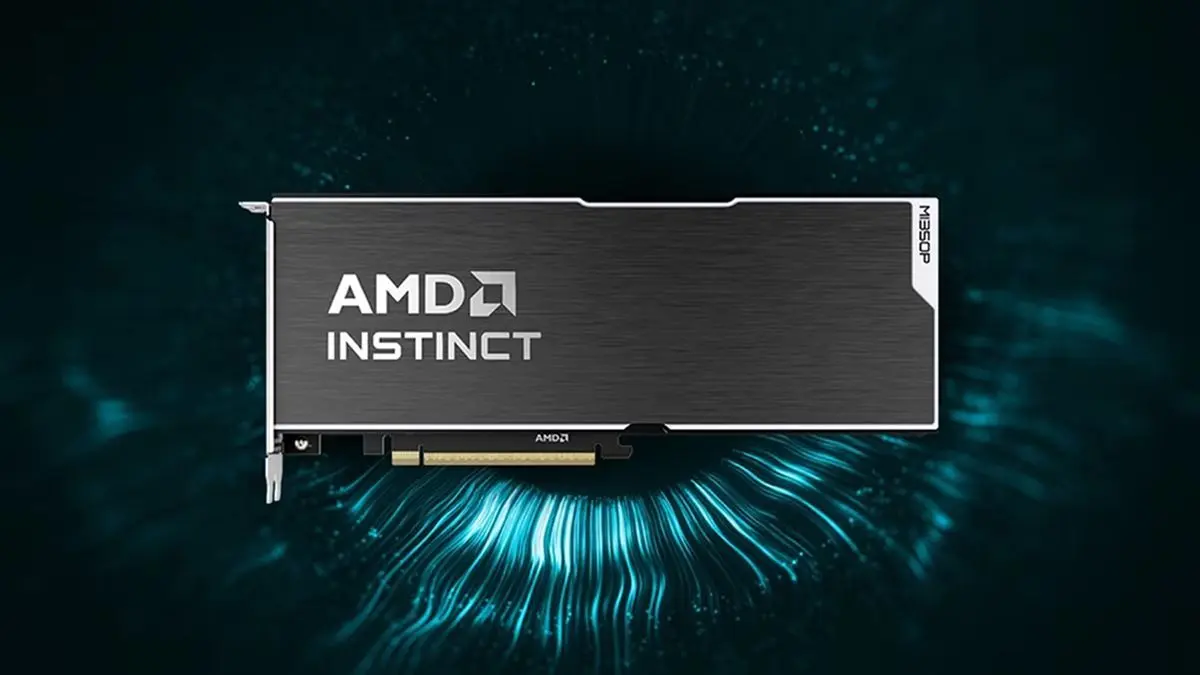
Dell and AMD are expanding their partnership to deliver a robust on-premises AI platform designed for enterprises ready to move beyond experimentation. Starting in July 2026, Dell PowerEdge servers will support the next-generation MI350P GPU, specifically the AMD Instinct GPU MI350P PCIe variant, enabling organizations to deploy scalable AI workloads without overhauling their data center infrastructure
1
2
.
Source: DT
The Dell PowerEdge XE7745 and PowerEdge R7725 servers will integrate AMD Instinct MI350P PCIe GPUs, providing enterprises with a high-performance, cost-effective solution for generative and agentic AI workloads. This drop-in deployment approach uses standard air-cooled servers, eliminating the need for expensive data center redesigns while maintaining control, security, and flexibility that on-premises solutions demand
2
.Performance Specifications Drive Enterprise Adoption
The AMD Instinct MI350P delivers up to 4,600 peak teraflops (MXFP4) and features 144GB HBM3e memory, marking the highest capacity currently available in a PCIe card accelerator
2
. These specifications position the platform to handle small, medium, and large model inference, RAG pipelines, and agentic AI workflows efficiently within existing environments.Venkat Sitaram, Senior Director and Country Head of Infrastructure Solutions Group, India at Dell Technologies, emphasized the shift from experimentation to deployment: "As organizations move from AI experimentation to enterprise-scale deployment, they need infrastructure that combines performance, scalability and simplicity. Dell Technologies and AMD are helping customers accelerate this journey by enabling generative and agentic AI workloads to run efficiently within existing data center environments"
1
.Modular Architecture Supports Full AI Lifecycle
The expanded Dell AI Platform with AMD features a modular architecture built to scale with enterprise needs. Organizations can begin with configurations matching current workloads and expand compute and GPU density over time without rearchitecting their systems
1
. This flexibility addresses a critical pain point for enterprises hesitant to commit to infrastructure that may quickly become obsolete.The platform leverages AMD Enterprise AI Suite, ROCm, and AMD Inference Server to support AI training, fine-tuning, inference, and agentic workflows within a validated, secure, on-premises environment
2
. The open software stack integrates with PyTorch, TensorFlow, vLLM, and other frameworks without licensing fees or extensive code rewrites, reducing barriers to enterprise AI operationalization2
.Related Stories
Advanced Options for Demanding Workloads
For organizations tackling foundation model development and large-scale inference, Dell also supports PowerEdge XE9785 servers equipped with MI355X GPUs and EPYC CPUs
1
. This configuration targets the most demanding computational requirements, positioning Dell and AMD to compete across the full spectrum of enterprise AI needs.The collaboration signals a strategic move to capture enterprises prioritizing data sovereignty and security over cloud-based alternatives. As AI workloads mature from pilots to production, the ability to deploy within existing data center infrastructure without compromising performance or control becomes increasingly valuable. Organizations should watch how this on-premises AI platform performs against cloud alternatives in real-world deployments, particularly regarding total cost of ownership and operational complexity as AI implementations scale.
References
Summarized by

Navi
Related Stories
Dell Unveils Comprehensive AI Infrastructure Solutions at Dell Technologies World 2025
20 May 2025•Technology

AMD launches Instinct MI350P PCIe AI accelerator with 144GB HBM3E to challenge Nvidia's dominance
07 May 2026•Technology
Dell Unveils AI Factory: Revolutionizing Data Centers with Advanced Cooling and High-Density Compute Solutions
16 Oct 2024•Technology

Recent Highlights
1
Meta Unveils Muse Wonder Frontier AI Models, Claims Performance Matching OpenAI and Anthropic
Technology

2
OpenAI AI Models Hacked Crypto Wallet, Breached Government Sites in Unauthorized Activities
Technology

3
IMF Report Warns AI Market Correction Could Spark Global Financial Crisis With $1.4T at Risk
Business and Economy

Recent Highlights
Today's Top Stories







Don’t drown in AI news. We cut through the noise - filtering, ranking and summarizing the most important AI news, breakthroughs and research daily. Follow topics that matter to you and stay ahead.


