Bengaluru Startup Dognosis Pairs Cancer-Sniffing Dogs with AI to Detect 20+ Cancer Types


3 Sources
[1]
This Bengaluru startup is training dogs and AI to sniff out cancer early
Dognosis pairs trained sniffer dogs with artificial intelligence to flag cancer from a breath sample. It is a charming idea aimed at a real problem, with equally real caveats: this is prescreening in trials, not a proven diagnostic. A dog's nose has long outclassed most laboratory kit, and a
[2]
AI's new cancer-screening partner has four legs and a very good nose
A 10-minute breath sample could give cancer-sniffing dogs something important to say AI apparently doesn't need to replace every biological system. Dogs are still keeping their jobs, at least for now. An Indian startup from Bengaluru, Karnataka, is training dogs with sensors and machine learning.
[3]
Dognosis: Bengaluru-based startup leans on Cancer-Sniffing dogs and AI for early detection
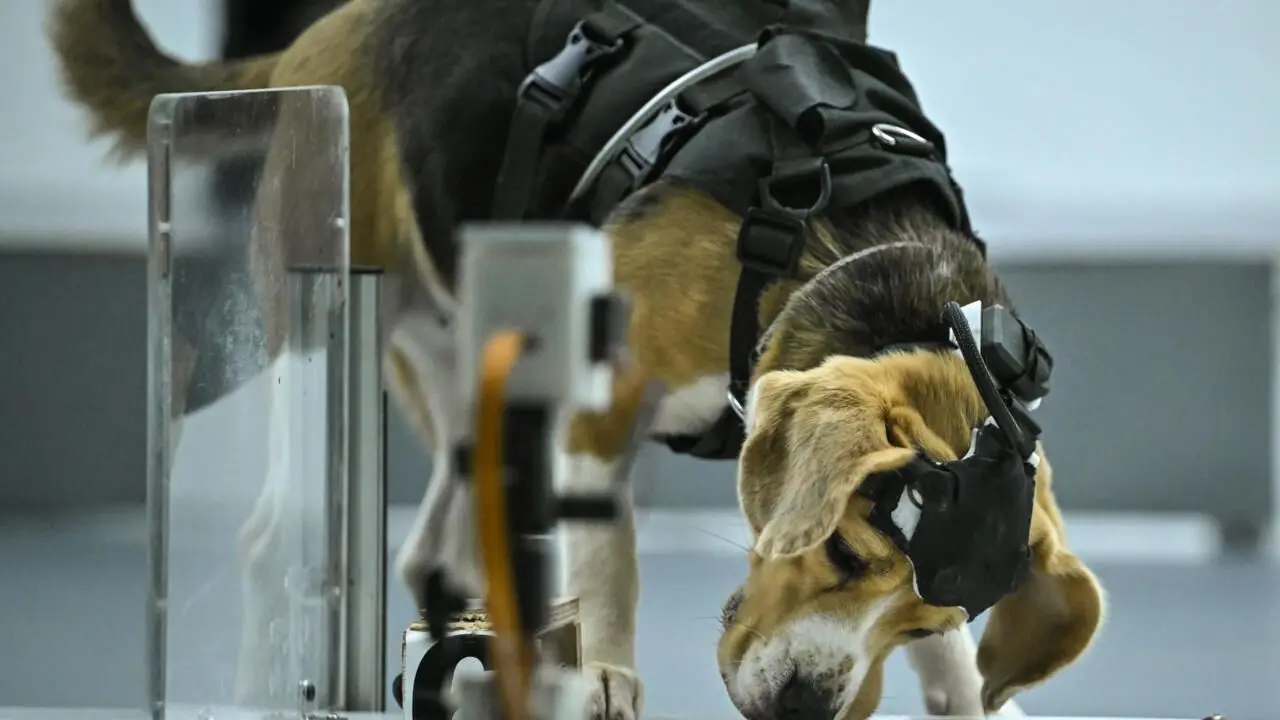
Billy, Jessie and Banu are part of a team of beagles, labradors, Dutch shepherds and other dog breeds being trained by startup Dognosis to sniff out traces of cancer in human breath. On a two-acre farm outside Bengaluru in southern India, Billy, Jessie and Banu put on their gear, enter a
Share
Copy Link
Bengaluru-based Dognosis is training beagles, labradors and Dutch shepherds to detect cancer from breath samples, pairing canine olfaction with AI sensors. Phase 2 trials show roughly 90% sensitivity for early-stage cancers across seven cancer groups. The startup plans to launch an at-home, multi-cancer prescreening test in India next year.
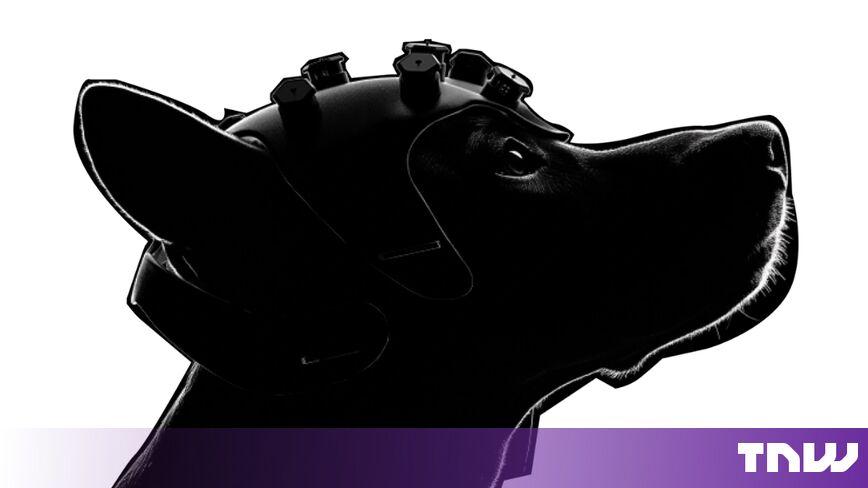
Cancer-Sniffing Dogs Meet AI in Bengaluru Lab
Dognosis, a two-year-old Bengaluru startup, is training beagles, labradors, Dutch shepherds and other breeds to detect cancer from human breath samples
1
3
. Patients breathe normally into a face mask for about 10 minutes, ship the sealed sample to the company's two-acre farm outside Bengaluru, and let the dogs get to work2
3
. The dogs are trained to identify changes in volatile organic compounds associated with cancer, while sensors track their movements, respiration, brain activity and body language2
. Dognosis AI then translates these signals into standardized data, removing the need for human handlers to interpret each animal's behavior1
. There is no imaging, blood draw or biopsy involved in this non-invasive cancer screening tool1
.Early Cancer Detection Shows 90% Sensitivity Across 20+ Cancer Types
Founded by Akash Kulgod, Dognosis targets more than 20 cancer types across seven groups, including breast, oral cavity, lung and cervical cancers
1
2
. In Phase 2 trials published in the Journal of Clinical Oncology, the company reports roughly 90% sensitivity for early-stage cancers1
. The Phase 2 study included 1,502 participants, with 283 people having biopsy-confirmed cancer2
. Seven trained dogs helped identify more than 90% of cancers and more than 91% of non-cancer samples, with similar performance reported for early-stage disease2
. Dogs trained on 10 cancer types went on to identify an 11th they had never been shown, suggesting the animals can expand their detection abilities through canine olfaction1
3
.Tackling India's Cancer Screening Gap
The pitch makes sense against India's grim cancer arithmetic. The country logged about 1.5 million new cases and more than 900,000 deaths in 2024, one of the world's heaviest caseloads
1
3
. Roughly one in 10 Indians are at risk of developing the disease before age 75, with breast cancer being the most commonly diagnosed type, followed by cancers of the lip and oral cavity, lung and cervix3
. Yet screening rates remain strikingly low. Roughly 1.9% of women are screened for cervical cancer, and fewer than 1% for breast or oral cancers1
. Among men, just 1.2% reported having undergone oral cancer screening3
. Much of that gap stems from cost, distance and the discomfort of invasive tests, creating a market for AI-assisted cancer-screening that could reach people the formal system never touches1
.$1.5M Pre-Seed Funding and Ambitious Roadmap
Dognosis raised $1.5 million via a pre-seed round in 2024, with Accel India and Caffeinated Capital among its backers
1
3
. The company has since closed a further, undisclosed round, providing enough runway for the next two years if it sticks to its planned growth trajectory1
3
. Kulgod plans to launch an at-home, multi-cancer prescreening test in India next year, priced at a few thousand rupees1
3
. A Phase 3 trial began in April across 10 hospitals, aiming to enrol about 10,000 participants over 12 months1
2
3
. The study will test asymptomatic people at higher risk of cancer and survivors at risk of recurrence, with those flagged receiving conventional follow-up including imaging and biopsy3
.Scaling to One Million Tests Annually
The company is targeting one million tests a year with a one-week turnaround, run by around 30 dogs
1
3
. Dognosis eventually wants around 30 dogs to support as many as one million tests annually2
. A US facility is pencilled in for late 2027 or early 2028, as the company eyes the US market1
3
. Getting there will mean showing that accuracy holds across larger, more varied populations, while building the logistics to move and process huge numbers of breath samples3
. The dogs live together at Dognosis's farm and laboratory, are given walks and playtime, and spend 30 minutes to an hour a day on the detection platform, where the work is designed as a game with treats as rewards3
.Related Stories

Regulatory Pathway and Key Caveats
There is a regulatory wrinkle worth flagging. Kulgod notes that Dognosis needs no Indian regulatory approval, because a prescreening tool is not classed as a diagnostic device
1
. That lowers the barrier to launch, but it also means the technology could reach patients without clearing the bar a formal diagnostic tool would have to1
. This is a prescreening tool designed to flag who should seek further tests, not a replacement for diagnosis, and the trials remain early1
2
. A positive result is a prompt to see a doctor, not a verdict, and the distinction is one the company will need to communicate carefully1
. Pankaj Chaturvedi, deputy director of the Centre for Cancer Epidemiology at Tata Memorial Centre in Mumbai, said emerging technologies "offer exciting opportunities, but they should strengthen -- not replace -- existing screening programs"3
.Dogs Training Their Own Replacements
There is a certain irony in the endgame, since Dognosis eventually wants to replace the dogs with sensors, distilling canine olfaction into hardware through machine learning
1
2
. The company wants to learn enough from the dogs to reproduce those abilities using sensors, potentially removing dogs from the process entirely2
. For now, their noses provide the biological sensing hardware while AI tackles consistency and scalability2
. Whether or not that works, the underlying idea is a serious one: using the dog's nose as a biosensor standardised by AI, and aiming it squarely at a screening gap conventional medicine has struggled to close1
. If the results from the at-home test hold, breathing into a mask and letting an AI-assisted dog sniff it could become considerably less strange than it sounds2
.References
Summarized by

Navi
[2]
Related Stories
Indian Startup Dognosis Uses AI to Train Dogs for Cancer Detection with 90% Accuracy
07 Sept 2026•Health
ChatGPT didn't cure dog cancer, but AI tools helped researchers develop personalized treatment
15 Mar 2026•Health

AI Algorithm Accurately Detects Heart Murmurs in Dogs, Promising Early Disease Detection
29 Oct 2024•Health

Recent Highlights
1
Microsoft and Nvidia Launch Surface Laptop Ultra: A $2,599 AI-Ready PC With RTX Spark Chip
Technology

2
Trump Consulted Grok AI Before Ordering Venezuela Invasion and Capture of Nicolás Maduro
Policy and Regulation

3
Scientists Build AI Model That Reconstructs Images From Brain Scans in Record Time
Science and Research

Recent Highlights
Today's Top Stories






Don’t drown in AI news. We cut through the noise - filtering, ranking and summarizing the most important AI news, breakthroughs and research daily. Follow topics that matter to you and stay ahead.


