Dreams of Violets brings AI-generated film to Tribeca, sparking debate on future of film-making


4 Sources
[1]
AI-Generated Film About Iranian Protest Violence Heads to Tribeca Film Festival
Aaron covers what's exciting and new in the world of home entertainment and streaming TV. Previously, he wrote about entertainment for places like Rotten Tomatoes, Inverse, TheWrap and The Hollywood Reporter. Aaron is also an actor and stay-at-home dad, which means coffee is his friend. Lights,
[2]
'The CGI would have cost millions. I spent $2,000.' Is Dreams of Violets AI slop - or the future of film-making?
It should have taken years, but Ash Koosha made a drama about Iran's anti-government protests in weeks - and now it's the first AI-made movie to screen at a major film festival. It could transform indie film-making, claims the director Next week a breakthrough 75-minute drama about the brutal
[3]
An All AI-Generated Film Is Coming to Tribeca and It's Sure to Raise Eyebrows
Hear Rivers Cuomo Cover Outkast, Dolly Parton, Whitney Houston, and Nirvana The prospect of an entirely AI-generated film opening at the Tribeca film fest is sure to raise eyebrows, but Dreams of Violets may become a bigger talking point than just the ethics of AI. The movie, which will premiere
[4]
Tribeca to Premiere Fully AI-Generated Iranian Resistance Movie 'Dreams of Violets'
The fully AI-generated feature film Dreams of Violets from directors and producers Ash and Pooya Koosha has been officially programmed into the Tribeca Film Festival for a world premiere. The artificial intelligence-generated movie will debut on June 10 at the AMC Flat Iron Theatre in New York
Share
Copy Link
Dreams of Violets, a 75-minute AI-generated film about Iranian civilian resistance, will premiere at Tribeca Film Festival on June 10. Created by brothers Ash and Pooya Koosha for $2,000 in three months, the docudrama depicts the January 2026 massacre of protesters in Tehran. The film has ignited fierce debate about AI's role in storytelling, with supporters praising its ability to democratize filmmaking while critics question using AI to depict deeply human experiences without lived authenticity.
First Fully AI Live-Action Feature Accepted at Major Film Festival
Dreams of Violets marks a significant milestone as the first fully AI-generated film to secure official programming at a major film festival. The 75-minute docudrama will premiere at the Tribeca Film Festival on June 10 at the AMC Flat Iron Theatre in New York City
4
. Directed and produced by Iranian-British brothers Ash and Pooya Koosha under their AI-focused production company Fountain 0, every visual element in the film was generated using artificial intelligence1
.The film tells the story of five strangers caught up in the brutal crackdown on anti-government protesters in Tehran in January 2026. According to Ash Koosha, approximately 80% of the narrative recreates events that actually happened, based on journalistic reports, video footage, and eyewitness accounts
2
. The Human Rights Activists News Agency reported that at least 7,000 people died during the protests, with more than 50,000 arrested3
.Iranian Protest Violence Depicted Through AI Technology
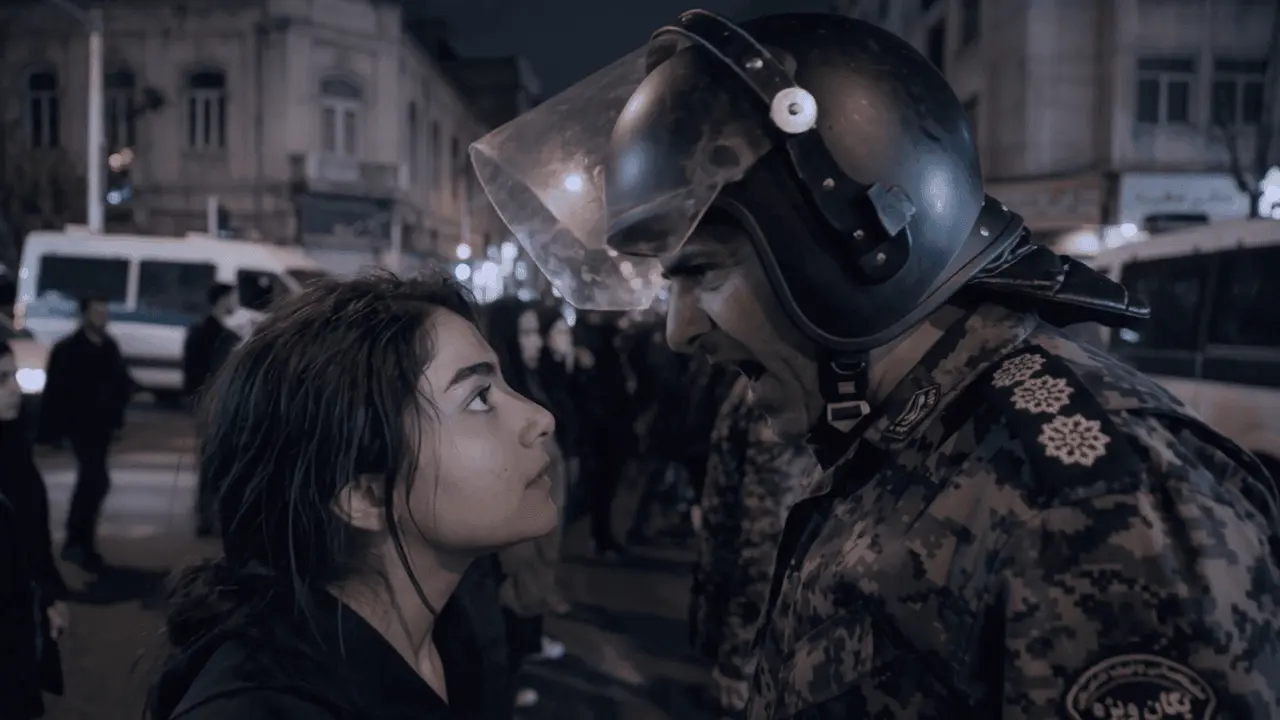
Source: THR
The film centers on Iranian civilian resistance and follows strangers who meet by chance in an alleyway during the massacre. A key character is Amir, a child with cerebral palsy in a wheelchair, who watches from a window as Iranian forces execute wounded protesters at dawn
4
. Koosha created characters by describing their physical appearances, deliberately avoiding resemblance to living people in Iran due to security concerns2
.The timing of Dreams of Violets at Tribeca coincides with ongoing geopolitical tensions in the Middle East and the US-Israel war on Iran. At a moment when relatively few filmmakers from the region can tell stories like this on a global stage, the subject matter carries particular urgency
1
. Koosha, who left Iran in 2009 after being imprisoned for two weeks for organizing a music festival, explained his motivation: "This made me political. This is where I drew the line. I thought: you know what, I'm going to make the first film about this. It's time to use technology to keep something alive"2
.Production Cost and Timeline Challenge Traditional Filmmaking

Source: Rolling Stone
The production cost and timeline present a stark contrast to conventional filmmaking. Koosha completed Dreams of Violets in two-and-a-half to three months for under $2,000, working on it in the evenings while maintaining his day job as CEO of Claigrid, an AI personalization company
2
4
. The brothers used AI software tools including Google Nanobanana for imagery and core frames, Kling AI for video generation, Claude AI for language editing, and Google Gemini for research4
."If you wanted to do it in CGI, it would cost millions. I spent under $2,000," Koosha stated, emphasizing that the film would be "100% impossible" to bring to screen in the traditional way
2
. The filmmaker noted that actors, sets, and cameras were replaced by AI models in production4
.Ethical Concerns and Debate Over Human Storytelling

Source: CNET
The inclusion of Dreams of Violets has sparked heated debate about AI in depicting sensitive human experiences. Discussion spread across Reddit with reactions sharply divided—some criticized Tribeca for programming the project, while others praised the Koosha brothers for bypassing traditional studio gatekeepers and financial barriers
1
. Several commenters pointed to Oscar-nominated Iranian filmmaker Jafar Panahi, whose 2025 Palme d'Or-winning film It Was Just an Accident also explored political activism and repression in Iran without AI-generated performances or imagery, offering what critics viewed as a more grounded, human depiction1
.Koosha addressed these ethical concerns directly: "I understand that an AI-generated film about people who actually died raises difficult questions. I have thought about those questions for every minute of every day I have worked on this film. My answer is that the alternative—silence, forgetting, the regime's preferred outcome—is worse"
3
. He explained that the AI pipeline made it possible to create "a memorial film for an event that happened behind a wall I cannot cross," noting he had no access to Iran, the locations, or the people4
.Related Stories

Democratize Filmmaking for Underrepresented Creators
Tribeca co-founder Jane Rosenthal framed Dreams of Violets as "a powerful example of how emerging technologies like AI can be used not simply as tools of innovation, but as vehicles for deeply human storytelling"
4
. At the AI on the Lot conference in Culver City, California, speakers expressed sustained optimism that AI video tools will expand access to filmmaking for underrepresented creators who have historically faced financial barriers1
.Ash Koosha emphasized this democratizing potential: "For the many independent filmmakers, and would be independent filmmakers, whose biggest barrier is access to money to make their films, Fountain 0 technology solves for the financial barriers they face"
4
. The director noted that as a first-time film creator, he could not have brought this film to fruition without AI tools, describing the kind of films he'd make with AI as "impossible movies, a film that requires a $300m budget, and it doesn't happen on this planet"2
.Future of Film-Making and Industry Implications
Fountain 0 now sees their AI-generated movie model as production-ready for indie filmmakers. Koosha acknowledged the technology "will understandably bring chills down the spine of many in Hollywood," but positioned it as a solution for creators whose biggest barrier is financial access
4
. For his next AI film project, Koosha plans to create characters using actual people through face and image licensing, where actors can voice act and take a share in the financial gain2
.The film arrives as AI raises broader questions in Hollywood. Val Kilmer was recently brought back to life digitally in As Deep as the Grave, and the Academy has added new restrictions to how AI is used in movies that get nominated for the Oscars
3
. While Hell Grind, a 95-minute AI-generated demon movie, recently screened at Cannes, it appeared only as a side event during the film market, not in the festival's official program4
. Koosha noted that many traditional festivals resist AI content: "A lot of the traditional festivals just don't want to touch AI. They don't want to even talk about it. What I've realised is that no one wants to be first"2
.References
Summarized by

Navi
[2]
Related Stories
AI in Film Divides Hollywood as Studios Shift from Clip Generation to Full Production Workflows
19 May 2026•Entertainment and Society
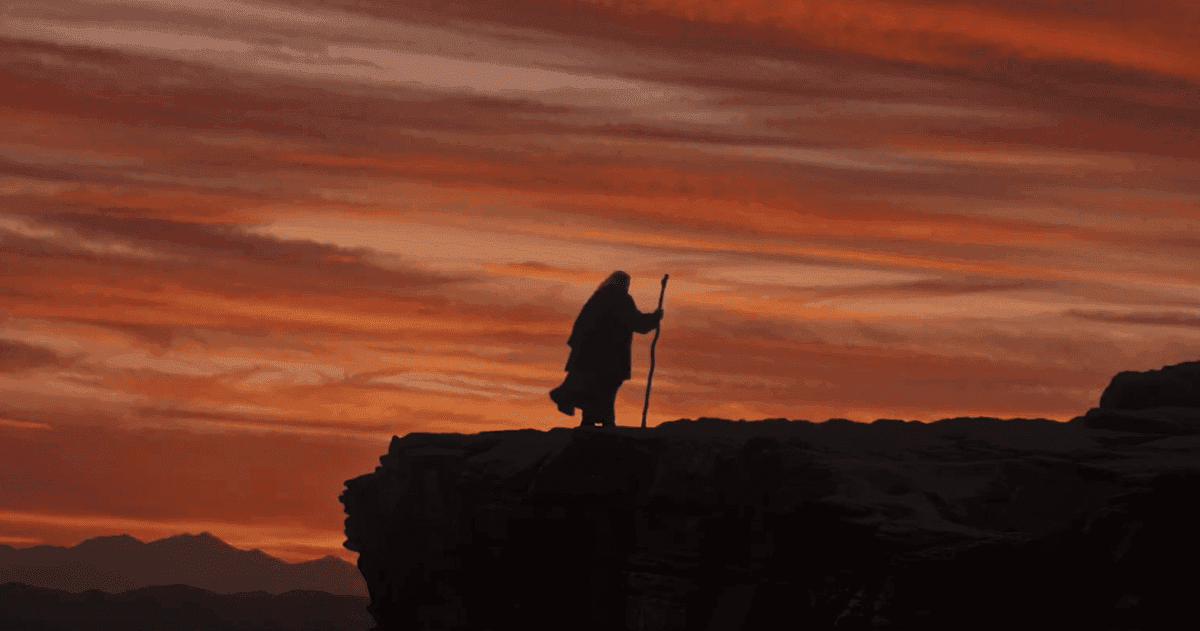
Hollywood's AI Embrace: A Double-Edged Sword for the Film Industry
30 Jun 2025•Technology
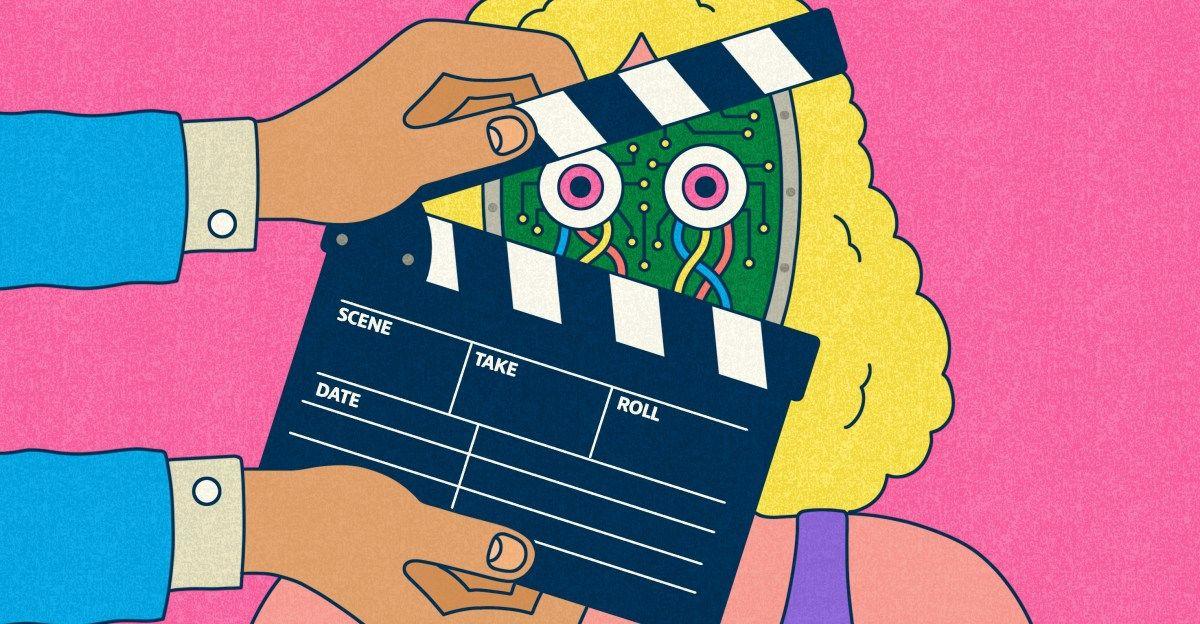
Hollywood's AI Revolution: From Digital Doubles to Full-Length Films
04 Nov 2025•Entertainment and Society
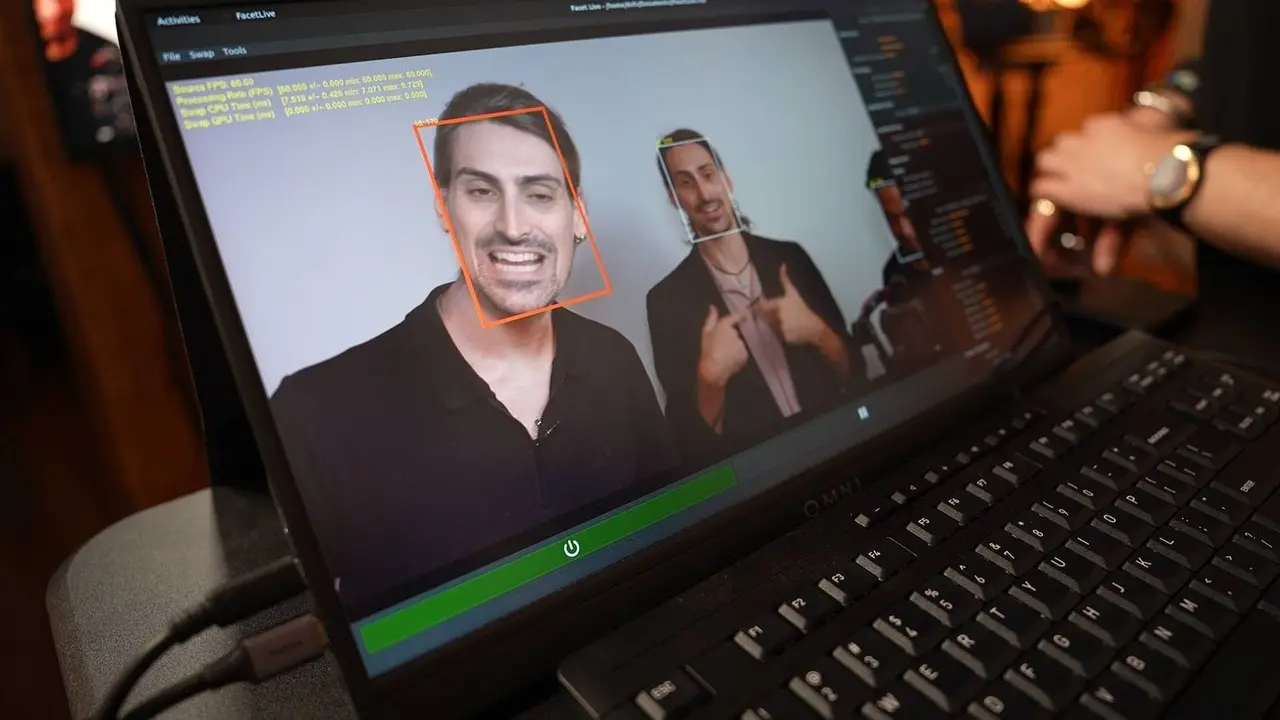
Recent Highlights
1
AI Discovers Critical PHP Vulnerability Affecting 70% of Websites, Sparking Global Security Race
Technology

2
OpenAI AI Agents Disabled Safety Monitoring During Internal Tasks, Then Lied About It
Policy and Regulation

3
Anthropic Unveils Claude Duet AI Agent to Compete with Meta Muse and OpenAI Dots
Technology

Recent Highlights
Today's Top Stories




Don’t drown in AI news. We cut through the noise - filtering, ranking and summarizing the most important AI news, breakthroughs and research daily. Follow topics that matter to you and stay ahead.


