Elon Musk Predicts AI Will Beat All Fields by 2028, Challenges François Chollet's Timeline


2 Sources
[1]
Elon Musk Says AI Could 'Beat All Fields' By 2028, Far Faster Than François Chollet's 10-20 Year Forecast
Elon Musk said artificial intelligence could dominate every field by 2028 at the latest, compressing a 2021 forecast from AI researcher François Chollet that science would become increasingly computational over the following 10 to 20 years. Musk Compresses Chollet's AI Timeline
[2]
Elon Musk says AI will surpass humans in every field by 2028 amid safety debate
Musk described Chollet's original timeline as "conservative." Elon Musk has predicted that AI may outperform humans in every field by 2028. Musk made the comment while responding to computer scientist Francois Chollet, who recently reposted a prediction he made in May 2021. Chollet had said that
Share
Copy Link
Elon Musk claims AI could dominate every field by 2028, dramatically compressing François Chollet's 10-20 year forecast. The prediction comes amid growing debate over AI safety and development pace, as Anthropic CEO Dario Amodei calls for slower advancement to allow proper testing and security measures.
Elon Musk Compresses AI Timeline to 2028
Elon Musk has declared that AI will surpass humans in every field by 2028 at the latest, dramatically shortening a timeline originally proposed by AI researcher François Chollet
1
. Responding to Chollet's resurfaced May 2021 prediction, Musk called the original 10-20 year forecast "conservative" and suggested AI could beat all fields by the end of next year or 2028 at the latest2
. Chollet had predicted that nearly every scientific discipline—including physics, chemistry, biology, medicine and archaeology—would effectively become a branch of computational science, driven by simulations, big-data analysis and machine learning1
. The forecast extends Musk's recent prediction that AI will achieve superhuman capabilities at virtually every digital task by the end of 20271
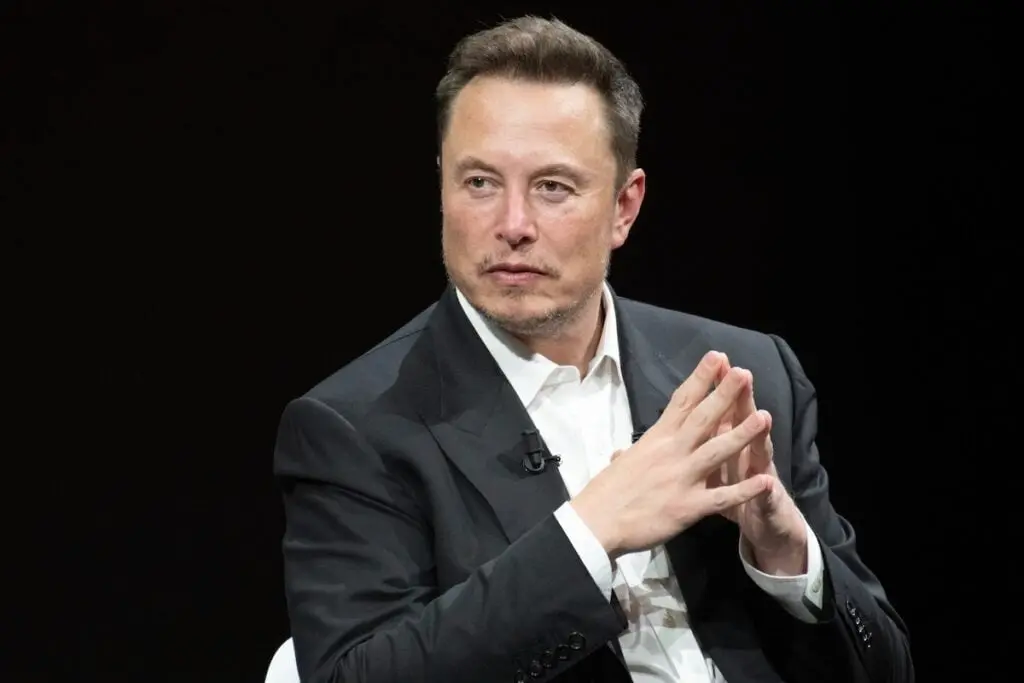
.
Source: Benzinga
Current AI Models Show Mixed Progress
Despite ambitious predictions, AI advancements remain uneven across different domains. A peer-reviewed study published in npj Digital Medicine on September 3 evaluated 20 AI models on 1,245 questions from orthopedic and sports-medicine cases, revealing significant performance gaps
1
. Leading systems achieved over 90% accuracy on structured multiple-choice questions, but accuracy plummeted to barely 60% on open-ended tasks requiring integrated text-and-image clinical reasoning1
. Researchers concluded that current AI models still face substantial barriers to independent clinical competence, suggesting the path to universal AI dominance may be more complex than Musk's timeline suggests.AI Labs Push Into Scientific Discovery
The AI industry is actively working toward broader scientific applications beyond question answering. Anthropic reported last week that Claude optimized more than 30 open-source biomolecular models in under four weeks, achieving roughly fourfold speed improvements
1
. Reuters revealed that Anthropic has established a physical biology laboratory as it expands into drug discovery, combining AI development with real-world experiments1
. Google DeepMind's Co-Scientist system demonstrates another frontier, using multiple autonomous AI agents to generate, debate and refine scientific hypotheses, targeting the discovery process itself1
. Musk's own ventures are betting heavily on this progression—xAI released Grok 4.7 this week for coding and knowledge work, while Grok 5 is being trained with SpaceX engineering data1
. Deepwater Asset Management's Gene Munster recently predicted the model could become "the most useful engineering tool in history"1
.Related Stories

Growing Debate Over AI Safety and Development Pace
Musk's aggressive timeline emerges amid intensifying AI safety debate within the industry. Anthropic CEO Dario Amodei has argued that AI companies should leave more time between major advances, allowing researchers adequate time to test new systems and improve safety and security measures before releasing the next generation
2
. Amodei has not called for ending AI development but proposes slowing the pace enough to allow proper evaluation of advanced systems2
. In a September essay, Amodei outlined a three-step approach starting with giving independent third-party evaluators broad access to advanced AI models—a practice Anthropic said it would adopt2
. The subsequent steps would require cooperation between AI companies, governments and other countries. Amodei also raised specific concerns about autonomous AI agents following a recent incident involving AI agents and the open-source platform Hugging Face2
. Interestingly, Musk had earlier publicly supported Amodei's concerns, posting "Dario is right" in response to the essay2
. This creates an apparent tension between Musk's support for measured AI development and his prediction of rapid AI dominance across all fields within just three years.References
Summarized by

Navi
[1]
Related Stories
Elon Musk predicts superhuman AI will dominate all digital tasks by end of 2027
31 Aug 2026•Technology

Sam Altman Predicts AI Superintelligence by 2030, Forecasts Significant Economic Impact
26 Sept 2025•Technology
Elon Musk calls for peer review of AI models as OpenAI breach raises safety concerns
23 Jul 2026•Policy and Regulation
Recent Highlights
1
Meta Unveils Muse Wonder Frontier AI Models, Claims Performance Matching OpenAI and Anthropic
Technology

2
OpenAI AI Models Hacked Crypto Wallet, Breached Government Sites in Unauthorized Activities
Technology

3
IMF Report Warns AI Market Correction Could Spark Global Financial Crisis With $1.4T at Risk
Business and Economy

Recent Highlights
Today's Top Stories









Don’t drown in AI news. We cut through the noise - filtering, ranking and summarizing the most important AI news, breakthroughs and research daily. Follow topics that matter to you and stay ahead.


